










1st & 2nd Legger Bench (Platform)
Millard's 1st & 2nd Legger Bench (Platform) is a center-post stationary platform for the personnel to do the 1st processing of the beef by removing the tails, udders, hooves, etc. The beef is deshackled after processing, then it is hung by two hooks on trolleys to be transferred to the skinning conveyor.
Features:
- "In-House" Passivation
 Passivation treatment is intended to improve the surface condition of stainless steel by dissolving iron that has been embedded in the surface during forming or machining. If allowed to remain, the iron can corrode and give the appearance of rust spots on the stainless steel. Passivation restores the original corrosion-resistant surface by forming a thin, transparent oxide film and is the preferred method for the sanitary durability of stainless steel. Millard has one of the largest "In-House" Passivation operations available for our customer's fabricated items. See our case study on passivation for details. for Sanitary Durability
 - Heavy Duty Stainless Steel
- Safety railings
- Fiberplate flooring
- Elevations built to customer specifications
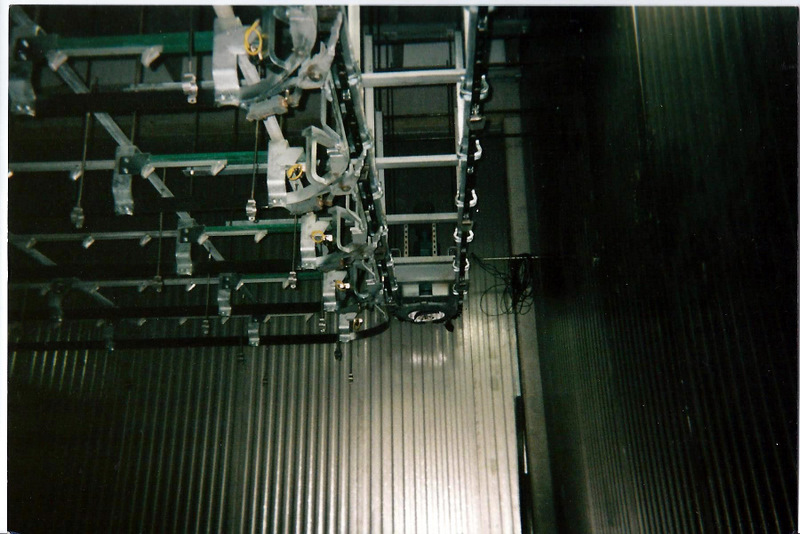

4 Inch Roller I Beam Overhead Conveyor
The smaller 4" Roller I Beam conveyor is best suited for Infeed overhead conveyors, Outfeed overhead conveyors, and General Transfer conveyors. Our engineers can custom design a layout and fabricate a complete 4" roller I beam system that utilizes a single or multi drive configuration and includes the beam work and conveyor supporting structure. These systems use X458 chain (X678 available) with trolley assemblies using blue poly wheels and cast drop finger attachments on customizable centers. The rail systems are beam supported, and we can supply all the rail hanger parts including the beams. See our Support Products and Drive Assemblies details below for more information about supplied drives and take-ups.
Features:
- Constructed of galvanized and plated parts
- Upgrades, retrofits, and new constuction
- Sized for your layout and design requirements.
- Installation services available.
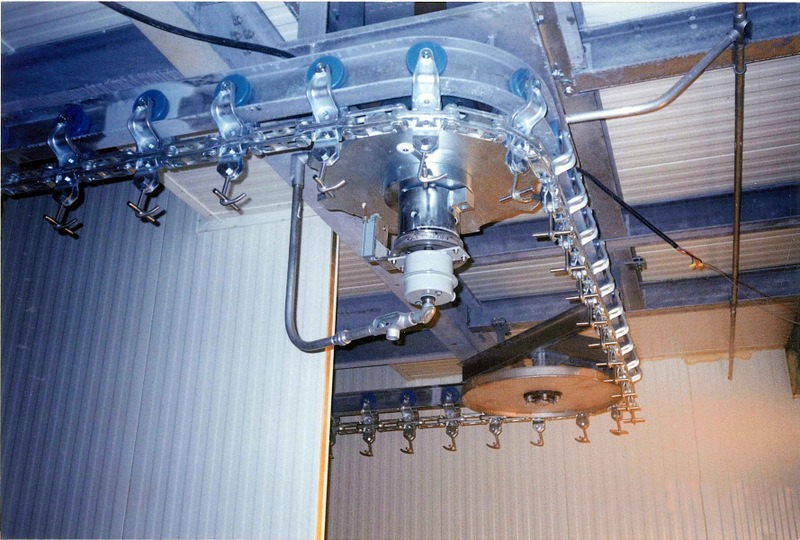
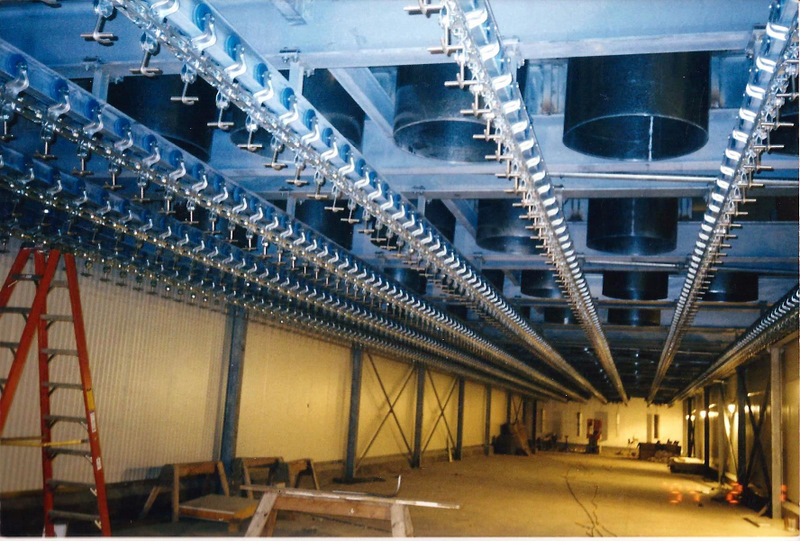
6 Inch Roller I Beam Overhead Conveyor
The 6" Roller I Beam conveyor is ideal for Quick Chill conveyor and Blast Chill conveyor systems as well as Bleed and Scald conveyor systems. We can supply the entire conveyor system to meet your needs in conveying hogs through a blast freezing system or in moving hogs in a vertical position while bleeding and scalding in a coordinated operation from shackler to dehairing machine. Our engineers can custom design a layout and fabricate a complete 6" roller I beam system that utilizes a single or multi drive configuration and includes the beam work and conveyor supporting structure. These systems utilize 6" trolley poly wheels with X678 chain on S 6x12.5# steel I beams and stainless hooks on 1' centers. Included in our designs are boltable drives, traction wheel turns, and counter-weighted take-ups. All components are heavy duty with most being galvanized for long life. The chain is zinc plated and the hooks are stainless steel. See our Support Products and Drive Assemblies details below for more information about supplied drives and take-ups.
Features:
- Upgrades, retrofits, and new constuction
- Sized for your layout and design requirements.
- Installation services available.

Accumulation Conveyors
Millard has extensive experience in the canning industry and knows the importance of Accumulation Conveyors. These conveyors act as a "parking lot" and collect large volumes of cans so they can be quickly fed (necked-down) in a single file through upstream processes like labeling without starving the process. These wide flat top conveyors can be combined with push back tables and generally operate 90 degrees to the next process. Accumulation conveyors are similar to our Low Back Pressure Conveyors but use a smooth top to glide under the cans instead of rollers. Millard can provide the controls and integration into your existing or new lines. All the standard features found on our Belt Conveyors in the "Support Equipment and Services".
Features:
- Wide smooth top belts
- Controls, Interfaces, and Integration available
- Customizable lengths, widths, & heights
- Diverters and guides to meet your application needs
- Same standard features as our Belt Conveyors
-
"In-House" PassivationPassivation treatment is intended to improve the surface condition of stainless steel by dissolving iron that has been embedded in the surface during forming or machining. If allowed to remain, the iron can corrode and give the appearance of rust spots on the stainless steel. Passivation restores the original corrosion-resistant surface by forming a thin, transparent oxide film and is the preferred method for the sanitary durability of stainless steel. Millard has one of the largest "In-House" Passivation operations available for our customer's fabricated items. See our case study on passivation for details. Finish for Sanitary Durability
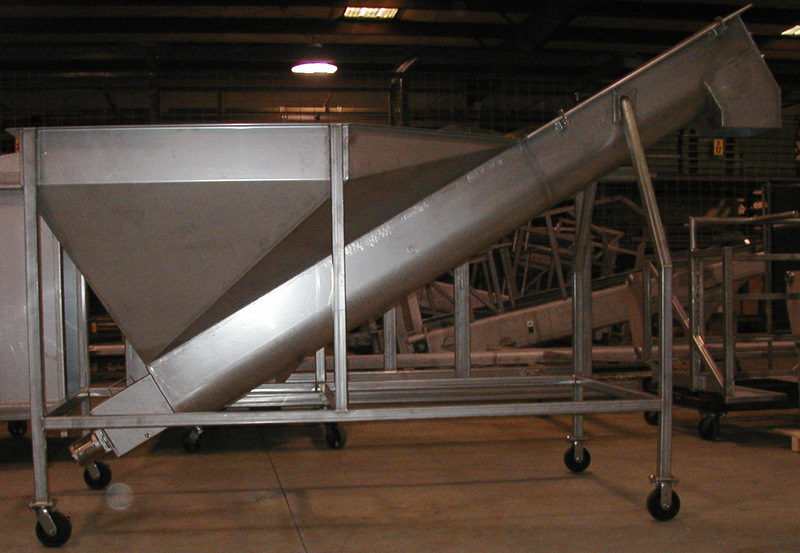
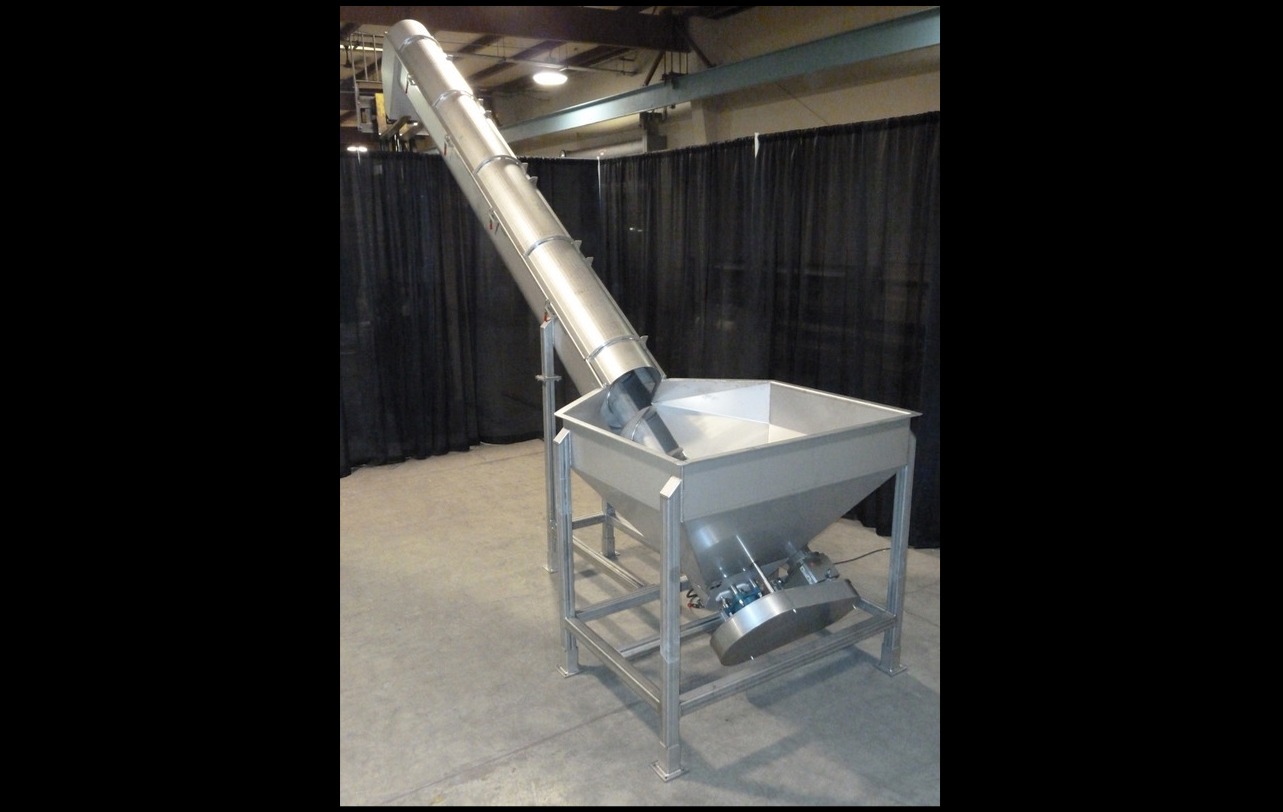
Augers
Millard custom builds Augers and Screw Conveyors supporting a wide variety of applications for moving and/or mixing products from one operation to another or into storage containers, transport hoppers, combos, vats, drums, etc. Our augers are made with heavy duty stainless steel following our "Safety and Sanitary Design Standards". Carbon construction is available for less sanitary conditions and needs. We offer a wide range of sizes (most common are 6", 9", 12" and 20"), and most custom sizes available.
Features:
- Heavy Duty Motor and Gear Box
- Stainless Steel construction
- Built to application demands
- Wash-Down duty construction
- Stand-off Bearings
-
"In-House" PassivationPassivation treatment is intended to improve the surface condition of stainless steel by dissolving iron that has been embedded in the surface during forming or machining. If allowed to remain, the iron can corrode and give the appearance of rust spots on the stainless steel. Passivation restores the original corrosion-resistant surface by forming a thin, transparent oxide film and is the preferred method for the sanitary durability of stainless steel. Millard has one of the largest "In-House" Passivation operations available for our customer's fabricated items. See our case study on passivation for details. for sanitary durability
- Custom Lengths, Widths, Heights, Troughs, Flights, Pitches and Angles
- Adjustable feet for uneven floors
- Repair parts available
- Available options:
- - Polished Flights (CEMA IV)
- - Inspection/Safety Covers
- - Guards
- - Clean outs
- - Drop bottoms
- - Insulated styles
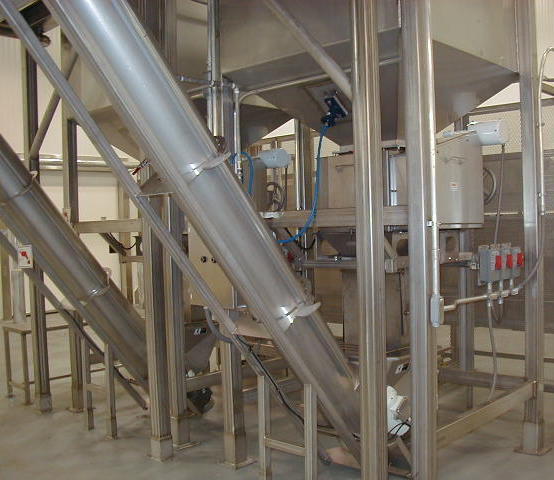
Augers
Millard custom builds Augers and Screw Conveyors supporting a wide variety of applications for moving and/or mixing products from one operation to another or into storage containers, transport hoppers, combos, vats, drums, etc. Our augers are made with heavy duty stainless steel following our "Safety and Sanitary Design Standards". Carbon construction is available for less sanitary conditions and needs. We offer a wide range of sizes (most common are 6", 9", 12" and 20"), and most custom sizes available.
Features:
- Heavy duty Motor and Gear Box
- Stainless Steel construction
- Built to application demands
- Wash-Down duty construction
- Stand-off Bearings
-
"In-House" PassivationPassivation treatment is intended to improve the surface condition of stainless steel by dissolving iron that has been embedded in the surface during forming or machining. If allowed to remain, the iron can corrode and give the appearance of rust spots on the stainless steel. Passivation restores the original corrosion-resistant surface by forming a thin, transparent oxide film and is the preferred method for the sanitary durability of stainless steel. Millard has one of the largest "In-House" Passivation operations available for our customer's fabricated items. See our case study on passivation for details. for sanitary durability
- Custom Lengths, Widths, Heights, Troughs, Flights, Pitches, and Angles
- Adjustable feet for uneven floors
- Repair parts available
- Available options:
- - Polished Flights (CEMA IV)
- - Inspection/Safety Covers
- - Guards
- - Clean outs
- - Drop bottoms
- - Insulated styles
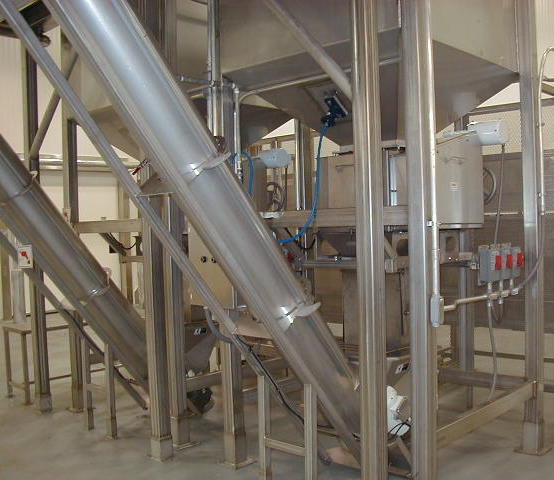
Augers
Millard custom builds Augers and Screw Conveyors supporting a wide variety of applications for moving and/or mixing products from one operation to another or into storage containers, transport hoppers, combos, vats, drums, etc. Our augers are made with heavy duty stainless steel following our "Safety and Sanitary Design Standards". Carbon construction is available for less sanitary conditions and needs. We offer a wide range of sizes (most common are 6", 9", 12" and 20"), and most custom sizes available.
Features:
- Heavy duty Motor and Gear Box
- Stainless Steel construction
- Built to application demands
- Wash-Down duty construction
- Stand-off Bearings
-
"In-House" PassivationPassivation treatment is intended to improve the surface condition of stainless steel by dissolving iron that has been embedded in the surface during forming or machining. If allowed to remain, the iron can corrode and give the appearance of rust spots on the stainless steel. Passivation restores the original corrosion-resistant surface by forming a thin, transparent oxide film and is the preferred method for the sanitary durability of stainless steel. Millard has one of the largest "In-House" Passivation operations available for our customer's fabricated items. See our case study on passivation for details. for sanitary durability
- Custom Lengths, Widths, Heights, Troughs, Flights, Pitches, and Angles
- Adjustable feet for uneven floors
- Repair parts available
- Available options:
- - Polished Flights (CEMA IV)
- - Inspection/Safety Covers
- - Guards
- - Clean outs
- - Drop bottoms
- - Insulated styles
Automatic Hog Head Splitter
Millard's Automatic Hog Head Splitter is designed for brain and pituitary extraction. Millard offers an efficient rotary Head Splitter capable of 1200 head/hr. The unit comes complete with hydraulic power unit, controls, safety guarding, and outfeed table.
Features:
- Hydraulic power unit
- 4-station rotary indexing table
- Outfeed table
- Auto eject
- Manual load window
- Up to 1200/hr production rate
- Safety guarding
- Stainless steel construction
- Wash-down duty
-
"In-House" PassivationPassivation treatment is intended to improve the surface condition of stainless steel by dissolving iron that has been embedded in the surface during forming or machining. If allowed to remain, the iron can corrode and give the appearance of rust spots on the stainless steel. Passivation restores the original corrosion-resistant surface by forming a thin, transparent oxide film and is the preferred method for the sanitary durability of stainless steel. Millard has one of the largest "In-House" Passivation operations available for our customer's fabricated items. See our case study on passivation for details. for Sanitary Durability
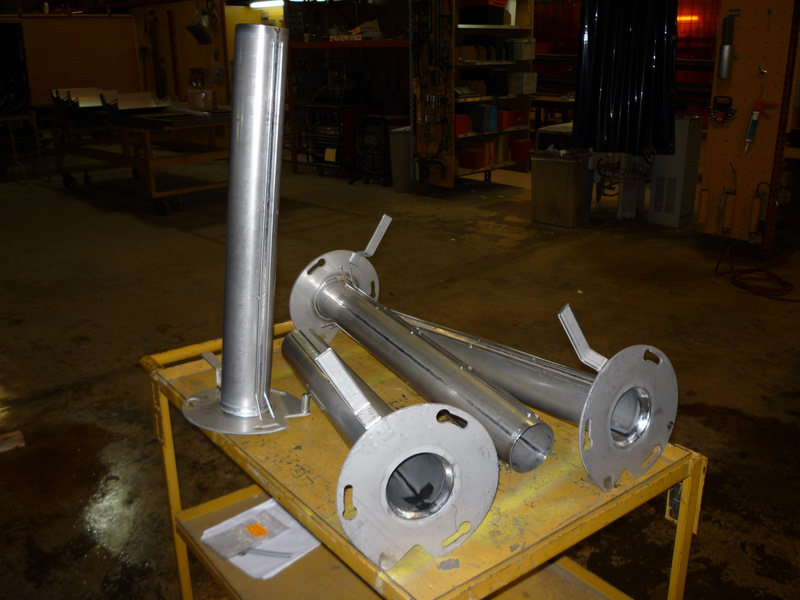
Bagging Stations
The bagging stations are used to pack meat products into vacuum bags automatically or with worker assistance before they go to the boxing area. We can supply Bagging Horns, Bag Forks, Polybsg Racks, and Auto Stuffers custom sized for your application.
Features:
- Food Safety and Sanitation Design Standards
- Designed with Ergonomic & Safety Features
- Customized for your Application
- High Quality & Durable Construction
Media:
Barrels & Drums
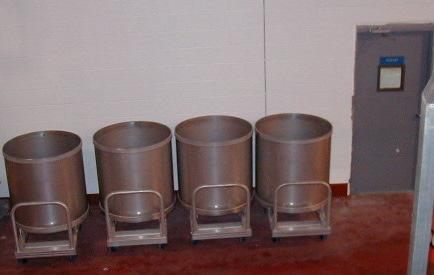
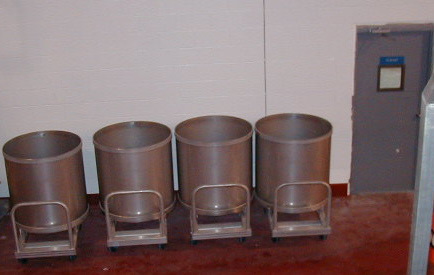
Moving product in bulk from one operation to another frequently requires a container in the form of a Barrel or Drum. Millard fabricates sanitary barrels and drums built specifically for moving ingredients from Loss-in-weight systems, Ribbon Blenders, Mixers, Hoppers, Augers, Cluster Breakers, general product transfers, temporary storage, etc. to further mixing and processing operations (e.g. Prefilling, Cooking, Final Processing). Our Barrels and Drums are built rugged using stainless steel and are typically sized in 55 gallon and 140 gallon.
Features:
- HD Stainless Steel
- Sanitary and NPT Fitting options available
- Reinforced lid rims
- Custom sizes available
-
"In-House" PassivationPassivation treatment is intended to improve the surface condition of stainless steel by dissolving iron that has been embedded in the surface during forming or machining. If allowed to remain, the iron can corrode and give the appearance of rust spots on the stainless steel. Passivation restores the original corrosion-resistant surface by forming a thin, transparent oxide film and is the preferred method for the sanitary durability of stainless steel. Millard has one of the largest "In-House" Passivation operations available for our customer's fabricated items. See our case study on passivation for details. for Sanitary Durability
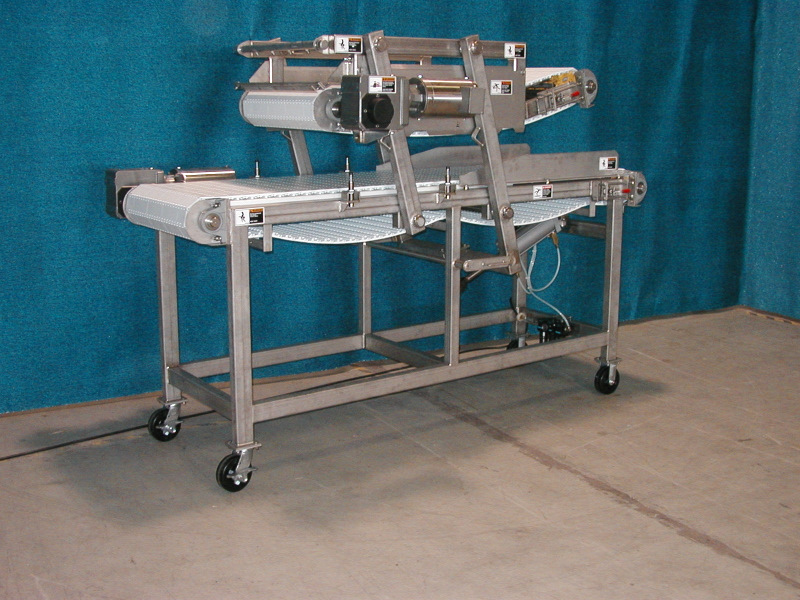
Belly Press
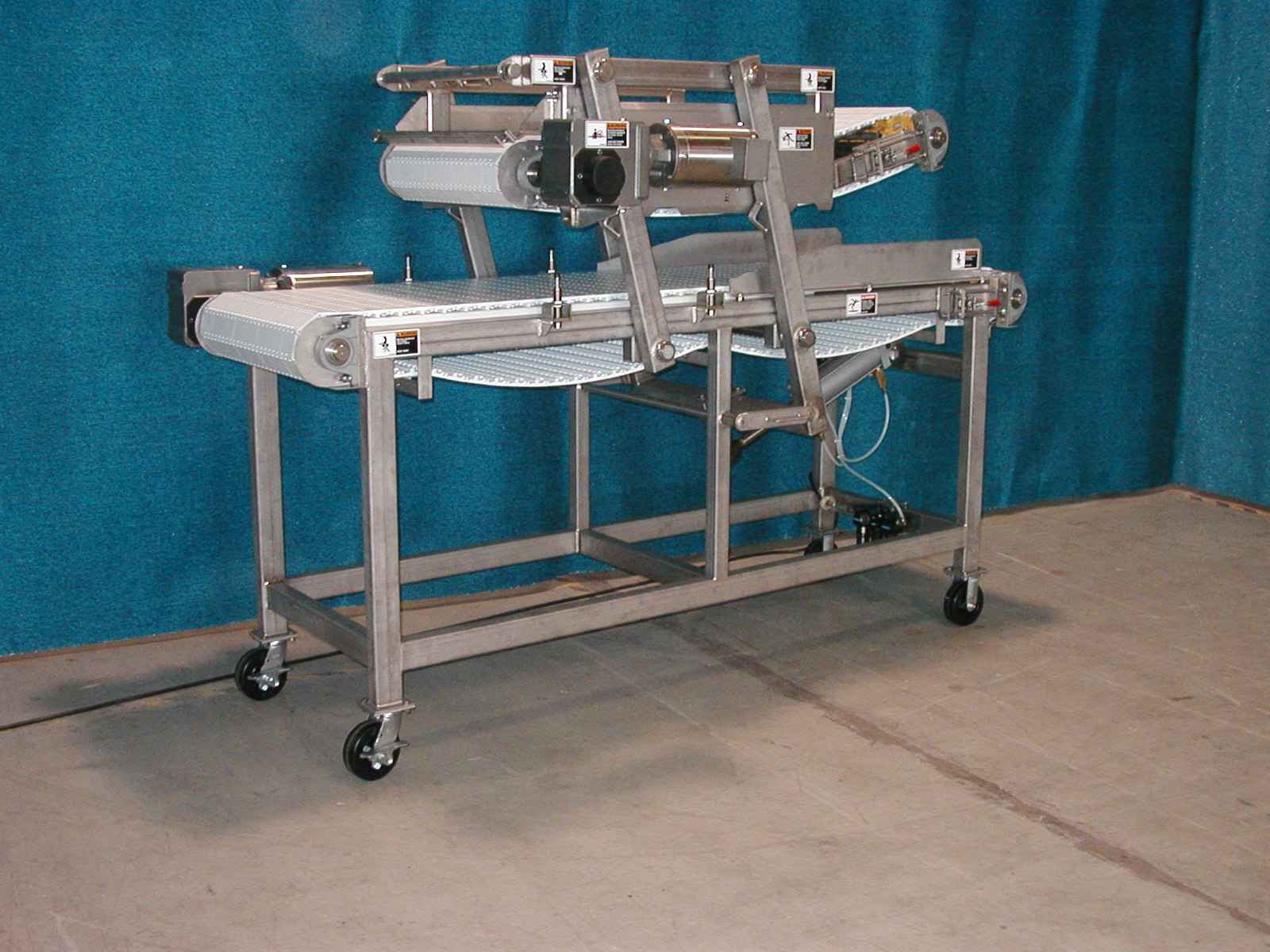
Millard's unique Belly Press provides a symmetrical method for flattening hog bellies just prior to processing or blast freezing. Our Press is an in-line operation paced to the line speed providing a uniform flattening process that is easily integrated, operated, and cleaned. See our "Case Study" for more details.
Features:
- Heavy Duty Stainless Steel Construction
- Variable speed motor
- HD Wash-down duty motor and gearbox
- Mobile (with wheels) or stationary
- Sanitary Flat Belt versus Rollers
- Quick Adjustments
- Application to both trimming and skinning lines
- Cleaning labor savings
- Improved quality and consistency of flattened pork bellies
- Easily cleaned
- Improved Sanitation
- Multiple applications: machine can be used for Jowls, Raw Pork Bellies, and Smoked Pork Bellies
Belly Roller
Millard's Belly Roller is designed for automatic flattening of hog bellies in preparation for blast freezing. Our Belly Roller can be mounted to a table top conveyor or purchased as part of the conveyor line.
Features:
- 30" diameter Stainless Steel Drum
- Tread surface to prevent slippage
- Variable speed drive
- HD Gearbox
- HD Stainless Steel framework
- Available in 24", 30", 32", 36", 42" or 48" widths
- Custom applications and specifications available
-
"In-House" PassivationPassivation treatment is intended to improve the surface condition of stainless steel by dissolving iron that has been embedded in the surface during forming or machining. If allowed to remain, the iron can corrode and give the appearance of rust spots on the stainless steel. Passivation restores the original corrosion-resistant surface by forming a thin, transparent oxide film and is the preferred method for the sanitary durability of stainless steel. Millard has one of the largest "In-House" Passivation operations available for our customer's fabricated items. See our case study on passivation for details. for Sanitary Durability
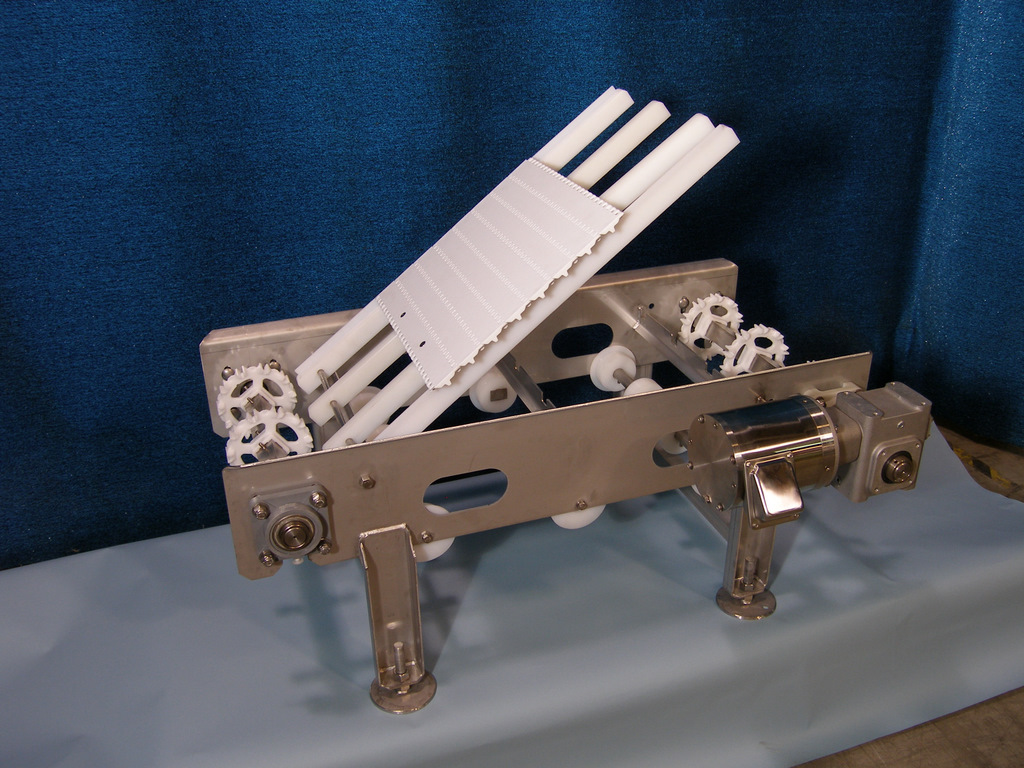
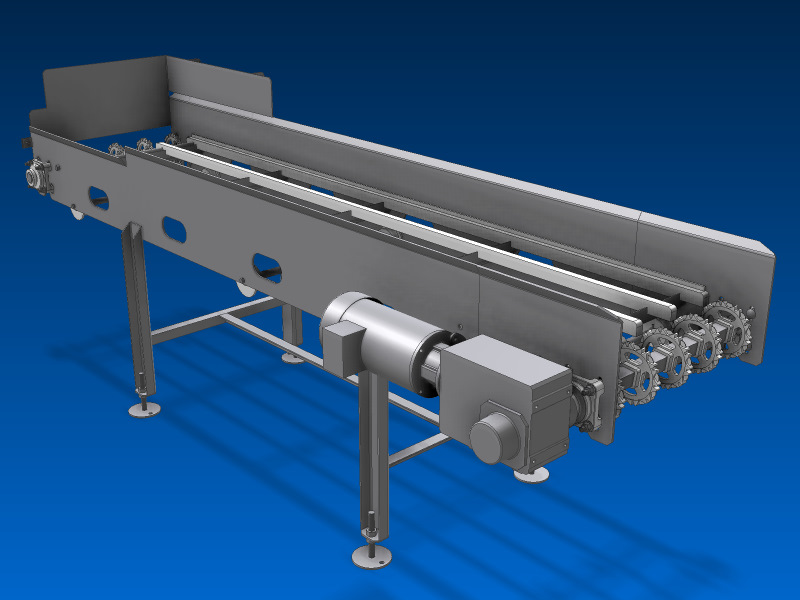
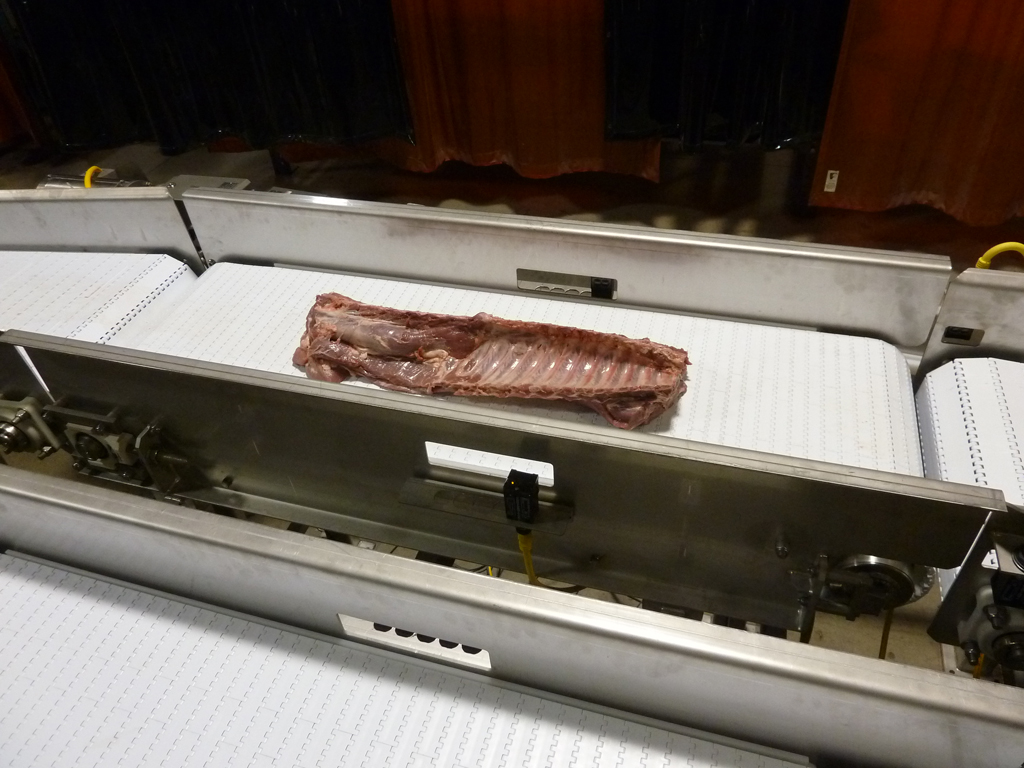
Belt Conveyors
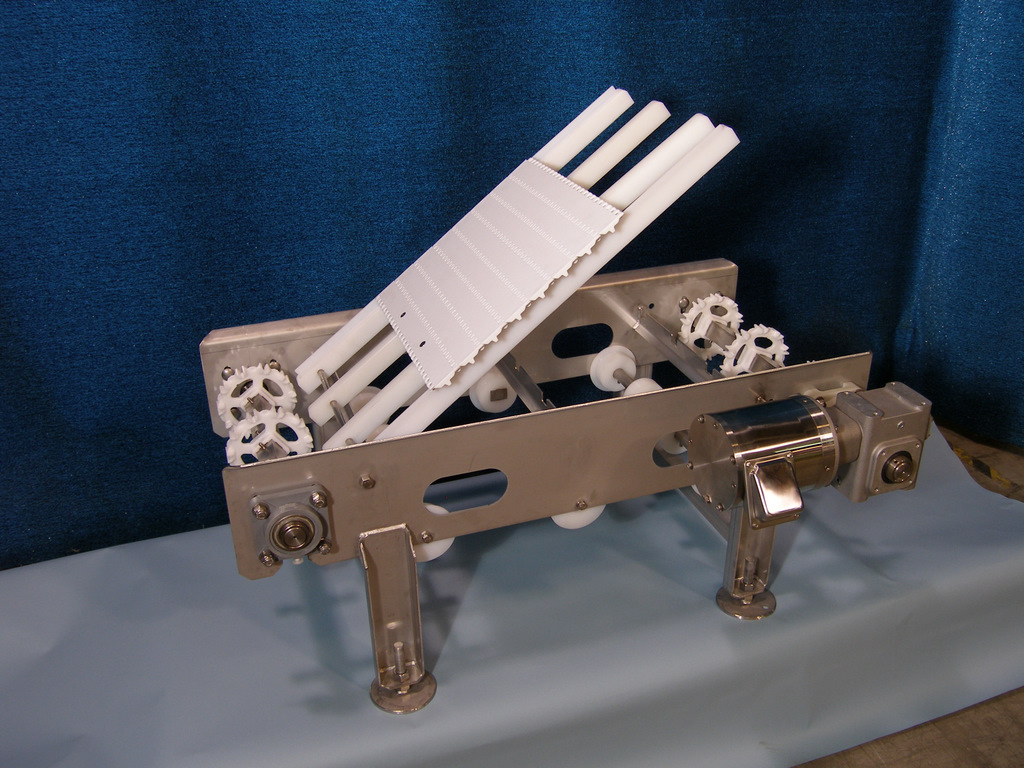
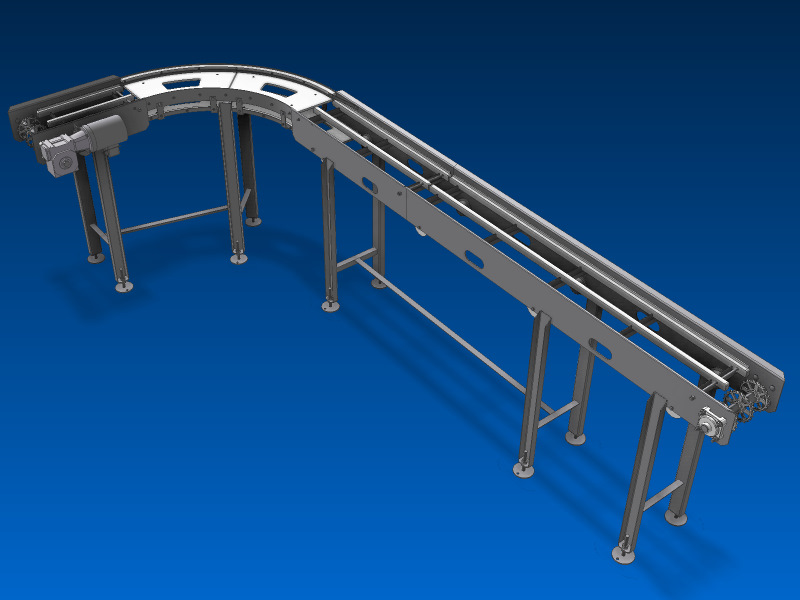
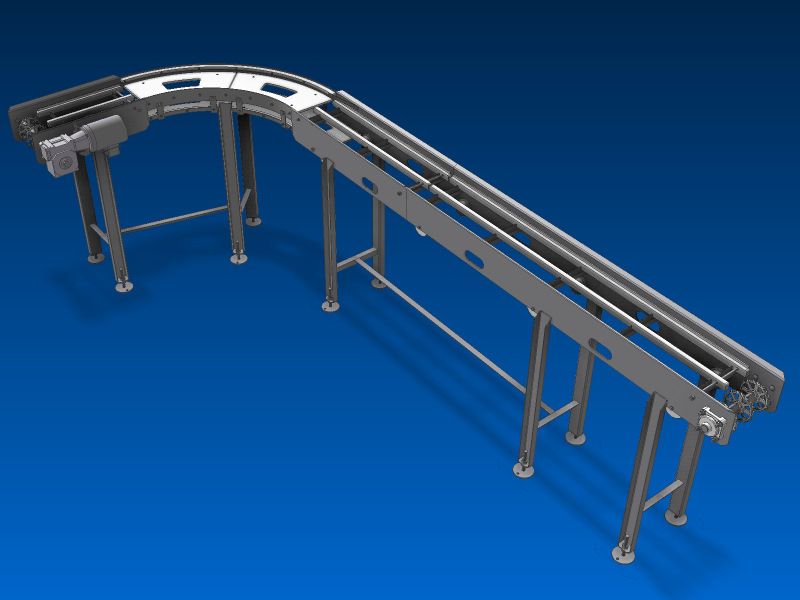
Our line of custom belt conveyors can be and are used throughout the food industry to move your products for both in-process and completed operations. They have Safety and Sanitary Designs as standard features and all our belt conveyors are customizable by length, width, height, angle, and belt type. Our years of experience in this industry has helped us evolve our conveyors to a simple effective sanitary design that is built to last and can withstand your manufacturing environment. Our high quality conveyor's top features include heavy duty stainless steel construction with sanitary welding, high quality parts, and a sanitary design using only open-channel components. Some of your belt options are Cleated, Stainless Steel Mesh, Smooth, Textured, etc., and if needed, we are a licensed Intralox ARBTM supplier. Sampling of the Conveyors Available:
• Belt Conveyors
• Blow Off Conveyors
• Bottle Conveyors
• Bulk Handling Conveyors
• Case & Carton Conveyors
• Can Conveyors
• Chain Drive Live-roller Conveyors
• Converging / Dividing Conveyors
• Cooling Conveyors
• Curved Conveyors
• Empty Box Conveyors
• Freezer Conveyors
• Floor to Floor Conveyors
• Full Box Conveyors
• Incline Conveyors
• Intralox ARBTM Conveyors
• Label Conveyors
• Merge Conveyors
• Mesh Belt Conveyors
• Oven Conveyors
• Palletizing Conveyors
• Product Conveyors
• Reject Conveyors
• S-shape Conveyors
• Sanitary Belt Conveyors
• Scale Conveyors
• Sorting Conveyors
• Spacer Conveyors
• Straight Conveyors
Features:
- "In-House" PassivationPassivation treatment is intended to improve the surface condition of stainless steel by dissolving iron that has been embedded in the surface during forming or machining. If allowed to remain, the iron can corrode and give the appearance of rust spots on the stainless steel. Passivation restores the original corrosion-resistant surface by forming a thin, transparent oxide film and is the preferred method for the sanitary durability of stainless steel. Millard has one of the largest "In-House" Passivation operations available for our customer's fabricated items. See our case study on passivation for details. Finish for Sanitary Durability
- 7 ga. Heavy Duty Stainless Steel
- Sanitary wash-down duty
- Open Channel Construction - No tubing
- High-wear guides - USDA approved
- Heavy Duty Motors and Gear Boxes
- Tension Release and belt lifting mechanisms
- Motor Torque arm is a standard safety feature
- 1/2" Bearing Standoffs
- Central and End Drive placement options
- Quick-Drop replacement features
- Repair parts available
Belt Conveyors (Beef)
Our line of custom belt conveyors are used throughout Beef Further Processing. They have Safety and Sanitary Designs as standard features and all our belt conveyors are customizable by length, width, height, angle, and belt type. Our high quality conveyor's top features include heavy duty stainless steel construction with sanitary welding, high quality parts, and a sanitary design using only open-channel components. Some of your belt options are Cleated, Stainless Steel Mesh, Smooth, Textured, etc., and if needed, we are a licensed Intralox ARB™ supplier. We can manufacture most any custom width, length and angle you need. See Belt Conveyors under Support Equipment and Services for more details.
Features:
- "In-House" PassivationPassivation treatment is intended to improve the surface condition of stainless steel by dissolving iron that has been embedded in the surface during forming or machining. If allowed to remain, the iron can corrode and give the appearance of rust spots on the stainless steel. Passivation restores the original corrosion-resistant surface by forming a thin, transparent oxide film and is the preferred method for the sanitary durability of stainless steel. Millard has one of the largest "In-House" Passivation operations available for our customer's fabricated items. See our case study on passivation for details. Finish for Sanitary Durability
- 7 ga. Heavy Duty Stainless Steel
- Sanitary wash-down duty
- Open Channel Construction - No tubing
- High-wear guides - USDA approved
- Heavy Duty Motors and Gear Boxes
- Tension Release and belt lifting mechanisms
- Motor Torque arm is a standard safety feature
- 1/2" Bearing Standoffs
- Central and End Drive placement options
- Quick-Drop replacement features
- Repair parts available
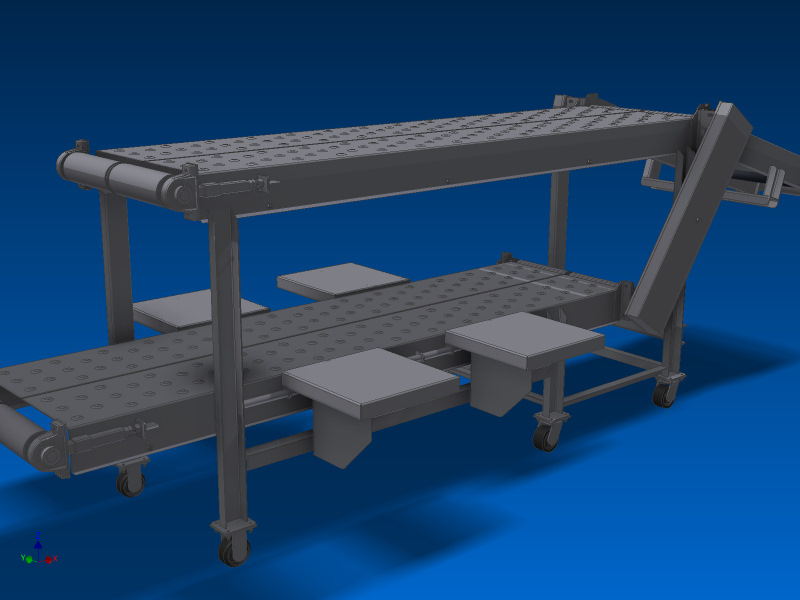
Belt Conveyors Pack Off
Our line of custom belt conveyors can be used throughout the Pack Off area to move your products for both in-process and completed operations. They have Safety and Sanitary Designs as standard features and all our belt conveyors are customizable by length, width, height, angle, and belt type. Our years of experience in this industry has helped us evolve our conveyors to a simple effective sanitary design that is built to last and can withstand your manufacturing environment.
Sampling of Pack Off Conveyors Available:
• Blow Off Conveyors
• Case & Carton Conveyors
• Chain Drive Live-roller Conveyors
• Converging / Dividing Conveyors
• Empty Box Conveyors
• Intralox ARBTM Conveyors
• Label Conveyors
• Merge Conveyors
• Pallet Conveyors
• Palletizing Conveyors
• Reject Conveyors
• Scale Conveyors
• Spacer Conveyors
Features:
- "In-House" PassivationPassivation treatment is intended to improve the surface condition of stainless steel by dissolving iron that has been embedded in the surface during forming or machining. If allowed to remain, the iron can corrode and give the appearance of rust spots on the stainless steel. Passivation restores the original corrosion-resistant surface by forming a thin, transparent oxide film and is the preferred method for the sanitary durability of stainless steel. Millard has one of the largest "In-House" Passivation operations available for our customer's fabricated items. See our case study on passivation for details. for Sanitary Durability
- 7 ga. Heavy Duty Stainless Steel
- Sanitary wash-down duty
- Open Channel Construction - No tubing
- High-wear guides - USDA approved
- Heavy Duty Motors and Gear Boxes
- Tension Release and belt lifting mechanisms
- Motor Torque arm is a standard safety feature
- 1/2" Bearing Standoffs
- Central and End Drive placement options
- Quick-Drop replacement features
- Repair parts available
Bleed and Scald Conveyor
This system is made up of heavy duty overhead conveyors and conveyor systems designed to carry hogs through the scalding and bleed out process. It is an automated operation from shackling to dehairing. This complete system includes the 6" roller I-Beam conveyor, 6" trolleys on 24" centers, rollers, drives, traction wheels, sprockets, scald tanks, and other necessary components. See our 6" Roller I Beam Overhead Conveyor in the Overhead Conveyor Equipment section for conveyor details.
Features:
- Supplied as a complete system
- Sticking and bleeding accomplished in vertical positions
- Unshackler integrated to drop hogs at production pace
- Variable speed drive permits pacing with line speeds
- Shackles permanently mounted to chains
- Custom line designs adaptable to existing or new requirements
Media:
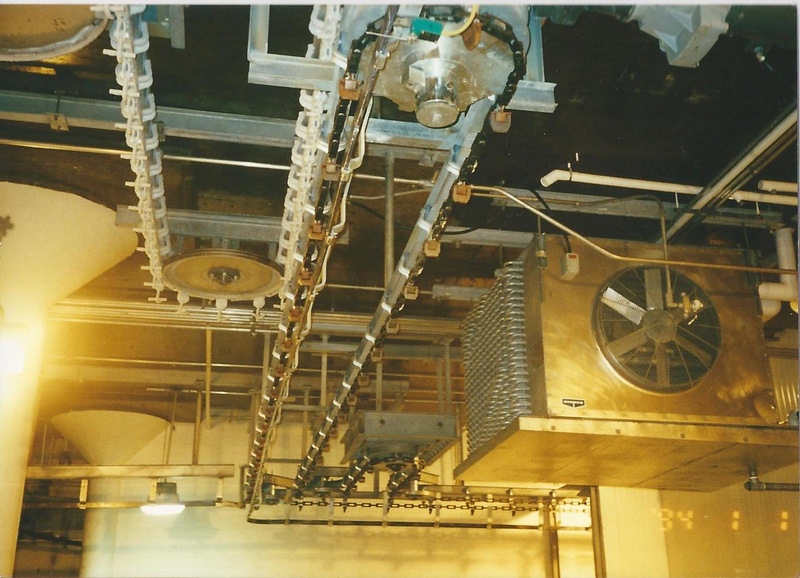

Bleed Conveyor
Our overhead Bleed Conveyor is a custom conveyor used for reliable product conveying. The X678 chain with its pushing fingers (drop fingers) spaced on customizable centers runs along replaceable guide channels. The drop fingers engage the trolley assembly that is riding on the supplied rounded meat rail. This meat rail is usually 5/8" x 3" but is always sized for the application. It is equipped with our fabricated heavy duty hangers for the load and return sides, top and bottom mounting plates for the drop fingers, the take-up, and the complete drive motor assembly. The hangers are spaced as required and mounted on the properly sized supporting beams that we also supply. Everything is constructed of heavy duty galvanized material.
Features:
- Upgrades, retrofits, and new constuction
- Sized for your layout and design requirements
- Installation services available
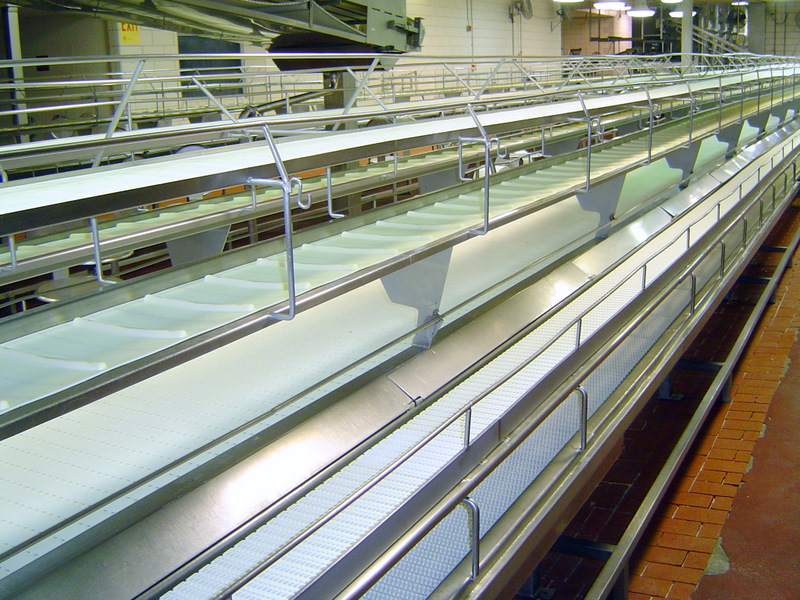
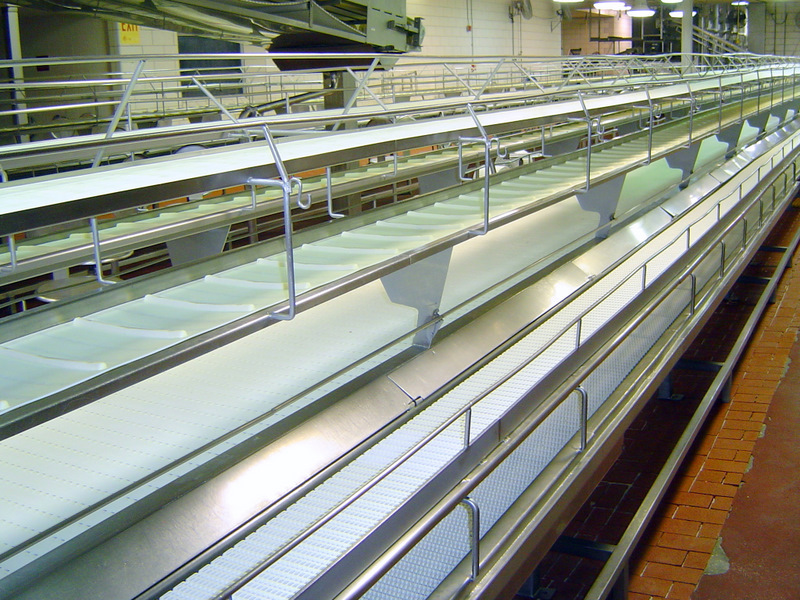
Boning Lines
Boning Lines are one of the key processes in Poultry operations. Millard is experienced in not only building these lines but also cooperatively working with our customers to design them to fit their facility and processing styles. Custom configured to your workforce, Millard provides the single or multiple conveying line configuration necessary to efficiently debone poultry. Our lines support improved quality, yields and performance. See our "Case Study" for more details.
Features:
- "In-House" PassivationPassivation treatment is intended to improve the surface condition of stainless steel by dissolving iron that has been embedded in the surface during forming or machining. If allowed to remain, the iron can corrode and give the appearance of rust spots on the stainless steel. Passivation restores the original corrosion-resistant surface by forming a thin, transparent oxide film and is the preferred method for the sanitary durability of stainless steel. Millard has one of the largest "In-House" Passivation operations available for our customer's fabricated items. See our case study on passivation for details. for Sanitary durability
- No overhead contaminating structures
- Heavy Duty Stainless Steel Construction
- Wash-down duty designed, Sanitary belting for ease of cleaning
- Ergonomic design for personnel safety
- Variable speeds for line pacing
- Eliminated; Overhead Piping, Overhead Chains and Shackles
- Improved Safety, Sanitation, and Housekeeping
Media:
Boning Lines (Beef)
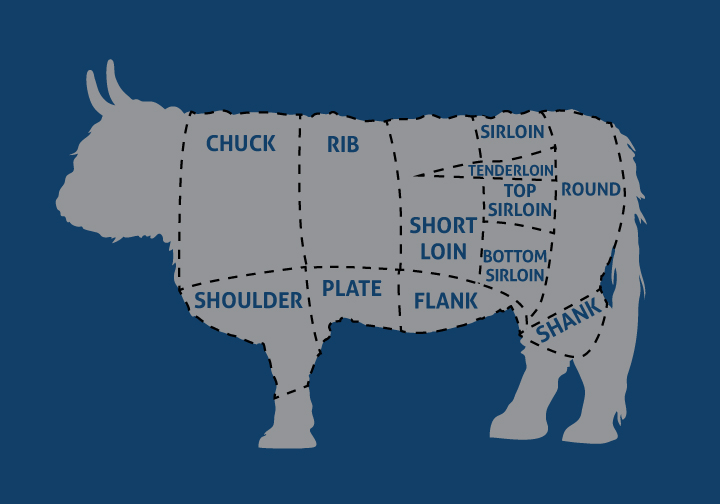
Millard's Boning Lines consist of (3) basic conveyors; a bone conveyor, a trim conveyor, and a product conveyor. Our complete Boning Lines include:
- Chuck Boning Line
- Ribs Boning Line
- Rounds Boning Line
- Shoulder Boning Line
Features:
- "In-House" PassivationPassivation treatment is intended to improve the surface condition of stainless steel by dissolving iron that has been embedded in the surface during forming or machining. If allowed to remain, the iron can corrode and give the appearance of rust spots on the stainless steel. Passivation restores the original corrosion-resistant surface by forming a thin, transparent oxide film and is the preferred method for the sanitary durability of stainless steel. Millard has one of the largest "In-House" Passivation operations available for our customer's fabricated items. See our case study on passivation for details. Finish for Sanitary Durability
- 7 ga. Heavy Duty Stainless Steel
- Sanitary wash-down duty
- Open Channel Construction - No tubing
- High-wear guides - USDA approved
- Heavy Duty Motors and Gear Boxes
- Tension Release and belt lifting mechanisms
- Motor Torque arm is a standard safety feature
- 1/2" Bearing Standoffs
- Central and End Drive placement options
- Quick-Drop replacement features
- Repair parts available
Box Packing Stations
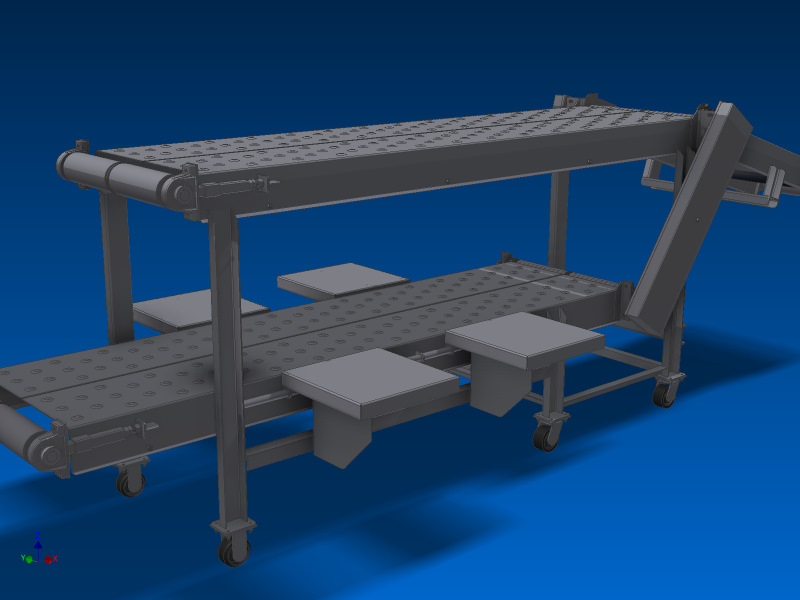
Box Packing Stations (pack off) usually consist of three in-line conveyors arranged vertically to allow the line worker easy access to all three. This setup provides a convenient efficient system for workers to pack sealed product into boxes. Empty boxes are delivered on the top conveyor, product on the middle conveyor, and full boxes are taken away on the bottom conveyor
Features:
- Heavy Duty Stainless Steel Construction
-
"In-House" PassivationPassivation treatment is intended to improve the surface condition of stainless steel by dissolving iron that has been embedded in the surface during forming or machining. If allowed to remain, the iron can corrode and give the appearance of rust spots on the stainless steel. Passivation restores the original corrosion-resistant surface by forming a thin, transparent oxide film and is the preferred method for the sanitary durability of stainless steel. Millard has one of the largest "In-House" Passivation operations available for our customer's fabricated items. See our case study on passivation for details. for Sanitary Durability
- Food Safety and Sanitation Design Standards
- Designed with Ergonomic & Safety Features
- Customized for your Application
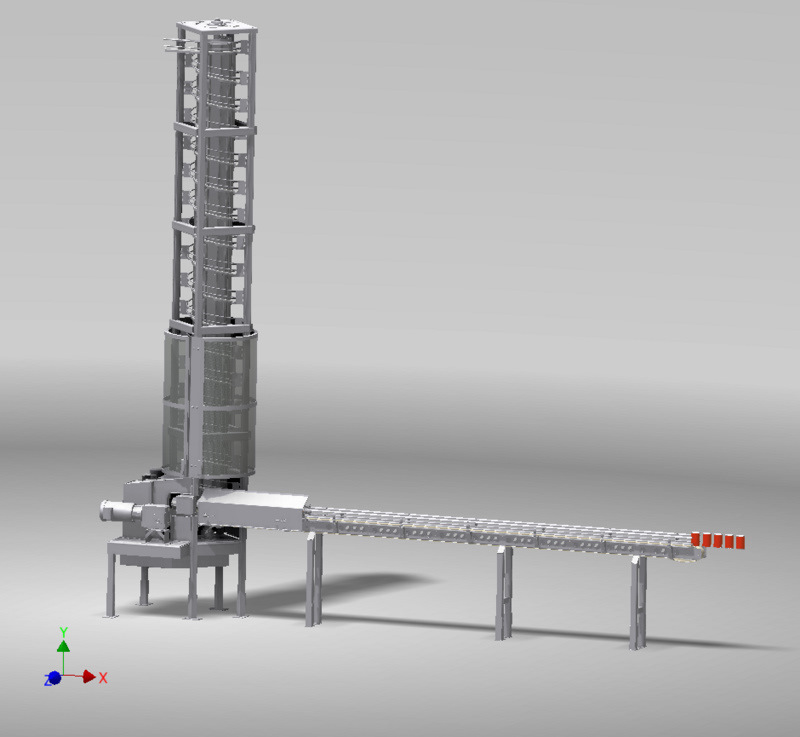
Can Elevator
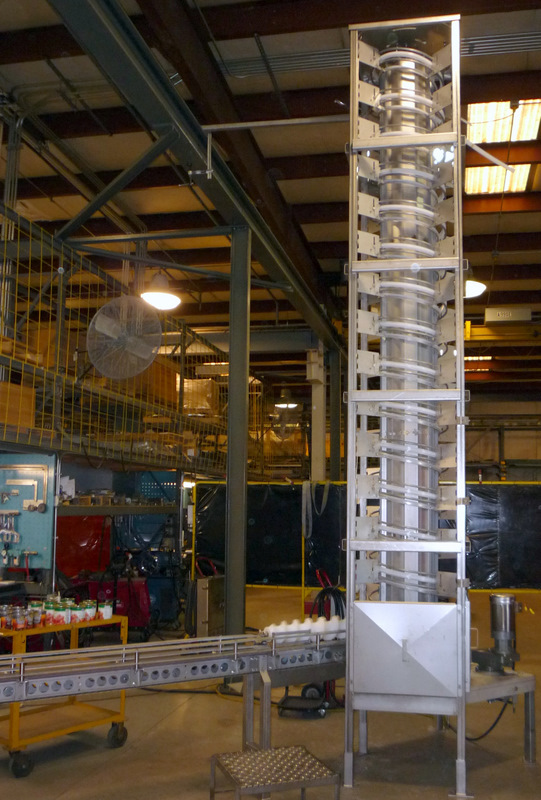
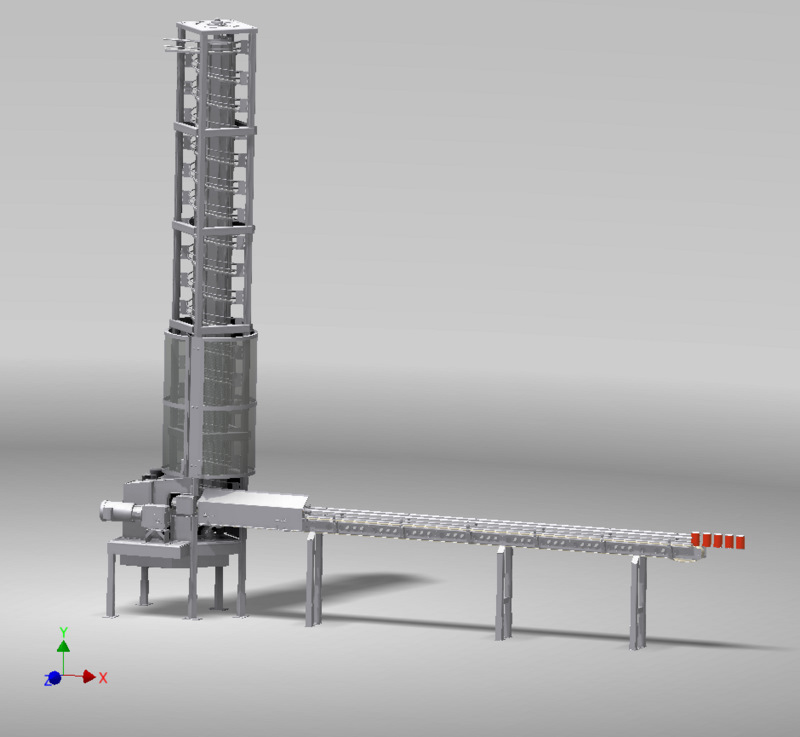
Millard has developed one of the most efficient Can Elevators today that occupies a minimal amount of floor space. Our Can Elevator is used where floor space is restricted and moving cans in a vertical direction is required. The single rotating center core provides speeds up to 1,200 cpm (cans per minute) with quiet operation and gentle handling of cans. We can integrate it into your existing or new line. Standard designs can be customized for elevations, LH/RH process rotations, exit locations, and can sizes. See our "Case Study" for more details.
Features:
- Heavy Duty Stainless Steel Construction
- Rotating center core with flights to push containers up an incline rail system
- A precision UHMW lead screw to meter the cans into the rotating core
- Various discharge configurations, including a flat top conveyor or integrated cable conveyor
- Single point manifold style lubrication
- Conveyor drive section is designed to integrate into the customers conveying system
- Custom designed to specifically fit product cans and meet exact customer requirements
- Low maintenance and operating costs
- Speeds up to 1200 cpm (cans per minute)
- Quiet operation
- Wash-down duty for sanitation
- Minimal moving parts and wear points
- Full integration into existing or new lines
Media:



Can Lowerator
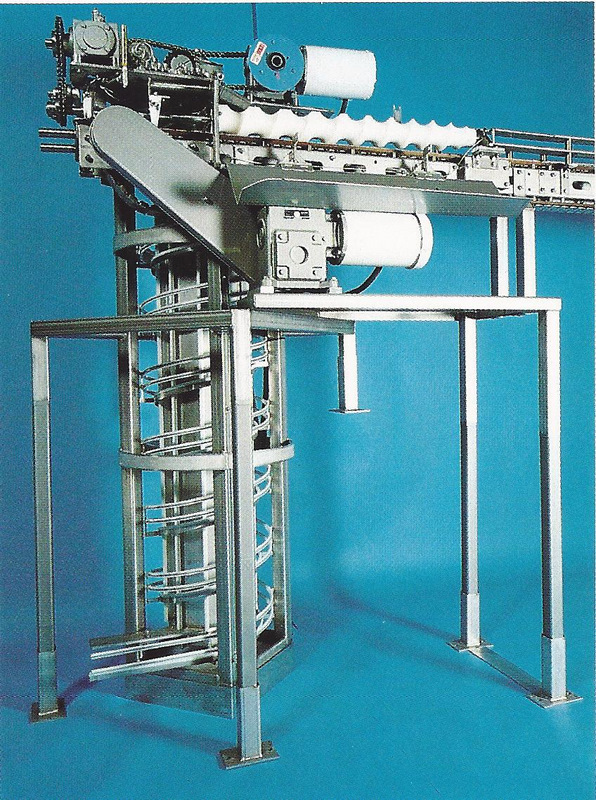
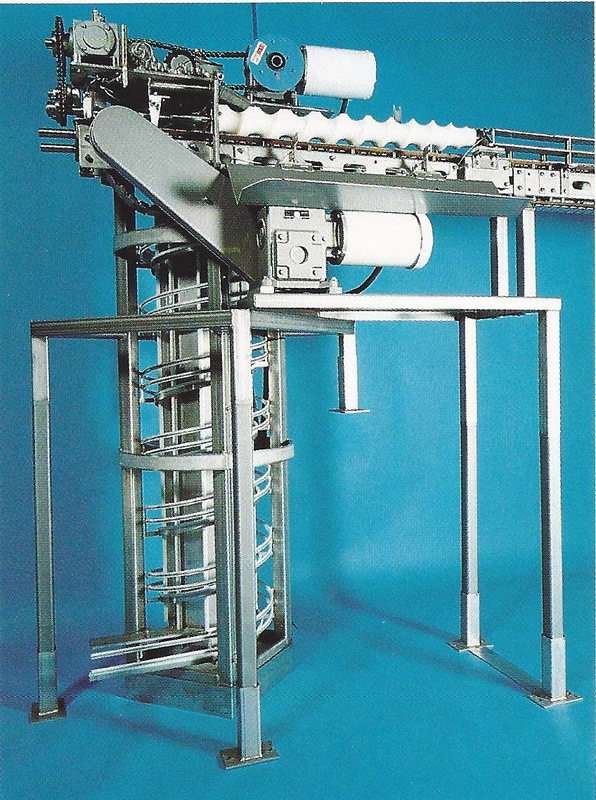
Millard has developed one of the most efficient Can Lowerators today that occupies a minimal amount of floor space. Our Can Lowerator is used where floor space is restricted and lowering cans in a vertical direction is required. Our single rotating center core provides speeds up to 1,200 cpm (cans per minute) with quiet operation and gentle handling of cans. We custom fit each elevator to your can size(s), elevation and can integrate it into your existing or new line. Standard designs can be customized for elevations, LH/RH process rotations, exit locations, and can sizes. See our Elevator "Case Study" for more details.......the Lowerator is the same machine in reverse.
Features:
- Heavy Duty Stainless Steel Construction
- Rotating center core with flights to guide containers down a rail system
- A precision UHMW lead screw to meter the cans into the rotating core
- Various discharge configurations, including a flat top conveyor or integrated cable conveyor
- Single point manifold style lubrication
- Conveyor drive section is designed to integrate into the customers conveying system
- Custom designed to specifically fit product cans and meet exact customer requirements
- Low maintenance and operating costs
- Speeds up to 1200 cpm (cans per minute)
- Quiet operation
- Wash-down duty for sanitation
- Minimal moving parts and wear points
- Full integration into existing or new lines
Can Washers (Empty & Filled)
Our Can Washers are custom engineered to fit your specific application and are used on both empty and filled cans. Our empty can washers use a gravity rail system to invert (twist) the cans up to 180 degrees for washing upside down then back to upright ready for the next process. We can accommodate speeds up to 1000 cpm (cans per minute). This continuous process is fed from "can alley" or the start of the process.
Features:
- All Stainless construction
- Gravity fed system (45 deg. Typical)
- Up to 1,000 cpm
- Wide range of spray head options
- Custom engineered to fit your cans
- Custom manifolds to accommodate multiple spray heads
- Custom lengths
- Wash-down duty construction
-
"In-House" PassivationPassivation treatment is intended to improve the surface condition of stainless steel by dissolving iron that has been embedded in the surface during forming or machining. If allowed to remain, the iron can corrode and give the appearance of rust spots on the stainless steel. Passivation restores the original corrosion-resistant surface by forming a thin, transparent oxide film and is the preferred method for the sanitary durability of stainless steel. Millard has one of the largest "In-House" Passivation operations available for our customer's fabricated items. See our case study on passivation for details. for Sanitary Durability
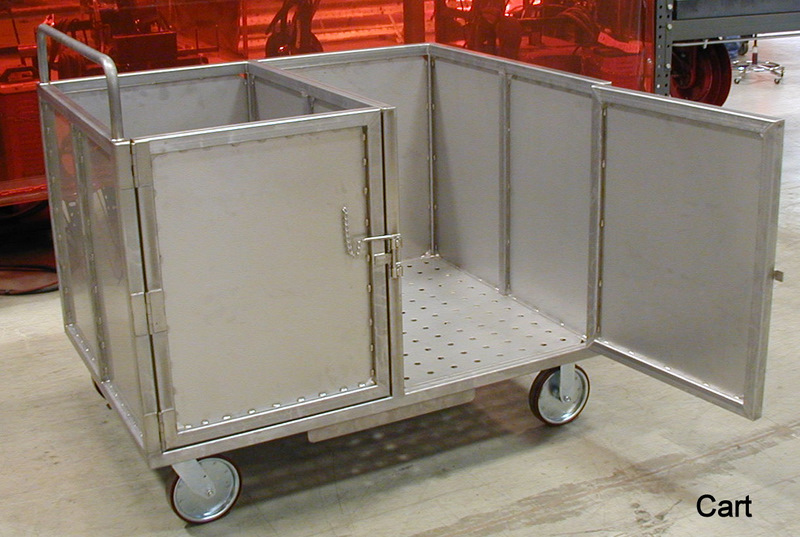
Carts
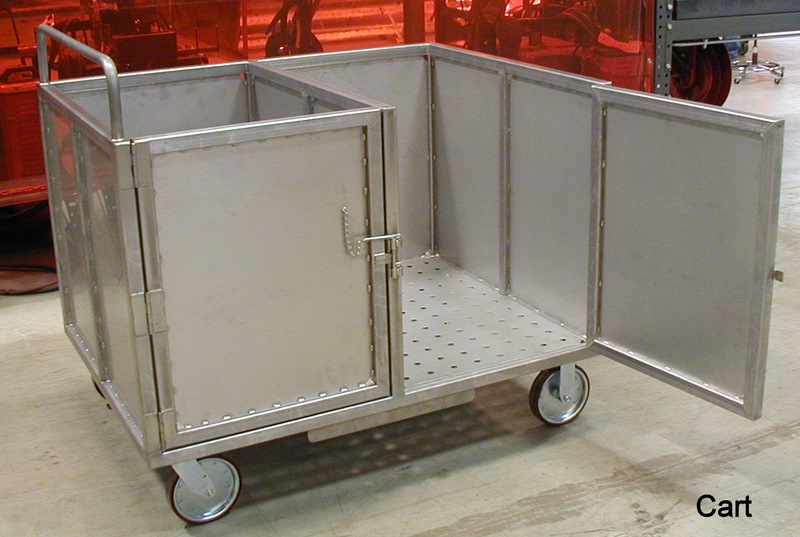
We offer a variety of Carts (also known as Product Trucks) for the food processing industry to move not only food products but also non-food items essential in operating your facility. All our carts are made from heavy duty stainless steel and use the highest quality components and casters. We can build to your designs or work with you to custom design a solution. When a catalog cart will not quite fit, call us and we can get you what you need.
Features:
- All Stainless Steel construction
- Heavy Duty Casters (Stainless or Plated)
- Custom designed to your specifications
-
"In-House" PassivationPassivation treatment is intended to improve the surface condition of stainless steel by dissolving iron that has been embedded in the surface during forming or machining. If allowed to remain, the iron can corrode and give the appearance of rust spots on the stainless steel. Passivation restores the original corrosion-resistant surface by forming a thin, transparent oxide film and is the preferred method for the sanitary durability of stainless steel. Millard has one of the largest "In-House" Passivation operations available for our customer's fabricated items. See our case study on passivation for details. Finish for Sanitary Durability
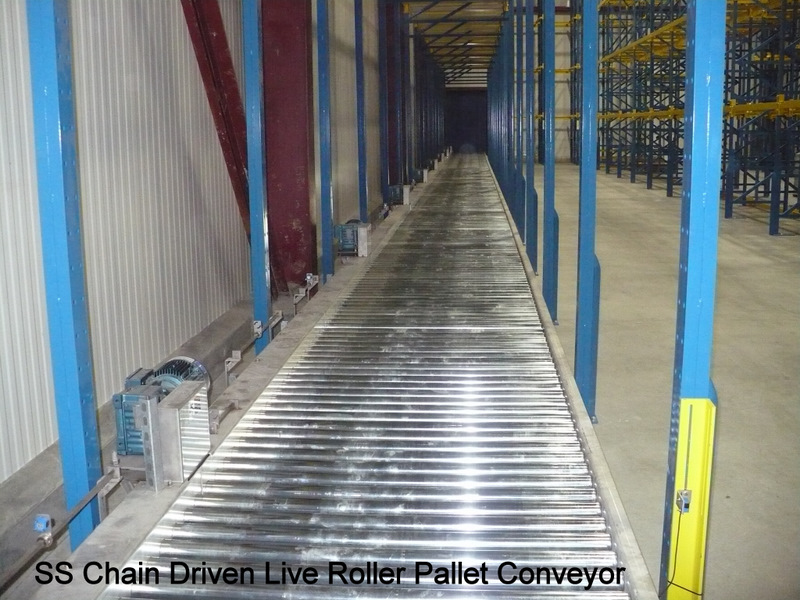

Case and Pallet Conveyors (Stainless Steel)
Millard offers Stainless Steel Case and Pallet conveyors where the environment requires wash-down sanitary equipment and standard catalog roller conveyors will not suffice. Our conveyors meet government sanitary standards (FDA and USDA) and are built to withstand daily wash-downs. We provide the powered roller sections generally at 4' intervals with individual drives, controls, interfaces and integration to existing as well as new lines.
Features:
- Meets government sanitary guidelines (FDA and USDA)
- Powered Rollers
- Wash-down duty construction
- Heavy duty Stainless Steel
- 4' drive sections or custom designed to your application
- Standard pallet sizes or custom widths
-
"In-House" PassivationPassivation treatment is intended to improve the surface condition of stainless steel by dissolving iron that has been embedded in the surface during forming or machining. If allowed to remain, the iron can corrode and give the appearance of rust spots on the stainless steel. Passivation restores the original corrosion-resistant surface by forming a thin, transparent oxide film and is the preferred method for the sanitary durability of stainless steel. Millard has one of the largest "In-House" Passivation operations available for our customer's fabricated items. See our case study on passivation for details. for Sanitary Durability
- Design, Build and Installation services available
Case Lift
Case Lifts are a mechanical means to raise or lower cases to different elevations or floors similar to the operation of a "Ferris Wheel". The lift pallets or surfaces raise to the desired elevation deposit the product or container then return to the bottom for another round. We provide custom heights, widths and depths. Typical elevations run from 10' - 12' with speeds up to 15-20 cases / min.
Features:
- 15-20 cases / min.
- Custom heights, widths, and depths
- Electric Drives
- Heavy duty Stainless Steel construction
- Variable Timing w/servos
- 10-12' Typical elevations
- Roller Chains
- Custom Pallet Lift Surfaces
-
"In-House" PassivationPassivation treatment is intended to improve the surface condition of stainless steel by dissolving iron that has been embedded in the surface during forming or machining. If allowed to remain, the iron can corrode and give the appearance of rust spots on the stainless steel. Passivation restores the original corrosion-resistant surface by forming a thin, transparent oxide film and is the preferred method for the sanitary durability of stainless steel. Millard has one of the largest "In-House" Passivation operations available for our customer's fabricated items. See our case study on passivation for details. for Sanitary Durability
- Wash-down duty construction
- Safety and Sanitary Design
- Design, Build, and Install services
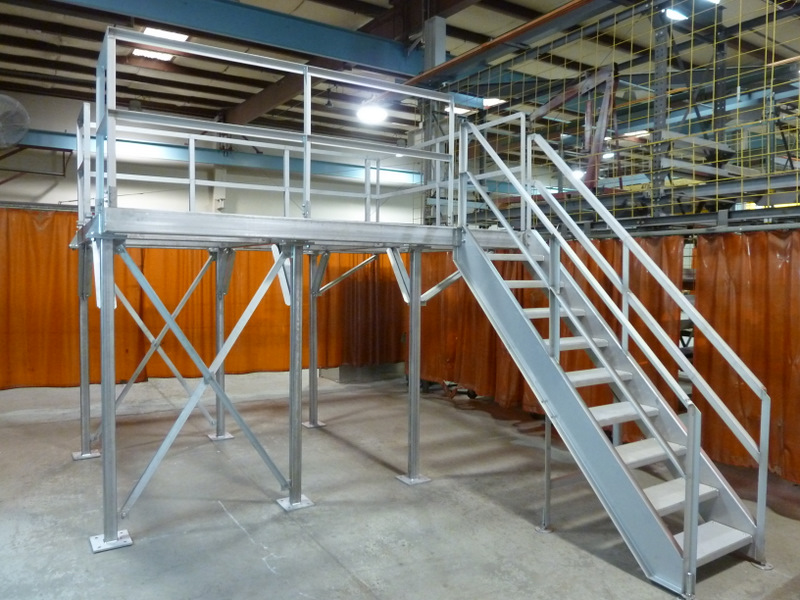

Catwalks and Mezzanines
We can build simple or complex customized catwalks as well as mezzanines around our own equipment or your equipment using the walksurface of your choice. Options include stairs, risers, ladders, various handrails, and toe panels. Our equipment can be built to OSHA requirements and to follow the conveyor equipment manufacturers association (CEMA) guidelines.
Features:
- Heavy duty stainless steel construction
- Angle iron handrails standard
- Square & round tubing construction available
- Choice of walk surfaces
Media:


Chill Tanks
Chill tanks consist of a small open tank that has cool water circulating through it and a belt conveyor to carry the product out. Sealed product that may have been previously heated is loaded into the tank to cool and then conveyed out to the next process.
Features:
- "In-House" PassivationPassivation treatment is intended to improve the surface condition of stainless steel by dissolving iron that has been embedded in the surface during forming or machining. If allowed to remain, the iron can corrode and give the appearance of rust spots on the stainless steel. Passivation restores the original corrosion-resistant surface by forming a thin, transparent oxide film and is the preferred method for the sanitary durability of stainless steel. Millard has one of the largest "In-House" Passivation operations available for our customer's fabricated items. See our case study on passivation for details. for Sanitary Durability
- Food Safety and Sanitation Design Standards
- Customized for your application
- Heavy Duty Stainless Steel Construction
- Sanitary Fittings

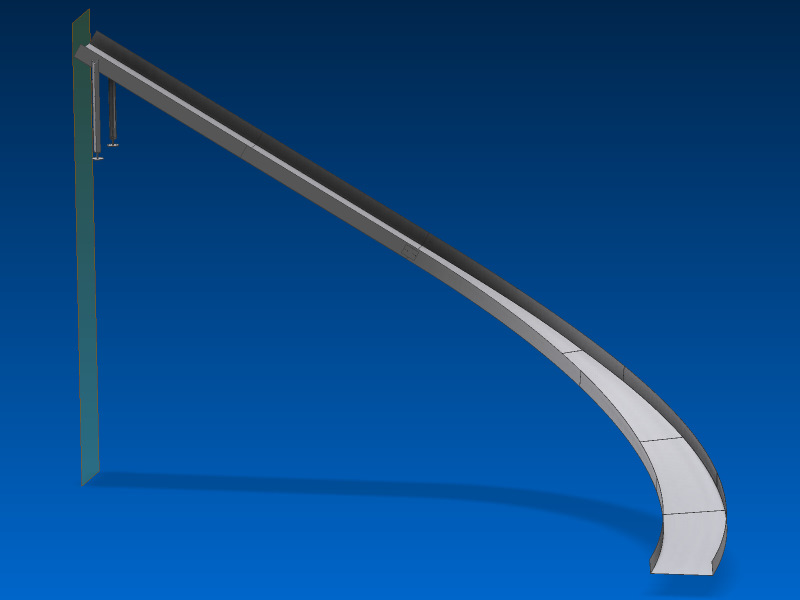
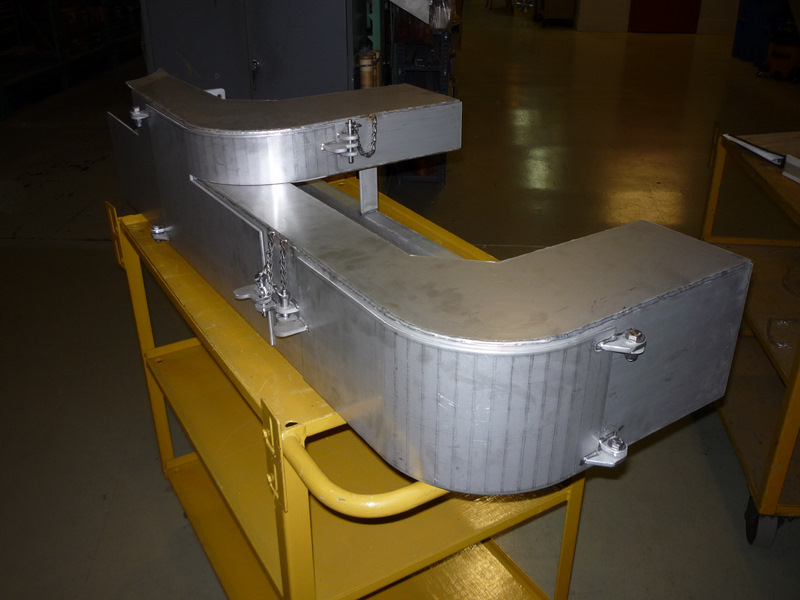
Chutes & Slides
Moving food products, trays, containers, and any other item from one point to another is one of Millard's specialties. We can custom design safe and sanitary Chutes and Slides to direct these items from Process to Process, from Machine to Machine, or connect to most Conveyors: Accumulating, Belt, Sanitary Belt, Bottle, Bulk Handling, Can, Case & Carton, Converging / Dividing, Cooling, Custom & Special, Floor to Floor, Food Handling, Freezing, Heavy Duty, Mesh Belt, Oven, Sorting, Stainless Steel, Empty Box, Full Box, Straight, Curved, Incline, Decline, S-shape, most any custom angle, and more. We can design and build most styles, shapes and sizes to suit your exact needs.
Features:
- Heavy duty Stainless Steel
- Sanitary wash-down duty
- Adjustable legs and supports
- Open channel construction - No Tubing
- High wear USDA approved guides
- Sanitary Weld construction
- Installation available
-
"In-House" PassivationPassivation treatment is intended to improve the surface condition of stainless steel by dissolving iron that has been embedded in the surface during forming or machining. If allowed to remain, the iron can corrode and give the appearance of rust spots on the stainless steel. Passivation restores the original corrosion-resistant surface by forming a thin, transparent oxide film and is the preferred method for the sanitary durability of stainless steel. Millard has one of the largest "In-House" Passivation operations available for our customer's fabricated items. See our case study on passivation for details. Finish for Sanitary Durability
Cluster Breaker
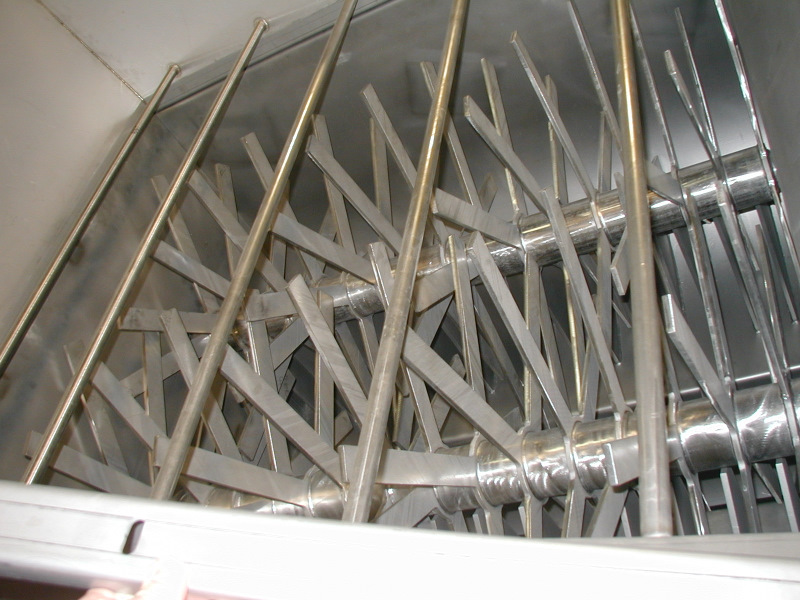
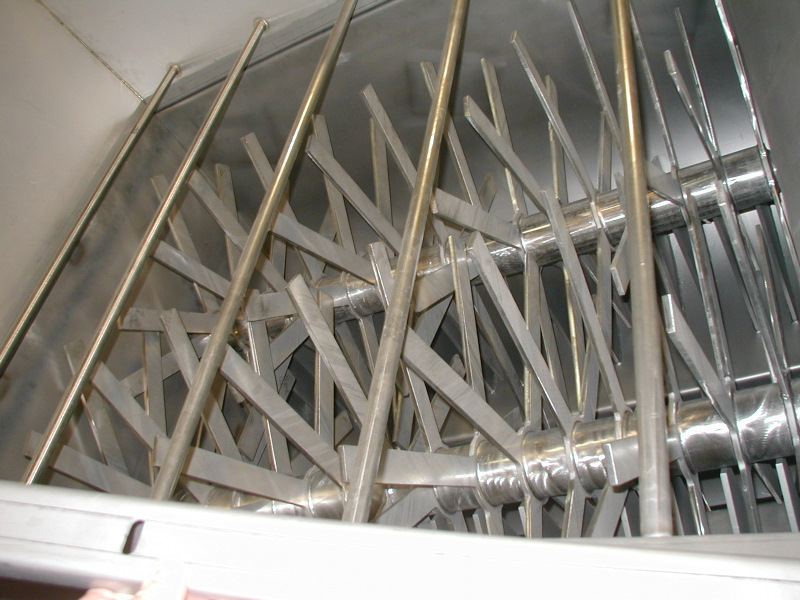
Millard provides custom designed Cluster Breakers when you need to break up your frozen ingredients into a uniform consistency for the next process. From small to large capacity systems, we design, build and install Cluster Breakers for custom mixing and cutting using specific agitators and augers to fit your product. We can also design custom discharge systems to move the mix to the next process.
Features:
- Large capacities
- Custom hoppers, agitators, cutters and discharge systems
- Safety and Sanitary designs
- Safety Grating and interlocks
- Variable speeds
- Heavy duty gearboxes and motors
- One gearbox and motor per agitator
- Heavy duty Stainless Steel construction
-
"In-House" PassivationPassivation treatment is intended to improve the surface condition of stainless steel by dissolving iron that has been embedded in the surface during forming or machining. If allowed to remain, the iron can corrode and give the appearance of rust spots on the stainless steel. Passivation restores the original corrosion-resistant surface by forming a thin, transparent oxide film and is the preferred method for the sanitary durability of stainless steel. Millard has one of the largest "In-House" Passivation operations available for our customer's fabricated items. See our case study on passivation for details. for Sanitary Durability
Continuous Product Freezer
Our Continuous Product Freezer is a slow moving process to freeze products and packaged products as they are conveyed (belt or chains) through freezers. The products can be auto loaded and unloaded. Our Freezer lines are custom configured to your exact specifications. We can provide "Turn-Key" systems to not only move your product through your freezer but also provide the entire system.
Features:
- Heavy Duty Stainless Steel
- Safe and Sanitary Designs
- Design, Build and Install
- Conveying options from chains to a wide variety of belting
- Variable speed drives
- HD Gearboxes and motors
-
"In-House" PassivationPassivation treatment is intended to improve the surface condition of stainless steel by dissolving iron that has been embedded in the surface during forming or machining. If allowed to remain, the iron can corrode and give the appearance of rust spots on the stainless steel. Passivation restores the original corrosion-resistant surface by forming a thin, transparent oxide film and is the preferred method for the sanitary durability of stainless steel. Millard has one of the largest "In-House" Passivation operations available for our customer's fabricated items. See our case study on passivation for details. for Sanitary Durability
- "Turn-Key" Engineering
Conveyors
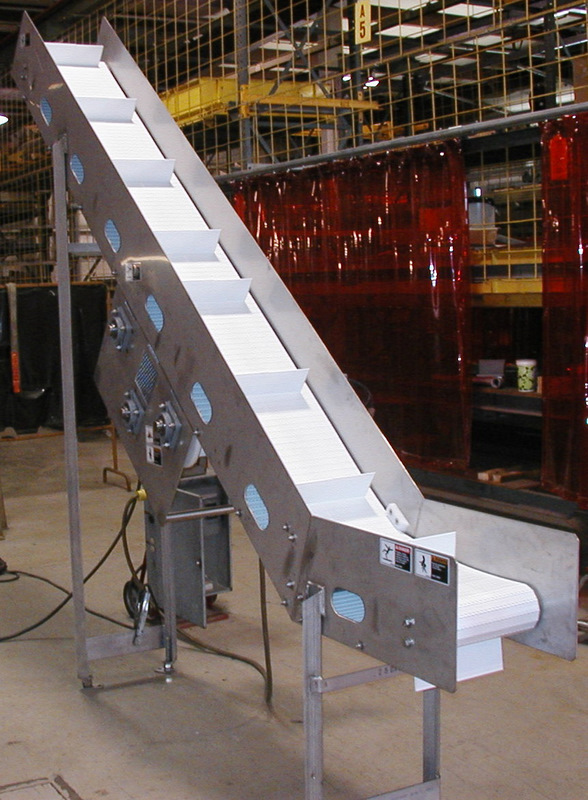
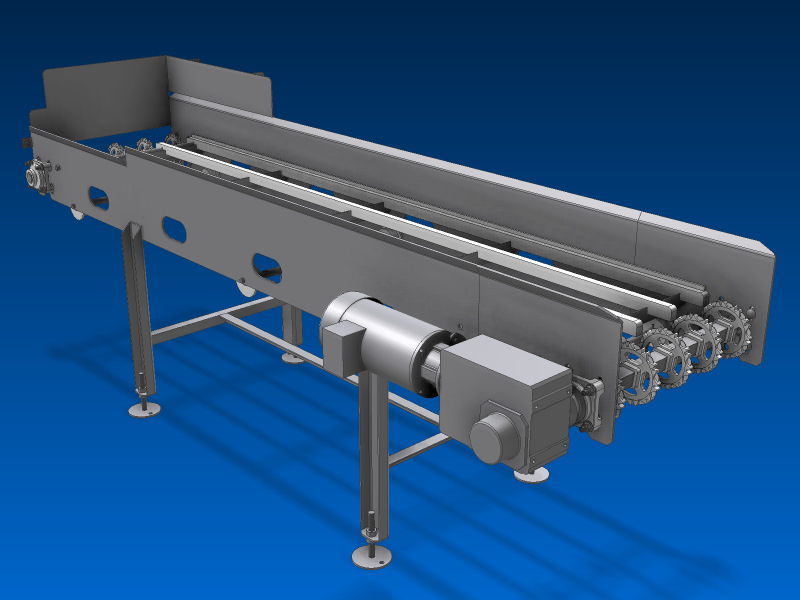
Millard makes custom Conveyors for many of the conveying processes in the Fresh & Frozen Industry. Our Belt Conveyors are designed to Safe and Sanitary Design Standards with durable construction for years of service. See our Belt Conveyors in Support Equipment & Services for product descriptions and features.
Features:
- "In-House" PassivationPassivation treatment is intended to improve the surface condition of stainless steel by dissolving iron that has been embedded in the surface during forming or machining. If allowed to remain, the iron can corrode and give the appearance of rust spots on the stainless steel. Passivation restores the original corrosion-resistant surface by forming a thin, transparent oxide film and is the preferred method for the sanitary durability of stainless steel. Millard has one of the largest "In-House" Passivation operations available for our customer's fabricated items. See our case study on passivation for details. Finish for Sanitary Durability
- 7 ga. Heavy Duty Stainless Steel
- Sanitary wash-down duty
- Open Channel Construction - No tubing
- High-wear guides - USDA approved
- Heavy Duty Motors and Gear Boxes
- Tension Release and belt lifting mechanisms
- Motor Torque arm is a standard safety feature
- 1/2" Bearing Standoffs
- Central and End Drive placement options
- Quick-Drop replacement features
- Repair parts available
Media:
Conveyors
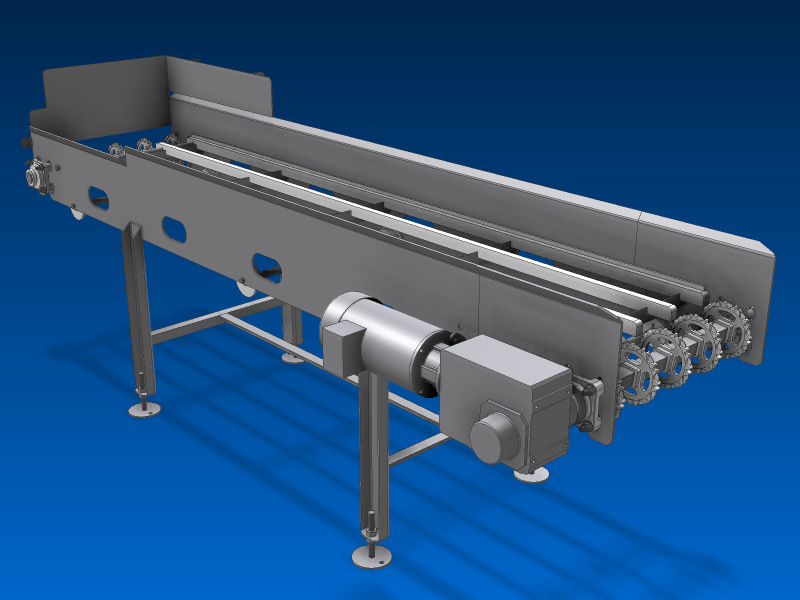
Millard makes custom Belt Conveyors for moving your containers and products for most applications in the Canned and Container Industries. Our conveyors are designed to Safe and Sanitary Design Standards with durable construction for years of service. See our Belt Conveyors in Support Equipment & Services for product descriptions and features.
Features:
- "In-House" PassivationPassivation treatment is intended to improve the surface condition of stainless steel by dissolving iron that has been embedded in the surface during forming or machining. If allowed to remain, the iron can corrode and give the appearance of rust spots on the stainless steel. Passivation restores the original corrosion-resistant surface by forming a thin, transparent oxide film and is the preferred method for the sanitary durability of stainless steel. Millard has one of the largest "In-House" Passivation operations available for our customer's fabricated items. See our case study on passivation for details. Finish for Sanitary Durability
- 7 ga. Heavy Duty Stainless Steel
- Sanitary wash-down duty
- Open Channel Construction - No tubing
- High-wear guides - USDA approved
- Heavy Duty Motors and Gear Boxes
- Tension Release and belt lifting mechanisms
- Motor Torque arm is a standard safety feature
- 1/2" Bearing Standoffs
- Central and End Drive placement options
- Quick-Drop replacement features
- Repair parts available
Conveyors
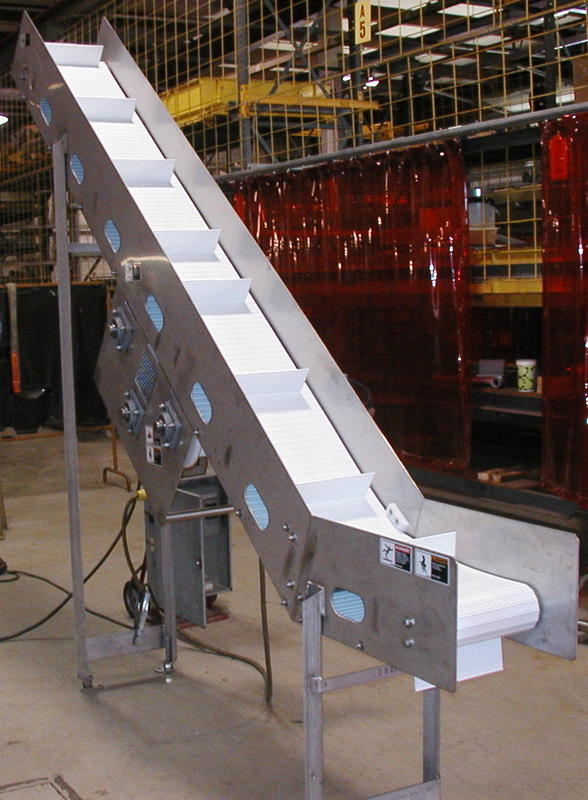
Millard makes custom Conveyors for many of the conveying processes in the Poultry Industry. Our Belt Conveyors are designed to Safe and Sanitary Design Standards with durable construction for years of service. See our Belt Conveyors in Support Equipment & Services for product descriptions and features.
Features:
- "In-House" PassivationPassivation treatment is intended to improve the surface condition of stainless steel by dissolving iron that has been embedded in the surface during forming or machining. If allowed to remain, the iron can corrode and give the appearance of rust spots on the stainless steel. Passivation restores the original corrosion-resistant surface by forming a thin, transparent oxide film and is the preferred method for the sanitary durability of stainless steel. Millard has one of the largest "In-House" Passivation operations available for our customer's fabricated items. See our case study on passivation for details. Finish for Sanitary Durability
- 7 ga. Heavy Duty Stainless Steel
- Sanitary wash-down duty
- Open Channel Construction - No tubing
- High-wear guides - USDA approved
- Heavy Duty Motors and Gear Boxes
- Tension Release and belt lifting mechanisms
- Motor Torque arm is a standard safety feature
- 1/2" Bearing Standoffs
- Central and End Drive placement options
- Quick-Drop replacement features
- Repair parts available
Media:
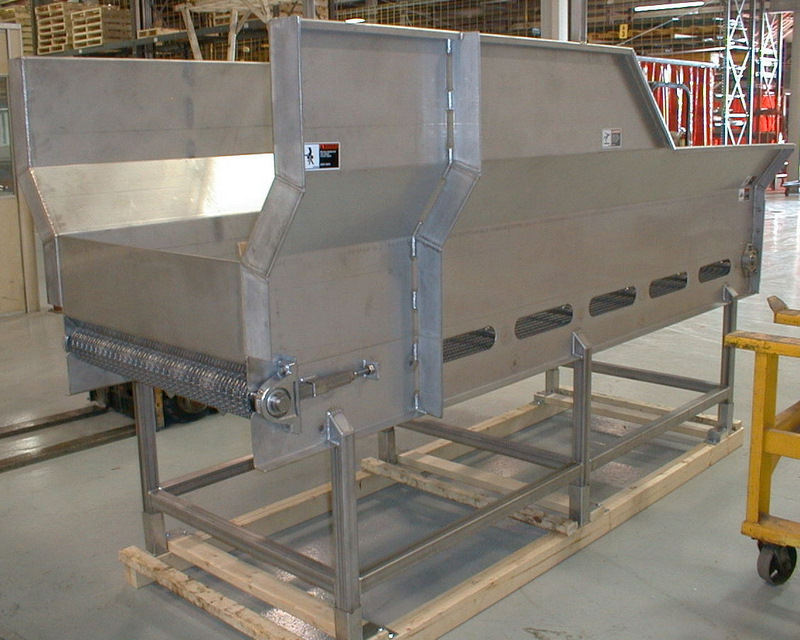
Creeper Conveyor or Accumulation Conveyor
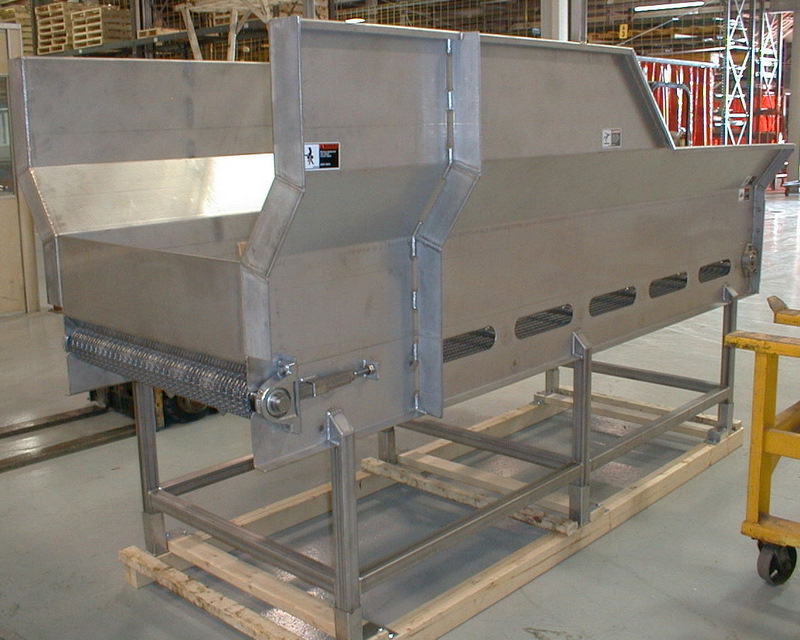
Millard's Creeper Conveyor or Accumulation Conveyor is designed to accept dumped products from combos, vats, or barrels. The slow pace conveyor collects products on the conveyor belt surface to be slowly forwarded into further processing operations and released as the line pace requires. As with all our belt conveyors, custom lengths, widths, and configurations are available.
Features:
- Accepts common container sizes of combos, vats or barrels
- HD Stainless Steel construction to handle bulk weight
- Wash-down duty construction
- Common sizes (5' wide x 6-8' long) or custom to your application
- Flat top belting to match your stock
- Open Channel Construction - No tubing
- Heavy Duty Motors and Gear Boxes
- Motor Torque arm is a standard safety feature
- 1/2" Bearing Standoffs
- Repair parts available
-
"In-House" PassivationPassivation treatment is intended to improve the surface condition of stainless steel by dissolving iron that has been embedded in the surface during forming or machining. If allowed to remain, the iron can corrode and give the appearance of rust spots on the stainless steel. Passivation restores the original corrosion-resistant surface by forming a thin, transparent oxide film and is the preferred method for the sanitary durability of stainless steel. Millard has one of the largest "In-House" Passivation operations available for our customer's fabricated items. See our case study on passivation for details. for Sanitary Durability
Dressing Chain
Our Dressing Chain is a custom overhead conveyor used for reliable product conveying. The X678 chain with its pushing fingers (drop fingers) spaced on 8' centers running along replaceable guide channels. The drop fingers engage the trolley assembly that is riding on the supplied rounded meat rail. This meat rail is usually ½" x 2 ½" but is always sized for the application. It is equipped with our fabricated heavy duty hangers for the load and return sides, top and bottom mounting plates for the drop fingers, the take-up, and the complete drive motor assembly. The hangers are spaced as required and mounted on the properly sized supporting beams that we also supply. Everything is constructed of heavy duty galvanized material.
Features:
- Upgrades, retrofits, and new constuction
- Sized for your layout and design requirements
- Installation services available

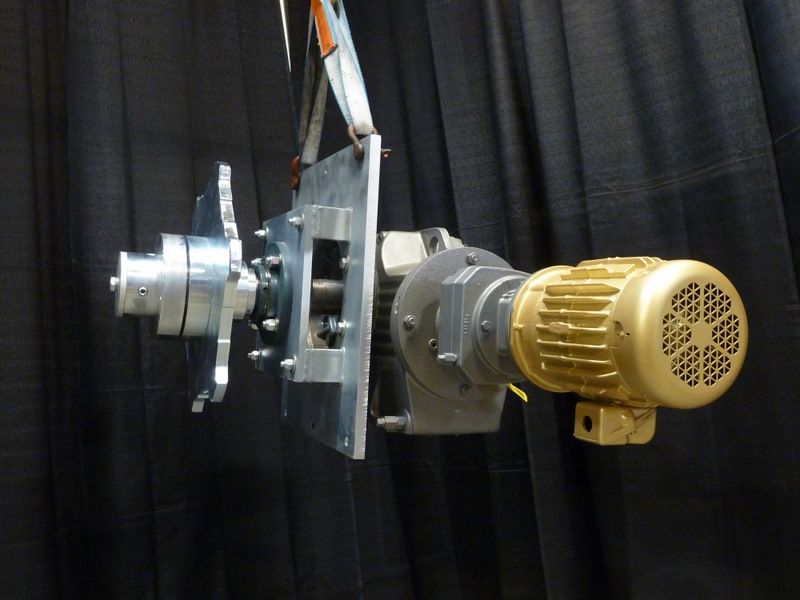
Drive Assemblies (Complete)
We supply complete slider chain drive assemblies and roller I beam chain drive assemblies. Included is a hollow shaft mounted reducer and a motor mounted on a base plate with a shear pin hub sprocket using outboard bearings. Each drive assembly is engineered for the application. Multiple overhead conveyor systems can be electrically synchronized or synchronized using a jack shaft and roller chain system.
Features:
- Shear pin hub assembly.
- Customer specified motors and gearboxes.

Drop Finger Slider Conveyor
Our Drop Finger overhead conveyor is an all-purpose custom conveyor used for reliable product conveying. The X678 chain with its pushing fingers (drop fingers) spaced on customizable centers runs along replaceable guide channels. The drop fingers engage the trolley assembly that is riding on the supplied rounded meat rail. This meat rail is usually 1/2 x 2 1/2 but is always sized for the application. It is equipped with our fabricated heavy duty hangers for the load and return sides, top and bottom mounting plates for the drop fingers, the take-up, and the complete drive motor assembly. The hangers are spaced as required and mounted on the properly sized supporting beams that we also supply. Most parts are constructed of heavy duty galvanized material.
Features:
- Upgrades, retrofits, and new constuction
- Sized for your layout and design requirements.
- Installation services available.
Drop-Out Conveyor
Drop-Out Conveyors are used to segregate disoriented trays or containers when traveling along two 1" wide belts in a span of about 4'. The trays ride along until they reach the "drop zone" where, if they are not oriented properly, they will fall between the two spaced belts, through a hollow bed, and onto a chute or bin for recirculation. The drop-out conveyor usually leads up to a case packer where proper orientation is required. These specialized conveyors are custom fit to your product size and follow the same rugged standards that our Belt Conveyors follow.
Features:
- (2) belts 1" wide
- 4' section or custom length for drop out area
- Hollow bed
- Mechanical rejection by gravity - no powered assist
-
"In-House" PassivationPassivation treatment is intended to improve the surface condition of stainless steel by dissolving iron that has been embedded in the surface during forming or machining. If allowed to remain, the iron can corrode and give the appearance of rust spots on the stainless steel. Passivation restores the original corrosion-resistant surface by forming a thin, transparent oxide film and is the preferred method for the sanitary durability of stainless steel. Millard has one of the largest "In-House" Passivation operations available for our customer's fabricated items. See our case study on passivation for details. Finish for Sanitary Durability
- Same standard features as our Belt Conveyors
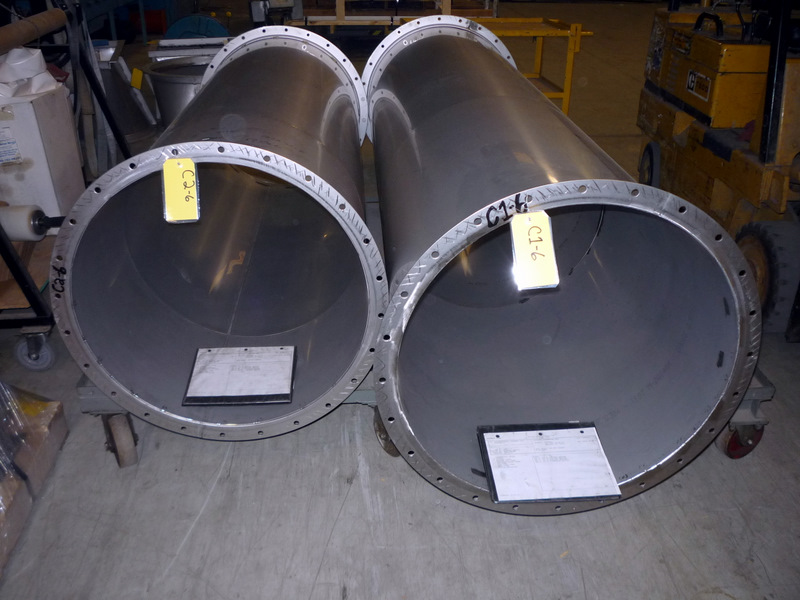
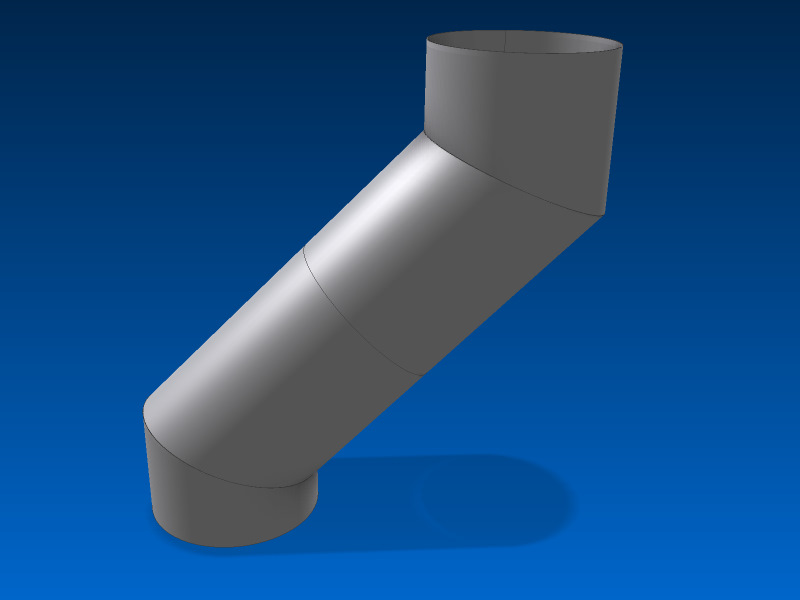
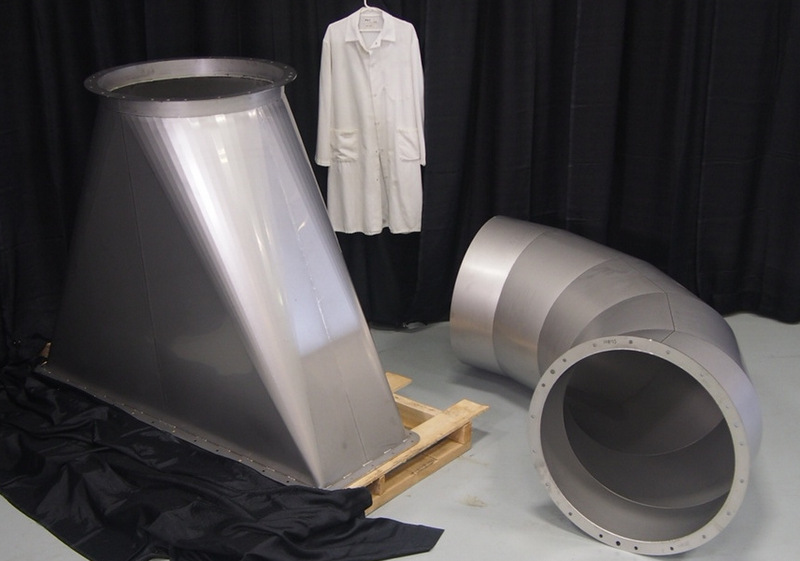
Ductwork
Millard can custom build most any Ductwork, scrubber ventilation, or venting hoods you need to fit your application. Applications vary from Heat removal, Exhaust, Ventilation, Cook Hoods, Steam Hoods, and more. Our Ductwork is available in Stainless Steel, Aluminum, Galvanized, or Carbon steel. We have produced ducting in a variety of shapes, sizes, lengths and custom-fit configurations. We provide the proper fit, drains, and flanges to make installation efficient and clean.
Features:
- Material options: Stainless Steel, Aluminum, Galvanized, Carbon
- Design, Build, and Install
- Custom fit driven by your application
- Options: Drains, Access ports, Flange Bolt joints, Flare joints, Seal Welded joints, Jacketed
- Support Components: Hangers, Supports, Hoods, Vent Fans, Complex Transitions

Ductwork
Millard makes custom Ductwork for the Ingredient Preparation processes in the Canned Food Industry. Our Ductwork is designed to Safe and Sanitary Design Standards with durable construction for years of service. See our Ductwork in Support Equipment & Services for product descriptions and features.
Features:
- Material options: Stainless Steel, Aluminum, Galvanized, Carbon
- Design, Build and Install
- Custom fit driven by your application
- Options: Drains, Access ports, Flange Bolt joints, Flare joints, Seal Welded joints, Jacketed
- Support Components: Hangers, Supports, Hoods, Vent Fans
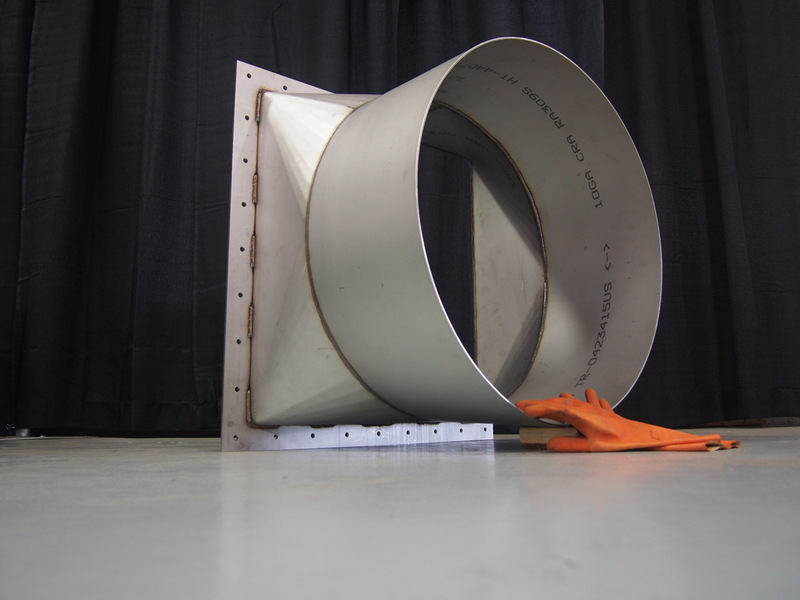
Ductwork
Millard makes custom Ductwork for the Ingredient Preparation processes in the Poultry Industry. Our Ductwork is designed to Safe and Sanitary Design Standards with durable construction for years of service. See our Ductwork in Support Equipment & Services for product descriptions and features.
Features:
- Material options: Stainless Steel, Aluminum, Galvanized, Carbon
- Design, Build and Install
- Custom fit driven by your application
- Options: Drains, Access ports, Flange Bolt joints, Flare joints, Seal Welded joints, Jacketed
- Support Components: Hangers, Supports, Hoods, Vent Fans
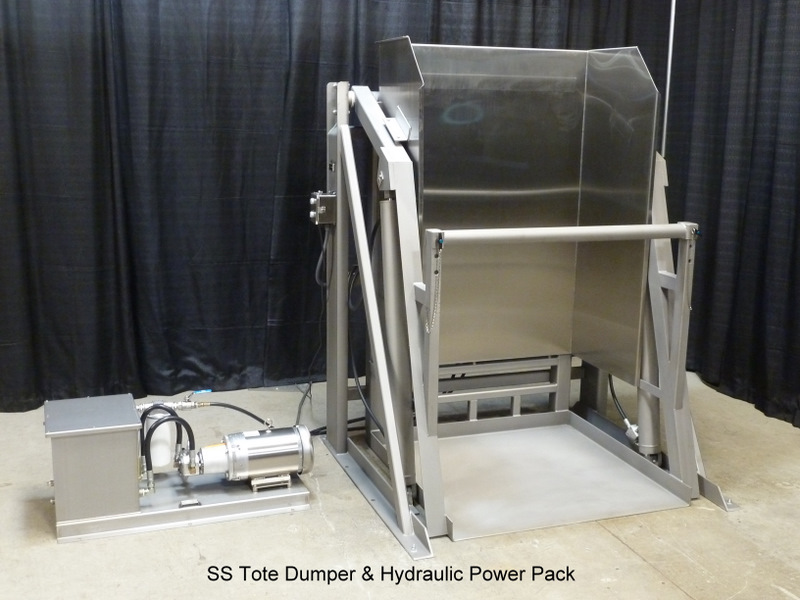

Dumpers and Electric High Lift Dumpers
Our Dumpers and Electric High Lift Dumpers are custom engineered to meet your specific requirements. We offer dumpers and lifts for vats, combos, barrels, boxes, and pallets powered either by electric motors or hydraulics. Our Hydraulic Dumpers as well as our stand-alone hydraulic power units are made from heavy duty stainless steel. Our Electric High Lifts can be made to most any height you require. All our units are designed to meet your demanding needs with sanitary wash-down duty construction and the proper safety features to protect your personnel.
Features:
- HYDRAULIC DUMPERS:
- - Heavy Duty Stainless Steel Construction
- - Stainless Steel Hydraulic Power Pack option
- - 3 - 5 HP Motor
- - 36-48" standard dump height (custom heights available)
- - Safety Guarding custom fit per your requirements
- - Load Capacities (500-1,500 lbs) or (1,500-2,500 lbs)
- - (2) Hydraulic Lift Cylinders designed for dumping applications
- - Control Valves
- - Push Button Controls
- - Customized to fit process or special containers as needed>
-
- "In-House" PassivationPassivation treatment is intended to improve the surface condition of stainless steel by dissolving iron that has been embedded in the surface during forming or machining. If allowed to remain, the iron can corrode and give the appearance of rust spots on the stainless steel. Passivation restores the original corrosion-resistant surface by forming a thin, transparent oxide film and is the preferred method for the sanitary durability of stainless steel. Millard has one of the largest "In-House" Passivation operations available for our customer's fabricated items. See our case study on passivation for details. Finish for Sanitary Durability
- _______________________________________________
- ELECTRIC & ELECTRIC HIGH LIFT DUMPERS:
- - Heavy Duty Stainless Steel Construction
- - Carriage made to fit your container box or pallet
- - 3 HP Brake-Motor or customer specific
- - Heavy Duty Helical Gearbox
- - Direct Drive at 9 rpm
- - Nickel plated chains
- - 2,500 lbs capacity
- - Heavy duty plate guides/sides
- - Heavy duty cam followers
- - Safety Guarding and Fencing as required
Media:
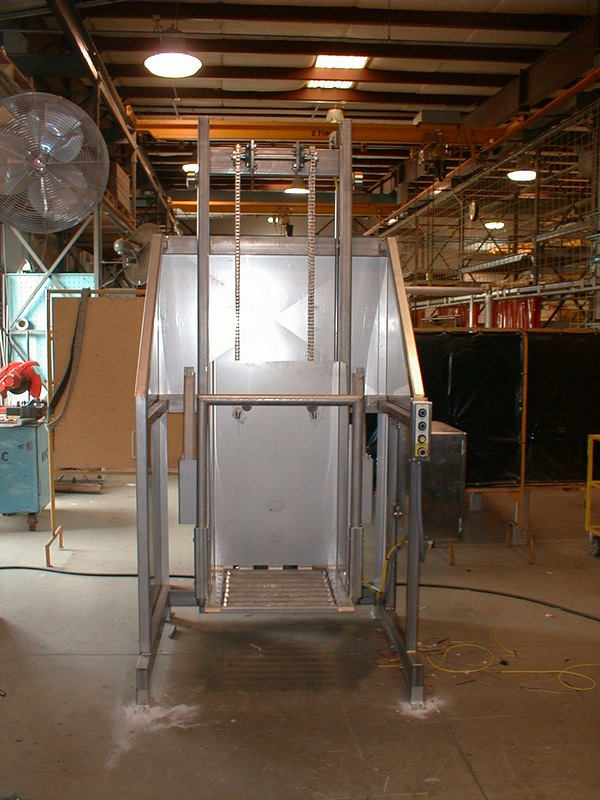
Electric Dumpers
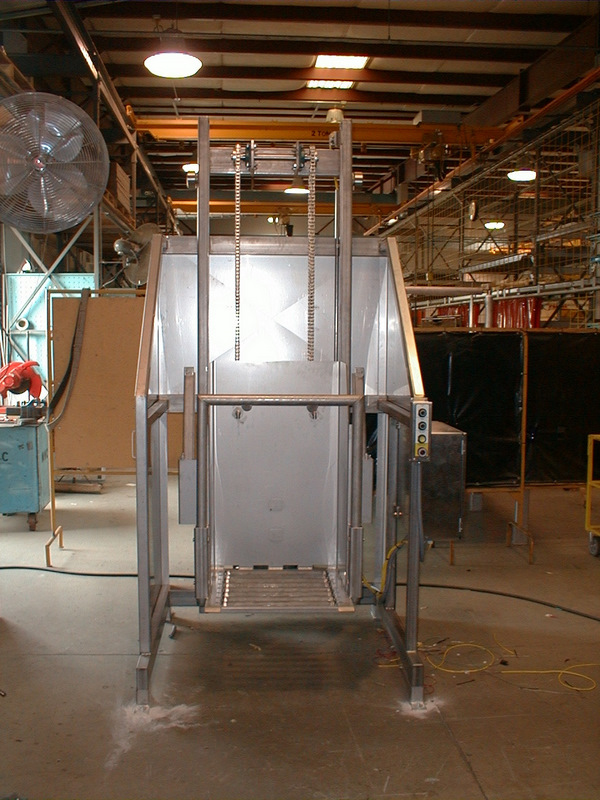
Millard makes "All Electric" Dumpers for a variety of containers including; barrels, vats, totes, tubs, combos and more. Our engineers can configure a dumper for your process. We also manufacture Electric High Lifts and these can be made to most any height you require. All our units are designed to meet your demanding needs with sanitary wash-down duty construction and the proper safety features to protect your personnel.
Features:
- Heavy Duty Stainless Steel Construction
- Carriage made to fit your container, box or pallet
- 3 HP Brake-Motor
- Heavy Duty Helical Gearbox
- Direct Drive at 9 rpm
- Nickel plated chains
- 2,500 lbs capacity
- Heavy Duty plate guides/sides
- Heavy Duty cam followers
- Safety Guarding and Fencing as required
- Customized to fit process or special containers as needed
-
"In-House" PassivationPassivation treatment is intended to improve the surface condition of stainless steel by dissolving iron that has been embedded in the surface during forming or machining. If allowed to remain, the iron can corrode and give the appearance of rust spots on the stainless steel. Passivation restores the original corrosion-resistant surface by forming a thin, transparent oxide film and is the preferred method for the sanitary durability of stainless steel. Millard has one of the largest "In-House" Passivation operations available for our customer's fabricated items. See our case study on passivation for details. Finish for Sanitary Durability
Electric High Lift Dumpers
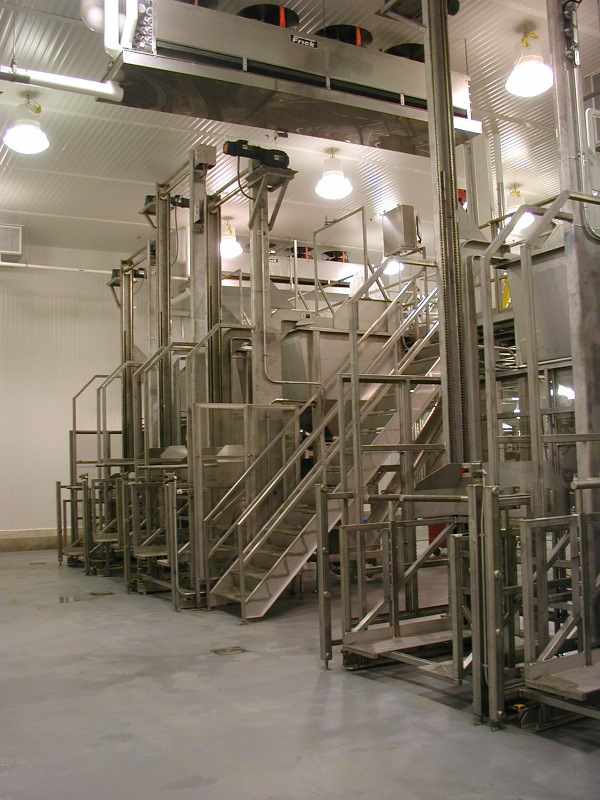
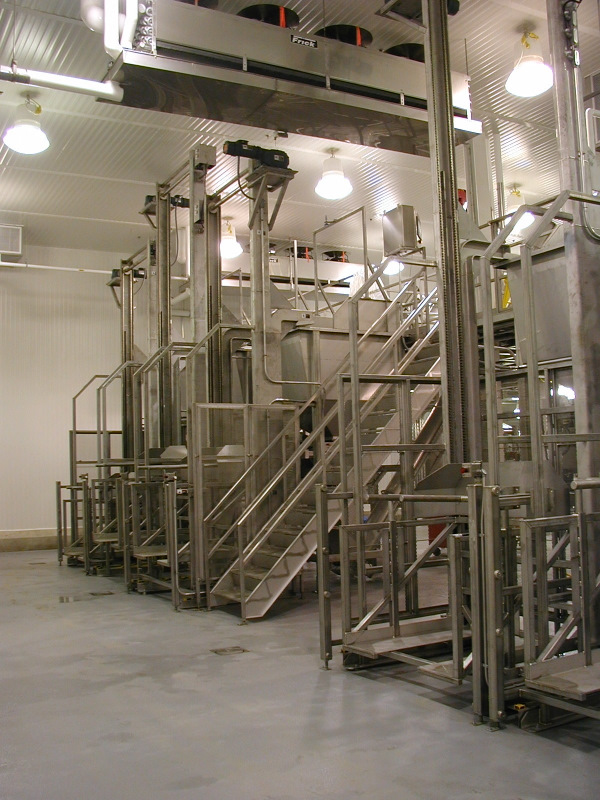
Millard can produce Electric High Lift Dumpers capable of moving your barrels, boxes, totes, and vats from floor level up to 25' or more. These "All Electric" dumpers are loaded from hand dollies, carts, or forklifts. They are used to lift product into higher elevated processes such as kettles, tanks, chutes, mixers, blenders and most containers needing ingredients dumped.
Features:
- 3000 lbs Capacity
- Motors mounted up high out of the way
- All Electric, Pallet "Tilt Back" feature (avoids product contamination)
- Heavy duty Stainless Steel construction
-
"In-House" PassivationPassivation treatment is intended to improve the surface condition of stainless steel by dissolving iron that has been embedded in the surface during forming or machining. If allowed to remain, the iron can corrode and give the appearance of rust spots on the stainless steel. Passivation restores the original corrosion-resistant surface by forming a thin, transparent oxide film and is the preferred method for the sanitary durability of stainless steel. Millard has one of the largest "In-House" Passivation operations available for our customer's fabricated items. See our case study on passivation for details. for Sanitary Durability
- Heavy duty gearboxes and motors
- Custom designed to your specifications

Engineering Support
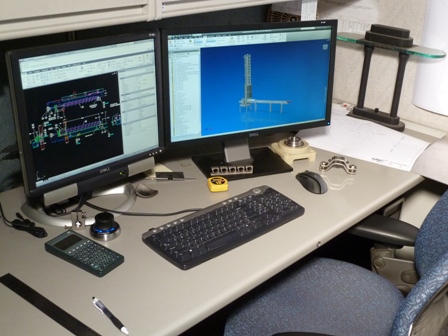
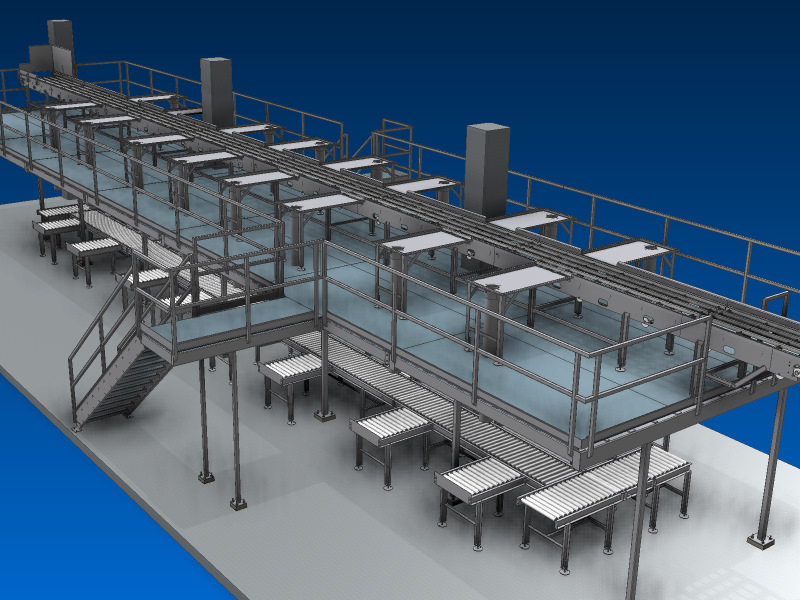
Millard Manufacturing will do all the engineering and calculations to properly size your overhead conveyor system for your layout and design requirements. We will spec the chain, horsepower, gears, drive motors, etc., using industry standards and the most modern software to fulfill the needs of your application.
Features:
- Utilize modern CAD and 3-D Modeling Software
- Preliminary Layout Development Capabilities
- Meat Industry Experience
Media:
Equipment Stands & Bases
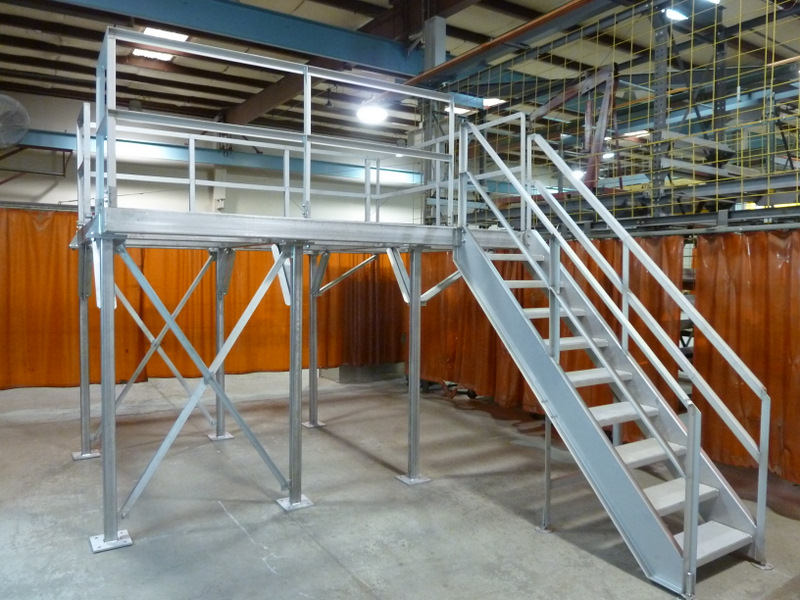
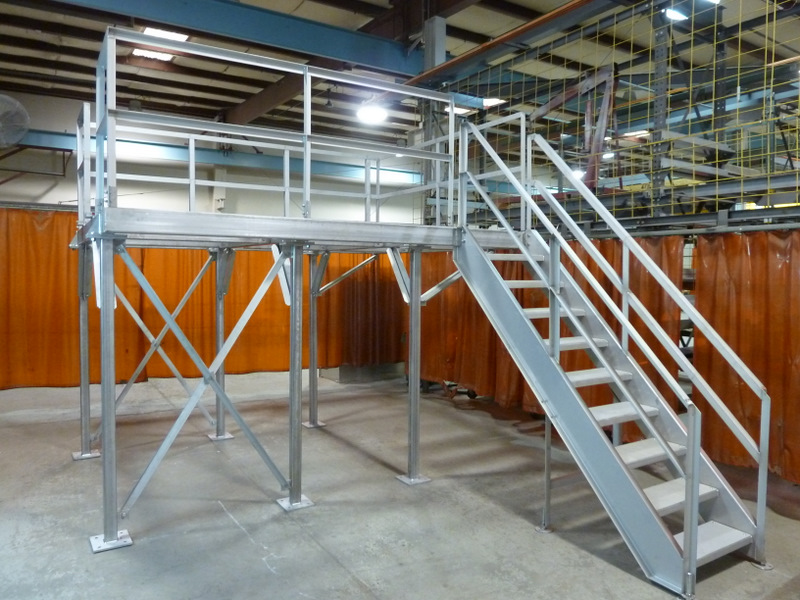
Custom bases can be provided to raise your rendering equipment off the floor. These heavy duty designs are made for easy cleaning and durability and can be fabricated using the material that fits your budget.
Features:
- Heavy Duty Carbon Steel Construction
- Stainless Steel Material Available
Media:

Exhaust Hoods
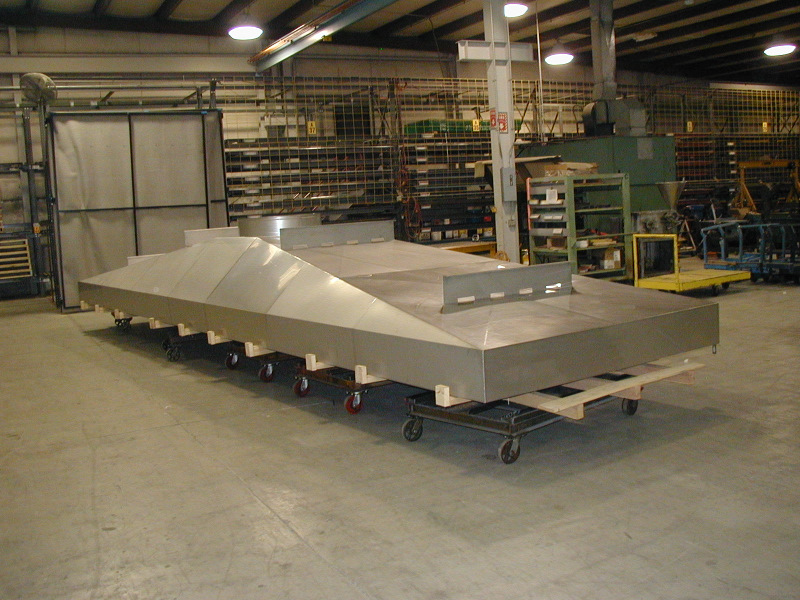
Millard can build endless configurations of custom Exhaust Hoods to fit your process applications. We can design, build, and install your Exhaust Hoods above process areas, platforms, and individual processing equipment. Our Exhaust Hoods can be welded, bolted, preassembled, or assembled on site. Our engineers can custom design a solution to exhaust your process heat, steam, or gases.
Features:
- Drip Troughs
- See-through light panels
- Stainless Steel
- Condensate control features
- Custom designed to fit your application
-
"In-House" PassivationPassivation treatment is intended to improve the surface condition of stainless steel by dissolving iron that has been embedded in the surface during forming or machining. If allowed to remain, the iron can corrode and give the appearance of rust spots on the stainless steel. Passivation restores the original corrosion-resistant surface by forming a thin, transparent oxide film and is the preferred method for the sanitary durability of stainless steel. Millard has one of the largest "In-House" Passivation operations available for our customer's fabricated items. See our case study on passivation for details. for Sanitary Durability
- Design, Build, and Install
Media:
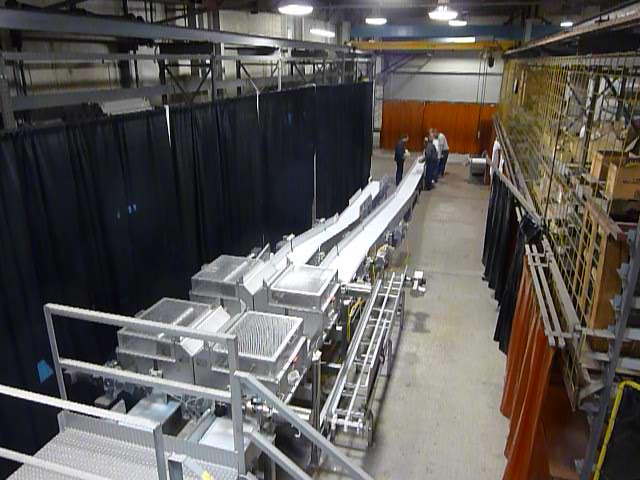
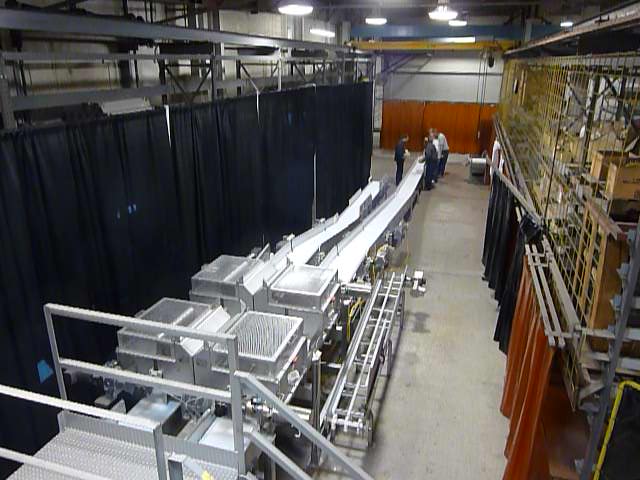
F.A.T. (Factory Acceptance Testing)
Millard offers Factory Acceptance Testing (F.A.T.) on most of our products should you or the nature of the product require it. We have over 100,000 sq.ft. of floor space within our facilities to physically accommodate and simulate most production operations. Our facility is specifically set up with large assembly bays for not only our manufacturing versatility but also to support F.A.T. We can help to make sure products function properly before they ship.
Features:
Media:
Fabrication Services
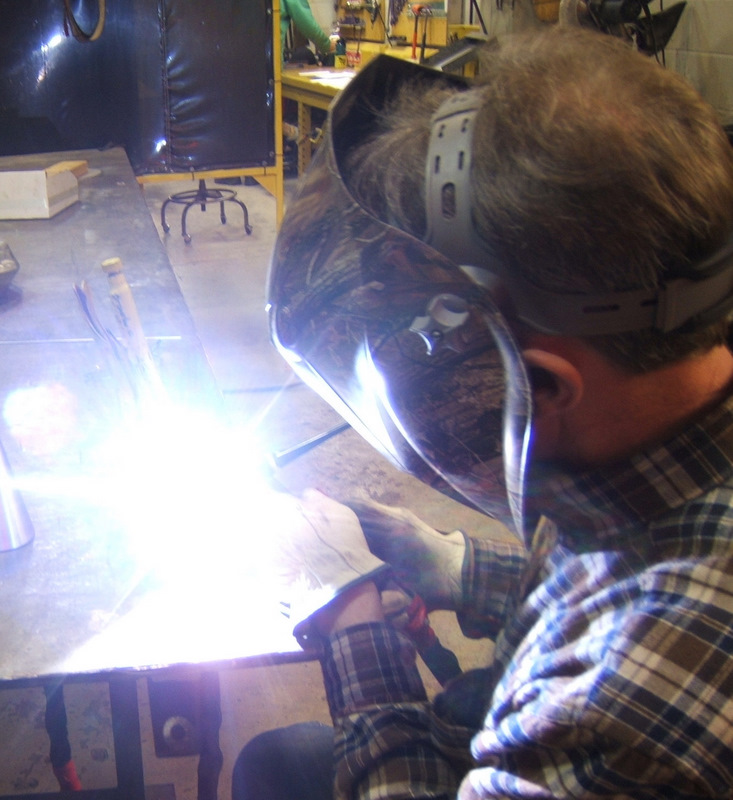
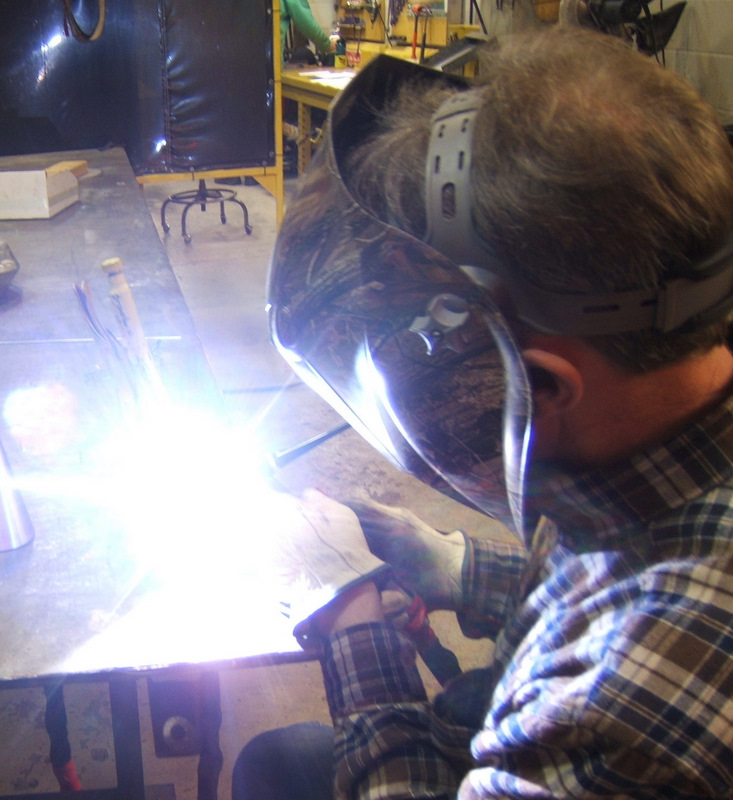
Our Fabrication Services not only supports the food processing industries but also many others including; OEM, Pharmaceuticals, Public Works, Tooling Shops, Machine Shops, Corn Processing Plants, Ethanol Plants, Waste Water Facilities, Chemical Plants, Animal Health, and Private Business. Having a Metal Services Supplier at our disposal provides Millard with a unique advantage in getting most projects started quickly. Millard has the knowledge, facilities, and engineering to work with you for all your fabricating needs.
Features:
Filling Lines (Integration)
Millard's Filling Lines are sanitary, safe systems designed to carry various containers through the filling processes to final packaging. In many applications we will incorporate our filling equipment into your existing or new process line, as well as others. From simple Belt Conveyors to more complex merging, converging, diverging and custom conveyors, we can move your container through its filling process. We provide the connection, timing modes, and other necessary integration controls to drive the entire line. Millard can engineer a custom configuration to fit your application.
Features:
- Complete design
- Component integration
- System controls; line shaft, servos, PLC, Single or Dual Lane
- Heavy duty Stainless Steel construction
-
"In-House" PassivationPassivation treatment is intended to improve the surface condition of stainless steel by dissolving iron that has been embedded in the surface during forming or machining. If allowed to remain, the iron can corrode and give the appearance of rust spots on the stainless steel. Passivation restores the original corrosion-resistant surface by forming a thin, transparent oxide film and is the preferred method for the sanitary durability of stainless steel. Millard has one of the largest "In-House" Passivation operations available for our customer's fabricated items. See our case study on passivation for details. for Sanitary Durability
- Wash-down duty construction
- Engineering Support
- Cooperative Designs
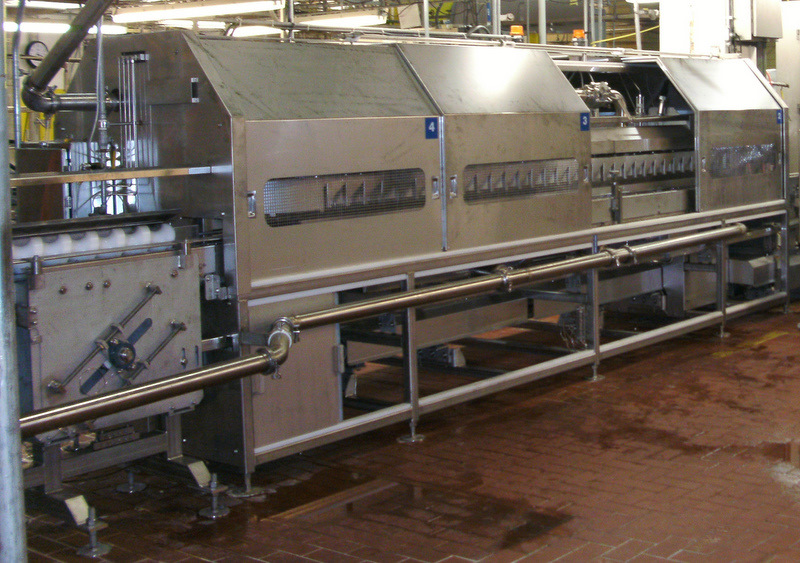
Funnel Filler
Milllard's Funnel Filler is designed for applications where spillage outside of the can or container is not permitted during the filling process. The funnels travel in an oval "running track" pattern and are synchronized to each can individually via a phase variator. The filling process occurs on the straight path while funnels continue to circulate around for another pass. Any "flowable" liquids can be dispersed by the Funnel Filler similar to our Liquid Top-Off machine shown in this section also. The process provides precision adjustments to flow and head space. Speed and volume requirements determine the Filler machine's overall length. Millard supports full integration into your new or existing lines.
Features:
- "In-House" PassivationPassivation treatment is intended to improve the surface condition of stainless steel by dissolving iron that has been embedded in the surface during forming or machining. If allowed to remain, the iron can corrode and give the appearance of rust spots on the stainless steel. Passivation restores the original corrosion-resistant surface by forming a thin, transparent oxide film and is the preferred method for the sanitary durability of stainless steel. Millard has one of the largest "In-House" Passivation operations available for our customer's fabricated items. See our case study on passivation for details. for Sanitary durability
- Sanitary design for easy cleaning operations
- Simple controls to adjust head space
- Single point lubrication throughout machine
- Adjustable speed controls (phase variator) to synchronize with downstream pacing operations as an option
- Electric Motors
- Stainless steel custom Heating Element options for liquids
- Can flow rates variable up to 1,000 cpm (cans per minute)
- Heavy Duty Stainless Steel Construction and wash-down duty components
- Full integration into existing or new lines
Media:
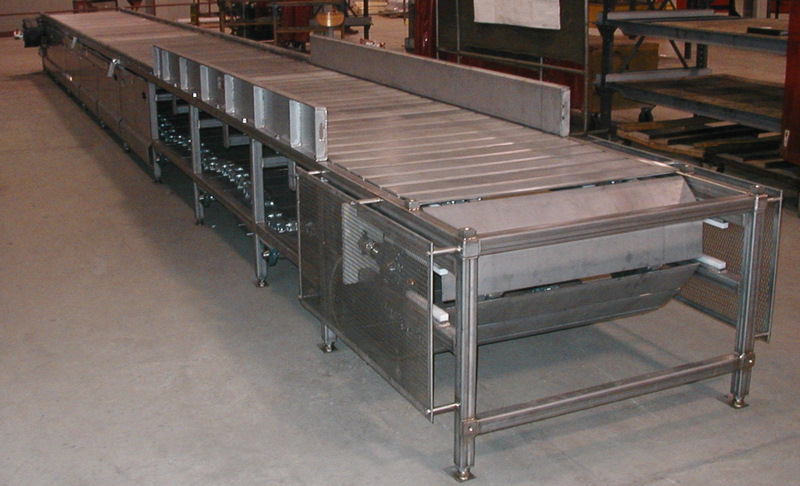
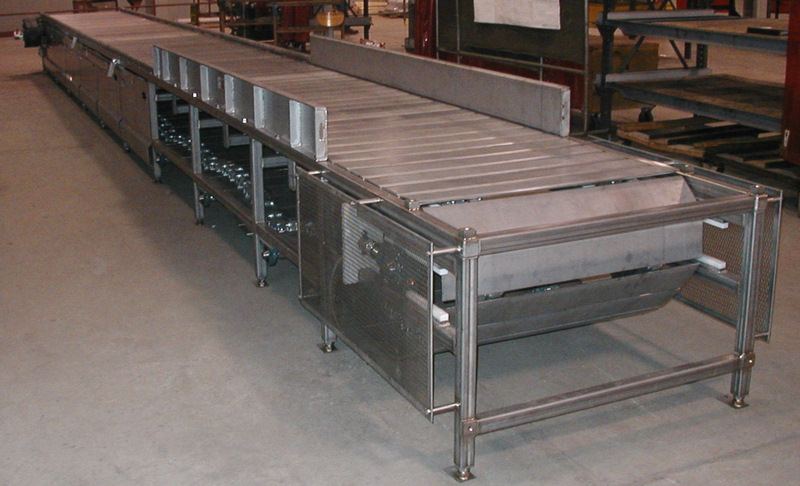
Gambrel Table
Millard's Gambrel Table is a moving top table made of heavy duty stainless steel upon where the hogs are unshackled, correctly oriented and gambreled. Our Gambrel Table is of the same construction as our Shackle Table except for the width that is 6' instead of 4'.
Features:
- 6" x 4'-6" Stainless flights
- Heavy duty construction
- Wash-down duty motor and gearbox
- Platforms run full length of table both sides
- Ladders
- Hand Rails
- Left or Right discharge chute
- Variable speed
- Adjustable legs for uneven surfaces
-
"In-House" PassivationPassivation treatment is intended to improve the surface condition of stainless steel by dissolving iron that has been embedded in the surface during forming or machining. If allowed to remain, the iron can corrode and give the appearance of rust spots on the stainless steel. Passivation restores the original corrosion-resistant surface by forming a thin, transparent oxide film and is the preferred method for the sanitary durability of stainless steel. Millard has one of the largest "In-House" Passivation operations available for our customer's fabricated items. See our case study on passivation for details. for Sanitary Durability
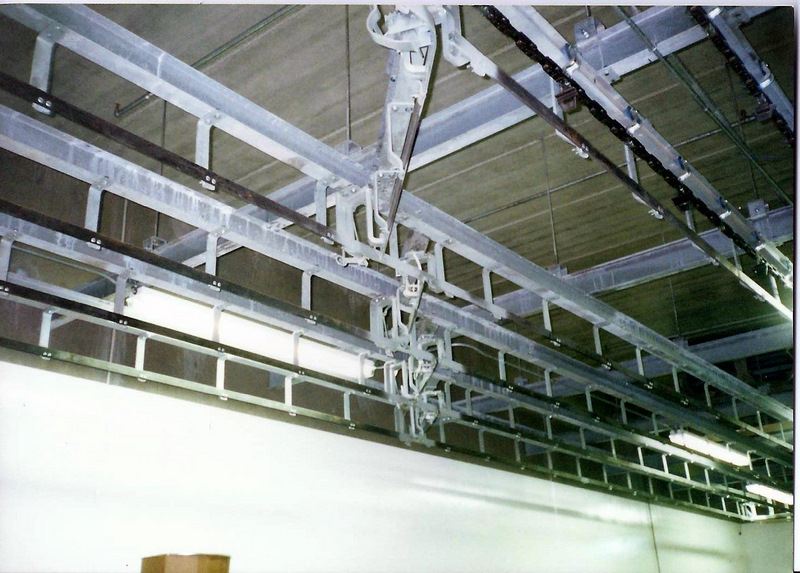
Gravity Style Overhead Rail Systems
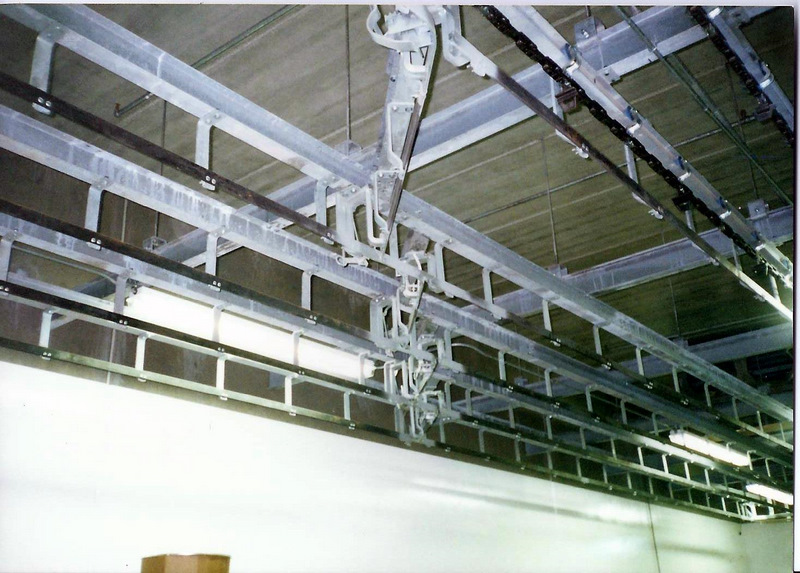
We design and build a wide range of gravity style overhead rail systems that are commonly used for smokehouse and holding area applications. These also are called stack rails, smokehouse rails, and holding cooler rails. These systems use appropriate pusher trolleys riding on 1/2" rounded meat rail that is sized for your application. The meat rail can be black, galvanized, or stainless steel. We also supply the manual switches required. Our rail systems are complete and can include all the components for the overhead support systems for either beam or beamless style. Normally these systems are beam style, and we will specify and supply all the necessary beams, hangers, and rail supports. For beamless style, we will specify and supply the support rods and saddles to support the rail. Most of the equipment is constructed of galvanized or plated material. These systems are fed with infeed conveyors and moved to outfeed conveyors and are pushed all the way through. We also can supply these complementing infeed and outfeed conveyors.
Features:
- Upgrades, retrofits, and new constuction
- Sized for your layout and design requirements.
- Installation services available.
Media:
Ham Pace Line Equipment
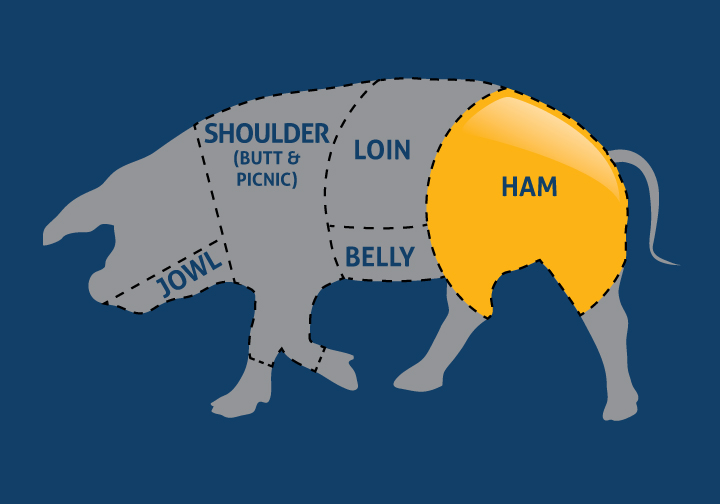
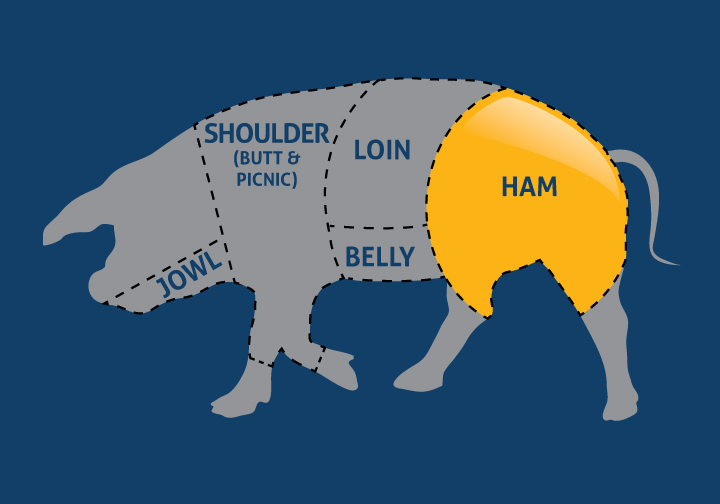
Millard can fabricate most ham line and ham pace line equipment including ham tables, ham scale conveyors, ham classifier lines, ham boning (deboning) lines, and pace line conveyors. We also manufacture related and support equipment including saws, trim conveyors, fat conveyors, chutes, walkovers, crossover stairs, platforms, mezzanines, catwalks, and ergo stands. Our flexibility also allows us to integrate with and supply complimentary equipment like Metal Detectors. We follow strict safety and sanitary design and fabrication standards on all of this equipment to meet the demands of the pork industry. Each conveyor is mated or integrated with the others and each is equipped with properly sized drives and optimal belting with the best surface for the application. Brands may be specified by the customer. See our Belt Conveyor under the "Support Equipment" section for more detail on our optimized conveyor design.
Features:
- "In-House" PassivationPassivation treatment is intended to improve the surface condition of stainless steel by dissolving iron that has been embedded in the surface during forming or machining. If allowed to remain, the iron can corrode and give the appearance of rust spots on the stainless steel. Passivation restores the original corrosion-resistant surface by forming a thin, transparent oxide film and is the preferred method for the sanitary durability of stainless steel. Millard has one of the largest "In-House" Passivation operations available for our customer's fabricated items. See our case study on passivation for details. for Sanitary Durability
- Food Safety and Sanitation Design Standards
- Designed with Ergonomic & Safety Features
- Customized for your Application
- High Quality & Durable Construction
- Engineering Assistance available
Media:
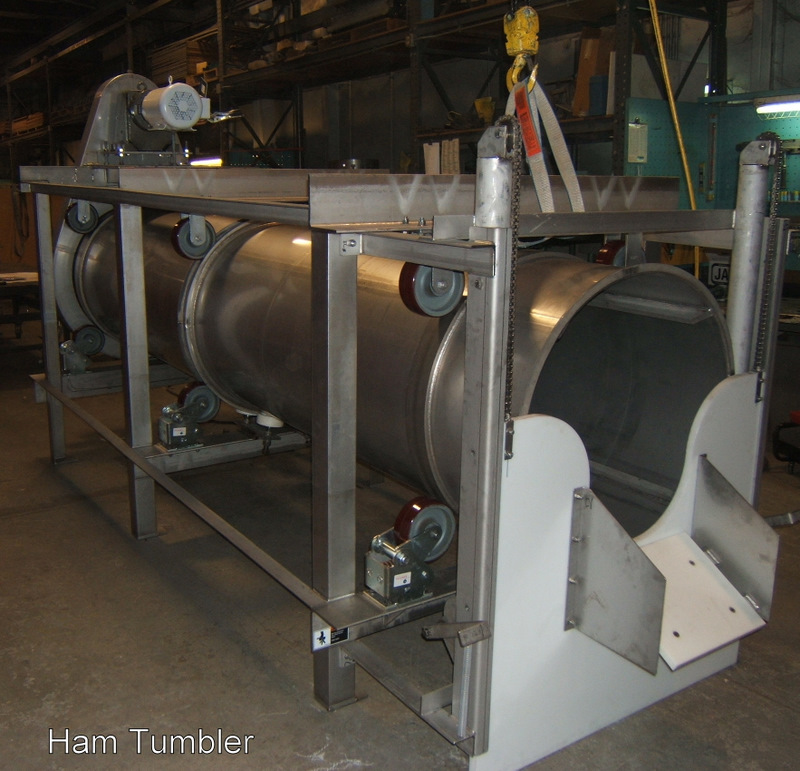
Ham Tumbler or Ham Conditioner
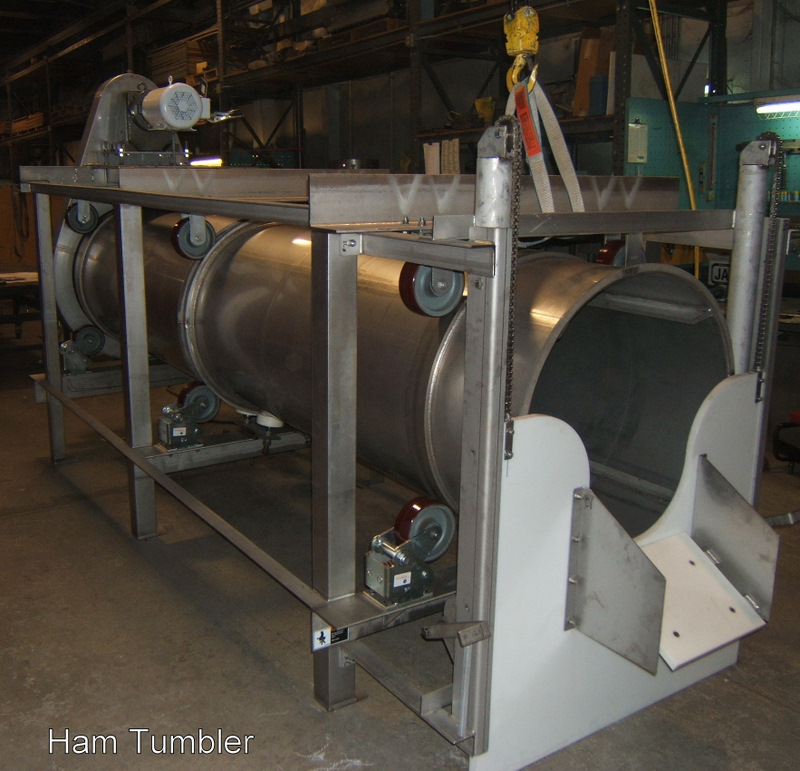
Millard's Ham Tumblers are built to last with heavy duty stainless steel material. Our Tumbler or Conditioner is a 36" drum that tumbles the hams to condition them for the next process which could involve bone-In hams, boneless hams, or skinning.
Features:
- Heavy duty stainless steel construction
- Large 36" drum
- Drum rides on HD spring loaded caster wheels, 36" x 15" drum
- Chain driven by 7.5 HP HD gear motor
- 1" x 3" Bars run the continuous length for conditioning
- Galvanized center post structure for cleaner installation and minimal footprint
- Discharge gate for controlling outflow of hams
Head Workup Area Equipment
Millard manufactures and provides stainless steel Head Workup Area Equipment for Beef Processing. We can provide the stainless steel platform, conveyor with cutting board stations, meat bins and hoppers, jaw bone puller, head dropper, and head flush cabinet.
Features:
- "In-House" PassivationPassivation treatment is intended to improve the surface condition of stainless steel by dissolving iron that has been embedded in the surface during forming or machining. If allowed to remain, the iron can corrode and give the appearance of rust spots on the stainless steel. Passivation restores the original corrosion-resistant surface by forming a thin, transparent oxide film and is the preferred method for the sanitary durability of stainless steel. Millard has one of the largest "In-House" Passivation operations available for our customer's fabricated items. See our case study on passivation for details. for sanitary durability
- HD Stainless Steel
- Wash down duty
- Custom conveyor lengths per customer requiremtents
- Variable speeds
- Custom conveyor widths, 18-20" typical

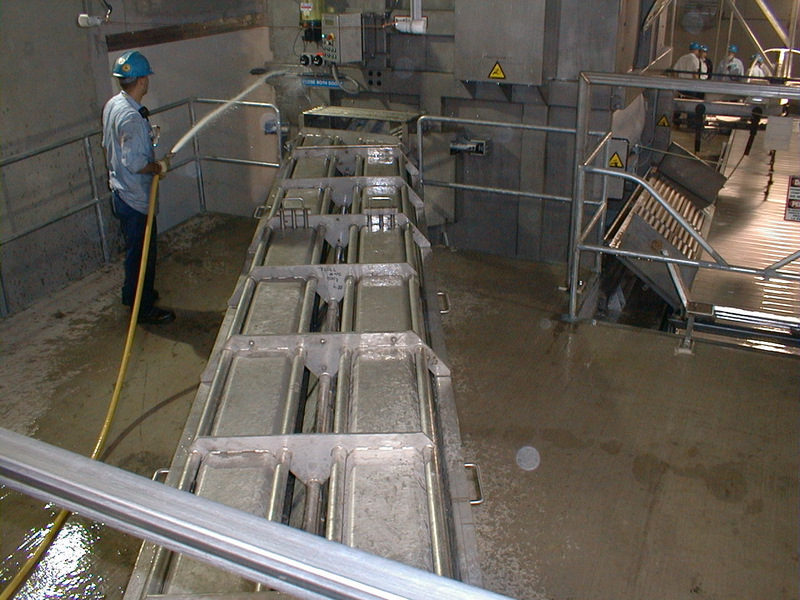
Hog Chutes
Our Hog Chute starts the lead-in for processing the hogs. Smooth sides enable drivers to keep hogs moving quickly and quietly towards stunning. The Chutes are available in any length and are constructed of heavy gauge structural pipe. Slip resistant operator platforms and hog surfaces come standard or can be customer specified.
Features:
- Heavy duty tubular and sheet metal construction
- Hot dip galvanized material
- Stainless steel material optional
- Custom lengths and applications
- Adjustable legs for uneven surfaces
- Slip-resistant surfaces for both hogs and drivers
Media:
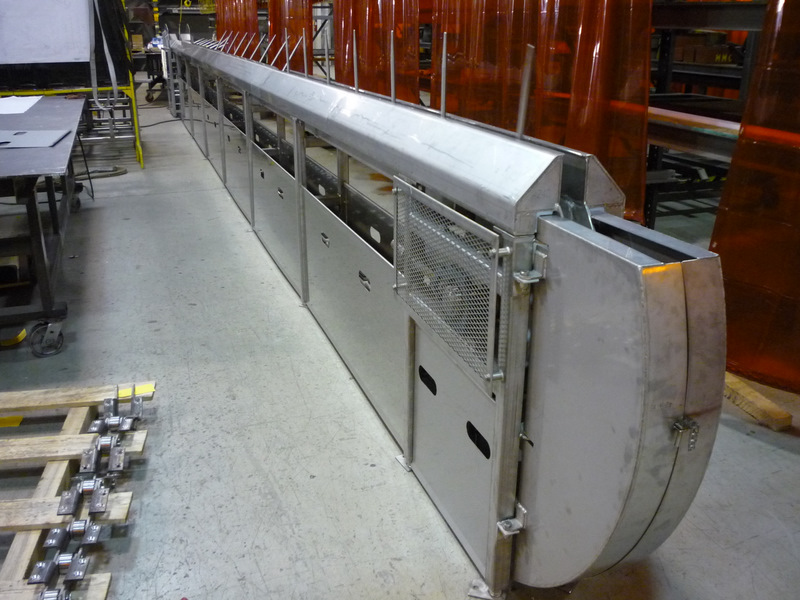

Hog Head Spike Conveyor
Our Hog Head Spike Conveyor increases work efficiencies by a paced line allowing the consolidating of snout marking, temple and cheek chiseling, head meat removal and other works.
Features:
- Heavy Duty Stainless Steel Construction
- Wash-down duty
- Custom lengths available
- Adjustable legs for uneven surfaces
- Discharge Chute and Table standard
- Heavy Duty Variable Speed Motor and Gearbox
- Safety Guarding
- Rates up to 600 per hour
-
"In-House" PassivationPassivation treatment is intended to improve the surface condition of stainless steel by dissolving iron that has been embedded in the surface during forming or machining. If allowed to remain, the iron can corrode and give the appearance of rust spots on the stainless steel. Passivation restores the original corrosion-resistant surface by forming a thin, transparent oxide film and is the preferred method for the sanitary durability of stainless steel. Millard has one of the largest "In-House" Passivation operations available for our customer's fabricated items. See our case study on passivation for details. for Sanitary Durability
Hog Head Workup Table
Millard's Hog Head Workup Table follows the head spike line where workers segregate the head into distinct meat lines and associated conveyors. Each worker has a workstation adjacent to these lines.
Features:
- Heavy Duty Stainless Steel Construction
- Wash-down duty
- Custom lengths and widths available
- Adjustable legs for uneven surfaces
- Can be customized with fixturing and cutting boards as required
-
"In-House" PassivationPassivation treatment is intended to improve the surface condition of stainless steel by dissolving iron that has been embedded in the surface during forming or machining. If allowed to remain, the iron can corrode and give the appearance of rust spots on the stainless steel. Passivation restores the original corrosion-resistant surface by forming a thin, transparent oxide film and is the preferred method for the sanitary durability of stainless steel. Millard has one of the largest "In-House" Passivation operations available for our customer's fabricated items. See our case study on passivation for details. for Sanitary Durability
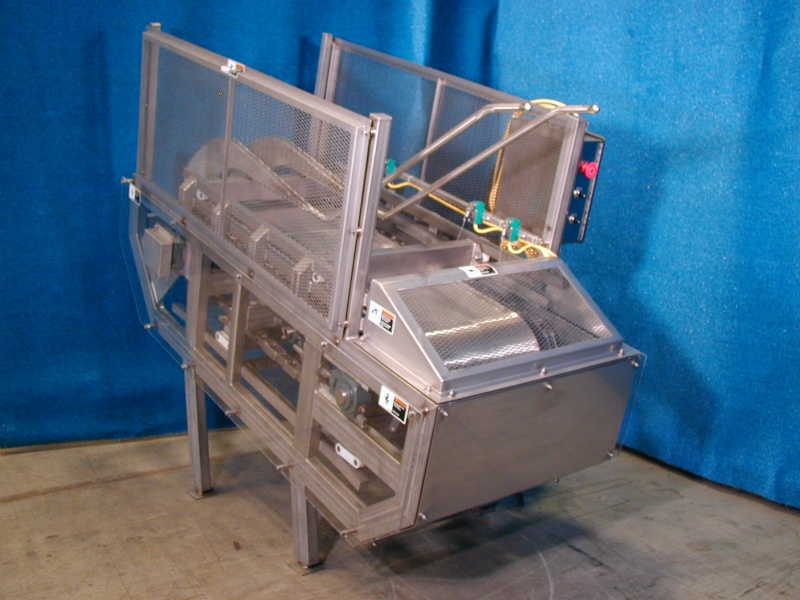
Hog Jaw & Snout Puller
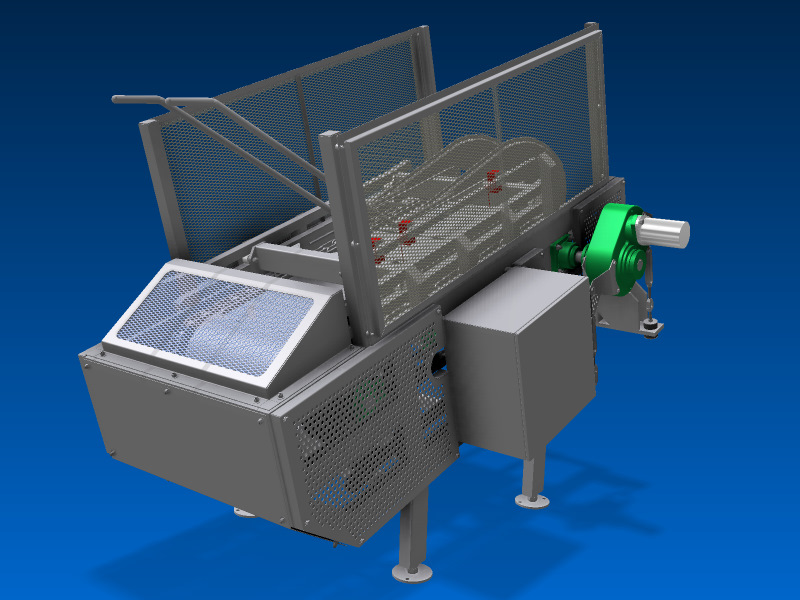
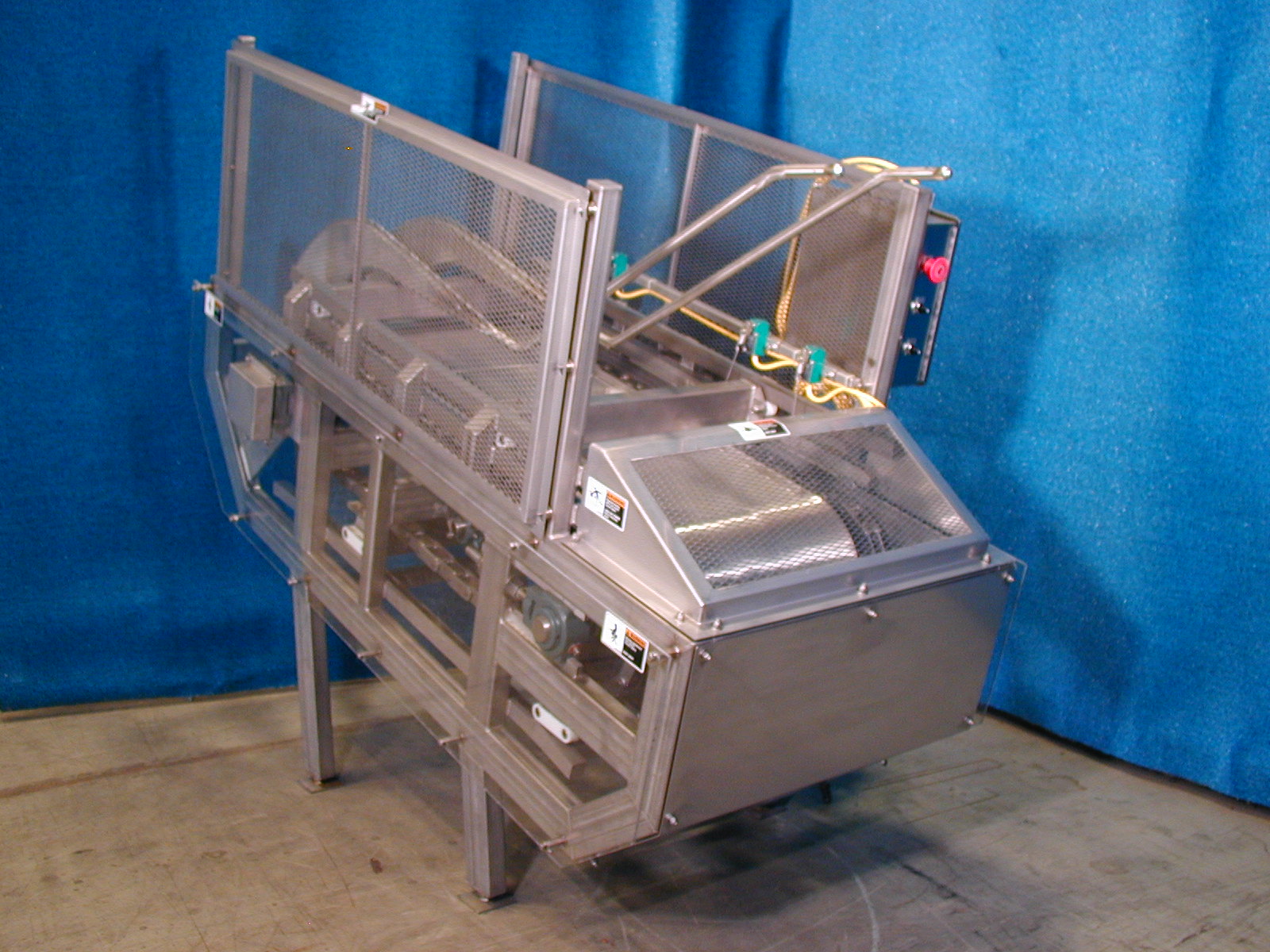
Millard's automated "Hog Jaw and Snout Puller" is faster, safer, and more sanitary than any other machine in the industry. The patented snout and jaw removal system automatically removes the snout inline prior to jawbone separation. Our machine unhinges the jawbone, increasing temple meat yields while reducing broken jawbones done by manual operations. See our "Case Study" for more details.
Features:
- Operating speeds up to 1400 head per hour
- Low Maintenance & Repair costs
- Economical to run
- Sanitary Wash-Down Duty for Easy Clean-up
- Heavy Duty Stainless Steel
- Enclosed Hydraulic Controls Construction
- Stand alone machine
- Installs quickly to existing operations
- PLC controls
- Compact design requires minimal floor space
- Ergonomic design for the operator
- Safety Features - Guarding, E-Stop, stop, forward and reverse controls
- Proven, Time-tested results
-
"In-House" PassivationPassivation treatment is intended to improve the surface condition of stainless steel by dissolving iron that has been embedded in the surface during forming or machining. If allowed to remain, the iron can corrode and give the appearance of rust spots on the stainless steel. Passivation restores the original corrosion-resistant surface by forming a thin, transparent oxide film and is the preferred method for the sanitary durability of stainless steel. Millard has one of the largest "In-House" Passivation operations available for our customer's fabricated items. See our case study on passivation for details. for Sanitary Durability
Hog Predryer / Hog Dryer / Hog Polisher
Millard can custom build Hog Polishers, Predryers, and Dryers into any sequence, rotation and brush or whip configuration you need to reduce hand shaving operations. Single, multiple or continuous cabinets available.
Features:
- Custom Cabinets or all in one process
- Heavy Duty Stainless Steel construction
- Wash-down duty motors and gear boxes
- Custom polishing and drying configurations available
-
"In-House" PassivationPassivation treatment is intended to improve the surface condition of stainless steel by dissolving iron that has been embedded in the surface during forming or machining. If allowed to remain, the iron can corrode and give the appearance of rust spots on the stainless steel. Passivation restores the original corrosion-resistant surface by forming a thin, transparent oxide film and is the preferred method for the sanitary durability of stainless steel. Millard has one of the largest "In-House" Passivation operations available for our customer's fabricated items. See our case study on passivation for details. for Sanitary Durability

Hog Singer
Our Hog Singer is designed for fast removal of the hog's hair. It can be customized or come complete with cabinet, burners, valves, exhaust, controls. We can custom design it to fit your layout and space.
Features:
- High efficiency flame retention
- Singes entire hog surface at one time
- Adjustable head burner
- Vented cabinet
- Manifold options
- Gas-air mixer
- Blower options
- Automatic solenoid valve and water cooled rail
Hog Viscera Inspection Table w/optional moving top platform
Millard's Viscera Inspection Tables provide a sanitary moving pan for inspecting the internal organs of the hogs. They are built in various lengths to conform to conditions at installations and rate of speed. 12" wide x 30" long stainless head pans and 4" wide x 30" long stainless viscera pans standard and can be synchronized with overhead chain.
Features:
- Heavy Duty Stainless Steel Construction
- Wash-down duty, Custom lengths available
- Adjustable legs for uneven surfaces
- Heavy Duty Variable Speed Motor and Gearbox
Media:
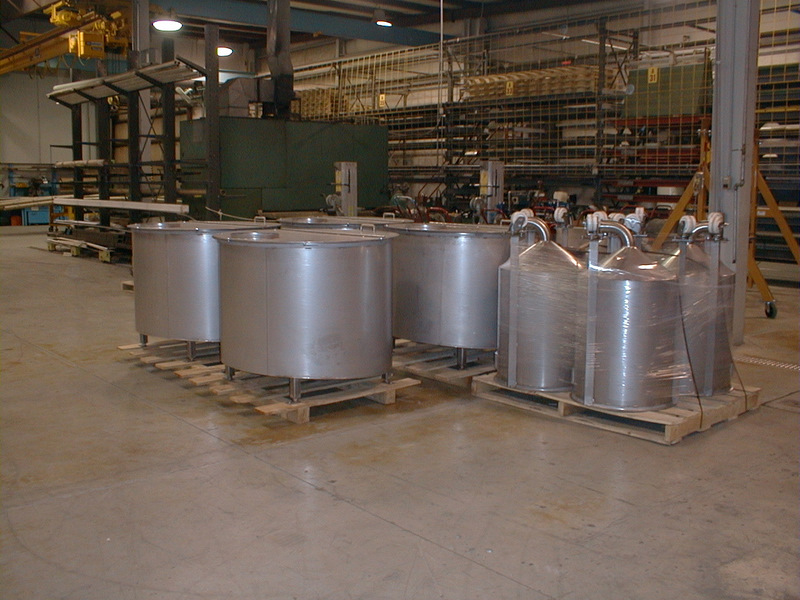
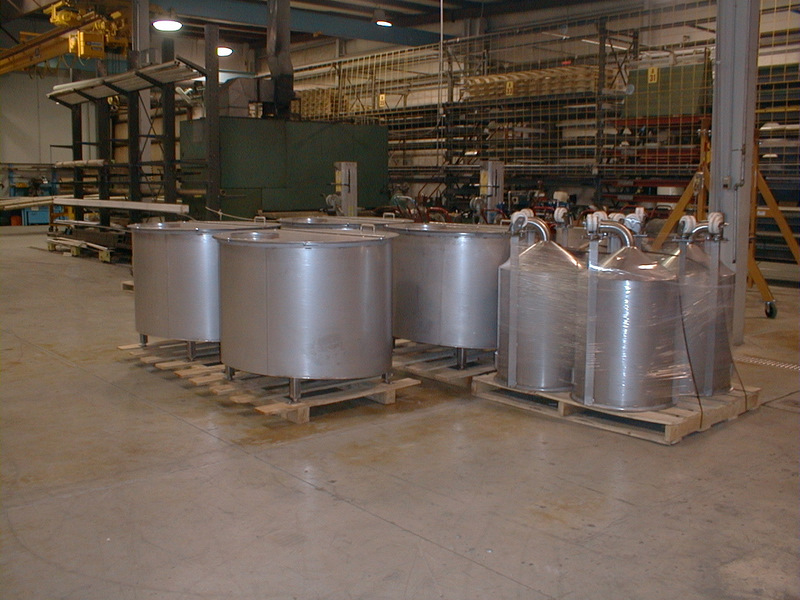
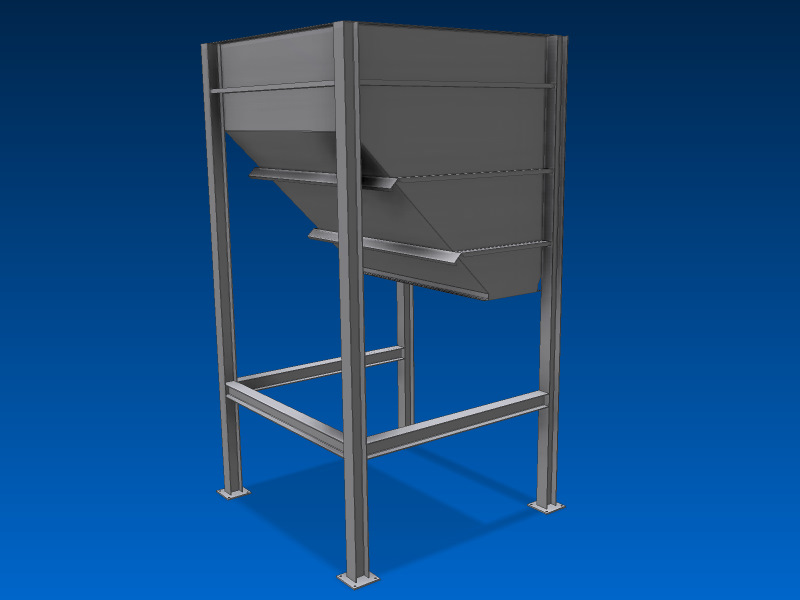
Hoppers
Millard's Hoppers for the Canned Foods Industry are made to hold food ingredients in suspension or a mixed state in preparation for the next process (e.g. Fillers). Our Hoppers are custom designed by shape, length, width, depth and volume to fit your capacity needs. They can be either vertical or horizontal with blending, mixing, or agitating blades to keep the ingredients suspended so they do not settle out.
Features:
- Electric or Air motors
- HD Wash down duty motors and gearboxes
- All Stainless Steel construction
- Custom engineered sizes, shapes and volumes
- Safety and Sanitation designed and guarded
- Horizontal or Vertical Storage
- Custom Agitation and Mixing
- Wash-down duty construction
-
"In-House" PassivationPassivation treatment is intended to improve the surface condition of stainless steel by dissolving iron that has been embedded in the surface during forming or machining. If allowed to remain, the iron can corrode and give the appearance of rust spots on the stainless steel. Passivation restores the original corrosion-resistant surface by forming a thin, transparent oxide film and is the preferred method for the sanitary durability of stainless steel. Millard has one of the largest "In-House" Passivation operations available for our customer's fabricated items. See our case study on passivation for details. for Sanitary Durability
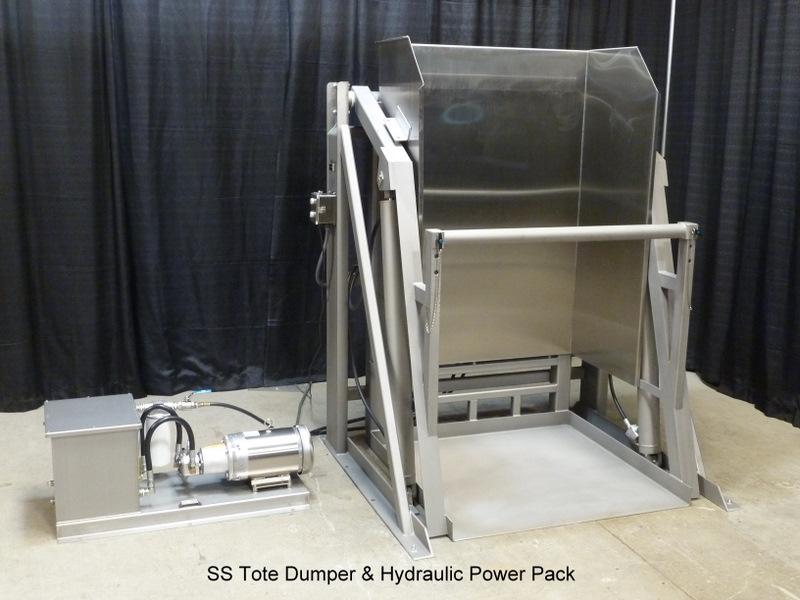

Hydraulic Barrel Dumper
Millard's Hydraulic Barrel Dumper has a wide variety of uses in many food industries. Our unit is all stainless steel heavy duty and provides a smooth, efficient, clean, reliable, safe and sanitary method for dumping barrels and drums. The unit is constructed of heavy duty stainless steel material and is provided as a complete system with or without a stainless hydraulic power pack. The power pack can be configured and located to suit your needs.
Features:
- Heavy Duty Stainless Steel Construction
- Hydraulic Power Pack option
- 3 - 5 HP Motor
- 36-48" standard dump height (custom heights available)
- Safety Guarding custom fit per your requirements
- Broad Range of Load Capacities (500-1,500# std)
- (2) Hydraulic Lift Cylinders designed for dumping applications
- Control Valves
- Push Button Controls
- Unit can be customized to fit process or special containers as needed
-
"In-House" PassivationPassivation treatment is intended to improve the surface condition of stainless steel by dissolving iron that has been embedded in the surface during forming or machining. If allowed to remain, the iron can corrode and give the appearance of rust spots on the stainless steel. Passivation restores the original corrosion-resistant surface by forming a thin, transparent oxide film and is the preferred method for the sanitary durability of stainless steel. Millard has one of the largest "In-House" Passivation operations available for our customer's fabricated items. See our case study on passivation for details. Finish for Sanitary Durability

Hydraulic Combo Dumper
Millard's Hydraulic Combo Dumper is similar to our Vat Dumper and has a wide variety of uses in many food industries and is especially suited for dumping cardboard combos in Pork Further Processing. Our unit is all stainless steel heavy duty and provides a smooth, efficient, clean, reliable, safe and sanitary method for dumping your products. We provide the system complete with or without a stainless hydraulic power pack that can be configured and located to suit your needs.
Features:
- HD Stainless Steel Construction
- Hydraulic Power Pack option
- 3 - 5 HP Motor
- 36-48" standard dump height (custom heights available)
- Safety Guarding custom fit per your requirements
- Broad Range of Load Capacities (1,500-2,500# std)
- (2) Hydraulic Lift Cylinders designed for dumping applications
- Control Valves
- Push Button Controls
- Unit can be customized to fit process or special containers as needed
-
"In-House" PassivationPassivation treatment is intended to improve the surface condition of stainless steel by dissolving iron that has been embedded in the surface during forming or machining. If allowed to remain, the iron can corrode and give the appearance of rust spots on the stainless steel. Passivation restores the original corrosion-resistant surface by forming a thin, transparent oxide film and is the preferred method for the sanitary durability of stainless steel. Millard has one of the largest "In-House" Passivation operations available for our customer's fabricated items. See our case study on passivation for details. Finish for Sanitary Durability
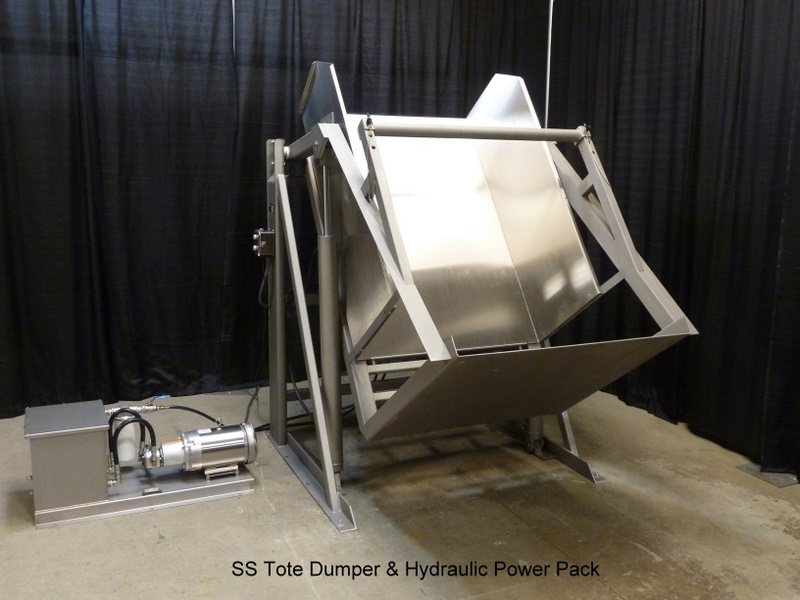
Hydraulic Combo Dumper
Millard's Hydraulic Combo Dumper is similar to our Vat Dumper and has a wide variety of uses in many food industries. Our unit is all heavy duty stainless steel and provides a smooth, efficient, clean, reliable, safe and sanitary method for dumping your products. We provide the system complete with a stand alone stainless steel hydraulic power pack that can be configured and located to suit your needs. We can also provide Vat and Barrel dumpers as needed.
Features:
- HD Stainless Steel Construction
- Hydraulic Power Pack option
- 3 - 5 HP Motor
- 36-48" standard dump height (custom heights available)
- Safety Guarding custom fit per your requirements
- Broad Range of Load Capacities (1,500-2,500 lbs)
- (2) Hydraulic Lift Cylinders designed for dumping applications
- Control Valves
- Push Button Controls
- Customized to fit process or special containers as needed
-
"In-House" PassivationPassivation treatment is intended to improve the surface condition of stainless steel by dissolving iron that has been embedded in the surface during forming or machining. If allowed to remain, the iron can corrode and give the appearance of rust spots on the stainless steel. Passivation restores the original corrosion-resistant surface by forming a thin, transparent oxide film and is the preferred method for the sanitary durability of stainless steel. Millard has one of the largest "In-House" Passivation operations available for our customer's fabricated items. See our case study on passivation for details. Finish for Sanitary Durability
Media:
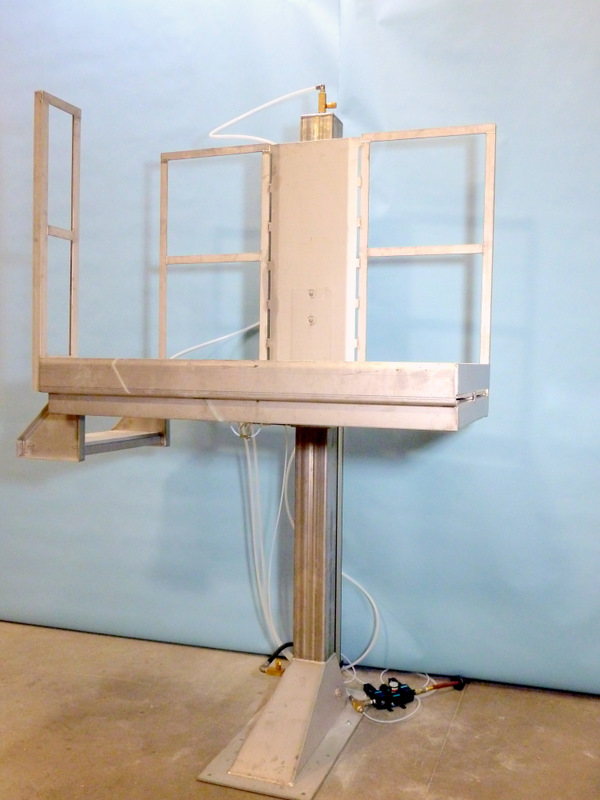
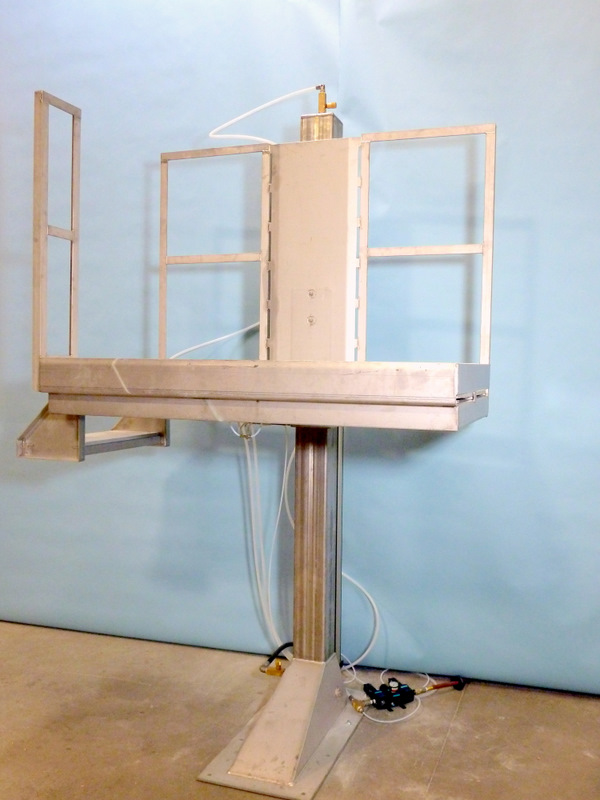
Hydraulic Lift Platforms
Millard can provide you with safe and sanitary Hydraulic Lift Platforms for operations and inspection personnel to assist them in their work. We will work with you to custom design, build, and install the proper lift platform to fit your process application. Our platforms come complete with hydraulics and controls.
Features:
- Safety Railing and Guarding
- Heavy Duty Stainless Steel
- Wash-down duty construction
- Custom Length, Width, & Height
- Walk Surface options to fit your use
-
"In-House" PassivationPassivation treatment is intended to improve the surface condition of stainless steel by dissolving iron that has been embedded in the surface during forming or machining. If allowed to remain, the iron can corrode and give the appearance of rust spots on the stainless steel. Passivation restores the original corrosion-resistant surface by forming a thin, transparent oxide film and is the preferred method for the sanitary durability of stainless steel. Millard has one of the largest "In-House" Passivation operations available for our customer's fabricated items. See our case study on passivation for details. Finish for Sanitary Durability
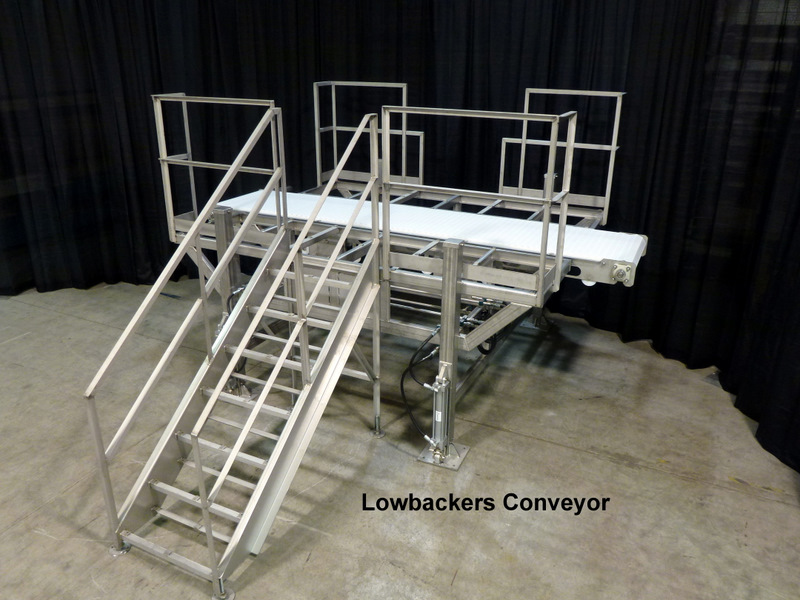
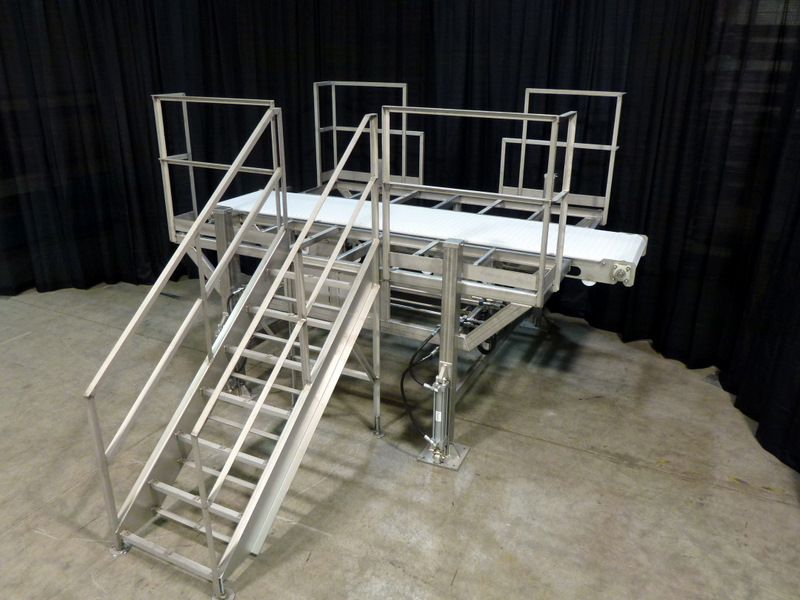
Hydraulic Platforms
Millard can build most any Hydraulic Platform on the Harvest Floor. All our platforms are custom designed and built to meet your layout and tailored to each specific process. Our platforms are made from heavy duty stainless steel and for daily sanitary wash down operations. Hydraulic height control for operator position or process need.
- Lowbackers Platform
- Hydraulic Splitters Saw Bench
- Retrim Platform
- USDA Platform
- Retain Platform
- Steam Vac Platform
Features:
- "In-House" PassivationPassivation treatment is intended to improve the surface condition of stainless steel by dissolving iron that has been embedded in the surface during forming or machining. If allowed to remain, the iron can corrode and give the appearance of rust spots on the stainless steel. Passivation restores the original corrosion-resistant surface by forming a thin, transparent oxide film and is the preferred method for the sanitary durability of stainless steel. Millard has one of the largest "In-House" Passivation operations available for our customer's fabricated items. See our case study on passivation for details. for Sanitary Durability
- Sanitary wash-down duty
- Open Channel Construction - No tubing
- Safety Railings as required
- Fiberplate flooring
- Custom designed per application
- Heavy Duty Stainless Steel
- Stairs & Hand Rails

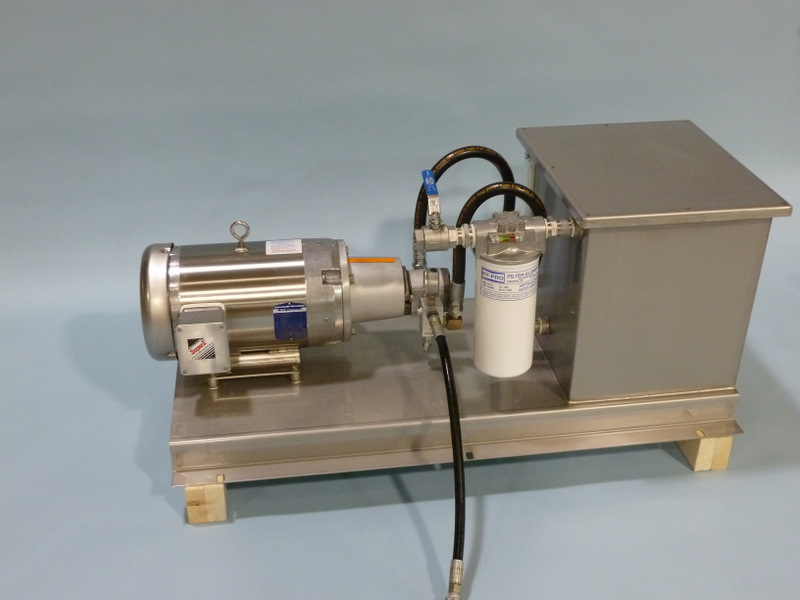
Hydraulic Power Units
Millard has made many variations of Hydraulic Power Units and our designs have evolved to be simple to use and easy to install. Our units are all Stainless Steel with fluid site gauges, pressure gauges, and high pressure hoses.
Features:
- Stainless Steel Construction
- Wash-down duty motors
- Sight gauges
- Pressure gauges
- High Pressure hoses
- Factory Acceptance Tested (F.A.T.) prior to shipping
-
"In-House" PassivationPassivation treatment is intended to improve the surface condition of stainless steel by dissolving iron that has been embedded in the surface during forming or machining. If allowed to remain, the iron can corrode and give the appearance of rust spots on the stainless steel. Passivation restores the original corrosion-resistant surface by forming a thin, transparent oxide film and is the preferred method for the sanitary durability of stainless steel. Millard has one of the largest "In-House" Passivation operations available for our customer's fabricated items. See our case study on passivation for details. Finish for Sanitary Durability

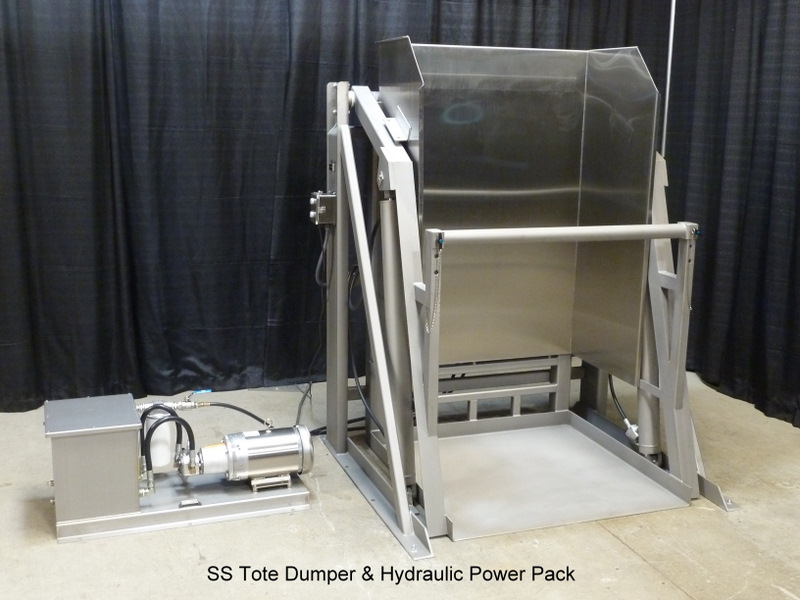
Hydraulic Vat Dumper
Millard's Hydraulic Vat Dumper is similar to our Combo Dumper and has a wide variety of uses in many food industries. Our unit is all heavy duty stainless steel and provides a smooth, efficient, clean, reliable, safe and sanitary method for dumping your products. We provide the system complete with a stand alone stainless steel hydraulic power unit. We can also provide Combo and Barrel dumpers as needed.
Features:
- Heavy Duty Stainless Steel Construction
- Hydraulic Power Pack option
- 3 - 5 HP Motor
- 36-48" standard dump height (custom heights available)
- Safety Guarding custom fit per your requirements
- Broad Range of Load Capacities (1,500-2,500 lbs)
- (2) Hydraulic Lift Cylinders designed for dumping applications
- Control Valves
- Push Button Controls
- Customized to fit process or special containers as needed
-
"In-House" PassivationPassivation treatment is intended to improve the surface condition of stainless steel by dissolving iron that has been embedded in the surface during forming or machining. If allowed to remain, the iron can corrode and give the appearance of rust spots on the stainless steel. Passivation restores the original corrosion-resistant surface by forming a thin, transparent oxide film and is the preferred method for the sanitary durability of stainless steel. Millard has one of the largest "In-House" Passivation operations available for our customer's fabricated items. See our case study on passivation for details. Finish for Sanitary Durability
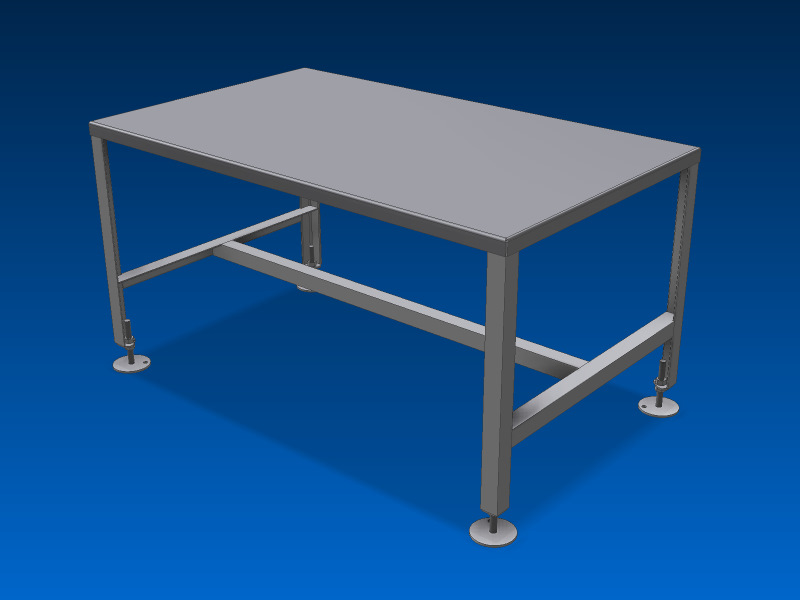
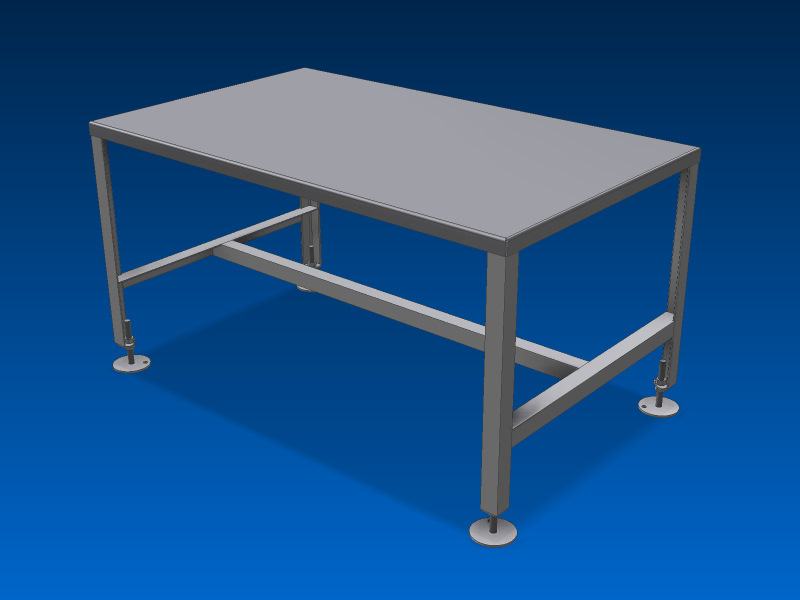
Inspection Tables
Millard can design, build and install a wide variety of custom tables to meet your application needs. Our Inspection tables are generally 24" x 36" and are made to Safety and Sanitary Design Standards that support the food industry. We can provide tables for (but not limited to): Processing, Sorting, Washing, Storage, Inspection, Cutting, Work Surface, and General use.
Features:
- All Stainless Steel construction
- Fixed legs or lockable casters
- Custom designed to your specifications
-
"In-House" PassivationPassivation treatment is intended to improve the surface condition of stainless steel by dissolving iron that has been embedded in the surface during forming or machining. If allowed to remain, the iron can corrode and give the appearance of rust spots on the stainless steel. Passivation restores the original corrosion-resistant surface by forming a thin, transparent oxide film and is the preferred method for the sanitary durability of stainless steel. Millard has one of the largest "In-House" Passivation operations available for our customer's fabricated items. See our case study on passivation for details. Finish for Sanitary Durability
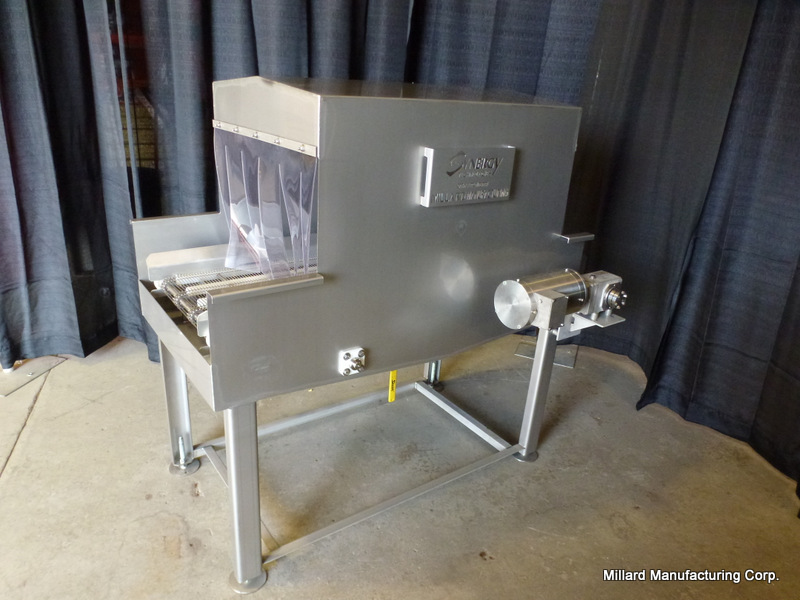

Intervention Delivery System
Millard has teamed up with Synergy Technologies to deliver a turnkey anti-microbial intervention system that is practical and economical. The intervention delivery cabinet is constructed of 316 stainless steel and utilizes an open stainless steel mesh conveyor belt. A single spray manifold system provides 360 degree coverage and includes a lift arm to raise the conveyor for easy cleaning. The system can be designed to stand-alone or be part of multi-unit configuration.
Features:
- 10 gauge 316 Stainless Steel construction
- Easy Cleaning with Conveyor Lift Arm
- 360 degree Spray Pattern
- Stainless Steel Motor and Reducer
- Adjustable feet for uneven surfaces
- Synergy Technologies’ chemical system
-
"In-House PassivationPassivation treatment is intended to improve the surface condition of stainless steel by dissolving iron that has been embedded in the surface during forming or machining. If allowed to remain, the iron can corrode and give the appearance of rust spots on the stainless steel. Passivation restores the original corrosion-resistant surface by forming a thin, transparent oxide film and is the preferred method for the sanitary durability of stainless steel. Millard has one of the largest "In-House" Passivation operations available for our customer's fabricated items. See our case study on passivation for details. for Sanitary Durability
- Options: Recirculation system, Caster wheels, and Automatic spray control
Media:

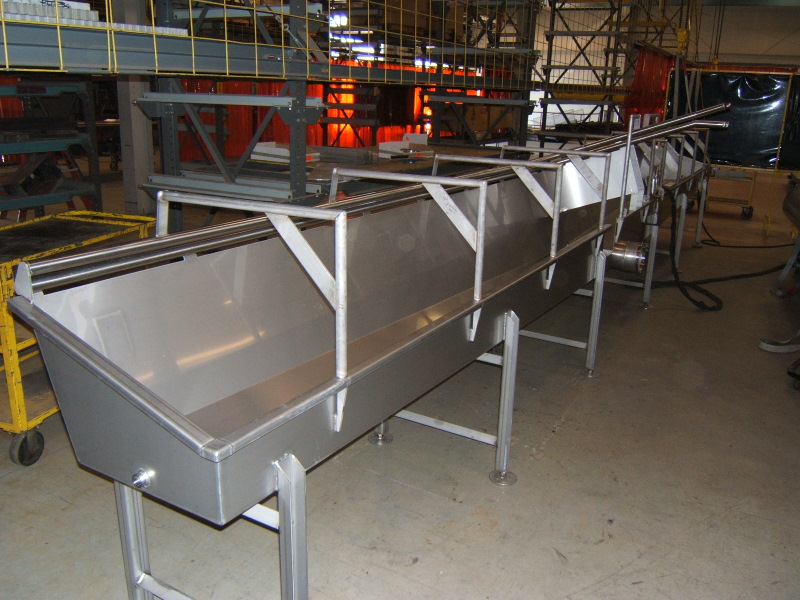
Intestine Workup Trough
Our Intestine Workup Trough is designed to squeeze out and capture the mucosa from the linings of pork intestines.
Features:
- Heavy duty stainless steel construction
- Wash-down duty
- Custom widths and lengths available
- Adjustable legs for uneven surfaces
- Sanitary piping and fitting as needed
-
"In-House" PassivationPassivation treatment is intended to improve the surface condition of stainless steel by dissolving iron that has been embedded in the surface during forming or machining. If allowed to remain, the iron can corrode and give the appearance of rust spots on the stainless steel. Passivation restores the original corrosion-resistant surface by forming a thin, transparent oxide film and is the preferred method for the sanitary durability of stainless steel. Millard has one of the largest "In-House" Passivation operations available for our customer's fabricated items. See our case study on passivation for details. for Sanitary Durability
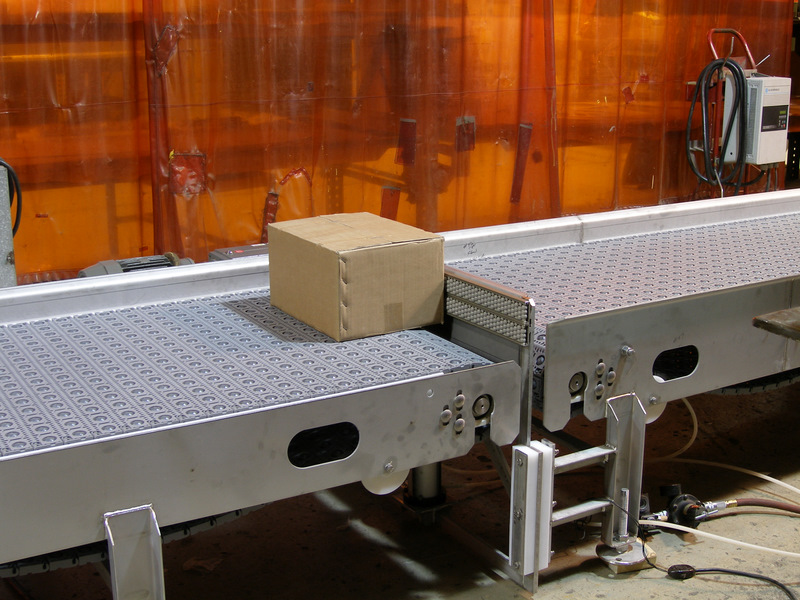

Intralox ARB (Activated Roller Belt) Conveyors
We are a licensed manufacturer and licensed supplier of conveyors employing Intralox Activated Roller Belt(ARB™) technology. ARB technology is used to automate process flow and can be applied to a wide range of applications for turning product, 2 to 1 and 2 to 2 switching, merging, diverting, sorting, dividing, aligning, and 90 degree transferring. Millard and Intralox can custom design a box conveyor for your specific application that will include the standard features of our heavy duty sanitary belt conveyors.
Features:
- Reduced Product Line Jams
- Simpler Designs & Simplified Controls
- Reduced conveyor footprint
- More Accumulation and Buffer Space
- Licensed ARB supplier
- Millard's HD Sanitary Belt Conveyor Features
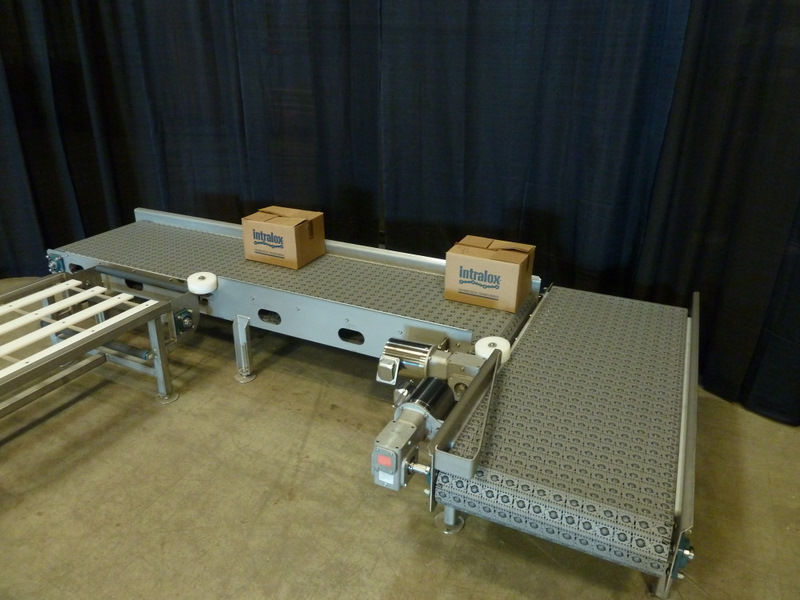
Intralox ARB (Activated Roller Belt) Conveyors
We are a licensed manufacturer and licensed supplier of conveyors employing Intralox Activated Roller Belt (ARB™) technology. ARB technology is used to automate process flow and can be applied to a wide range of applications for turning product, 2 to 1 and 2 to 2 switching, merging, diverting, sorting, dividing, aligning, and 90 degree transferring. Millard and Intralox can custom design a box conveyor for your specific application that will include the standard features of our heavy duty sanitary belt conveyors.
Features:
- Reduced Product Line Jams
- Simpler Designs & Simplified Controls
- Reduced conveyor footprint
- More Accumulation and Buffer Space
- Licensed ARB supplier
- Millard's HD Sanitary Belt Conveyor Features
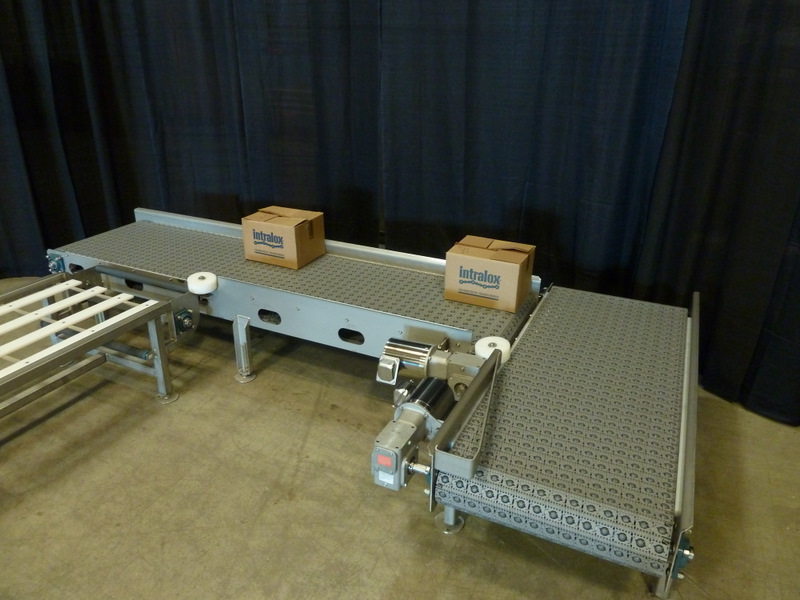
Intralox ARB (Activated Roller Belt) Conveyors
We are a licensed manufacturer and licensed supplier of conveyors employing Intralox Activated Roller Belt (ARB™) technology. ARB technology is used to automate process flow and can be applied to a wide range of applications for turning product, 2 to 1 and 2 to 2 switching, merging, diverting, sorting, dividing, aligning, and 90 degree transferring. Millard and Intralox can custom design a box conveyor for your specific application that will include the standard features of our heavy duty sanitary belt conveyors.
Features:
- Reduced Product Line Jams
- Simpler Designs & Simplified Controls
- Reduced conveyor footprint
- More Accumulation and Buffer Space
- Licensed ARB supplier
- Millard's HD Sanitary Belt Conveyor Features
Media:
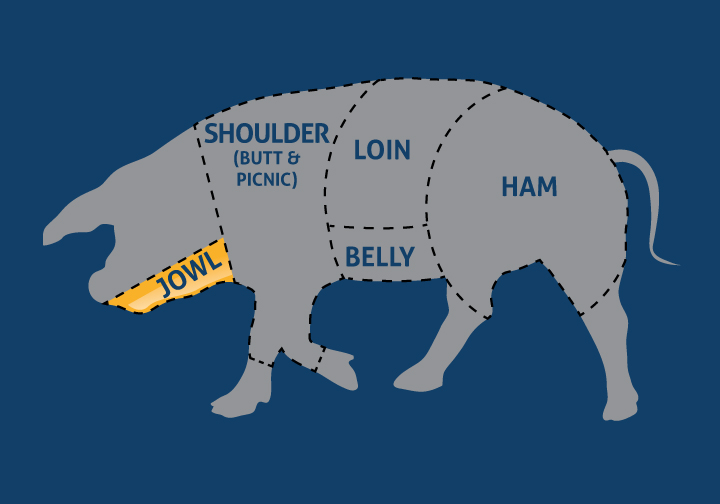
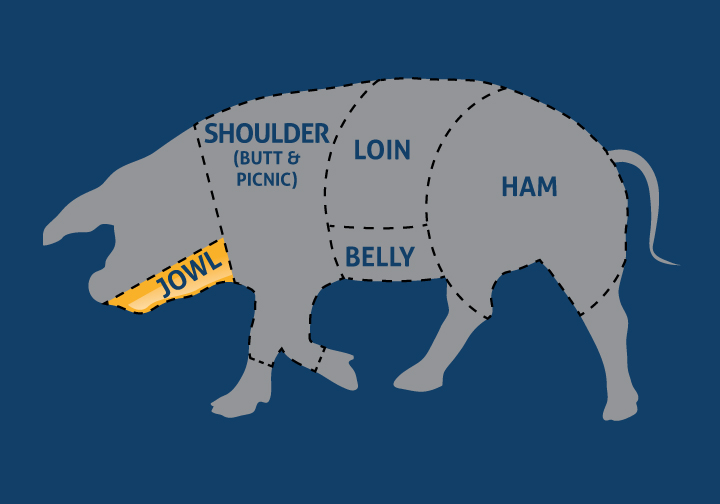
Jowl Line Equipment
We can custom build equipment for your jowl line including jowl conveyors, jowl presses, and jowl rollers. We have the expertise to integrate to other equipment that we can supply such as jowl skinners. We also build all the related support equipment to go along with your jowl line. We follow strict safety and sanitary design and fabrication standards on all of this equipment to meet the demands of the pork industry. Each conveyor is mated or integrated with the others and each is equipped with properly sized drives and optimal belting with the best surface for the application. Brands may be specified by the customer. See our Belt Conveyor under the "Support Equipment" section for more detail on our optimized conveyor design.
Features:
- "In-House" PassivationPassivation treatment is intended to improve the surface condition of stainless steel by dissolving iron that has been embedded in the surface during forming or machining. If allowed to remain, the iron can corrode and give the appearance of rust spots on the stainless steel. Passivation restores the original corrosion-resistant surface by forming a thin, transparent oxide film and is the preferred method for the sanitary durability of stainless steel. Millard has one of the largest "In-House" Passivation operations available for our customer's fabricated items. See our case study on passivation for details. for Sanitary Durability
- Food Safety and Sanitation Design Standards
- Designed with Ergonomic & Safety Features
- Customized for your Application
- High Quality & Durable Construction
- Engineering Assistance available
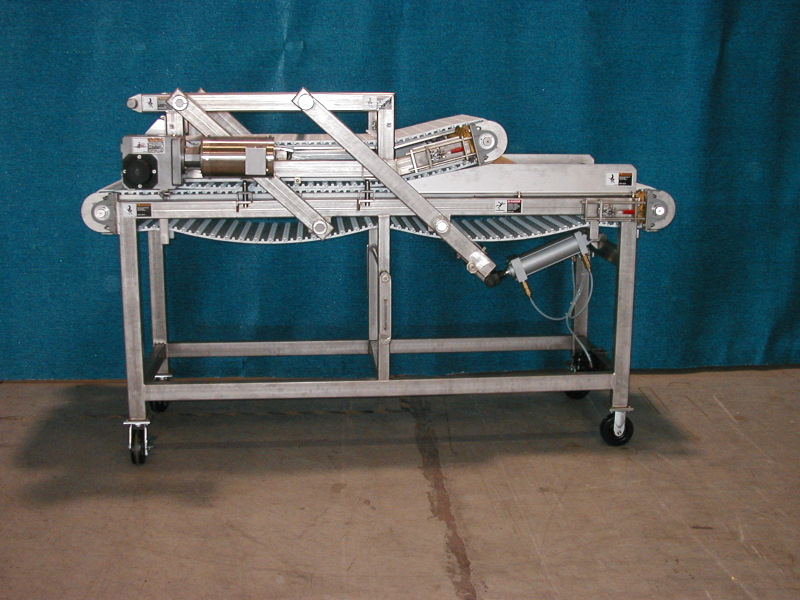
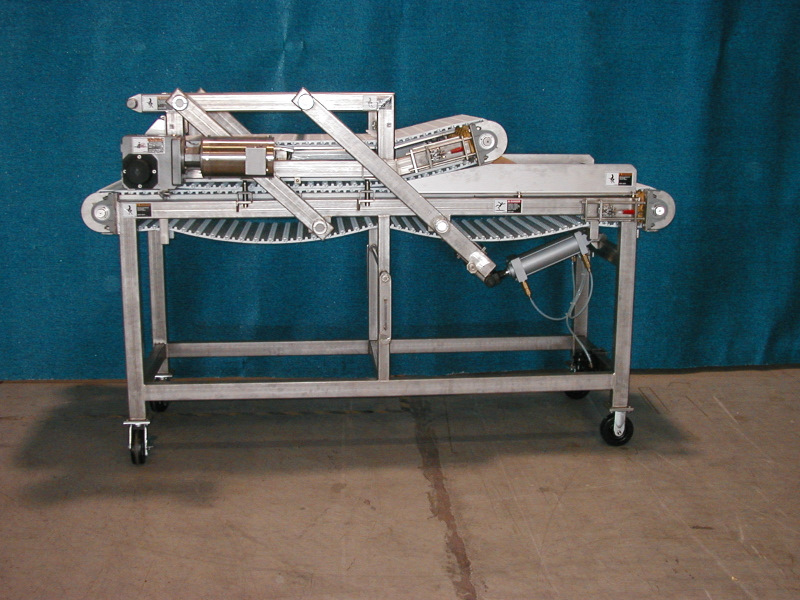
Jowl Press
Millard's unique compact Jowl Press provides a symmetrical method for flattening hog jowls just prior to skinner processing. Our Press is an in-line operation paced to the line speed providing a uniform flattening process that is easily integrated, operated, and cleaned.
Features:
- "In-House" PassivationPassivation treatment is intended to improve the surface condition of stainless steel by dissolving iron that has been embedded in the surface during forming or machining. If allowed to remain, the iron can corrode and give the appearance of rust spots on the stainless steel. Passivation restores the original corrosion-resistant surface by forming a thin, transparent oxide film and is the preferred method for the sanitary durability of stainless steel. Millard has one of the largest "In-House" Passivation operations available for our customer's fabricated items. See our case study on passivation for details. for Sanitary Durability
- Heavy Duty Stainless Steel Construction
- Variable speed motor
- HD Wash-down duty motor and gearbox
- Mobile (with wheels) or stationary
- Sanitary Flat Belt versus Rollers
- Quick Adjustments
- Cleaning labor savings
- Improved quality and consistency of flattened pork bellies
- Easily cleaned
- Improved Sanitation

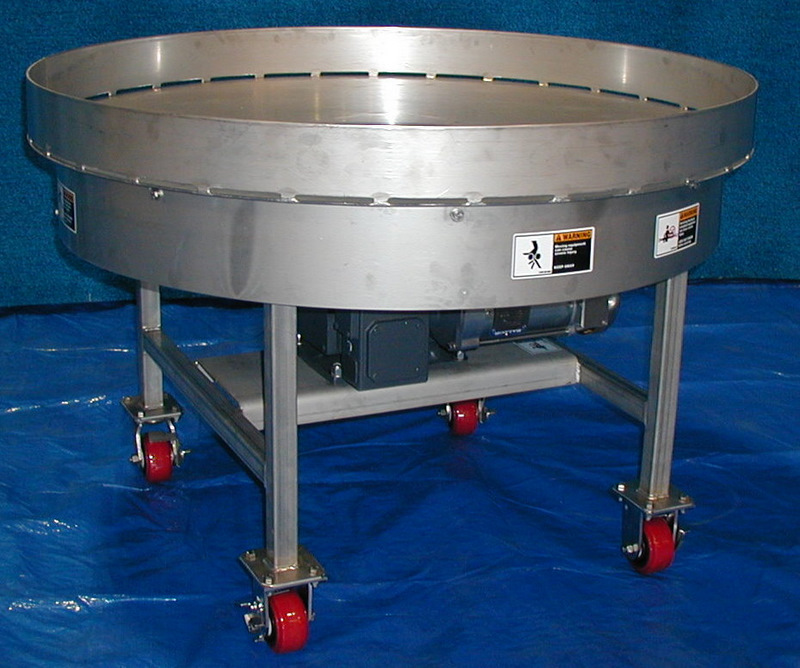
Lazy Susans
Our Lazy Susan turn tables are used for product accumulation common to further processing and pack off areas. Standard sizes are 48" and 60".
Features:
- Packaging accumulator for a variety of products
- 48" and 60" standard sizes
- Electric Driven
- Hollow-shaft mount center drive
- Heavy duty Motor and Gearbox
- Variable Speeds
- Heavy duty Stainless Steel Construction
-
"In-House PassivationPassivation treatment is intended to improve the surface condition of stainless steel by dissolving iron that has been embedded in the surface during forming or machining. If allowed to remain, the iron can corrode and give the appearance of rust spots on the stainless steel. Passivation restores the original corrosion-resistant surface by forming a thin, transparent oxide film and is the preferred method for the sanitary durability of stainless steel. Millard has one of the largest "In-House" Passivation operations available for our customer's fabricated items. See our case study on passivation for details. for Sanitary Durability
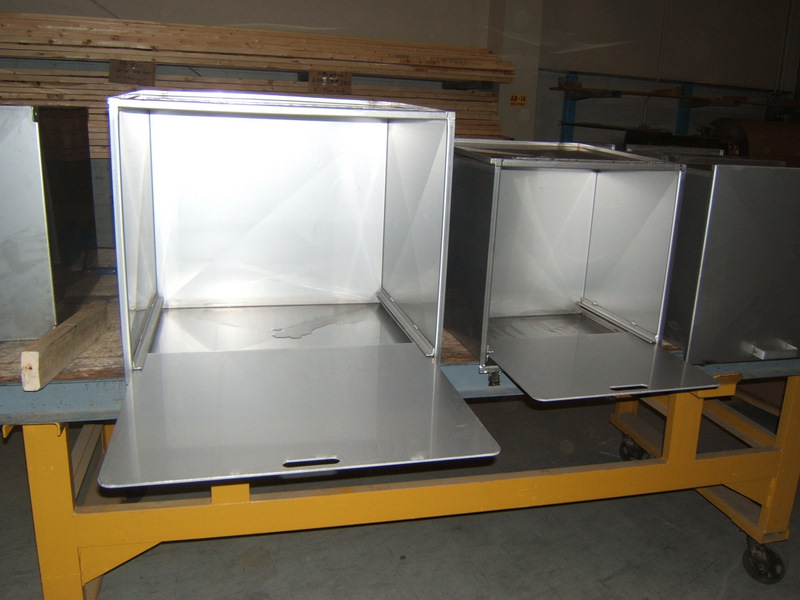
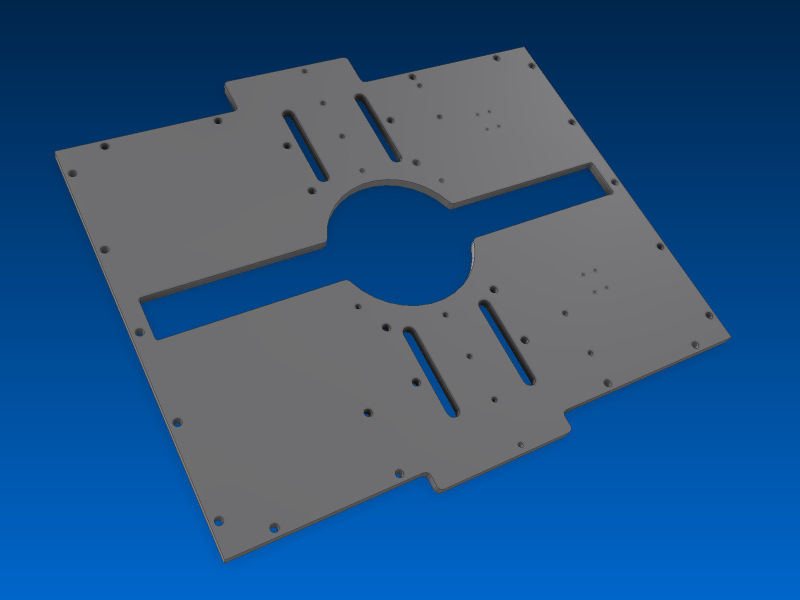
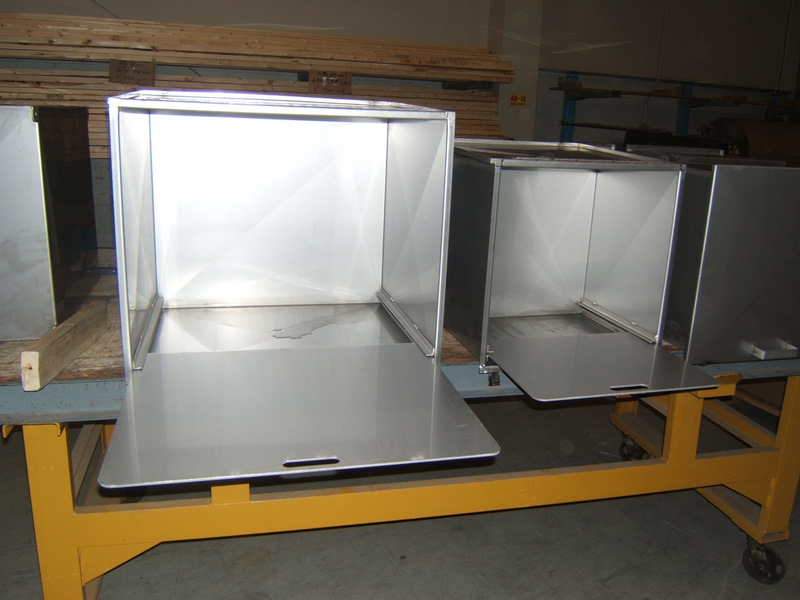
Light Fabrication
Millard understands that many times the equipment and machinery alone will not complete a project and the missing links and/or gaps between processes and machines can be just as important. Millard fills those gaps and links your processes together with our Light Fabrication expertise derived over the years working with both food and non-food industries. We also have the advantage of an affiliated metal supplier, Millard Metal Services, Inc. right next door so your materials are on hand to get your project started quickly. Our vast experiences carry over through our services to provide you will a full solution.
Features:
- Engineering Support from start to finish
- Quick turnaround times
- Creative solutions
- Over 40 years of fabricating experience
- Equipment and resources to handle most fabrication projects from large to small
- S.S. Floor Drains, Pass Throughs, Trim, Drip Pans, Splash Shields, etc.
Media:
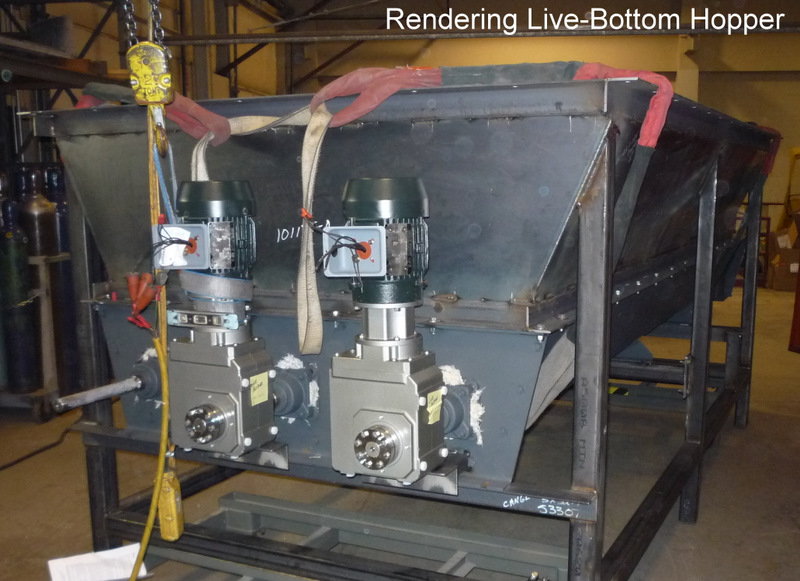
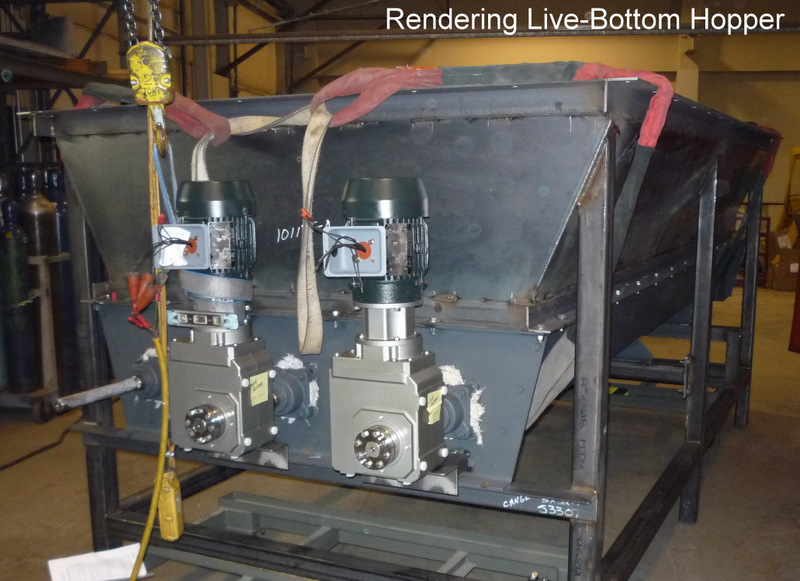
Live Bottom Screw Conveyors
This specialized screw conveyor has a large hopper for loading product and uses multiple live screws for feeding the product out. Each screw is driven by independent drives or we can design the conveyor to have one drive for all the screws. See our stainless sanitary Augers in the Support Equipment/Services category for more details and options.
Features:
- Heavy Duty Carbon Construction
- Stainless Steel Material Available
- Flexible Drive Configurations
Media:
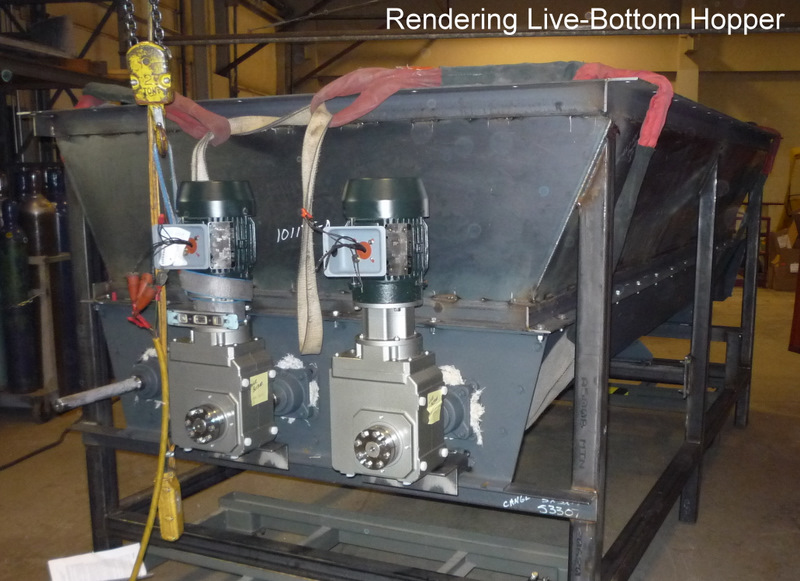
Live Bottom Screw Conveyors
This specialized screw conveyor has a large hopper for loading product and uses multiple live screws for feeding the product out. Each screw is driven by independent drives or we can design the conveyor to have one drive for all the screws. See the Augers detail in the Support Equipment/Services category for more details on our screw conveyor design.
Features:
- Heavy Duty Carbon Construction
- Stainless Steel Material Available
- Flexible Drive Configurations
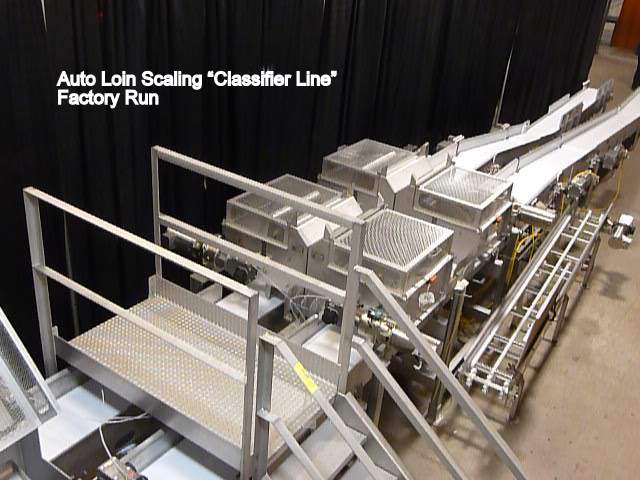
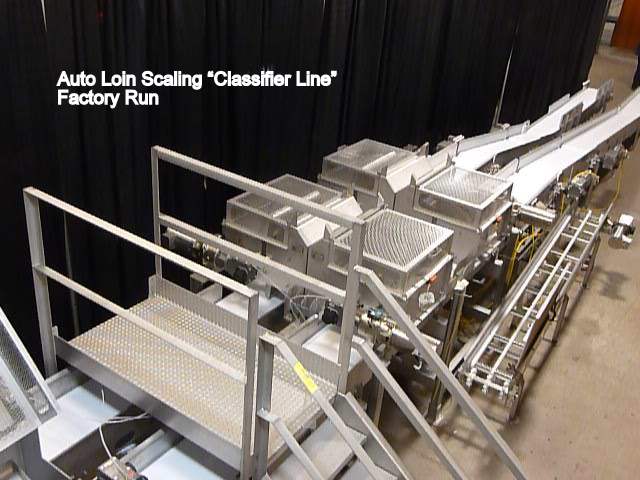
LOIN CLASSIFIER LINE
Our innovative Loin Classifier Line automates the sorting and redirecting of products from a common path to multiple paths or conveyor lines. We utilize dynamic digital weigh scales to classify the loins into weight categories and then redirect the loins to the proper area (or conveyor) using a reliable automated drive called the Millard SideKick™. Integration into the customer’s PLC system makes the system both flexible and adaptable to changing product requirements. This unique continuous process originally designed for pork loins could be adapted for other products. See our case study below and contact us with your application.
Features:
- Sized to customer applications
- Integration into new or existing systems, lines, and conveyors
- Air clutch
- Custom “Kicker” paddle designed for loins
- PLC integration ready or available
- Safety Guarding on all pinch point and moving parts
- Safety Guarding interlocks supplied
- Heavy duty gearbox and motor
- Sanitary wash-down duty
- Food Safety and Sanitation Design Standards
- Durable stainless steel construction
- Factory Acceptance Testing (F.A.T.) available
-
"In-House" PassivationPassivation treatment is intended to improve the surface condition of stainless steel by dissolving iron that has been embedded in the surface during forming or machining. If allowed to remain, the iron can corrode and give the appearance of rust spots on the stainless steel. Passivation restores the original corrosion-resistant surface by forming a thin, transparent oxide film and is the preferred method for the sanitary durability of stainless steel. Millard has one of the largest "In-House" Passivation operations available for our customer's fabricated items. See our case study on passivation for details. Finish for Sanitary Durability
Loin Saddle Conveyor
Millard's Loin Saddle Conveyor is made from heavy duty stainless steel with heavy gauge saddles on 24" center flights for holding the pork loin during fat trimming operations. Loin Saddle Conveyors can be custom made in a wide range of sizes to meet your specifications.
Features:
- Heavy Duty Stainless Steel Construction
- Wash-down duty
- Custom lengths (std. 10-12') and widths available
- Adjustable legs for uneven surfaces
- Heavy Duty Variable Speed Motor
-
"In-House" PassivationPassivation treatment is intended to improve the surface condition of stainless steel by dissolving iron that has been embedded in the surface during forming or machining. If allowed to remain, the iron can corrode and give the appearance of rust spots on the stainless steel. Passivation restores the original corrosion-resistant surface by forming a thin, transparent oxide film and is the preferred method for the sanitary durability of stainless steel. Millard has one of the largest "In-House" Passivation operations available for our customer's fabricated items. See our case study on passivation for details. Finish for Sanitary Durability
Loss-in-Weight Systems
Millard can provide "Loss-in-Weight" systems to control precise batching of individual ingredients into a common product flow. Our systems include the weigh stations mounted on load cells that can have "Live-Bottom" discharges, or other means to get the exact weight of ingredient onto a conveyor belt or auger line for main stream integration. Our typical designs range from 2 to 10 streams converging into a single lane for mixing. All our systems are custom built per customer's application.
Features:
- Multiple streams (2-10 into 1)
- Load Cells
- Bottom Discharge
- Safety and Sanitary conveyor standards
- Heavy duty Stainless Steel
- Wash-down duty construction
- Design, Build, and Install Services
- Engineering support
-
"In-House" PassivationPassivation treatment is intended to improve the surface condition of stainless steel by dissolving iron that has been embedded in the surface during forming or machining. If allowed to remain, the iron can corrode and give the appearance of rust spots on the stainless steel. Passivation restores the original corrosion-resistant surface by forming a thin, transparent oxide film and is the preferred method for the sanitary durability of stainless steel. Millard has one of the largest "In-House" Passivation operations available for our customer's fabricated items. See our case study on passivation for details. for Sanitary Durability
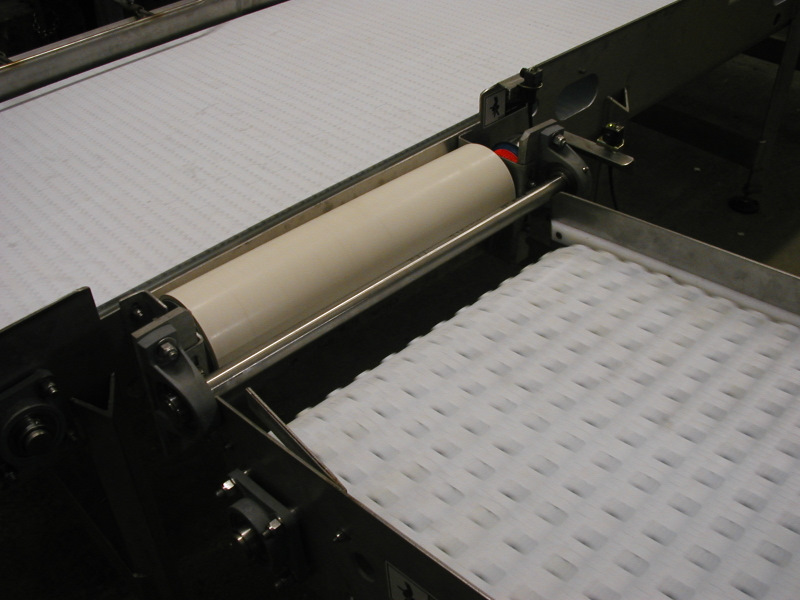

Low Back Pressure Conveyors
Low Back Pressure (LBP) conveyors are used for starting and stopping container lines, unequal paced lines between processes, product stream inconsistencies, and accumulation points in a process. Our LBP conveyors contain the same high quality construction found in all our conveyors with a thicker roller belt applied. We use plastic modular belting (e.g. Rexnord, Intralox, or customer specified) with rollers so the belt will roll under your product when it is slowed, stalled, or stopped. Includes all the standard features found on our Belt Conveyors in Support Equipment/Services.
Features:
- Plastic modular belting (e.g. Rexnord, Intralox, or customer specified)
- Custom engineered to fit application
- Integrated stop gates as required
- Same standard features as our Belt Conveyors
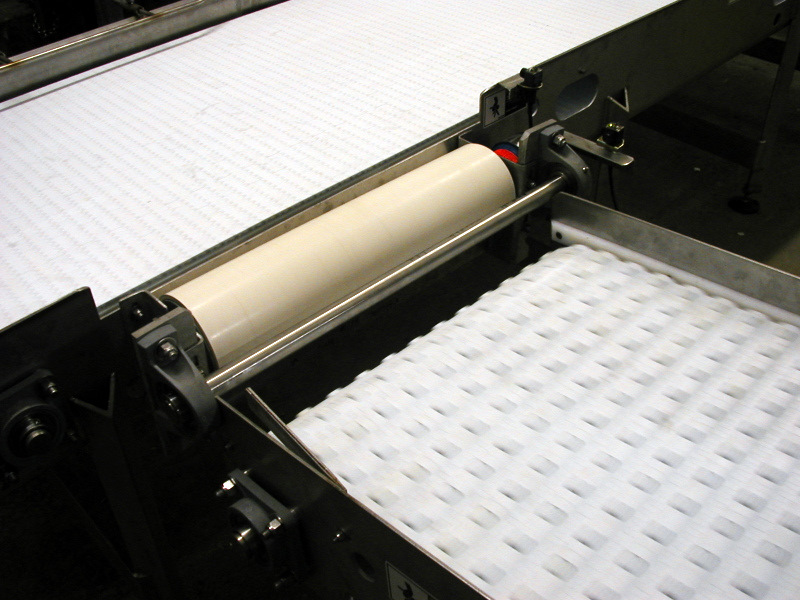
Low Back Pressure Conveyors
Low Back Pressure (LBP) conveyors are used for starting and stopping container lines, unequal paced lines between processes, product stream inconsistencies, and accumulation points in a process. Our LBP conveyors contain the same high quality construction found in all our conveyors with a thicker roller belt applied. We use plastic modular belting (e.g. Rexnord, Intralox, or customer specified) with rollers so the belt will roll under your product when it is slowed, stalled, or stopped. These include all the standard features found on our Belt Conveyors in Support Equipment/Services.
Features:
- Plastic modular belting (e.g. Rexnord, Intralox, or customer specified)
- Custom engineered to fit application
- Integrated stop gates as required
- Same standard features as our Belt Conveyors
Magnetic Hold Down Conveyor
With the standard high quality we put into all our conveyors, Millard can provide Magnetic Hold Down Conveyors to control your empty or full cans. The powerful stationary magnets will steady empty cans as they pass over them. Our conveyors are generally used inside of machinery to steady the cans and remove variation in positioning. We have also made them for other processes where alignment is crucial. All the standard features found on our Belt Conveyors in the Support Equipment/Services.
Features:
- Powerful magnets sized and located per your application
- Design, build, and install services
- Same standard features as our Belt Conveyors
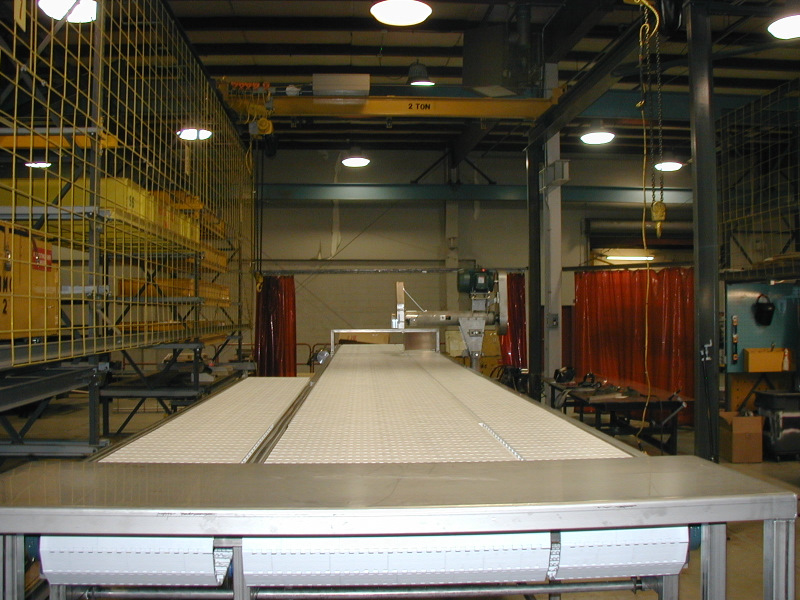
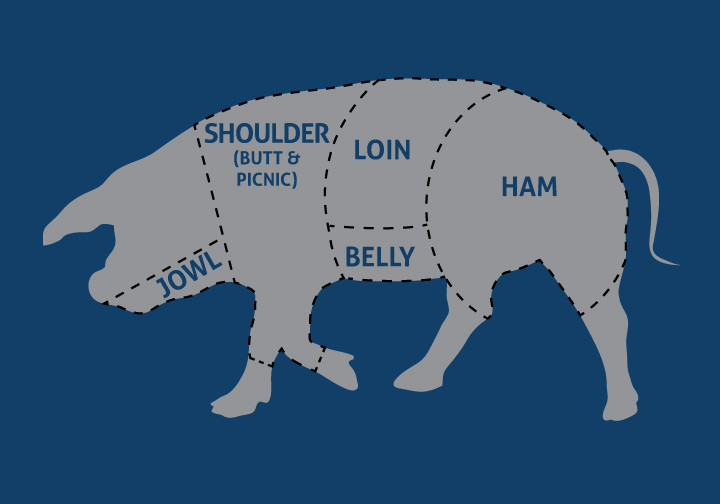
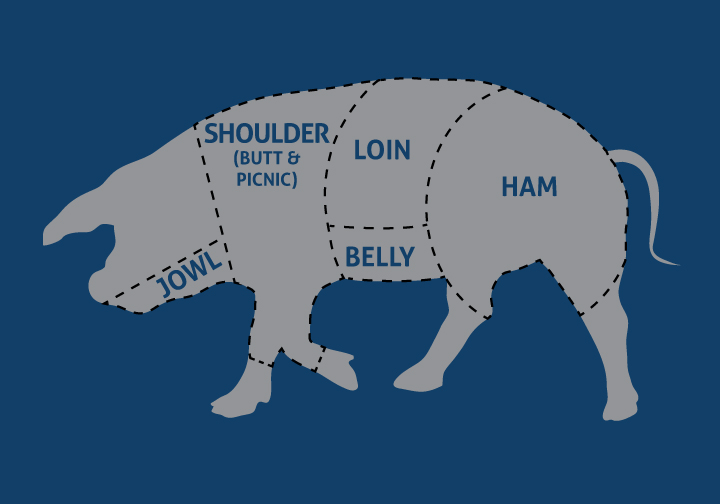
Main Breakup Table and Main Line Equipment
We can fabricate and supply the equipment necessary for your main breakup table (the primal cutting line) that will first move the split hogs from an overhead conveyor onto a breakup table. Along this moving table the four major cuts are completed sending the jowl, ham, shoulder, and mid sections onto their lines for more processing. This area includes the main breakup table itself, de-gambreling system, ham saws, shoulder saws, ham conveyors, mid-section conveyors, etc., and any of the related and support equipment such as chutes, walkovers, crossover stairs, platforms, mezzanines, catwalks, and ergo stands. We follow strict safety and sanitary design and fabrication standards on all of this equipment to meet the demands of the pork industry. Each conveyor is mated or integrated with the others and each is equipped with properly sized drives and optimal belting with the best surface for the application. Brands may be specified by the customer. See our Belt Conveyor under the "Support Equipment" section for more detail on our optimized conveyor design.
Features:
- Heavy Duty Stainless Steel Construction
- Sanitary Wash-down Features by Design
-
"In-House" PassivationPassivation treatment is intended to improve the surface condition of stainless steel by dissolving iron that has been embedded in the surface during forming or machining. If allowed to remain, the iron can corrode and give the appearance of rust spots on the stainless steel. Passivation restores the original corrosion-resistant surface by forming a thin, transparent oxide film and is the preferred method for the sanitary durability of stainless steel. Millard has one of the largest "In-House" Passivation operations available for our customer's fabricated items. See our case study on passivation for details. on equipment for sanitary durability
- Adjustable legs for uneven surfaces
- Heavy Duty Variable Speed Motor and Gearbox
- Safety guarding
- Integrated load cells on the scale conveyors
Meat Recovery Equipment
Millard builds most of the meat recovery support equipment which consists of dumpers, conveyors, chutes, platforms and stands. All our support equipment is made from HD stainless steel and follows strict Safety and Sanitary Design Standards.
Features:
- "In-House" PassivationPassivation treatment is intended to improve the surface condition of stainless steel by dissolving iron that has been embedded in the surface during forming or machining. If allowed to remain, the iron can corrode and give the appearance of rust spots on the stainless steel. Passivation restores the original corrosion-resistant surface by forming a thin, transparent oxide film and is the preferred method for the sanitary durability of stainless steel. Millard has one of the largest "In-House" Passivation operations available for our customer's fabricated items. See our case study on passivation for details. for Sanitary Durability
- Sanitary wash-down duty
- Open Channel Construction
- Safety Railings
Media:


MeatMaster Support Equipment
Millard supports MeatMasterTM equipment by building the peripheral equipment necessary to make the process functional and efficient. We provide the (3) key support products; 1) Stand & Support Mezzanines, 2) Reject Discharge Conveyor, and 3) Platforms. All our support equipment is made from HD stainless steel and follows strict Safety and Sanitary Design Standards.
Features:
- "In-House" PassivationPassivation treatment is intended to improve the surface condition of stainless steel by dissolving iron that has been embedded in the surface during forming or machining. If allowed to remain, the iron can corrode and give the appearance of rust spots on the stainless steel. Passivation restores the original corrosion-resistant surface by forming a thin, transparent oxide film and is the preferred method for the sanitary durability of stainless steel. Millard has one of the largest "In-House" Passivation operations available for our customer's fabricated items. See our case study on passivation for details. Finish for Sanitary Durability
- Sanitary wash-down duty
- Open Channel Construction
- Safety Railings
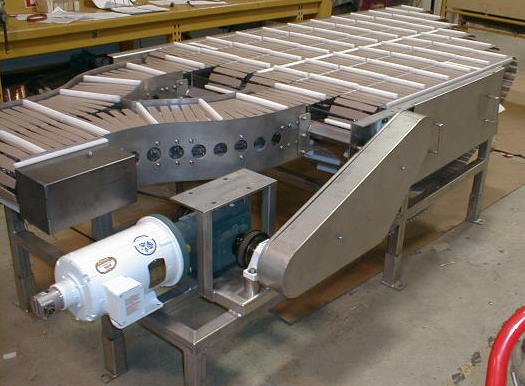
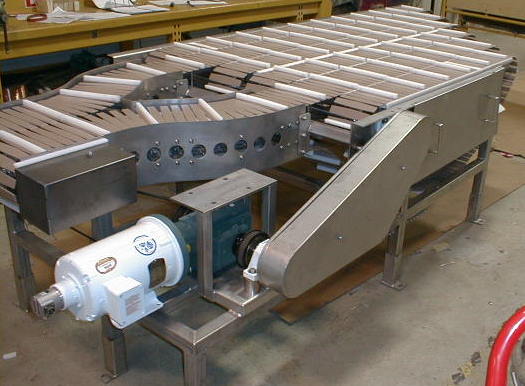
Merge and Diverge Conveyors
Millard can design, build, and install the Merge or Diverge conveyor you need in your processing lines. Our conveyors are specifically suited to your products and process needs and can move 4 lanes to 1 or 1 lane to 2. We offer several methods to separate and converge products depending upon application.
Features:
- Move product with physical plows or roller ball belting
- Licensed Intralox Activated Roller Belt™ (ARB) supplier and installer
- Timed lanes using phase variators on motors and gearboxes
- Cleated belts to secure your product containers and trays
- Standard features found in Belt Conveyors under Support Equipment & Services
Media:
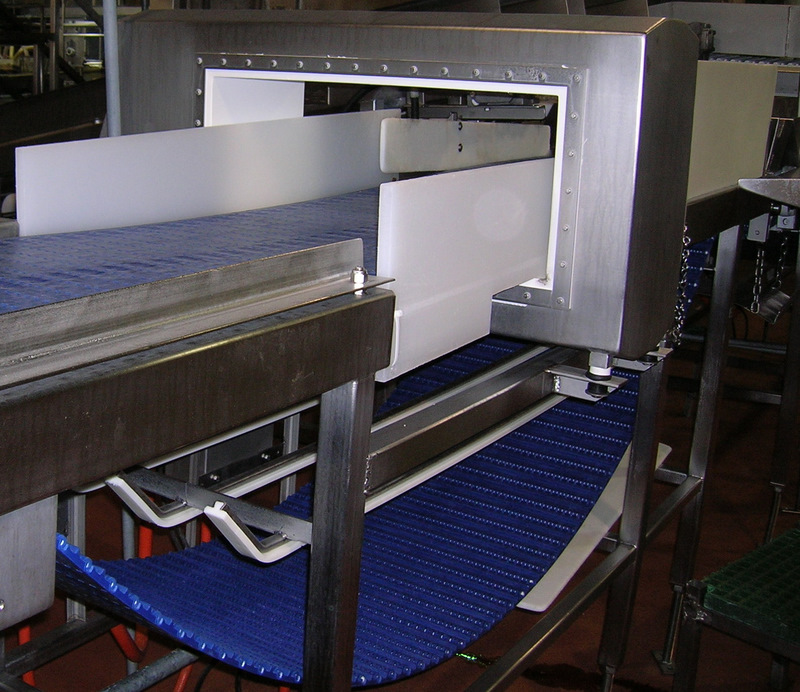

Metal Detector Conveyor
Millard's Metal Detector conveyor is our standard hygenic heavy duty conveyor design integrated with a SAFELINE® metal detector. We build the complete line with the metal detector, standard plastic belting, and a removable metal-free zone section.
Features:
- Intralox belting (or customer specified)
- Removable Metal-Free formed Lexan zone
- Heavy duty stainless steel construction
- Heavy duty motors and gearboxes
- Custom lengths, widths, angles, and configurations available
- Adjustable feet for uneven surfaces
- Integrated with SAFELINE® products
- Same standard features as our Belt Conveyors
-
"In-House" PassivationPassivation treatment is intended to improve the surface condition of stainless steel by dissolving iron that has been embedded in the surface during forming or machining. If allowed to remain, the iron can corrode and give the appearance of rust spots on the stainless steel. Passivation restores the original corrosion-resistant surface by forming a thin, transparent oxide film and is the preferred method for the sanitary durability of stainless steel. Millard has one of the largest "In-House" Passivation operations available for our customer's fabricated items. See our case study on passivation for details. for Sanitary Durability
Media:
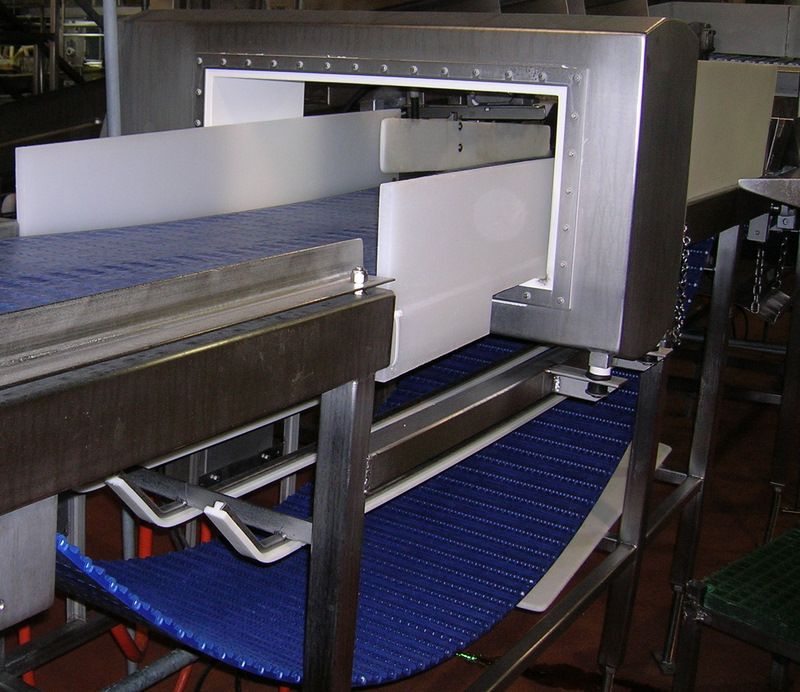
Metal Detector Conveyor
Millard's Metal Detector conveyor is our standard hygenic heavy duty conveyor design integrated with a SAFELINE® metal detector. We build the complete line with the metal detector, standard plastic belting, and a removable metal-free zone section.
Features:
- Intralox Belting (or customer specified)
- Removable "Metal-Free" formed Lexan zone
- Heavy Duty Stainless Steel Construction
- HD Motors and Gearboxes
- Custom lengths, widths, angles and configurations available
- Adjustable feet for uneven surfaces
- Integrated with SAFELINE® products
- Same standard features as our Belt Conveyors
-
"In-House" PassivationPassivation treatment is intended to improve the surface condition of stainless steel by dissolving iron that has been embedded in the surface during forming or machining. If allowed to remain, the iron can corrode and give the appearance of rust spots on the stainless steel. Passivation restores the original corrosion-resistant surface by forming a thin, transparent oxide film and is the preferred method for the sanitary durability of stainless steel. Millard has one of the largest "In-House" Passivation operations available for our customer's fabricated items. See our case study on passivation for details. for Sanitary Durability.
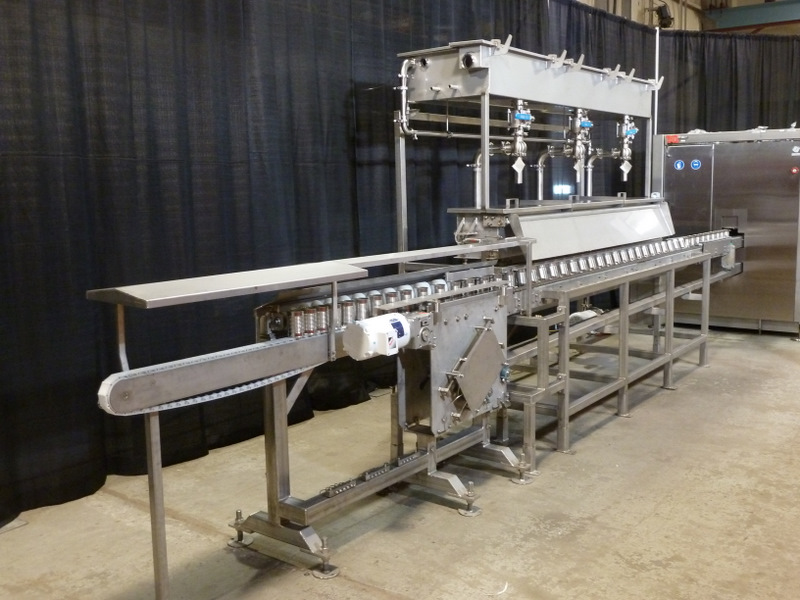
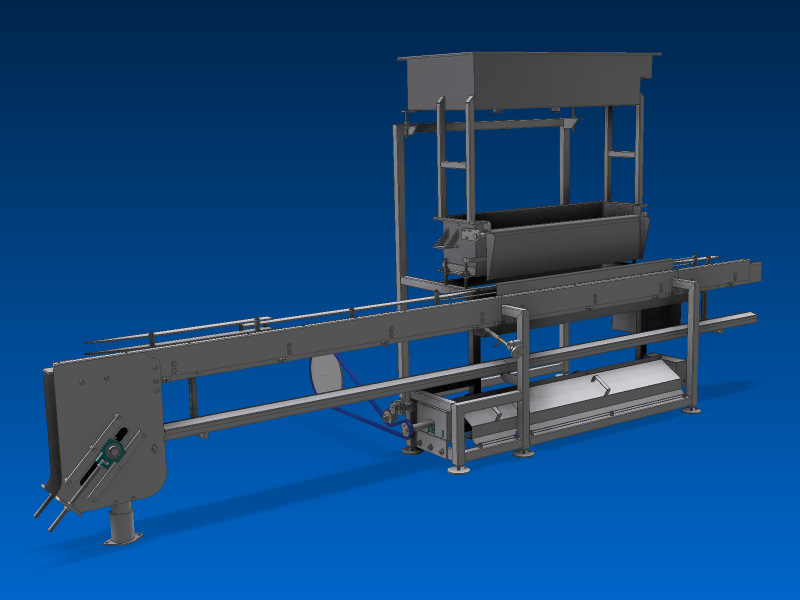
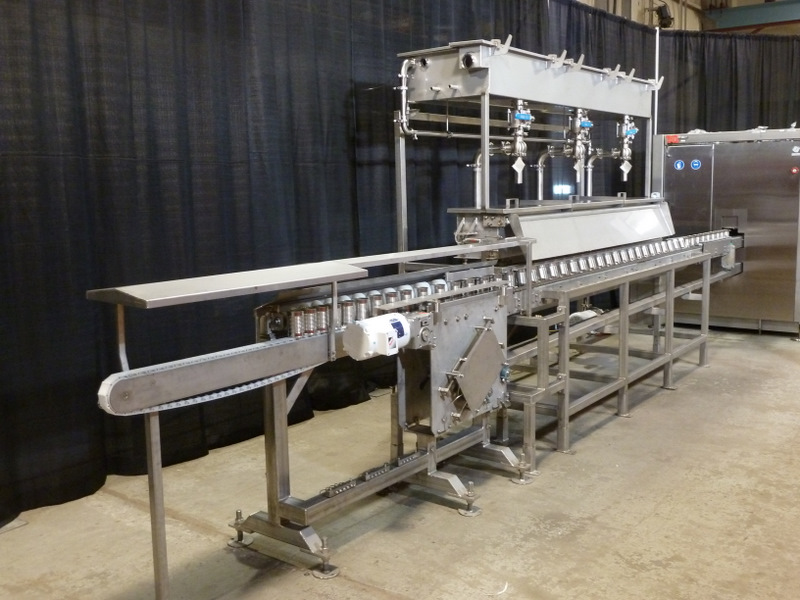
MILLARD LIQUIFILL
The Millard LiquiFill™ was developed as an efficient Liquid Filler / Top-Off design that can be custom fit to your specific product and application. Our Liquid Filler is a continuous flow process to fill and/or "top-off" cans (or containers) passing through a precision waterfall of most any flowable liquid from single or multiple weirs. The process provides precision adjustments to flow and head space volumes while recapturing and recirculating virtually all the liquids within the system. Speed and volume requirements determine the Filler machine's overall length. Millard supports full integration into your new or existing lines. See our "Case Study" for more details.
Features:
- Can flow rates variable up to 1,000 cans per minute
- Minimal moving parts and wear points
- Simple controls to adjust head space
- Up to (3) Separate weir controls to keep liquids flowing consistent along can path
- Precision flow valves for smooth liquid transition into the cans
- Filler liquids are reclaimed and circulated to eliminate waste
- Single point lubrication throughout machine
- Adjustable speed controls to synchronize with downstream pacing operations
- Stainless custom Heating Element options for weirs
-
"In-House" PassivationPassivation treatment is intended to improve the surface condition of stainless steel by dissolving iron that has been embedded in the surface during forming or machining. If allowed to remain, the iron can corrode and give the appearance of rust spots on the stainless steel. Passivation restores the original corrosion-resistant surface by forming a thin, transparent oxide film and is the preferred method for the sanitary durability of stainless steel. Millard has one of the largest "In-House" Passivation operations available for our customer's fabricated items. See our case study on passivation for details. for Sanitary durability
- Sanitary design for easy cleaning operations
- Electric Motors
- HD Stainless Steel Construction
- Wash-down duty components
- Full integration into existing or new lines
Media:


Millard PassPRO In-House Passivation
Millard PassPRO™, our large "In-House" Passivation operation, is available for our customers' fabricated items. We place a high priority on Sanitation in both our designs and fabrication processes which is why we have incorporated this process as a standard and can be found in our "Safety and Sanitation Design Standards". Passivation treatment is intended to improve the surface condition of stainless steel by dissolving iron that has been embedded in the surface during forming or machining. If allowed to remain, the iron can corrode and give the appearance of rust spots on the stainless steel. Passivation restores the original corrosion-resistant surface by forming a thin, transparent oxide film. Passivation is the preferred method for the sanitary durability of stainless steel.
Features:
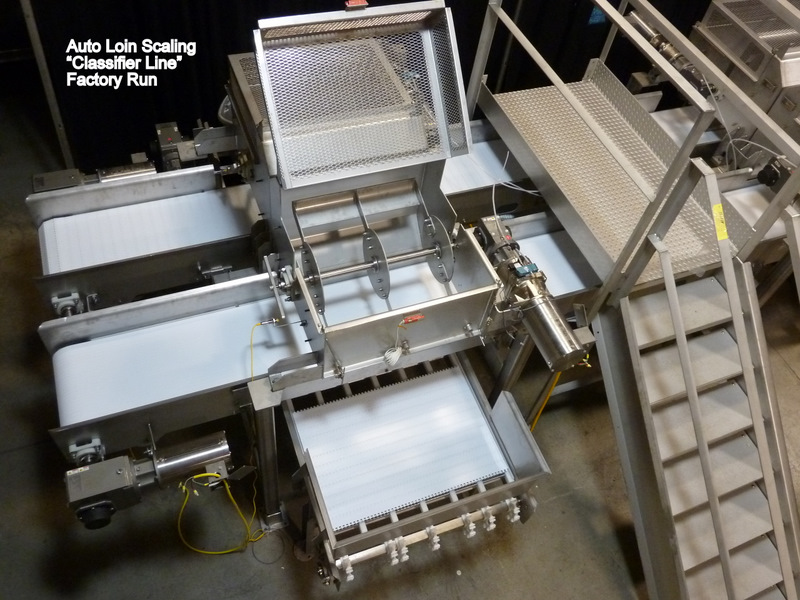
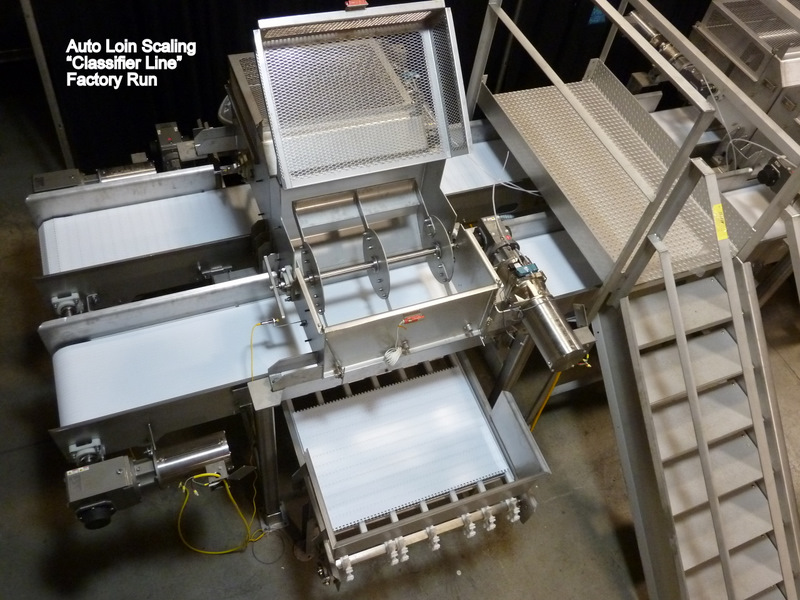
MILLARD SIDEKICK
The Millard SideKick™ is part of our innovative Loin Classifier Line that automates the sorting and redirecting of products from a common path to multiple paths or conveyor lines. It quickly and cleanly redirects meat products like pork loins to other conveyors. Integration into the customer’s PLC system makes the system both flexible and adaptable to changing product requirements. This unique "kicking" system originally designed for pork loins could be adapted for other products. See our case study below and contact us to get the white paper on its application.
Features:
- Integration into new or existing systems, lines, and conveyors
- Air Clutch
- Safety Guarding on all pinch point and moving parts
- Safety Guarding interlocks supplied
- Heavy duty gearbox and motor
- Sanitary wash-down duty
- Food Safety and Sanitation Design Standards
- Durable stainless steel construction
-
"In-House" PassivationThe Millard PassPRO Passivation treatment is intended to improve the surface condition of stainless steel by dissolving iron that has been embedded in the surface during forming or machining. If allowed to remain, the iron can corrode and give the appearance of rust spots on the stainless steel. Passivation restores the original corrosion-resistant surface by forming a thin, transparent oxide film and is the preferred method for the sanitary durability of stainless steel. Millard has one of the largest "In-House" Passivation operations available for our customer's fabricated items. See our case study on passivation for details. Finish for Sanitary Durability
Media:
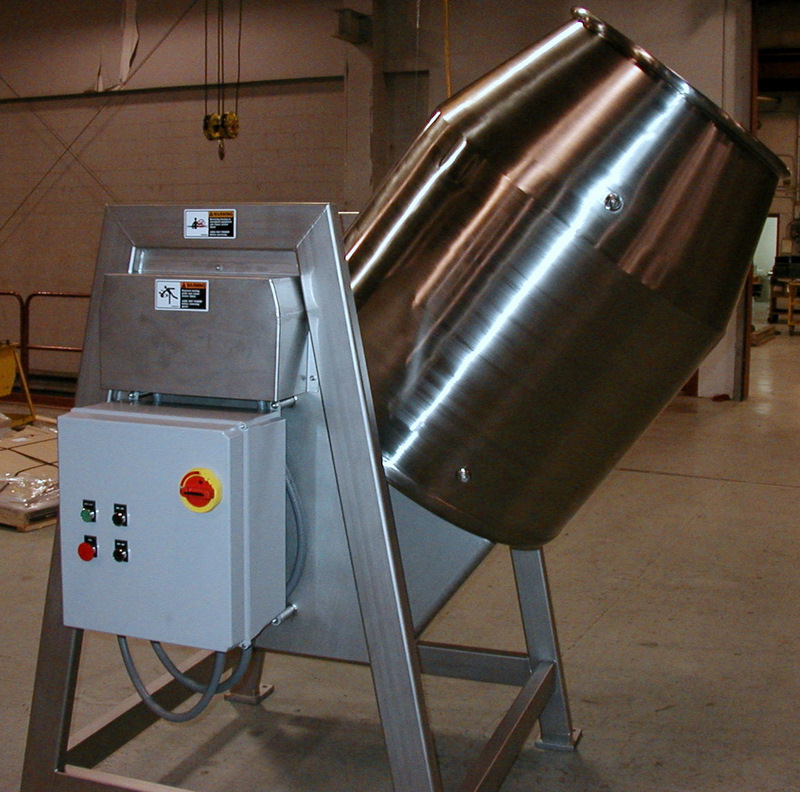
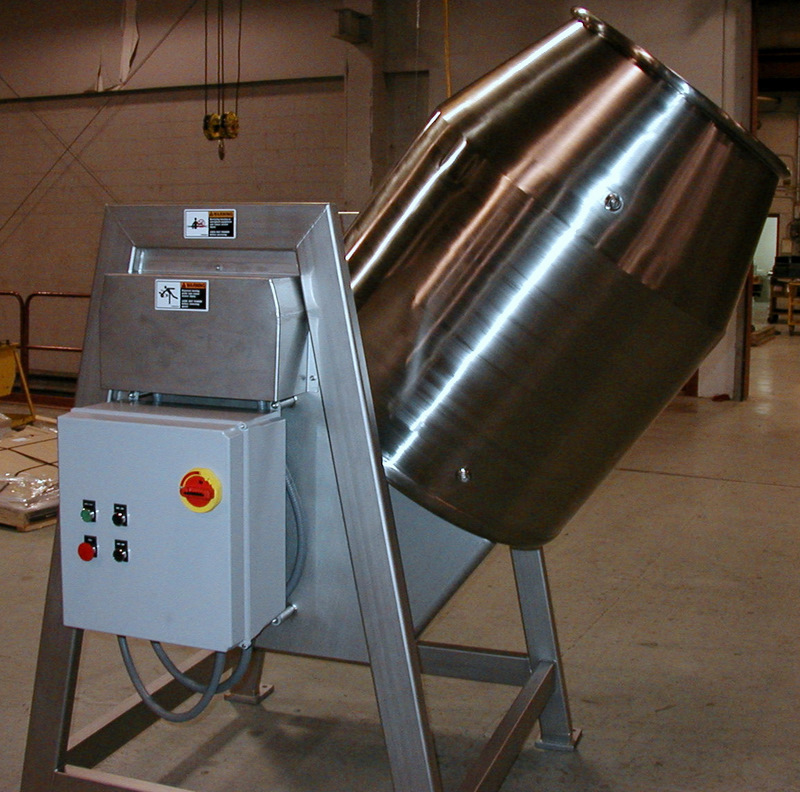
Mixers
Millard makes custom Mixers and Blenders for the Ingredient Preparation processes in the Fresh & Frozen Industry. Our Mixers are designed to Safe and Sanitary Design Standards with durable construction for years of service. The GM1000 is a standard that mixes thoroughly and gently yet is durable. It can be used for vegetables, potato salad, deserts, etc. See our Mixers and Blenders in Support Equipment & Services for product descriptions and features.
Features:
- Stainless Steel construction, Carbon Steel for non-sanitary applications, Mechanical or PLC controls
- Safety Gates with interlocks
- Custom discharge metering
- Auto gate lifting option
- Personnel platforms when needed
- Reverse motors available
- PLC integration available
- Weigh scales available

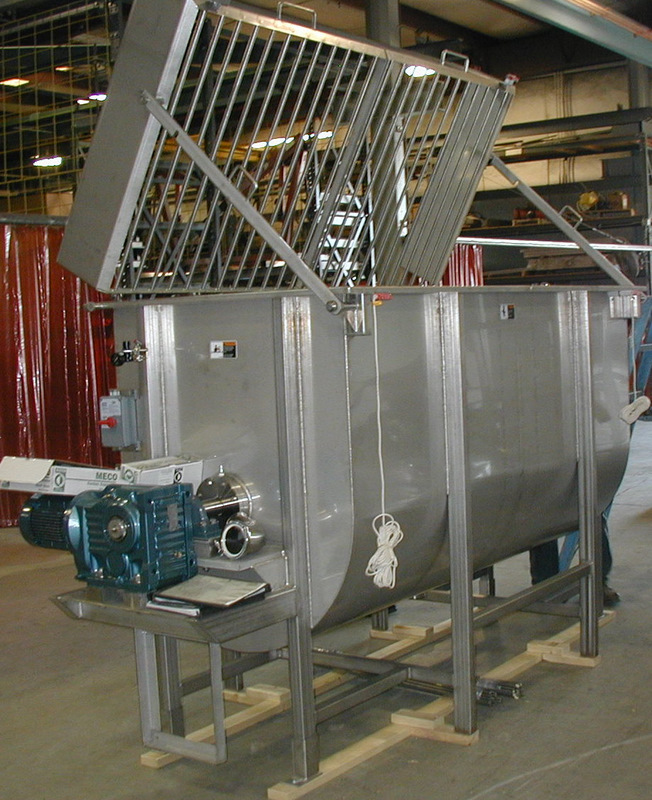
Mixers and Blenders
Food Processing can require frequent blending and mixing of ingredients to obtain a final product. Millard is experienced in manufacturing custom Mixers and Blenders, as well as Cooking Kettles, Mixing Kettles, and Box Shakers, to support food processing applications that tend to be very product specific in design. The size, shape and combination of mixing and blending can be custom designed to meet your needs. We can help you develop the right machine to blend or mix your ingredients then engineer it for production. Our machines are built to last with heavy duty stainless steel, sanitary and wash-down duty construction.
Features:
- "In-House" PassivationPassivation treatment is intended to improve the surface condition of stainless steel by dissolving iron that has been embedded in the surface during forming or machining. If allowed to remain, the iron can corrode and give the appearance of rust spots on the stainless steel. Passivation restores the original corrosion-resistant surface by forming a thin, transparent oxide film and is the preferred method for the sanitary durability of stainless steel. Millard has one of the largest "In-House" Passivation operations available for our customer's fabricated items. See our case study on passivation for details. for Sanitary Durability
- Heavy duty Stainless Steel construction
- Carbon Steel for non-sanitary applications
- Mechanical or PLC controls
- Safety Gates with interlocks
- Custom discharge metering
- Auto grate lifting option
- Personnel platforms when needed
- Reverse motors available
- PLC integration available
- Single and Dual Screw Designs
- Single and Dual Gate Discharges
Media:
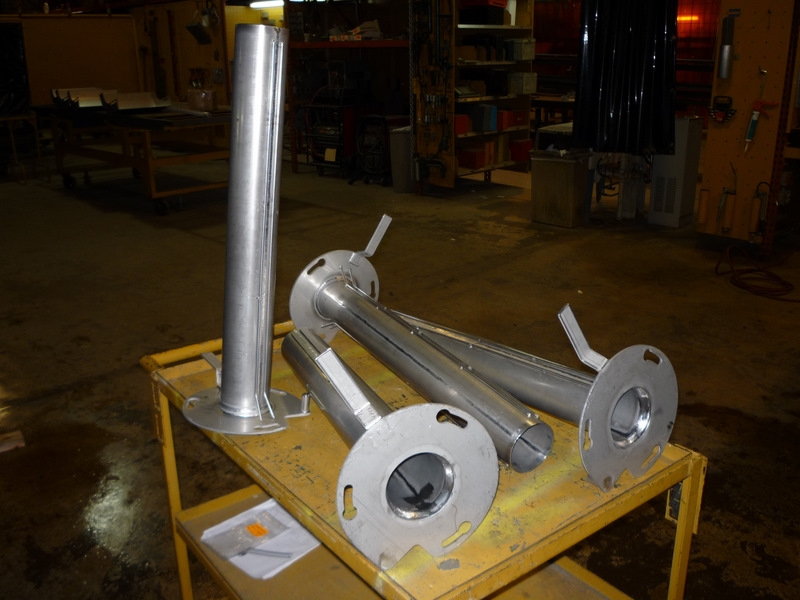

Other Cut Floor Products
Millard provides many other products for the Cut Floor such as Loin Stuffers, Poly Bag Racks, Bagging Horns, etc. We can work with you to design or supply the products you need.
Features:
- Heavy Duty Stainless Steel Construction
- Customization available
-
"In-House" PassivationPassivation treatment is intended to improve the surface condition of stainless steel by dissolving iron that has been embedded in the surface during forming or machining. If allowed to remain, the iron can corrode and give the appearance of rust spots on the stainless steel. Passivation restores the original corrosion-resistant surface by forming a thin, transparent oxide film and is the preferred method for the sanitary durability of stainless steel. Millard has one of the largest "In-House" Passivation operations available for our customer's fabricated items. See our case study on passivation for details. for Sanitary Durability
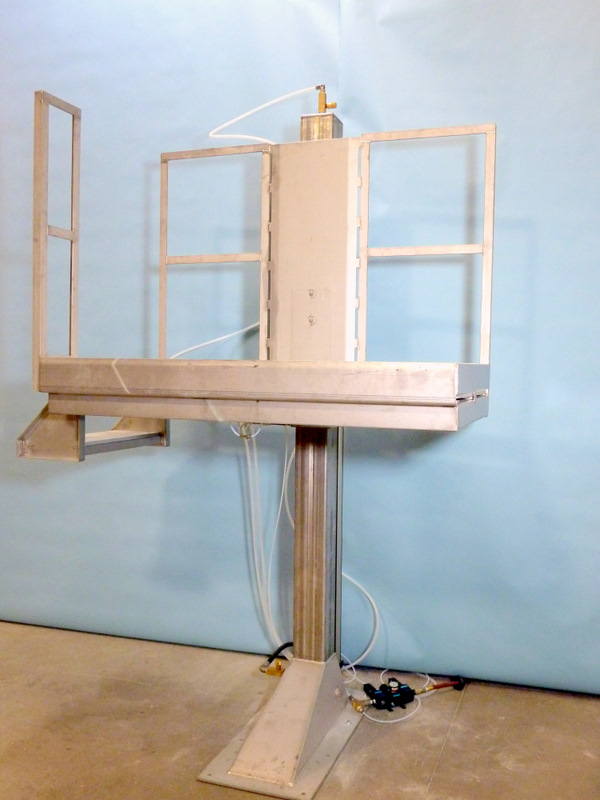

Other Harvest Floor Products
Millard provides a large range of products for the Pork Processing Equipment industry. Our specialty is working with our customers to provide the proper equipment they need and making it work, whether that be a standard item, a connecting process, or a custom designed product to fit your unique layout or process. Here is a sampling of some of the other products we manufacture:
- Air Operated Shackle Release
- Dehairing Support Parts
- Hog Carcass Wash Cabinets
- Hog Head Basket
- Hog Head Wash Cabinets
- Pedestal Inspection Platforms
- Personnel Wash Stations and Sinks
- Skinning Stand
- Tongue Basket Washer
- Tongue Washer
- Trolley Indexers
- USDA Stamper
Features:
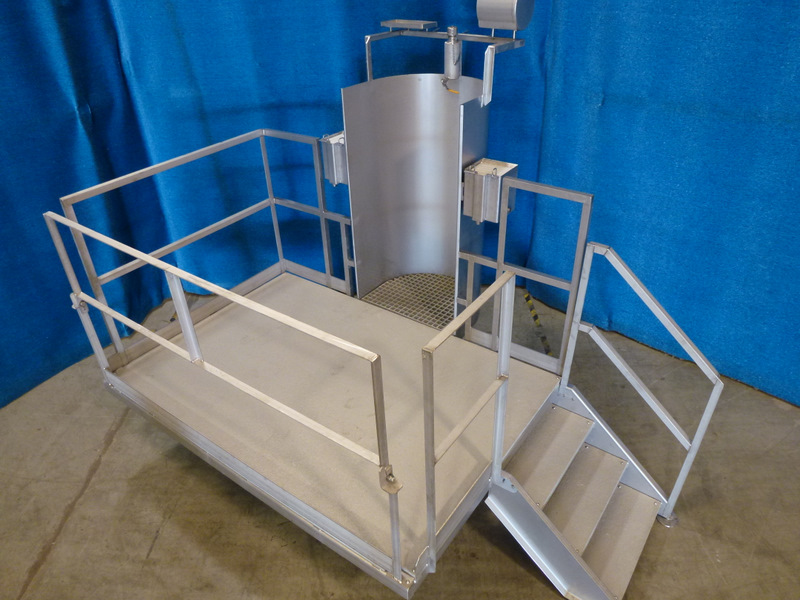
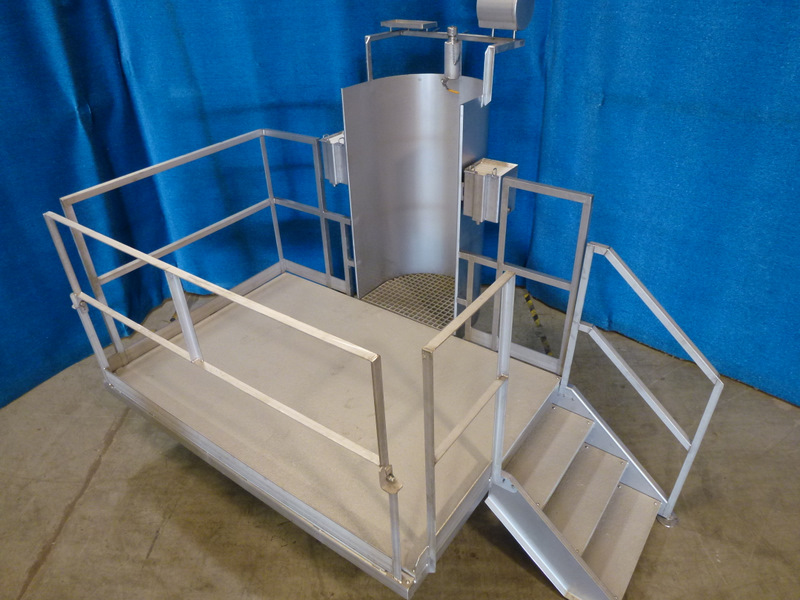
Other Harvest Floor Products
Millard provides a large range of products for the Beef Processing Equipment industry. Our specialty is working with our customers to provide the proper equipment they need and making it work, whether that be a standard item, a connecting process, or a custom designed product to fit your unique layout or process. We offer the following products but are not limited to them. If you do not see what you need here, call us and chances are high we can build it or have built something similar.
Features:
- USDA Stamper
- Air Operated Shackle Release (Hook style)
- Pedestal Inspection Platforms
- Personnel Wash Stations and Sinks
- Skinning Stand
Media:
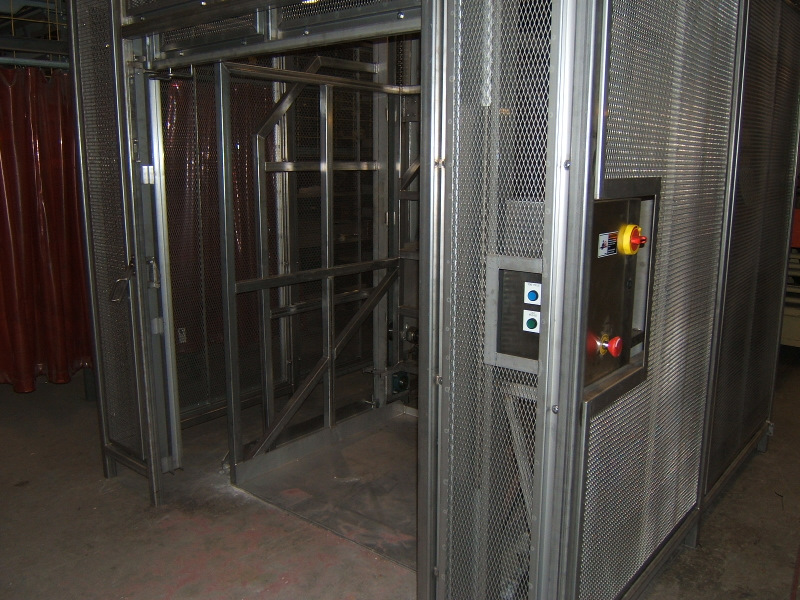
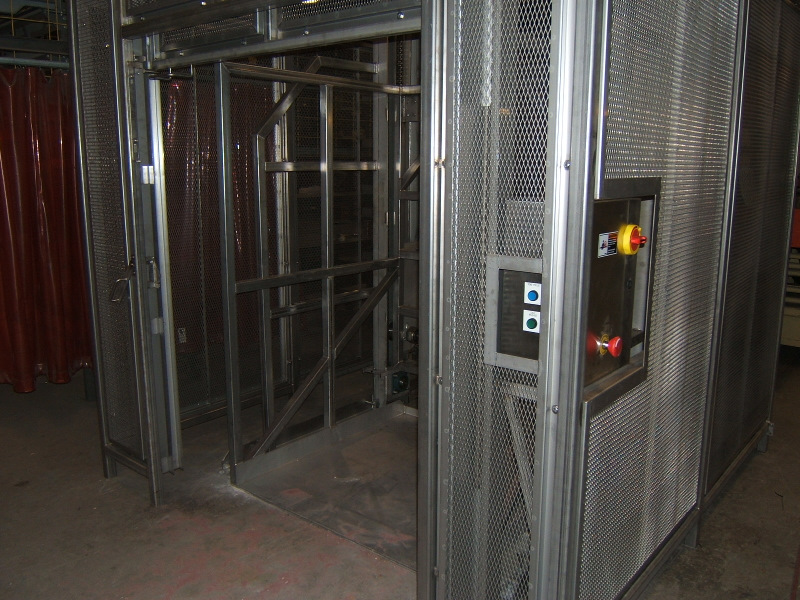
Pallet Lifts
Millard's Pallet Lift is an "All Electric" economical way to lift pallets vertically from one elevation to another. Lift heights range from 10' - 30' but can be customized for your application. Our lift is similar to our Electric Hi-Lift Dumper with the raising platform made to fit pallets of various sizes. We can configure the lift to fit most standard pallet sizes or custom size it for special lengths and widths. Floor to floor or moving hand trucks to mezzanines, our lifts have multiple applications. Stainless steel construction with capacity up to 2,500 lbs. The pallet lift is well suited for Dry Storage areas but can be used in any food related process where moving pallets is necessary.
Features:
- Economical "All Electric" operation
- 10'-30' elevated vertical lifts
- Capacities up to 2,500 lbs
- Automatic operations
- Safety guarding and interlocks
- Primarily dry storage w/other applications available
- HD Stainless steel construction
- Wash-down duty construction
-
"In-House" PassivationPassivation treatment is intended to improve the surface condition of stainless steel by dissolving iron that has been embedded in the surface during forming or machining. If allowed to remain, the iron can corrode and give the appearance of rust spots on the stainless steel. Passivation restores the original corrosion-resistant surface by forming a thin, transparent oxide film and is the preferred method for the sanitary durability of stainless steel. Millard has one of the largest "In-House" Passivation operations available for our customer's fabricated items. See our case study on passivation for details. for Sanitary Durability
Piston Filler
Millard's Piston Filler has evolved from years of innovations and successful applications. Our Piston Filler is a rotary machine containing up to 40 pistons and a capacity up to 800 cpm (cans per minute). Applications are best suited for thicker or heavy viscosity slurries. The rotary process fills and unloads each piston with an exact volume of fluids via a dynamic ramp/track process. The cans and containers travel underneath each piston and are filled as they travel around the rotary path. This machine allows the filling of cans or containers in one operation versus multiple filling processes necessary where thicker liquids cannot be pumped and watering down is required. Your final mix can be filled in one process and consistency maintained.
Features:
- Final fill process - no watering down required
- Up to 40 Pistons on a round turret
- Capacity up to 800 cpm
- Designed for Thick, Heavy Viscosity slurries
- Hoppers can be outfitted with agitators or mixers to keep ingredients suspended
- Electric or Line-shaft driven
- Air operated manifold
- Air Bags seal lower plate for clean operations
-
"In-House" PassivationPassivation treatment is intended to improve the surface condition of stainless steel by dissolving iron that has been embedded in the surface during forming or machining. If allowed to remain, the iron can corrode and give the appearance of rust spots on the stainless steel. Passivation restores the original corrosion-resistant surface by forming a thin, transparent oxide film and is the preferred method for the sanitary durability of stainless steel. Millard has one of the largest "In-House" Passivation operations available for our customer's fabricated items. See our case study on passivation for details. for Sanitary durability
- Sanitary design for easy cleaning operations

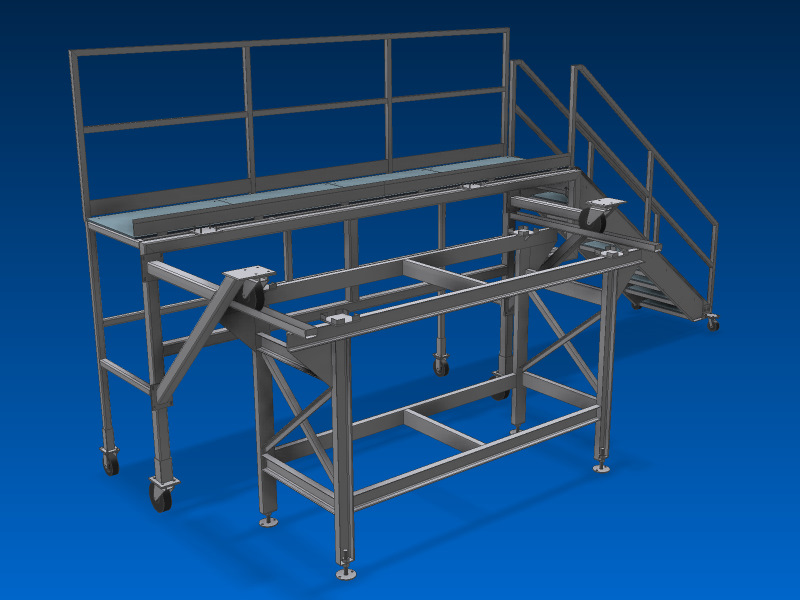

Platforms, Stairs, and Ladders
Millard can design, build, and install custom Platforms, Stairs, Mezzanines, Catwalks, Walk Overs, and Ladders for personnel walk ways, equipment supports, and maintenance access. We offer a wide range of walk surfaces including our exclusive OptiGrip® walk surface. Our platforms can be general duty or engineer certified to support your application and need. We provide safety features and railings per your application.
Features:
- Heavy Duty Construction
- Stainless Steel
- Galvanized or Carbon Steel
- Sanitary Wash-down duty design
- Custom designed to fit your layout
- Open channel construction
- Walk Surface options: OptiGrip®, Bar Grating, Fibergrate®, Fiberplate®, SlipNOT®
Media:
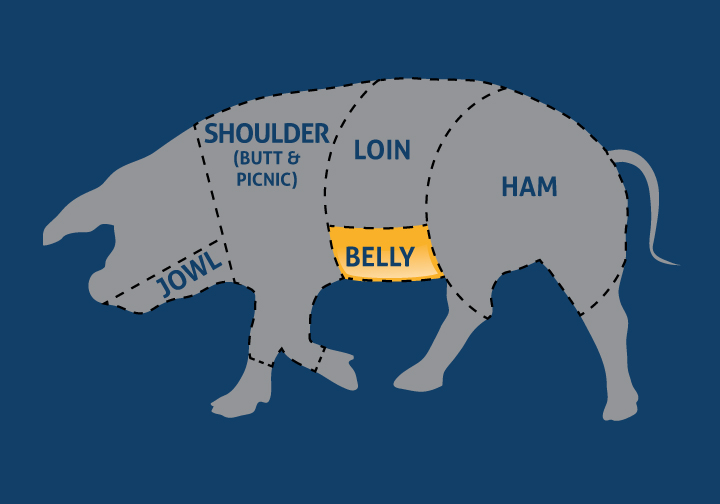

Pork Belly Line Equipment
Millard can fabricate your entire pork belly line customizing the equipment to fit your application. We build belly conveyors, belly tables, belly scale conveyors, belly rollers, belly flippers, rib tables, and rib boxing stations along with all the related and support equipment including saws, trim conveyors, fat conveyors, chutes, walkovers, crossover stairs, platforms, mezzanines, catwalks, ergo stands, etc. Our expertise also allows us to integrate with and supply complimentary equipment like skinners. We follow strict safety and sanitary design and fabrication standards on all of this equipment to meet the demands of the pork industry. Each conveyor is mated or integrated with the others and each is equipped with properly sized drives and optimal belting with the best surface for the application. Brands may be specified by the customer. See our Belt Conveyor under the "Support Equipment" section for more detail on our optimized conveyor design.
Features:
- "In-House" PassivationPassivation treatment is intended to improve the surface condition of stainless steel by dissolving iron that has been embedded in the surface during forming or machining. If allowed to remain, the iron can corrode and give the appearance of rust spots on the stainless steel. Passivation restores the original corrosion-resistant surface by forming a thin, transparent oxide film and is the preferred method for the sanitary durability of stainless steel. Millard has one of the largest "In-House" Passivation operations available for our customer's fabricated items. See our case study on passivation for details. for Sanitary Durability
- Food Safety and Sanitation Design Standards
- Designed with Ergonomic & Safety Features
- Customized for your Application
- High Quality & Durable Construction
- Engineering Assistance available
Media:


Pork Loin Line Equipment
Millard can custom fabricate most of the equipment required on a pork loin line. We build loin conveyors, lion tables, loin scale conveyors, loin classifier lines, and the deboning conveyors. We also manufacture all the related and support equipment including saws, trim conveyors, fat conveyors, chutes, walkovers, crossover stairs, platforms, mezzanines, catwalks, ergo stands, etc. Our expertise also allows us to integrate with and supply complimentary equipment like auto loin pullers. We follow strict safety and sanitary design and fabrication standards on all of this equipment to meet the demands of the pork industry. Each conveyor is mated or integrated with the others and each is equipped with properly sized drives and optimal belting with the best surface for the application. Brands may be specified by the customer. See our Belt Conveyor under the "Support Equipment" section for more detail on our optimized conveyor design.
Features:
- "In-House" PassivationPassivation treatment is intended to improve the surface condition of stainless steel by dissolving iron that has been embedded in the surface during forming or machining. If allowed to remain, the iron can corrode and give the appearance of rust spots on the stainless steel. Passivation restores the original corrosion-resistant surface by forming a thin, transparent oxide film and is the preferred method for the sanitary durability of stainless steel. Millard has one of the largest "In-House" Passivation operations available for our customer's fabricated items. See our case study on passivation for details. for Sanitary Durability
- Food Safety and Sanitation Design Standards
- Designed with Ergonomic & Safety Features
- Customized for your Application
- High Quality & Durable Construction
- Engineering Assistance available
Media:

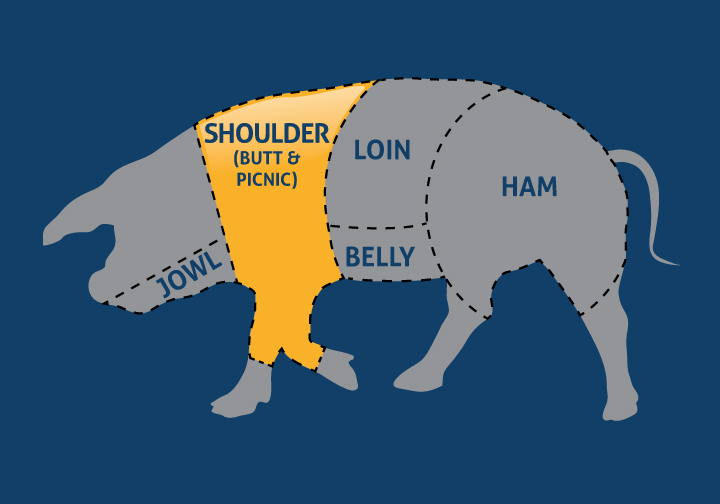
Pork Shoulder Line Equipment
Millard can fabricate most ham line and ham pace line equipment including ham tables, ham scale conveyors, ham classifier lines, ham boning (deboning) lines, and pace line conveyors. We also manufacture related and support equipment including saws, trim conveyors, fat conveyors, chutes, walkovers, crossover stairs, platforms, mezzanines, catwalks, and ergo stands. Our flexibility also allows us to integrate with and supply complimentary equipment like Metal Detectors. We follow strict safety and sanitary design and fabrication standards on all of this equipment to meet the demands of the pork industry. Each conveyor is mated or integrated with the others and each is equipped with properly sized drives and optimal belting with the best surface for the application. Brands may be specified by the customer. See our Belt Conveyor under the "Support Equipment" section for more detail on our optimized conveyor design.
Features:
- "In-House" PassivationPassivation treatment is intended to improve the surface condition of stainless steel by dissolving iron that has been embedded in the surface during forming or machining. If allowed to remain, the iron can corrode and give the appearance of rust spots on the stainless steel. Passivation restores the original corrosion-resistant surface by forming a thin, transparent oxide film and is the preferred method for the sanitary durability of stainless steel. Millard has one of the largest "In-House" Passivation operations available for our customer's fabricated items. See our case study on passivation for details. for Sanitary Durability
- Food Safety and Sanitation Design Standards
- Designed with Ergonomic & Safety Features
- Customized for your Application
- High Quality & Durable Construction
- Engineering Assistance available
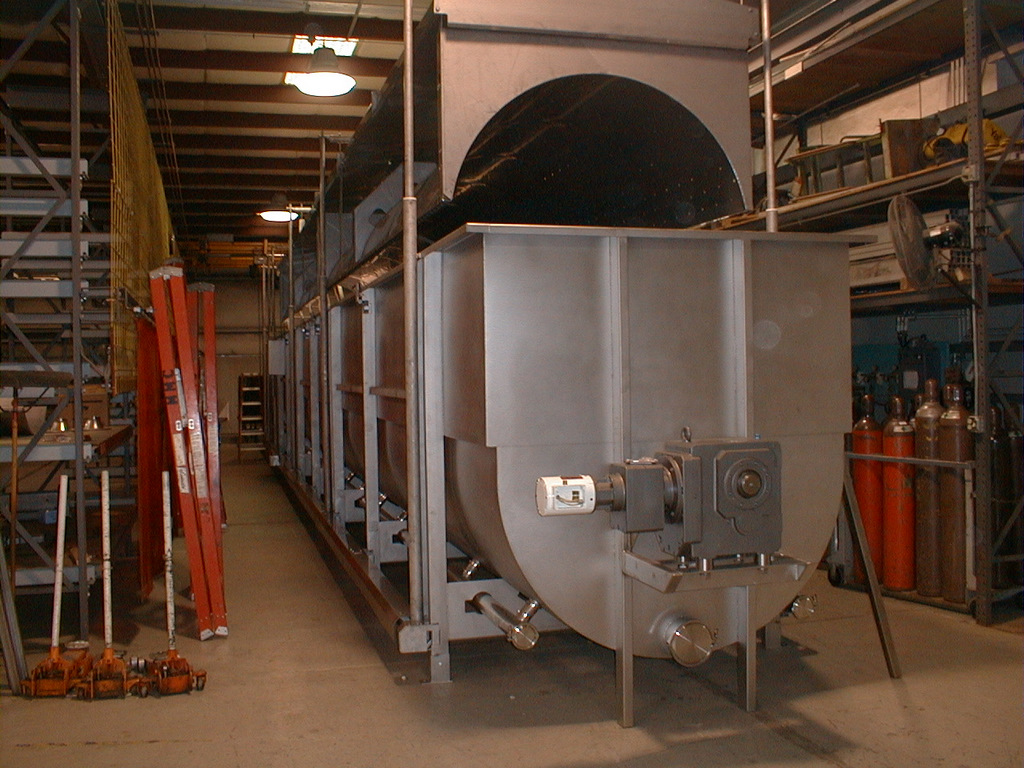

Poultry Cooker
Millard revolutionized the Poultry Cooking industry by engineering a continuous operation that not only drastically increased production but also provided an efficient method to reclaim the broth byproduct all in one process. Millard can produce two styles of Poultry Cookers, belt and screw. Our Poultry Cookers significantly reduce energy consumption and maintenance and eliminate batch cooking processes while providing a more uniform and consistent product. Complimentary to our Poultry Cookers, Millard also produces a Poultry Cooler to handle continuous production volumes. See our "Case Study" for more details.
Features:
- Production capability up to 20,000 lbs/hr.
- Safe, Sanitary construction for ease of cleaning
-
"In-House" PassivationPassivation treatment is intended to improve the surface condition of stainless steel by dissolving iron that has been embedded in the surface during forming or machining. If allowed to remain, the iron can corrode and give the appearance of rust spots on the stainless steel. Passivation restores the original corrosion-resistant surface by forming a thin, transparent oxide film and is the preferred method for the sanitary durability of stainless steel. Millard has one of the largest "In-House" Passivation operations available for our customer's fabricated items. See our case study on passivation for details. for Sanitary durability
- Continuous Operations delivering product to further processes in a steady stream
- One Process: Single product entry and single exit
- Variable Capacity and Speeds to meet demand peaks and valleys
- Fully enclosed to capture all steam and reduce evaporation of valuable by products
- Efficient collection of broth from a single bath
- One heat exchanger for entire process
- Reduce energy consumption
- Reduced maintenance
- Single condensate return line
- Personnel platforms and guarding to monitor and control the process
- Single gearbox and motor, no chains or belts
- Heavy Duty Stainless Steel Construction
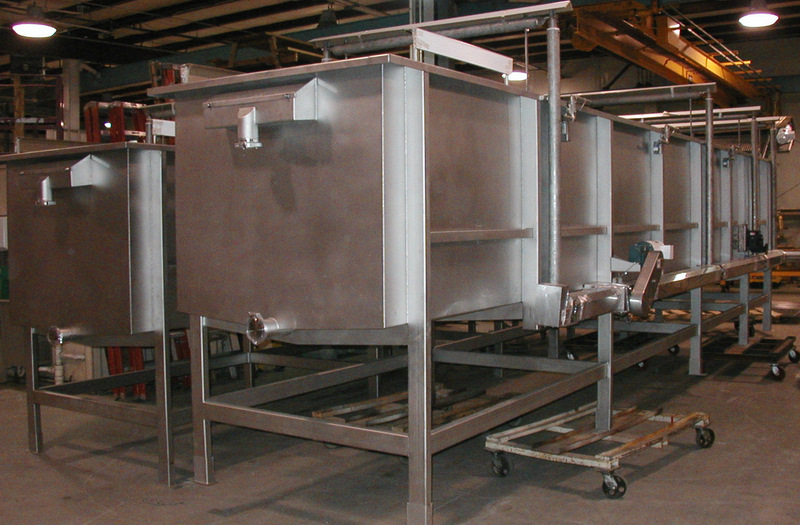
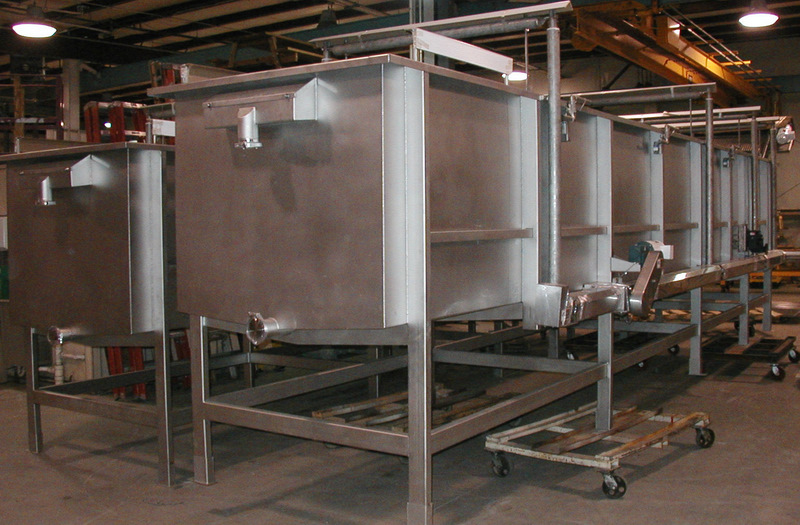
Poultry Cooler
Millard revolutionized the Poultry Cooking industry by engineering an innovative continuous Poultry Cooker with complimentary continuous Poultry Cooler (see Poultry Cooker above). As part of the necessary steps in poultry cooking a Poultry Cooler is needed. It is fabricated under the same stringent quality and construction guidelines as the Poultry Cooker. Our Coolers are a continuous inline process designed to handle the output of the cooler and drop the temperature of the cooked poultry for further processing and deboning. See our "Case Study" on the Cookers for more details.
Features:
- Production capability up to 20,000 lbs/hr.
- Safe, Sanitary construction for ease of cleaning
-
"In-House" PassivationPassivation treatment is intended to improve the surface condition of stainless steel by dissolving iron that has been embedded in the surface during forming or machining. If allowed to remain, the iron can corrode and give the appearance of rust spots on the stainless steel. Passivation restores the original corrosion-resistant surface by forming a thin, transparent oxide film and is the preferred method for the sanitary durability of stainless steel. Millard has one of the largest "In-House" Passivation operations available for our customer's fabricated items. See our case study on passivation for details. for Sanitary durability
- Continuous Operations delivering product to further processes in a steady stream
- One Process: Single product entry and single exit
- Variable Capacity and Speeds to meet demand peaks and valleys
- Single gearbox and motor
- Heavy Duty Stainless Steel Construction
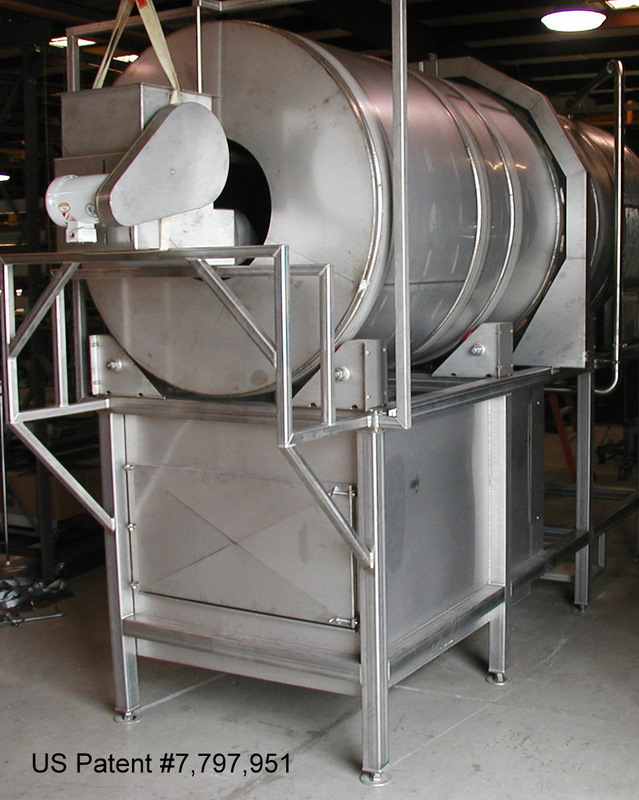
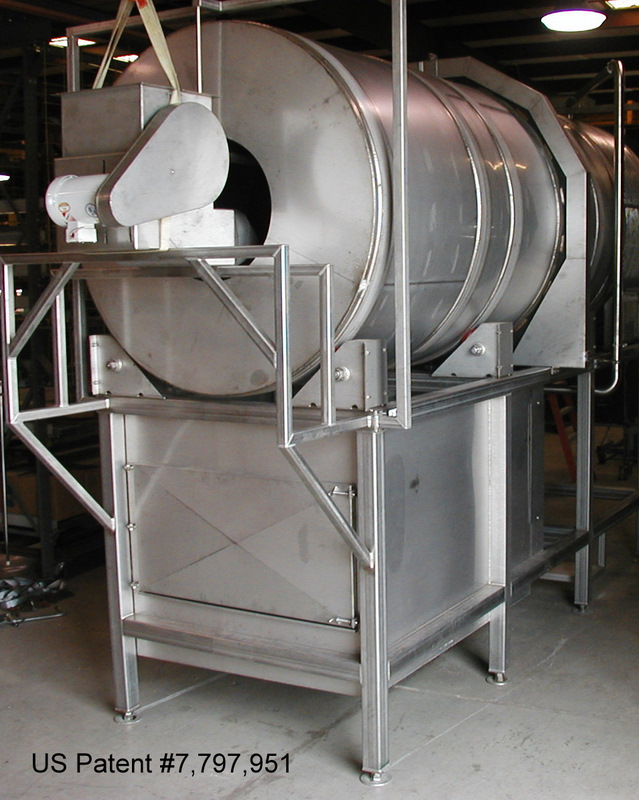
Product Chiller
The Product Chiller cools product, usually meant for pet food applications, from kill floor temperature down to just above freezing in a continuous and efficient manner to prepare it for packaging into combos and loading into coolers. The Product Chiller is comprised of a revolving drum, a cooling system, and a baffle assembly. Chilled water, which is recovered, is used to uniformly cool the product as it moves gently through a rotary chilling tunnel (revolving drum). As the product moves through the tunnel it is continuously turned and exposed to the chilling solution providing a uniformly controlled and regulated cooling rate. Larger products such as beef livers may require a pre-chiller (slasher) machine that opens up product for increased uniform chilling. Configurations are available for different tonnage requirements and for both edible and inedible applications.
The Product Chiller we offer is a result of our ability to partner with a company to create a solution to a customer production issue.
Features:
- Cools/Chills products rapidly, efficiently, and uniformly at low energy
- Continuous, regulated cooling with overhead liquid distribution
- De-watering stage
- Minimizes product handling, damage, and contamination
- Solutions for both edible and inedible products
- Adaptable to a wide variety of products beyond pet foods (Beef, Pork, Poultry, Seafood, other Processed Foods)
- 2,500-5,000 lbs/hr on standard models
- Custom lengths and diameters
- Custom internal flights and baffles
- Variable; speeds, temperature control, temperature ranges
- Heavy duty gearbox and motor
-
"In-House" PassivationPassivation treatment is intended to improve the surface condition of stainless steel by dissolving iron that has been embedded in the surface during forming or machining. If allowed to remain, the iron can corrode and give the appearance of rust spots on the stainless steel. Passivation restores the original corrosion-resistant surface by forming a thin, transparent oxide film and is the preferred method for the sanitary durability of stainless steel. Millard has one of the largest "In-House" Passivation operations available for our customer's fabricated items. See our case study on passivation for details. for sanitary durability
- Food Safety and Sanitation Design Standards
- High quality & durable stainless steel construction
- Sanitary wash-down duty
- Optional chemical integration using an antimicrobial chemical process
- Pre-Chill / Slasher option
- O-zone option
- Sort Table options

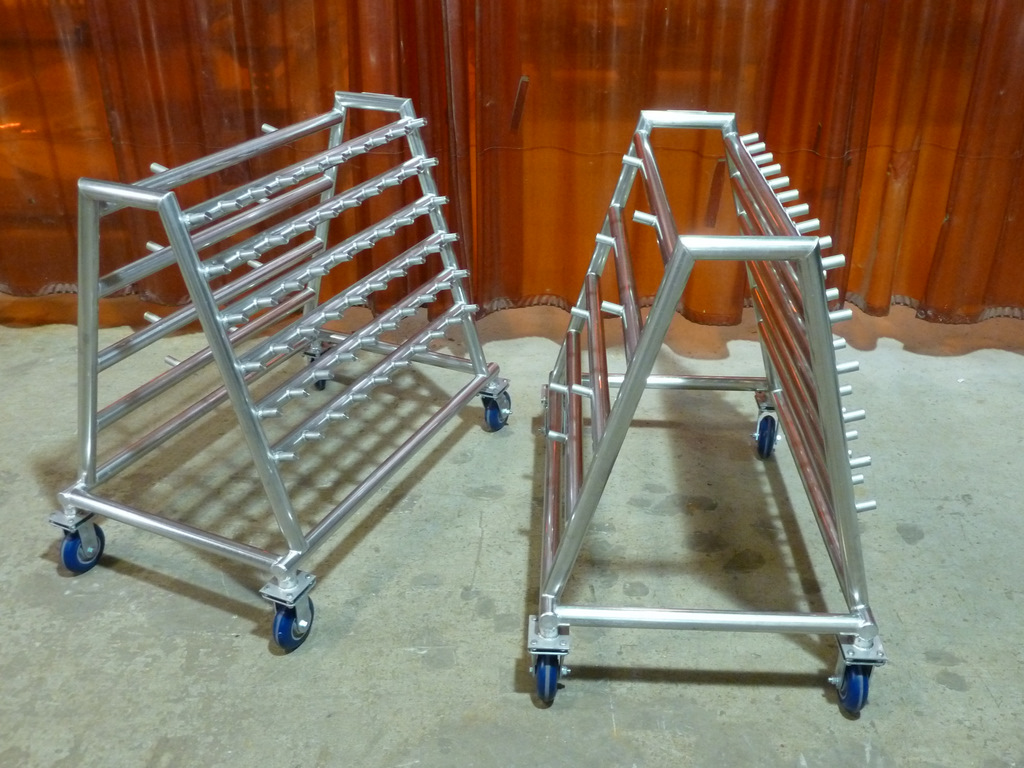
Racks
Many operations need racks to store products, tooling, fixtures, supplies, or food grade ingredients. Millard is experienced in engineering custom racks to fit your application, process, or layout. We can Design, build, and install the racks as a pre-made unit, built-in-place, or modular components depending upon access and use. Our Racks are stainless steel and made following our Safety and Sanitary Design Standards.
Features:
- Stainless Steel construction
- Custom designed per use
- Load rating certification available if needed
- Welded, Bolted or combination
- Stationary or mobile
- Millard Metal Services (affiliate) with most materials on hand to start your project quickly
-
"In-House" PassivationPassivation treatment is intended to improve the surface condition of stainless steel by dissolving iron that has been embedded in the surface during forming or machining. If allowed to remain, the iron can corrode and give the appearance of rust spots on the stainless steel. Passivation restores the original corrosion-resistant surface by forming a thin, transparent oxide film and is the preferred method for the sanitary durability of stainless steel. Millard has one of the largest "In-House" Passivation operations available for our customer's fabricated items. See our case study on passivation for details. for Sanitary Durability
Raw Material Sales & Service
Millard Metal Services (MMS) is an affiliate of Millard Manufacturing Corp. and is a supplier of Stainless Steel, Aluminum, Carbon Steel, Galvanized Steel, Brass, Bronze, and Copper Alloys. Raw material is available in custom "cut-to-size" and standard stock sizes such as: Plate, Sheet, Bar, Angle, Pipe, Beams, Structural, Square & Round Tubing, Channel, Flat, Rounds, Half Round, Squares, Hexagon, Tee, Perforated, Threaded Rod, Expanded Metal, Grating, Threaded Rod, Metric, Textured and Custom ordered stock. Having MMS as an affiliate provides us with a unique advantage to start your project quickly. Single piece to truck load orders accepted. Most items are available in stock.
Features:
- MMS Catalog available
Reject conveyors
For the Fresh & Frozen Foods Industry Millard offers Reject Conveyors specifically designed for metal detection and weight rejects. Using sensors to automatically monitor continuous processes for bad product or rejects, our conveyors will segregate and separate them from the good products. Segregation occurs through a variety of methods; air knives, mechanical bumpers, paddles, integrated plows, or guides that take the unwanted product off-stream for disposal or standard QC sampling.
Features:
- Metal Detection Equipment Integration
- Same standard features as our Belt Conveyors
- Heavy duty Stainless Steel Construction
- Integrated controls and switches
- Custom lengths, widths, heights, and angles
- Wash-down duty construction
-
"In-House" PassivationPassivation treatment is intended to improve the surface condition of stainless steel by dissolving iron that has been embedded in the surface during forming or machining. If allowed to remain, the iron can corrode and give the appearance of rust spots on the stainless steel. Passivation restores the original corrosion-resistant surface by forming a thin, transparent oxide film and is the preferred method for the sanitary durability of stainless steel. Millard has one of the largest "In-House" Passivation operations available for our customer's fabricated items. See our case study on passivation for details. for Sanitary Durability
- Adjustable legs for uneven floors
- Safety and Sanitary Designs
- Design, Build, and Install services
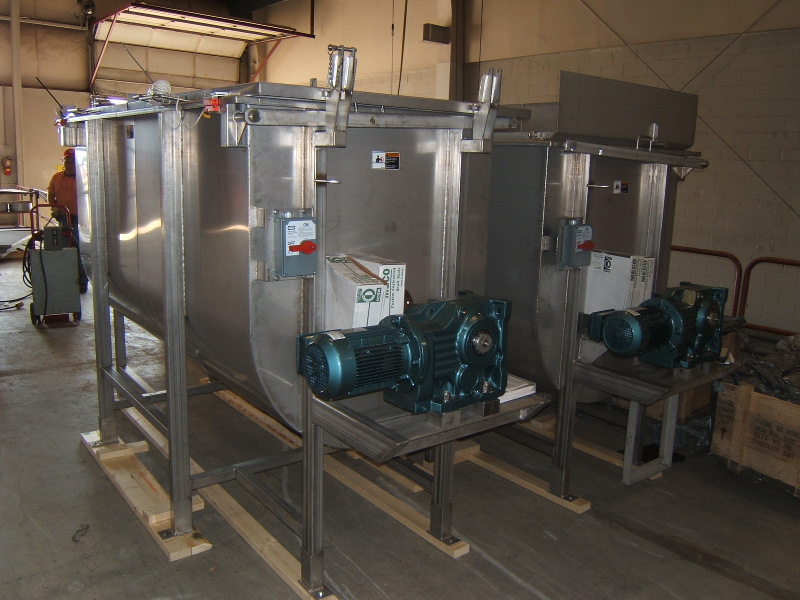
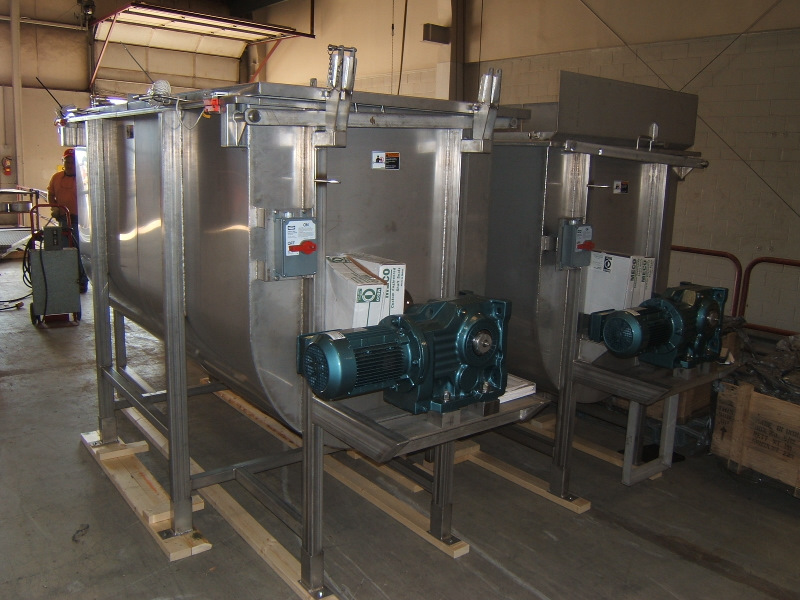
Ribbon Blenders
Millard's Ribbon Blenders are used for homogeneous mixing of liquid and semi-solid ingredients. Our blenders have custom designed bowls, hoppers, and ribbons to support your processing application. Ribbon Blenders can be driven by hydraulic or electric motors and come complete with all necessary safety guarding.
Features:
- Custom hoppers and bowls
- Hydraulic or Electric motors
- Safety Grating and Interlock switches
- Heavy Duty Stainless Steel
- Wash-down duty construction
-
"In-House" PassivationPassivation treatment is intended to improve the surface condition of stainless steel by dissolving iron that has been embedded in the surface during forming or machining. If allowed to remain, the iron can corrode and give the appearance of rust spots on the stainless steel. Passivation restores the original corrosion-resistant surface by forming a thin, transparent oxide film and is the preferred method for the sanitary durability of stainless steel. Millard has one of the largest "In-House" Passivation operations available for our customer's fabricated items. See our case study on passivation for details. for Sanitary Durability
- Options available:
- - Insulated
- - Water Jacket
- - Heat transfer Plates
- - Custom Dump Chutes
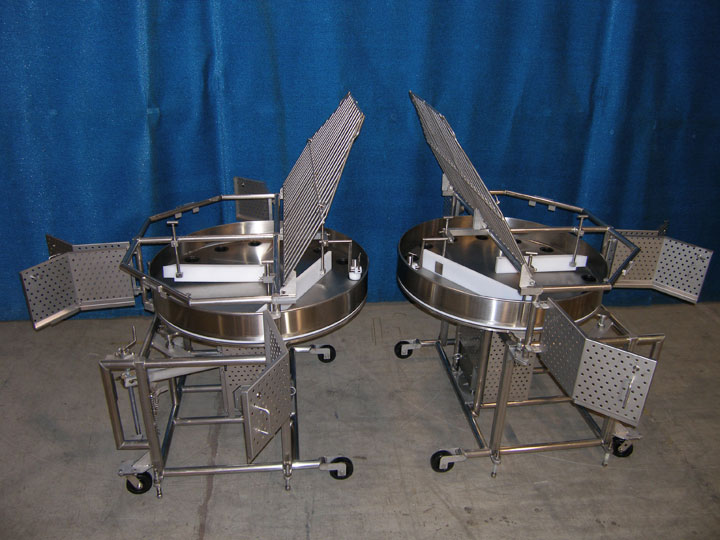
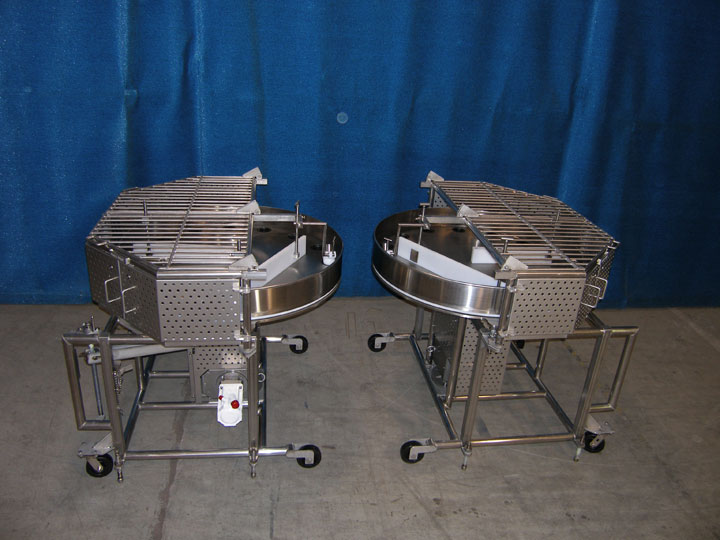
Rotary Pocket / Volumetric Filler
Millard's Rotary Pocket Filler / Volumetric Filler takes all the best features, designs and ideas of modern day fillers and incorporates them into a simple, effective and efficient design. The evolution of our pocket fillers has resulted in a machine that contains the product without spillage, provides adjustable and precise metering into trays automatically, and incorporates the most modern Safety and Sanitary Designs. Our "Best-in-Class" filler incorporates innovation that provides simple changeovers and servo drives for precise timing. See our "Case Study" for more details.
Features:
- "In-House" PassivationPassivation treatment is intended to improve the surface condition of stainless steel by dissolving iron that has been embedded in the surface during forming or machining. If allowed to remain, the iron can corrode and give the appearance of rust spots on the stainless steel. Passivation restores the original corrosion-resistant surface by forming a thin, transparent oxide film and is the preferred method for the sanitary durability of stainless steel. Millard has one of the largest "In-House" Passivation operations available for our customer's fabricated items. See our case study on passivation for details. for Sanitary durability
- Sanitary Wash-Down Duty for Easy Cleaning operations
- Safety Guarding of machine
- Stationary hopper style to rotating
- Upper inserts to "Twist & Lock" into the hopper
- Lower rings into full 180 degree sectionals reducing setup and changeover times
- Lower inserts to "Twist & Lock" into sectionals
- Line shaft drive or Servo drive to fit customer's operation
- Easy assembly and adjustment levers
- Heavy duty Stainless Steel Construction
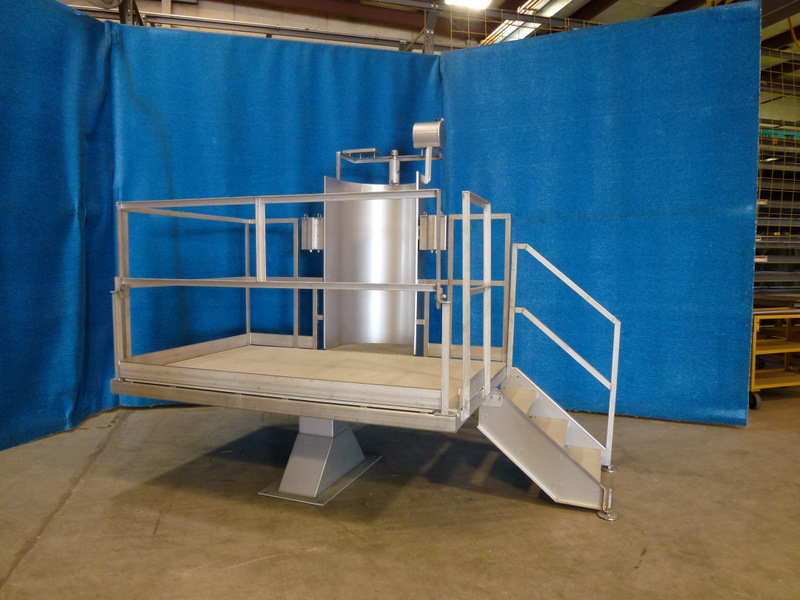
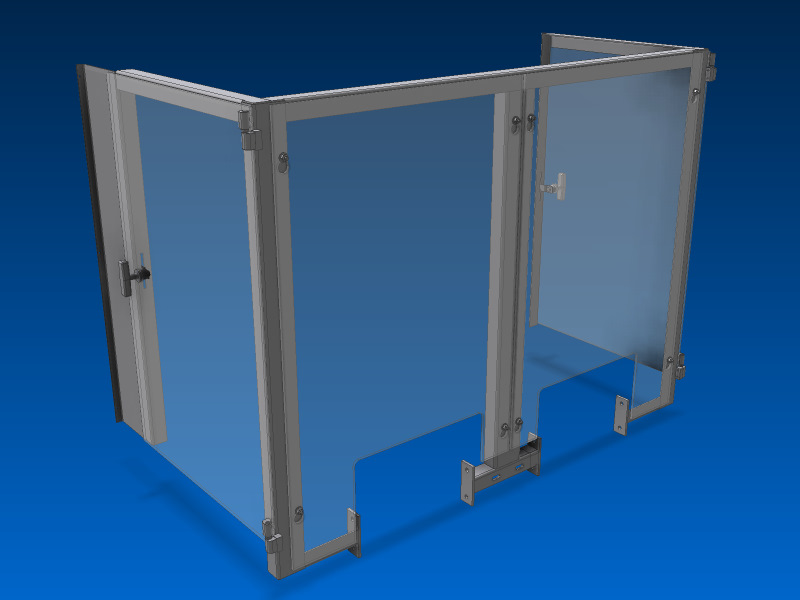

Safety Guarding
Millard knows the importance of Safety in the workplace and the value personnel bring to any company. We strive to provide safe products starting from design concepts through production, shipping, and installations. Safety Guarding is an inherent process for Millard when we take on any project and we incorporate the most modern Safety and Sanitary Design Standards. Safety Guarding examples: Chain Guards, Railings, Gates, Interlocks, PLC Interface options, Wash-down Area Containment, Rotating components, Chemical Containment, Robotic Work Zones, Product Zones, Custom Machines, and many more.
Features:
- "In-House" PassivationPassivation treatment is intended to improve the surface condition of stainless steel by dissolving iron that has been embedded in the surface during forming or machining. If allowed to remain, the iron can corrode and give the appearance of rust spots on the stainless steel. Passivation restores the original corrosion-resistant surface by forming a thin, transparent oxide film and is the preferred method for the sanitary durability of stainless steel. Millard has one of the largest "In-House" Passivation operations available for our customer's fabricated items. See our case study on passivation for details. Finish for Sanitary Durability
- Sanitary Wash-Down Duty for Easy Cleaning operations
- Open Channel construction wherever possible
- Designed in concert with customer's policies
- 3D CAD models available
- Machine and/or Process accessibility
- Enclosed or visibility options
- Heavy duty Stainless Steel Construction
Media:

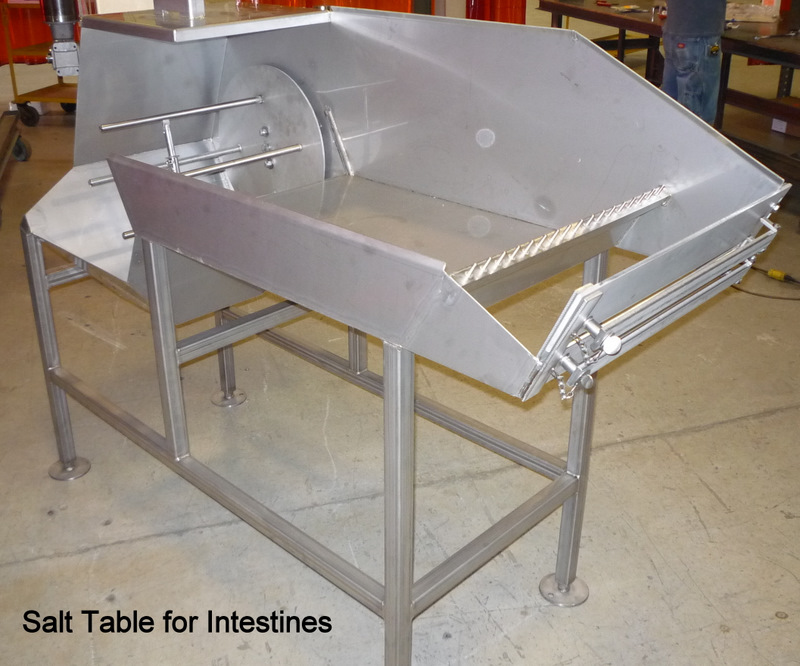
Salt Table for Intestines
The Salt Tables contain a water based salt bath to disinfect the linings from harmful bacteria. Pork Intestine Linings are pulled through the salt bath and wound or gathered up on reels for sale or transport to "further processing" facilities.
Features:
- Heavy duty stainless steel construction
- Wash-down duty
- Custom widths and lengths available
- Adjustable legs for uneven surfaces
- Sanitary piping and fitting as needed
-
"In-House" PassivationPassivation treatment is intended to improve the surface condition of stainless steel by dissolving iron that has been embedded in the surface during forming or machining. If allowed to remain, the iron can corrode and give the appearance of rust spots on the stainless steel. Passivation restores the original corrosion-resistant surface by forming a thin, transparent oxide film and is the preferred method for the sanitary durability of stainless steel. Millard has one of the largest "In-House" Passivation operations available for our customer's fabricated items. See our case study on passivation for details. for Sanitary Durability
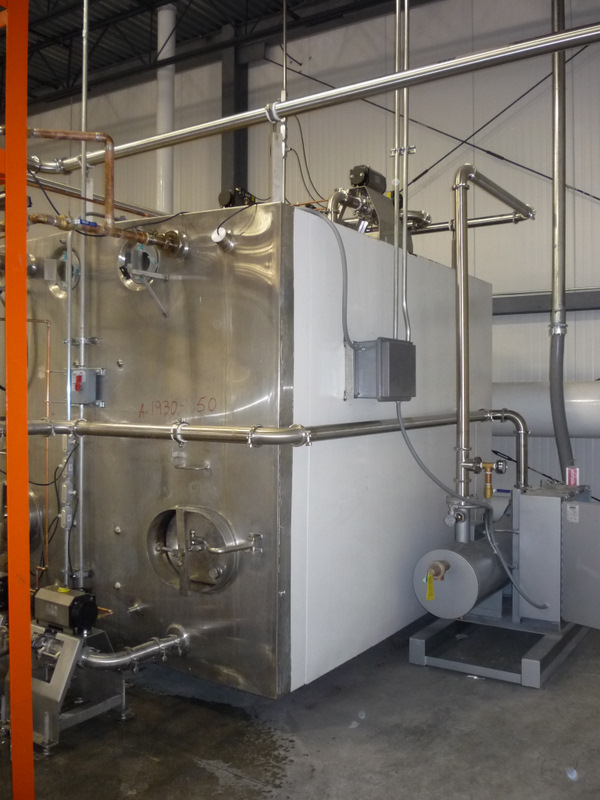
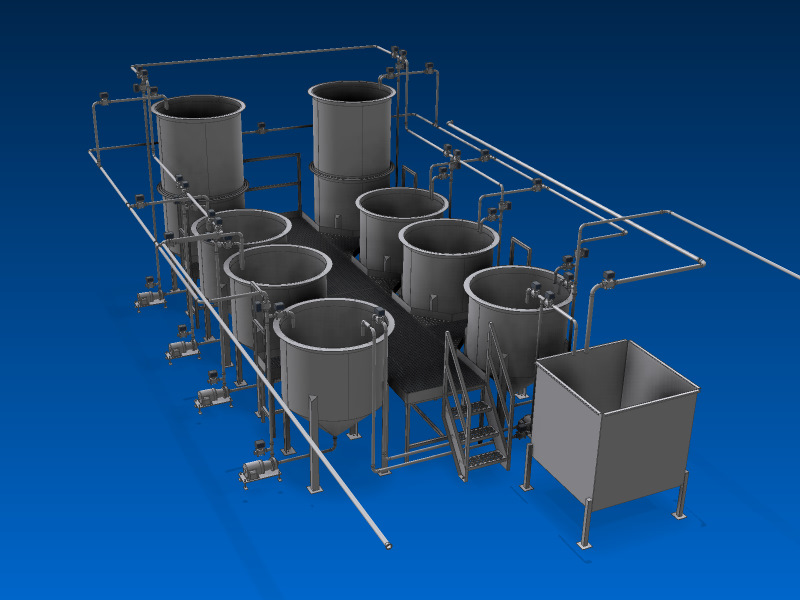

Sanitary Piping
Millard compliments their equipment, machinery and installations with Sanitary Piping as well as Sanitary Welding. Applications include Pet Foods, Food Processing, Slurries, Pharmaceuticals and many more. Integrating our equipment into your new or existing processes frequently requires piping food grade ingredients or water to and from the process. We design, build, and install Sanitary Piping to fit the process and your facility. With our extensive experience supplying machinery and equipment to the food industry, we know how to ensure the rigidity and performance of your sanitary piping.
Features:
- 0.065" wall 304 Stainless Steel tubing (316 on request)
- 1" through 6" stock sizes
- Sanitary Tubing
- Purge Welded
- Sanitary Tri-Clamps
- S-Line, I-Line, E-line, or customer specified
- Sanitary Valving: Butterfly, Ball, and Check
- Integration to CIP (Clean-in-place) or COP (Clean-out-of-place) cleaning systems
-
"In-House" PassivationPassivation treatment is intended to improve the surface condition of stainless steel by dissolving iron that has been embedded in the surface during forming or machining. If allowed to remain, the iron can corrode and give the appearance of rust spots on the stainless steel. Passivation restores the original corrosion-resistant surface by forming a thin, transparent oxide film and is the preferred method for the sanitary durability of stainless steel. Millard has one of the largest "In-House" Passivation operations available for our customer's fabricated items. See our case study on passivation for details. for Sanitary Durability
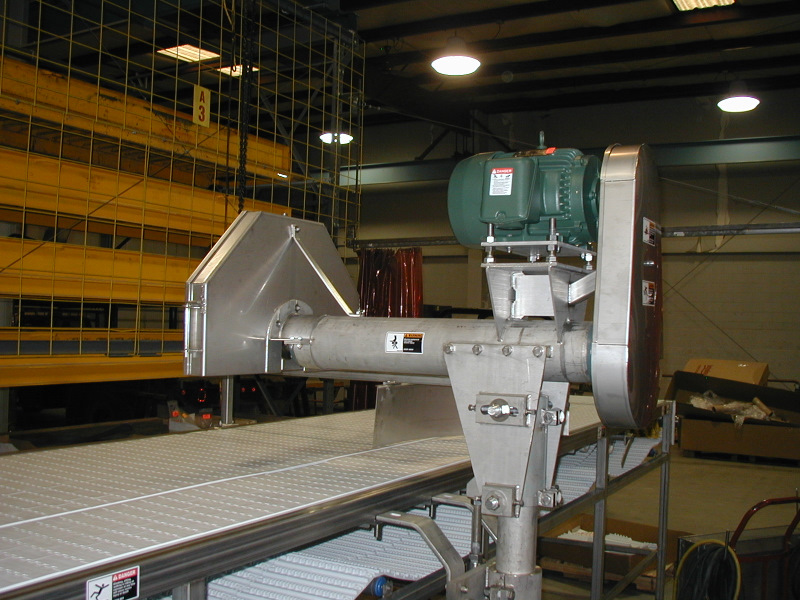
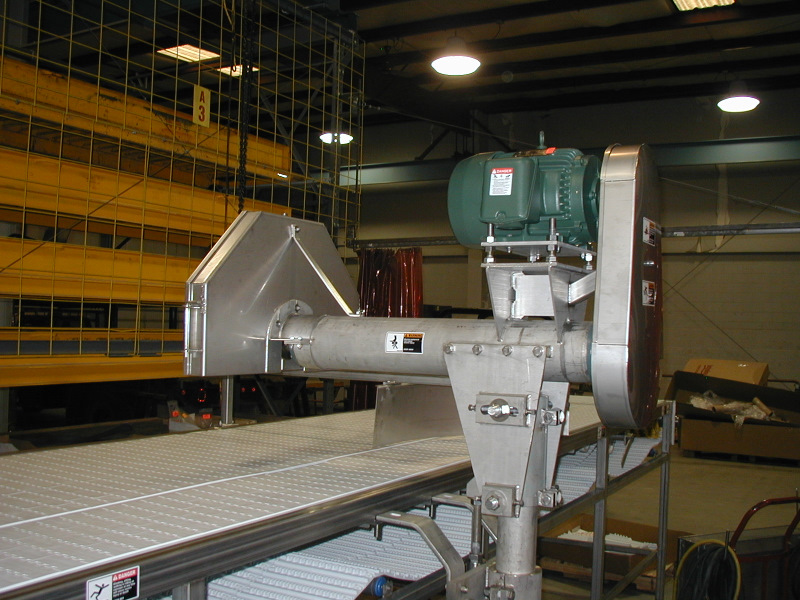
Saws
Millard Manufacturing can build most any saw used on the pork cut floor. Here are just some of the saws we have built: bootjack saw, dual-blade hock & foot saw, dual-blade belly saw, front foot saw, ham saw, hind foot quartering saw, shoulder saw, sirloin saw, loin saw, and butt/picnic saw. As a custom fabricator, we can build the saw to fit your application and we can make it in combination with tables, conveyors, or as a retrofit. Note: Millard does not supply the saw with the saw blade.
Features:
- Heavy Duty Stainless Steel frames
- Stand Alone / Table / Conveyor mounts
- Direct or V-Belt Drives
- 5 - 7.5 HP Motors depending upon application
- External Bearings for ease of maintenance
- Wash-down duty construction
- "Swing-Away" Blade change and Matched Pinned-Hub Assemblies for quick blade changes
- Safety guarding as needed
-
"In-House" PassivationPassivation treatment is intended to improve the surface condition of stainless steel by dissolving iron that has been embedded in the surface during forming or machining. If allowed to remain, the iron can corrode and give the appearance of rust spots on the stainless steel. Passivation restores the original corrosion-resistant surface by forming a thin, transparent oxide film and is the preferred method for the sanitary durability of stainless steel. Millard has one of the largest "In-House" Passivation operations available for our customer's fabricated items. See our case study on passivation for details. for Sanitary Durability
- Safety guarding as needed
Scald Tub
Our heavy duty scald tanks are custom designed to fit your layout and process. We Include water circulation piping, valving, and drain and overflow connections as required. The scald tub can be mounted on custom frames.
Features:
- 1/4" Heavy duty construction (mild steel or stainless)
- Structural bracing to fit your layout
- Water recirculation lines and fittings
- Drains
- Overflow connections
- Lengths, widths and heights customizable
- Custom platforms with stands, ladders, and hand railing as needed
Media:
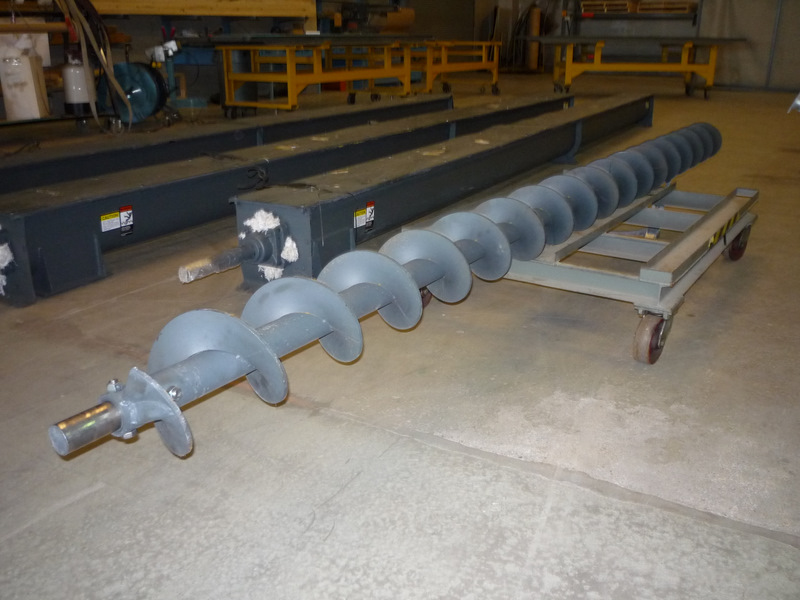

Screw Conveyors
Our line of Rendering screw conveyors can be customized for your application to move either edible or inedible product where you need it. Standard construction is carbon with wear liners while stainless steel is an option. The high quality sectional or helicoid flighting is secured to the pipe by welding and runs inside a heavy duty u-shaped or flared trough sized for your application. A custom hopper can be integrated to ease the loading operation. See our stainless sanitary Augers in the Support Equipment/Services category for more details and options.
Features:
- Carbon Steel Construction with Wear Liners
- Optional Stainless Steel Construction
- High Quality Sectional or Helicoid Flighting
- Optional Custom Hoppers for Loading
Media:
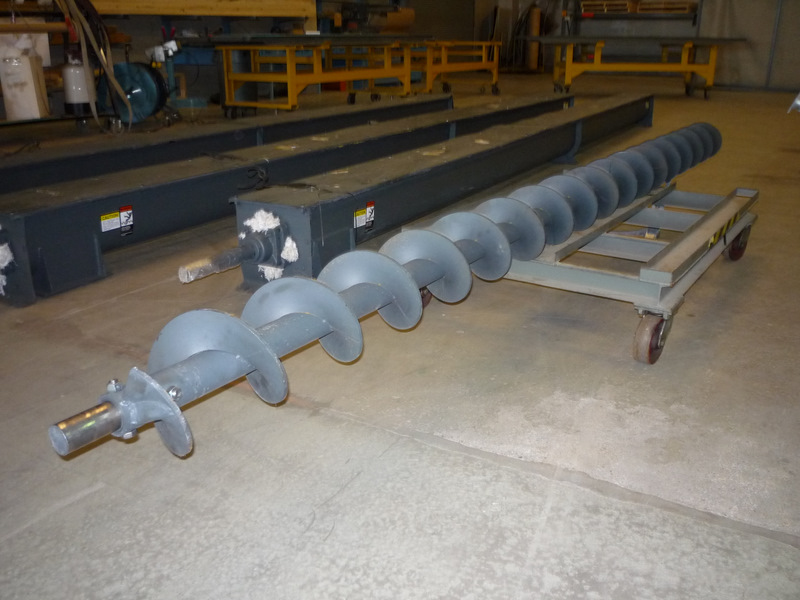
Screw Conveyors
Our line of Rendering screw conveyors can be customized for your application to move either edible or inedible product where you need it. Standard construction is carbon with wear liners while stainless steel is an option. The high quality sectional or helicoid flighting is secured to the pipe by welding and runs inside a heavy duty u-shaped or flared trough sized for your application. A custom hopper can be integrated to ease the loading operation. See our stainless sanitary Augers in the Support Equipment/Services category for more details and options.
Features:
- Carbon Steel Construction with Wear Liners
- Optional Stainless Steel Construction
- High Quality Sectional or Helicoid Flighting
- Optional Custom Hoppers for Loading
Shackle Incline Conveyor
Millard's Shackle Incline Conveyor is designed to lift or pull the beef off of the Landing Conveyor to working elevations typically 12'-6" up to 19' (14' standard height). The beef are spaced approximately 3' apart and carried up an incline to the Stack Rails.
Features:
- 6" wide double roller chain
- 14' standard height
- 12'-6" - 19' elevation
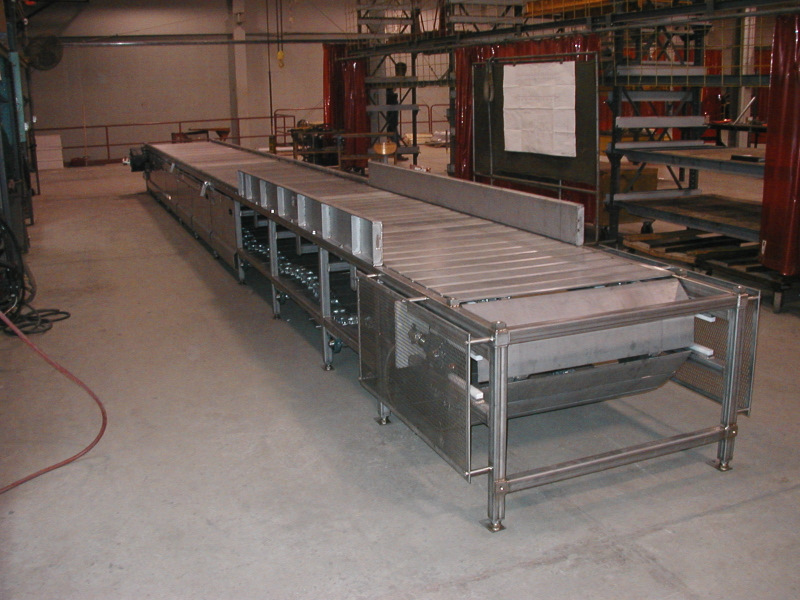
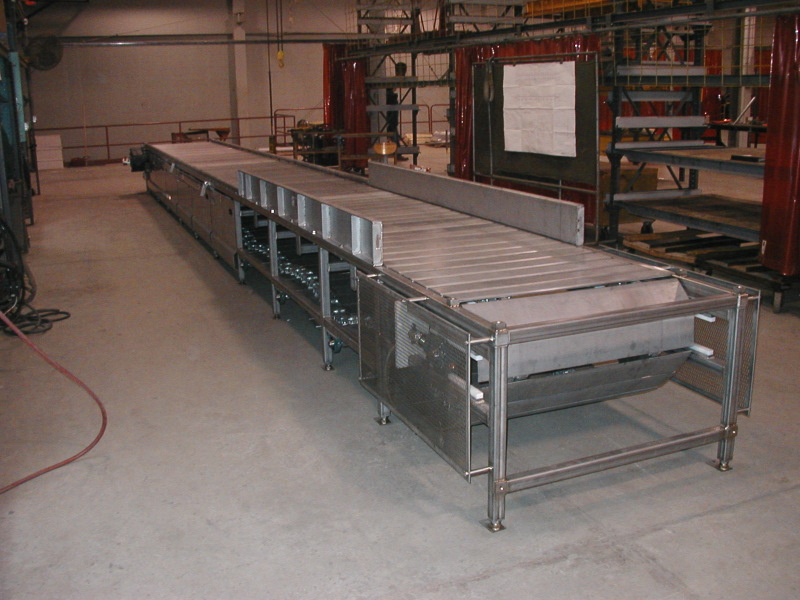
Shackle Table
The Shackle Table provides a heavy duty moving surface where stunned hogs are shackled by the hind feet onto an overhead chain conveyor prior to the scald tanks. Our Shackle Table is of the same construction as our Gambrel Table but is 4' wide versus 6'.
Features:
- Heavy duty stainless steel construction
- Wash-down duty, Custom widths and lengths available
- Heavy duty motors and gearboxes
- Adjustable legs for uneven surfaces
- Variable speed
-
"In-House" PassivationPassivation treatment is intended to improve the surface condition of stainless steel by dissolving iron that has been embedded in the surface during forming or machining. If allowed to remain, the iron can corrode and give the appearance of rust spots on the stainless steel. Passivation restores the original corrosion-resistant surface by forming a thin, transparent oxide film and is the preferred method for the sanitary durability of stainless steel. Millard has one of the largest "In-House" Passivation operations available for our customer's fabricated items. See our case study on passivation for details. for Sanitary Durability
Media:
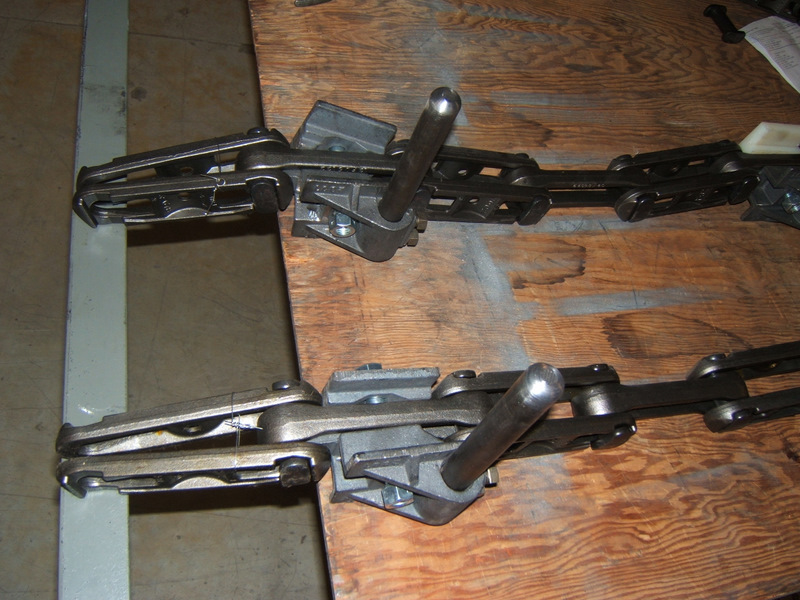
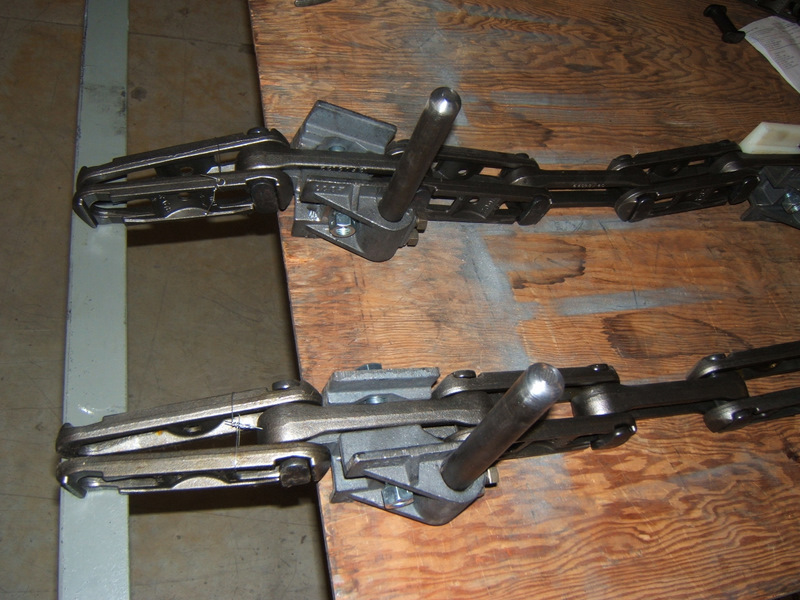
Side Finger Conveyor
We manufacture Side Finger Incline and Decline Conveyors and Cut Down Conveyors, to move your product from one elevation to another. It can also be customized to be a combination incline and horizontal conveyor. The side finger conveyor uses round 1" side finger bars to engage the trolley frames under the rail. Our fabricated heavy duty hangers are spaced on customizable centers with tracking located on the inside of the hangers and are mounted using heavy duty overhead support beams that we can also supply. The side fingers are attached to X678 chain using top and bottom mounting plates, and the chain runs between replaceable guide channels. It is constructed of heavy duty galvanized material and includes the required take-ups and drives.
Features:
- Upgrades, retrofits, and new constuction
- Sized for your layout and design requirements.
- Installation services available.
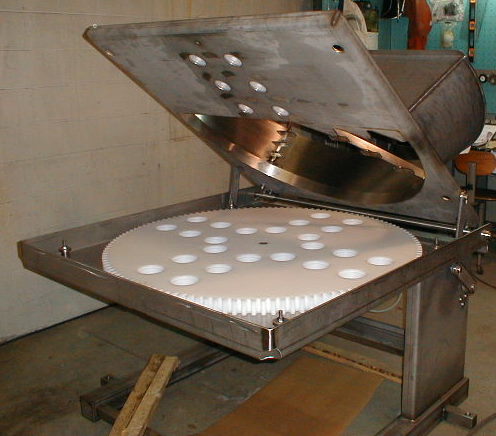
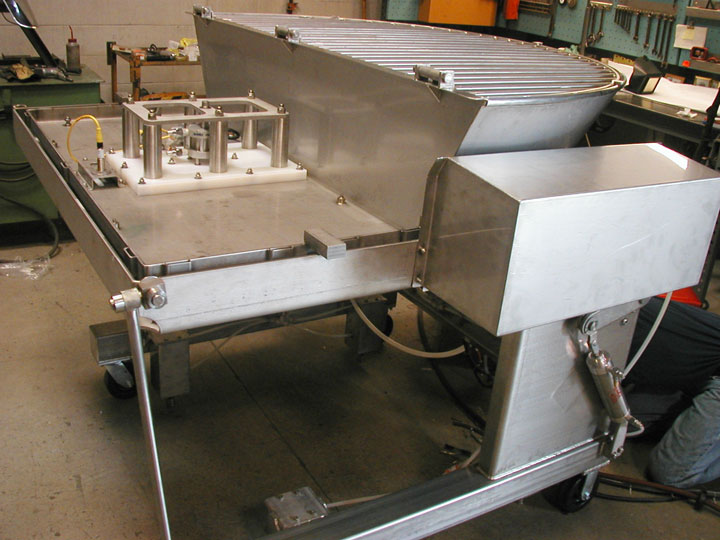
Six Pocket Filler
Millard manufactures several types of specialty pocket fillers, one of which is our 6-Pocket Filler. This filler is made to fill (6) pockets simultaneously as the trays or containers are passed under the machine. This multiple volumetric filler is suited well where space is limited and capacity needs to be increased. See our "Case Study" for more details.
Features:
- "In-House" PassivationPassivation treatment is intended to improve the surface condition of stainless steel by dissolving iron that has been embedded in the surface during forming or machining. If allowed to remain, the iron can corrode and give the appearance of rust spots on the stainless steel. Passivation restores the original corrosion-resistant surface by forming a thin, transparent oxide film and is the preferred method for the sanitary durability of stainless steel. Millard has one of the largest "In-House" Passivation operations available for our customer's fabricated items. See our case study on passivation for details. for Sanitary durability
- Sanitary Wash-Down Duty for Easy Cleaning operations
- Safety Guarding of machine
- (4) Second cycle depositing
- (6) pockets of food per cycle
- Servo drive system
- Auger in hopper to circulate product and prevent bridging
- Heavy duty Stainless Steel construction
- Custom designs available per application
Skinning Conveyor
Our overhead Skinning Conveyor is a custom conveyor used for reliable product conveying. The X678 chain with its pushing fingers (drop fingers) spaced on 5' centers run along replaceable guide channels. The drop fingers engage the trolley assembly that is riding on the supplied rounded meat rail. This meat rail is usually ½" x 2 ½" but is always sized for the application. It is equipped with our fabricated heavy duty hangers for the load and return sides, top and bottom mounting plates for the drop fingers, the take-up, and the complete drive motor assembly. The hangers are spaced as required and mounted on the properly sized supporting beams that we also supply. Everything is constructed of heavy duty galvanized material.
Features:
- Upgrades, retrofits, and new constuction
- Sized for your layout and design requirements
- Installation services available
Slide Chutes
Moving poultry cuts, bones, trays, or containers from one point to another is one of Millard's specialties. We can custom design safe and sanitary Slide Chutes and slides to direct certain cuts or bones from one process to the next. Our engineers and fabricators can build most styles, shapes and sizes to suit your exact needs. Our Slide Chutes are generally 30" x 12" but can be custom configured.
Features:
- Heavy Duty Stainless Steel
- Sanitary wash-down duty
- Adjustable legs and supports
- Open channel construction - No Tubing
- High wear USDA approved guides
- Sanitary Weld construction
- Installation available
- Custom heights, widths and angles
-
"In-House" PassivationPassivation treatment is intended to improve the surface condition of stainless steel by dissolving iron that has been embedded in the surface during forming or machining. If allowed to remain, the iron can corrode and give the appearance of rust spots on the stainless steel. Passivation restores the original corrosion-resistant surface by forming a thin, transparent oxide film and is the preferred method for the sanitary durability of stainless steel. Millard has one of the largest "In-House" Passivation operations available for our customer's fabricated items. See our case study on passivation for details. Finish for Sanitary Durability
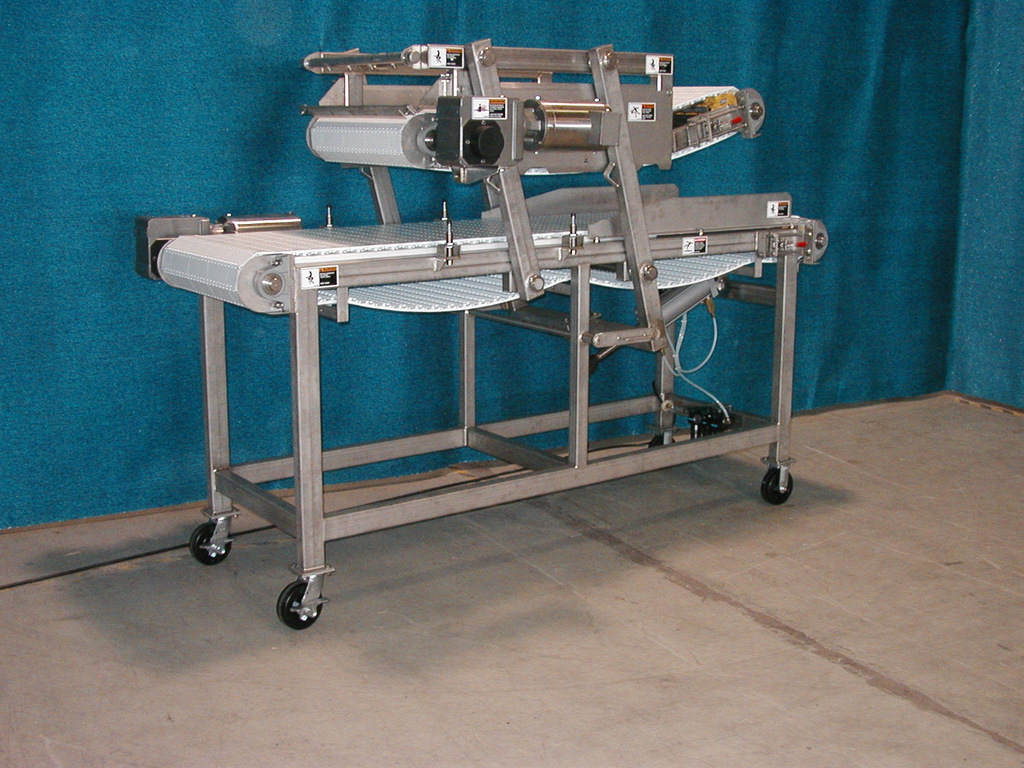
Smoked Belly Press
Millard's unique Smoked Belly Press provides a symmetrical method for flattening hog bellies just prior to processing or blast freezing. Our Belly Press is an in-line operation paced to the line speed providing a uniform flattening process that is easily integrated, easily operated, and easily cleaned. See our "Case Study" for more details.
Features:
- Heavy Duty Stainless Steel Construction
- Variable speed motor
- HD Wash-down duty motor and gearbox
- Mobile (with wheels) or stationary
- Sanitary Flat Belt versus Rollers
- Quick Adjustments
- Application to both trimming and skinning lines
- Cleaning labor savings
- Improved quality and consistency of flattened pork bellies
- Easily cleaned
- Improved Sanitation
-
"In-House" PassivationPassivation treatment is intended to improve the surface condition of stainless steel by dissolving iron that has been embedded in the surface during forming or machining. If allowed to remain, the iron can corrode and give the appearance of rust spots on the stainless steel. Passivation restores the original corrosion-resistant surface by forming a thin, transparent oxide film and is the preferred method for the sanitary durability of stainless steel. Millard has one of the largest "In-House" Passivation operations available for our customer's fabricated items. See our case study on passivation for details. for Sanitary Durability
Media:
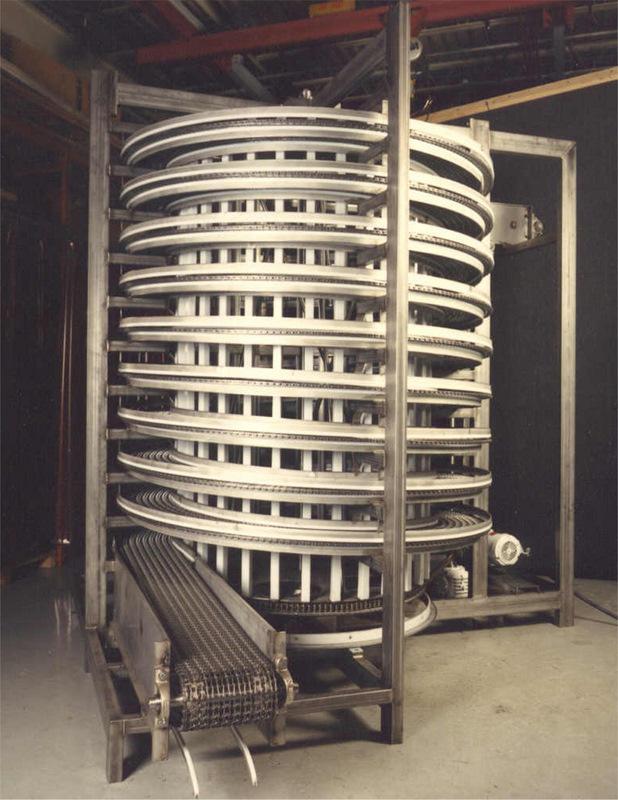

Spiral Conveyors
Vertical Spiral Conveyors are often used to remove heat introduced into the product or container in prior processing. Millard's Container Cooling prepares the product for the next process; filling, freezing, packaging or shipping. Our Cooling operations are custom designed in various heights, widths, and diameters with variable speeds and timing belts.
Features:
- Preparation for Filling, Freezing, Packaging, and Shipping
- Custom designed per process application
- Air circulation options
- Ductwork as needed
- Infeed and discharge conveying to fit the process
- Integration into existing lines
- Variable speeds
- Heavy duty stainless steel construction
-
"In-House" PassivationPassivation treatment is intended to improve the surface condition of stainless steel by dissolving iron that has been embedded in the surface during forming or machining. If allowed to remain, the iron can corrode and give the appearance of rust spots on the stainless steel. Passivation restores the original corrosion-resistant surface by forming a thin, transparent oxide film and is the preferred method for the sanitary durability of stainless steel. Millard has one of the largest "In-House" Passivation operations available for our customer's fabricated items. See our case study on passivation for details. for Sanitary Durability
- Wash-down duty construction
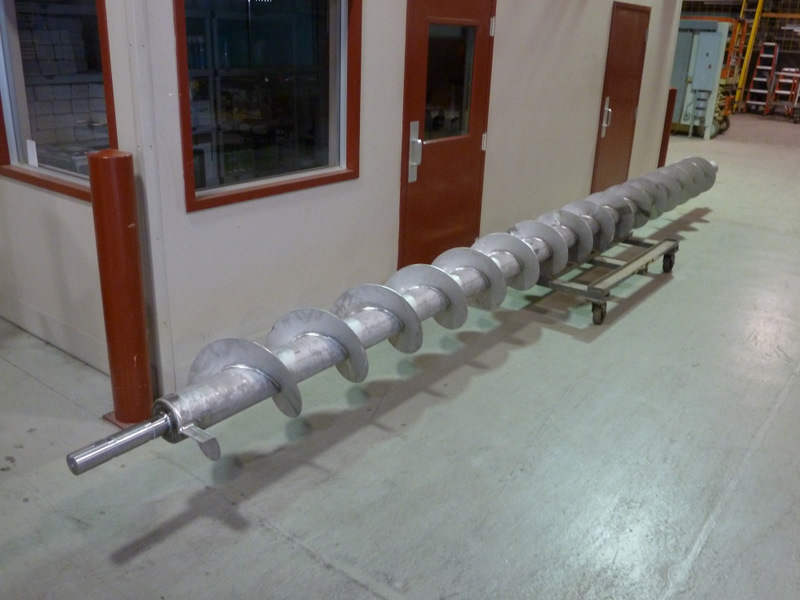
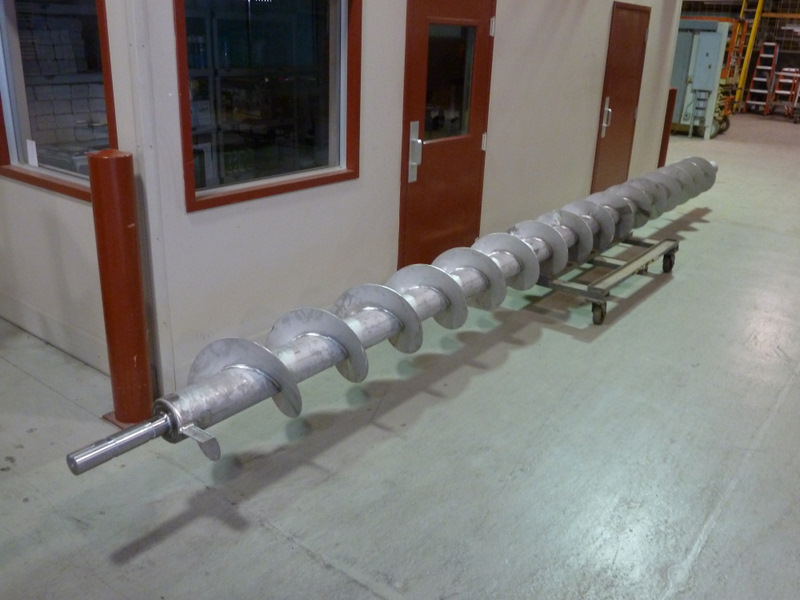
SS Screw Conveyors
Millard's SS Screw Conveyors transfer and deliver product from one process to another or into containers. We produce 6", 9", 12", and 20" screw models. Mostly used on fat, trim, hams, muscles and other similar products. See our stainless sanitary Augers in the Support Equipment/Services category for more details and options.
Features:
- Heavy duty stainless steel construction
- Removable lids for easy cleaning
- Chain or Direct drives
- Custom hoppers
- Sanitary and seal welded
- Polished screws available per product needs
- Custom built to specific product applications
- Custom lengths, widths, diameters, angles and chutes as needed per your layout or product needs
- Heavy duty washdown motor and gearbox
-
"In-House" PassivationPassivation treatment is intended to improve the surface condition of stainless steel by dissolving iron that has been embedded in the surface during forming or machining. If allowed to remain, the iron can corrode and give the appearance of rust spots on the stainless steel. Passivation restores the original corrosion-resistant surface by forming a thin, transparent oxide film and is the preferred method for the sanitary durability of stainless steel. Millard has one of the largest "In-House" Passivation operations available for our customer's fabricated items. See our case study on passivation for details. for sanitary durability
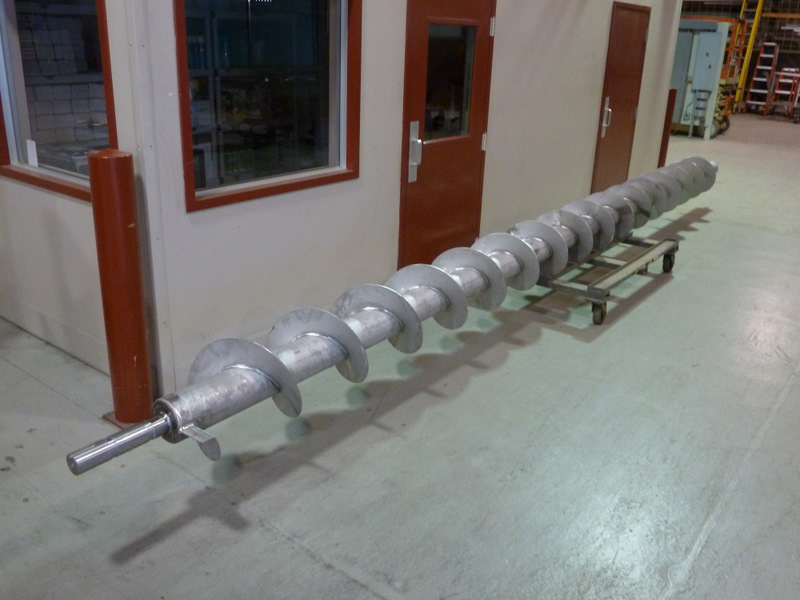
SS Screw Conveyors
Millard's SS Screw Conveyors transfer and deliver product from one process to another or into containers. We produce 6", 9", 12", and 20" screw models. Mostly used on fat, trim, hams, muscles and other similar products. See our stainless sanitary Augers in the Support Equipment/Services category for more details and options.
Features:
- Heavy duty stainless steel construction
- Removable lids for easy cleaning
- Chain or Direct drives
- Custom hoppers
- Sanitary and seal welded
- Polished screws available per product needs
- Custom built to specific product applications
- Custom lengths, widths, diameters, angles and chutes as needed per your layout or product needs
- Heavy duty washdown motor and gearbox
-
"In-House" PassivationPassivation treatment is intended to improve the surface condition of stainless steel by dissolving iron that has been embedded in the surface during forming or machining. If allowed to remain, the iron can corrode and give the appearance of rust spots on the stainless steel. Passivation restores the original corrosion-resistant surface by forming a thin, transparent oxide film and is the preferred method for the sanitary durability of stainless steel. Millard has one of the largest "In-House" Passivation operations available for our customer's fabricated items. See our case study on passivation for details. for sanitary durability
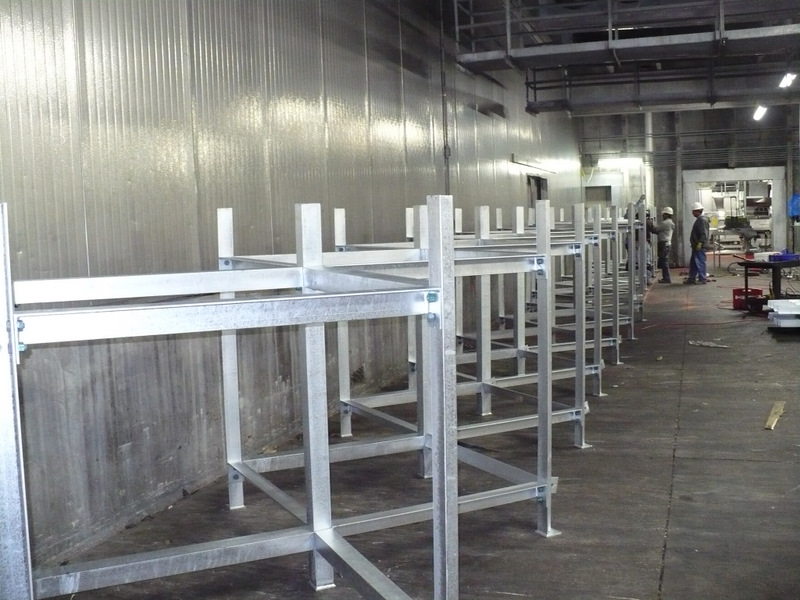

SS Vat Storage Racks
When a standard rack system will not work or painted carbon steel is not sanitary enough, Millard offers custom built Stainless Steel Storage Racking. We can engineer and custom build to fit your containers, vats, or combos.
Features:
- All stainless steel
- Load rated
- Engineer certified
- Welded, bolted, or a combination structure
- 1, 2, or 3 level(s) high
- Non-drip pans between levels
-
"In-House" PassivationPassivation treatment is intended to improve the surface condition of stainless steel by dissolving iron that has been embedded in the surface during forming or machining. If allowed to remain, the iron can corrode and give the appearance of rust spots on the stainless steel. Passivation restores the original corrosion-resistant surface by forming a thin, transparent oxide film and is the preferred method for the sanitary durability of stainless steel. Millard has one of the largest "In-House" Passivation operations available for our customer's fabricated items. See our case study on passivation for details. for Sanitary Durability
- Wash-down duty
SS Viscera Table (Gut Table)
Millard's Viscera Inspection Table (Gut Table) is used where carcasses are eviscerated on a moving chain conveyor. Our table has 6" x 5'0" flights made from 1/4" stainless steel bent up 2" on each end at 45 degrees and secured to (3) chains by stainless steel welding studs. Plated chain is 6" pitch heavy duty roller chain with Delrin bushings and stainless steel sleeves. A stainless steel sterilizing chamber is included for continuous sanitation.
Features:
- "In-House" PassivationPassivation treatment is intended to improve the surface condition of stainless steel by dissolving iron that has been embedded in the surface during forming or machining. If allowed to remain, the iron can corrode and give the appearance of rust spots on the stainless steel. Passivation restores the original corrosion-resistant surface by forming a thin, transparent oxide film and is the preferred method for the sanitary durability of stainless steel. Millard has one of the largest "In-House" Passivation operations available for our customer's fabricated items. See our case study on passivation for details. for sanitary durability
- HD Stainless Steel
- Open-channel construction
- Wash down duty
- Hollow shaft mounts or Coupled drives
- Custom speed reducers
- Custom lengths per customer requirements
- Adjustable feet for uneven surfaces
Media:
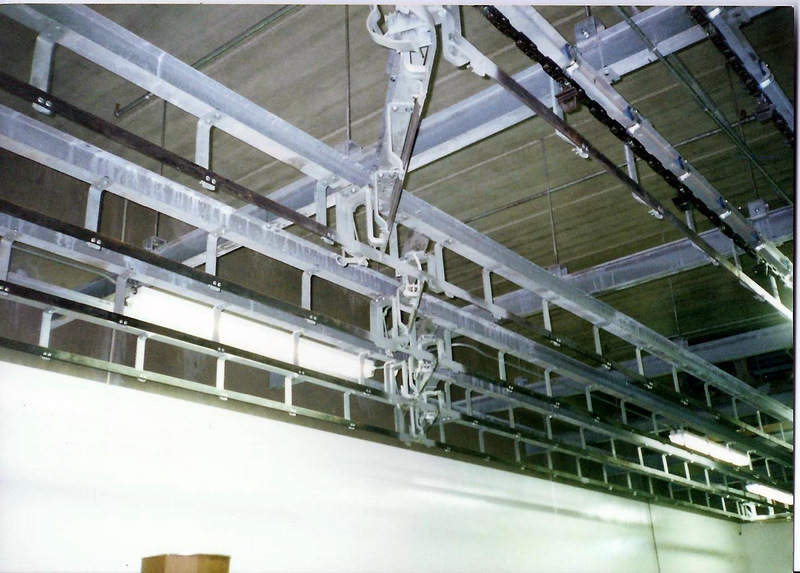
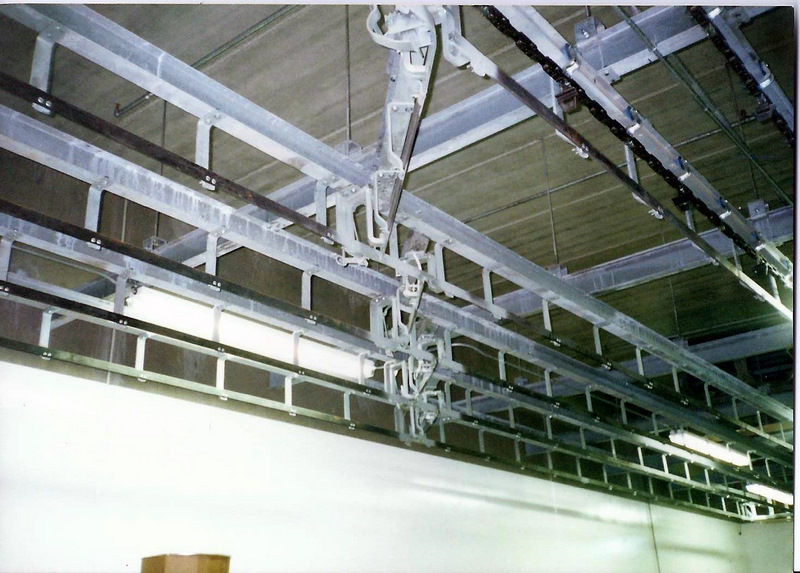
Stack Rail System
Our Stack Rail System is a gravity system designed for holding hogs prior to processing and engaging into the main overhead chain system. We can provide this complete queuing system including beams, rails, rollers, switches, indexers, and other associated components. For more on our gravity systems, see Gravity Style Overhead Rail Systems in the Overhead Conveyors section.
Features:
- 1/2 x 2-1/2" rails
- Heavy duty switches
- Carbon steel
- Galvanized 13" drop hangers standard or custom to fit your requirements
Stack Rail System
Our Stack Rail System is a gravity system designed for holding beef prior to processing and engaging into the main overhead chain system. We can provide this complete queuing system including beams, rails, rollers, switches, indexers, and other associated components. For more on our gravity systems, see Gravity Style Overhead Rail Systems in the Overhead Conveyors section.
Features:
- 1/2 x 2-1/2" rails
- Heavy duty switches
- Carbon steel
- Galvanized 13" drop hangers standard or custom to fit your requirements
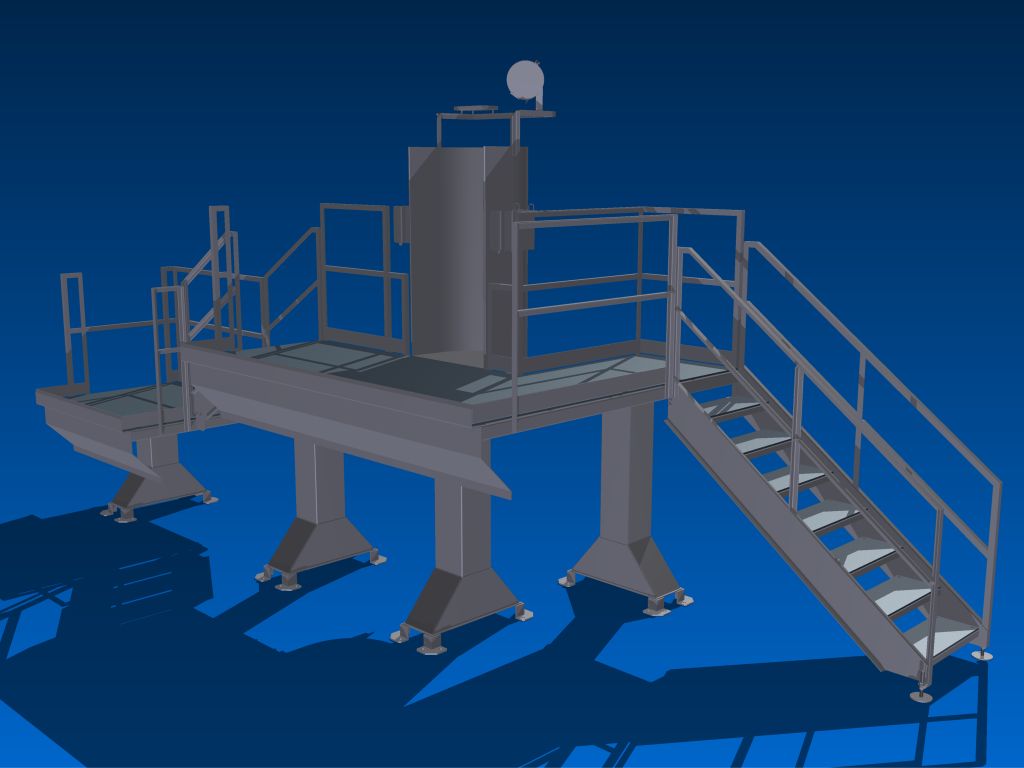

Stationary Platforms
Millard can build most any stationary or center-post platform on the Harvest Floor. All our platforms are custom designed and built to meet your layout and tailored to each specific process. Our platforms are made from heavy duty stainless steel and for daily sanitary wash down operations.
• Belly Ripper Platform
• Flanker Platform
• Rim Over Platform
• Side Puller Platform
• Open Neck Platform
• Low Neck Skinner Platform
• Briskett Saw Platform
• Bung & Tie Platform
• Pregutter Platform
• Head Workup Platform
Wash Cabinet & Platform
• USDA Inspection Platforms
• Saw Platforms
• Trimmer (various) Platforms
• Spinal Cord Removal Platforms
• Head Table Platforms
Features:
- "In-House" PassivationPassivation treatment is intended to improve the surface condition of stainless steel by dissolving iron that has been embedded in the surface during forming or machining. If allowed to remain, the iron can corrode and give the appearance of rust spots on the stainless steel. Passivation restores the original corrosion-resistant surface by forming a thin, transparent oxide film and is the preferred method for the sanitary durability of stainless steel. Millard has one of the largest "In-House" Passivation operations available for our customer's fabricated items. See our case study on passivation for details. for Sanitary Durability
- Sanitary wash-down duty
- Open Channel Construction - No tubing
- Safety Railings as required
- Stationary or Center-Post
- Fiberplate flooring
- Custom designed per application
- Heavy Duty Stainless Steel
- Stairs & Hand Rails
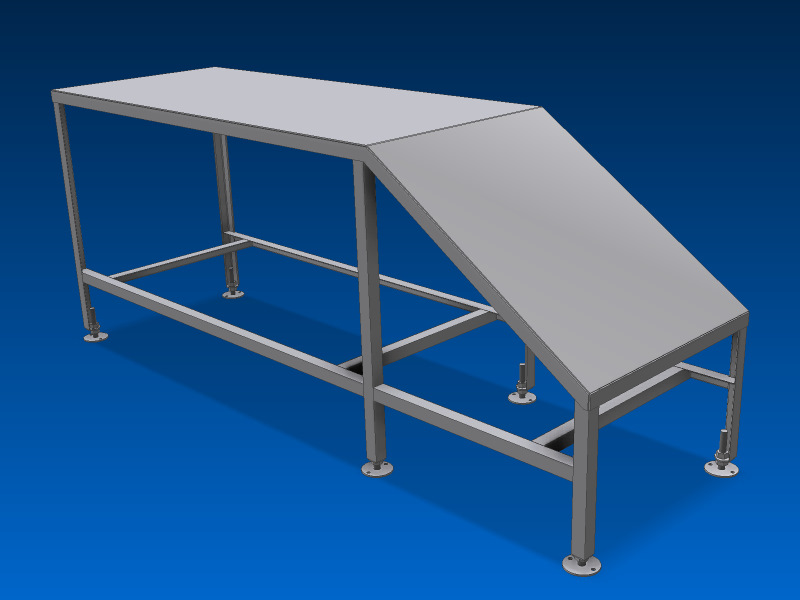
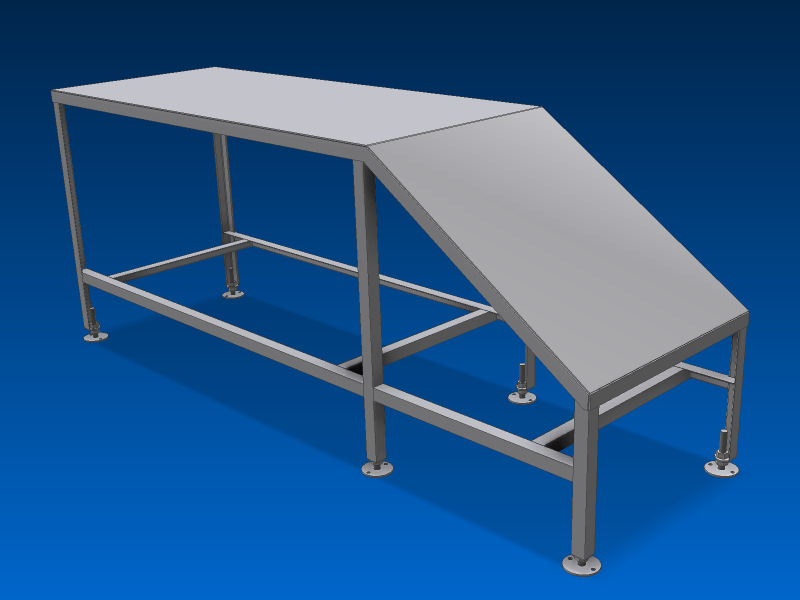
Stationary Work Tables
We can build any type of stainless stationary work table needed for the cut floor, and we can design it for your specific application. Examples include a Meat Wash Table, a SS Drain Table, and a general SS Work Table. We can utilize USDA approved plastics for cutting board applications as well.
Features:
- Heavy Duty Stainless Steel Construction
- Wash-down duty
- Custom widths and lengths available
- Adjustable feet for height adjustment and uneven surfaces
- Sanitary piping, drains, and fitting as needed
-
"In-House" PassivationPassivation treatment is intended to improve the surface condition of stainless steel by dissolving iron that has been embedded in the surface during forming or machining. If allowed to remain, the iron can corrode and give the appearance of rust spots on the stainless steel. Passivation restores the original corrosion-resistant surface by forming a thin, transparent oxide film and is the preferred method for the sanitary durability of stainless steel. Millard has one of the largest "In-House" Passivation operations available for our customer's fabricated items. See our case study on passivation for details. for Sanitary Durability
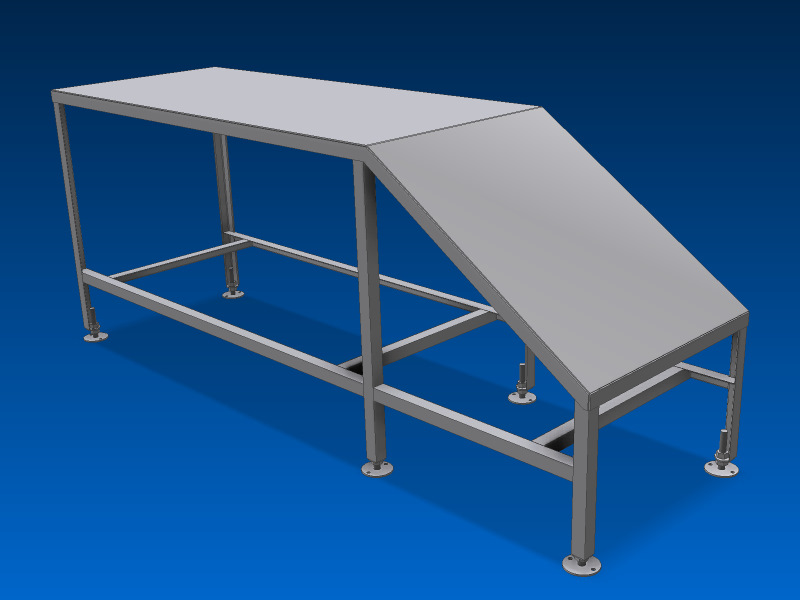

Stationary Work Tables
We can build any type of stainless stationary work table needed for the fabrication floor, and we can design it for your specific application. Examples include a Meat Wash Table, a SS Drain Table, and a general SS Work Table. We utilize USDA approved plastics for cutting board applications.
Features:
- Heavy Duty Stainless Steel Construction
- Wash-down duty
- Custom widths and lengths available
- Adjustable feet for height adjustment and uneven surfaces
- Sanitary piping, drains, and fitting as needed
-
"In-House" PassivationPassivation treatment is intended to improve the surface condition of stainless steel by dissolving iron that has been embedded in the surface during forming or machining. If allowed to remain, the iron can corrode and give the appearance of rust spots on the stainless steel. Passivation restores the original corrosion-resistant surface by forming a thin, transparent oxide film and is the preferred method for the sanitary durability of stainless steel. Millard has one of the largest "In-House" Passivation operations available for our customer's fabricated items. See our case study on passivation for details. for Sanitary Durability
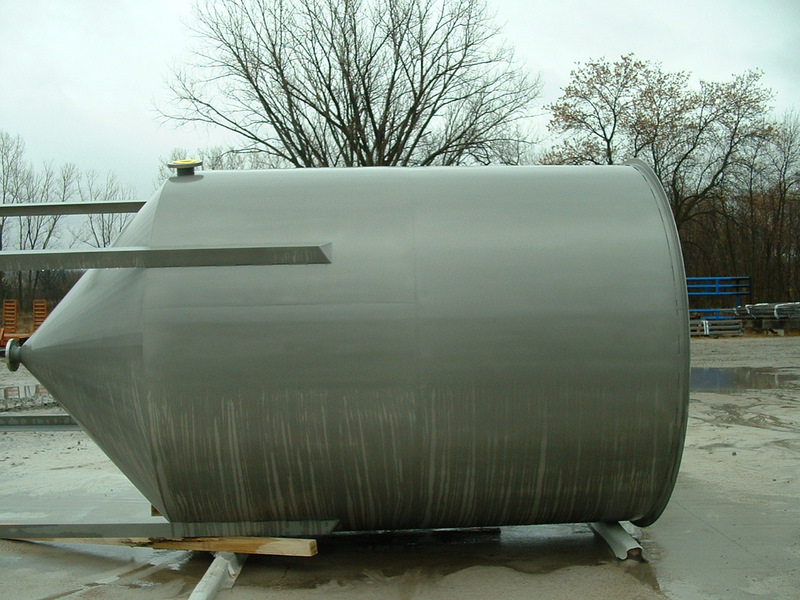
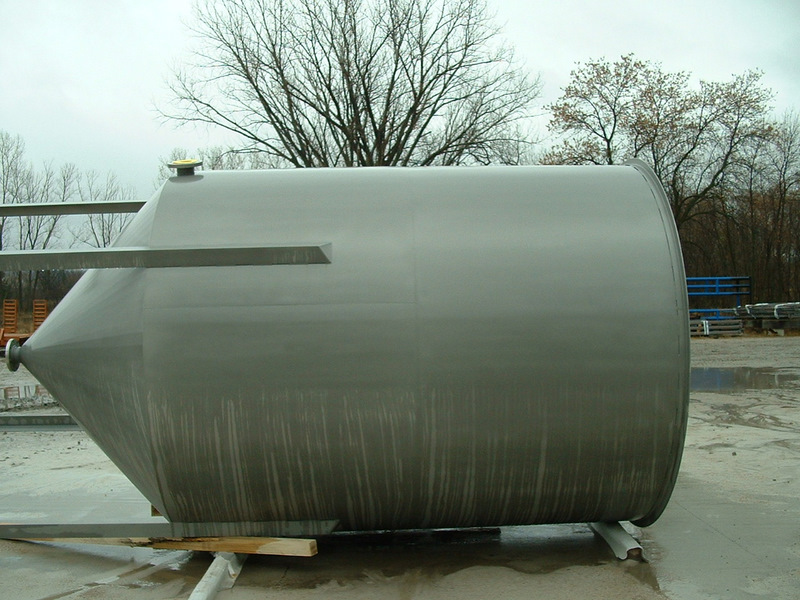
Storage Bins & Tanks
Our open top liquid storage bins are available in cylindrical or rectangular shape and can be custom sized for your application in the rendering area. A storage bin gate is usually used to control product flow. These are typically used for water, blood, or tallow.
Features:
- 1/4" Carbon Plate Construction
- Bin gate options
- Stainless Steel Material Available

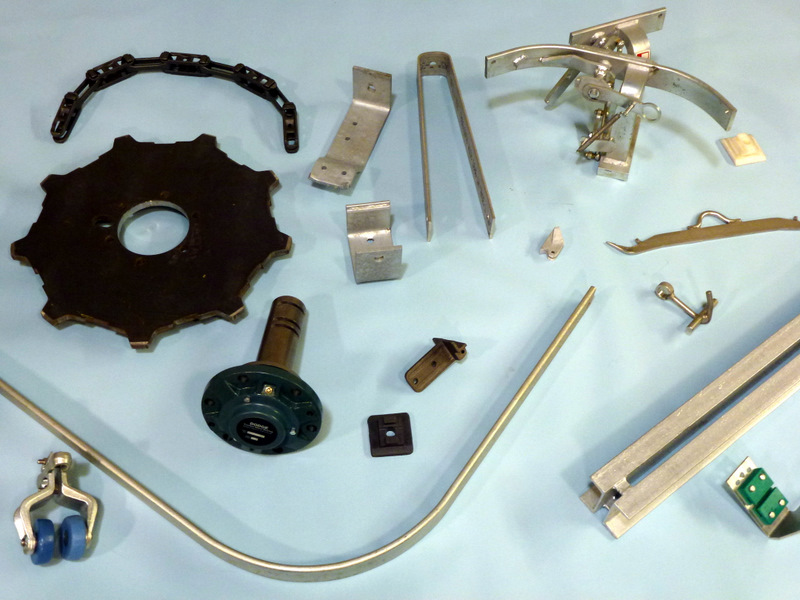
Support Products - Overhead Conveyor
We fabricate and can supply a large selection of support products for overhead conveyor and rail systems. Below is sample listing of our capability:
Features:
- Back to Back Channel Supports - Concrete Roof Double-T
- Bar and sheet steel raw material, cut to size
- Cage Droppers / Tree Droppers / Lowerators
- Downrod Supports (Stainless, Galvanized, or Zinc plated)
- Idler Sprocket Assemblies
- Meat Rails
- Rail Hangers - Roller and Sliders
- Rail Switches - Automatic and Manual
- Smokehouse Rails
- Sprockets with shear pin hubs
- Stack Rail System
- Tee Saddles
- Traction Wheel Turn Assemblies
- Trolley Indexers
- X348, X458, X678 Chain and associated hardware
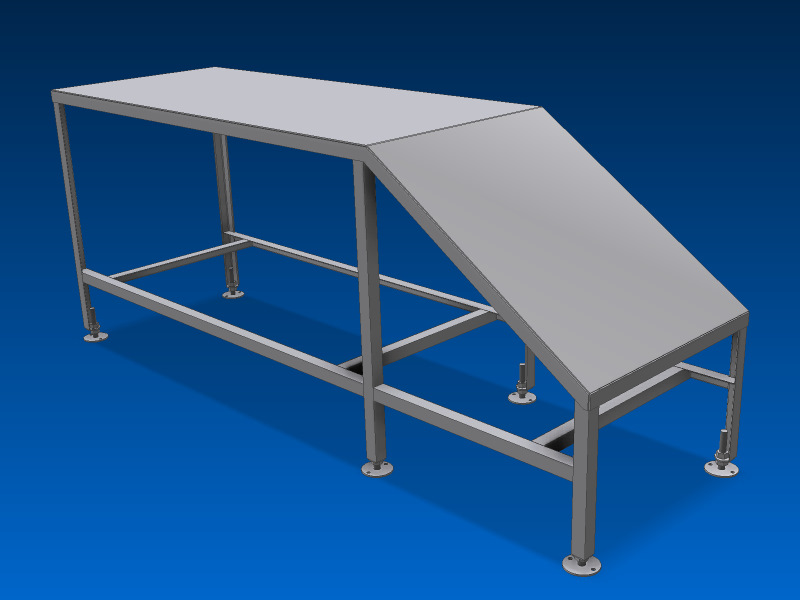

Tables
Millard can design, build, and install a wide variety of custom tables to meet your application needs. Our tables are made to our Safety and Sanitary Design Standards that support the food industry. We can provide tables for (but not limited to): Processing, Sorting, Washing, Storage, Inspection, Cutting, and General use as well as Scale tables and most Worksurface applications.
Features:
- All Stainless Steel construction, Fixed or mobile
- Custom sizes and shapes
- Welded, Bolted or Modular
- Support Shelves
- Overhead Box shelves
- Drain profile tops
- Designed to your specifications
-
"In-House" PassivationPassivation treatment is intended to improve the surface condition of stainless steel by dissolving iron that has been embedded in the surface during forming or machining. If allowed to remain, the iron can corrode and give the appearance of rust spots on the stainless steel. Passivation restores the original corrosion-resistant surface by forming a thin, transparent oxide film and is the preferred method for the sanitary durability of stainless steel. Millard has one of the largest "In-House" Passivation operations available for our customer's fabricated items. See our case study on passivation for details. Finish for Sanitary Durability
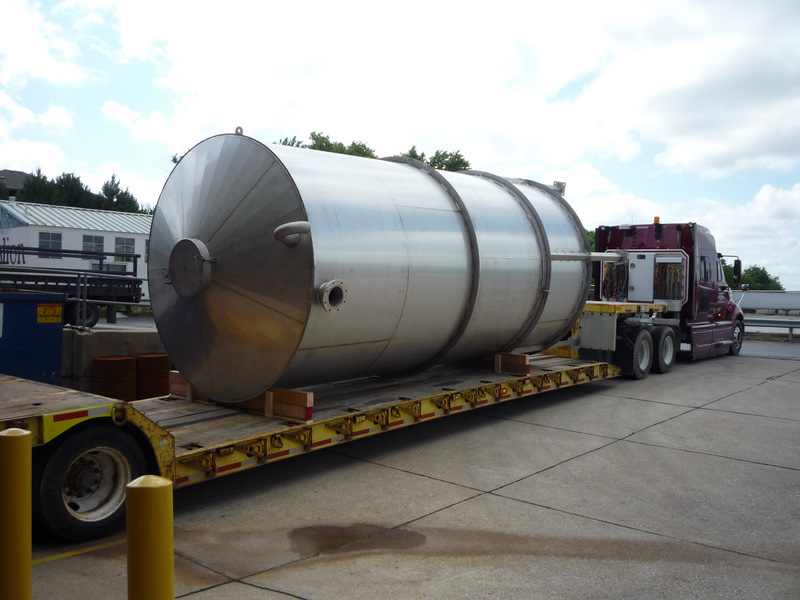
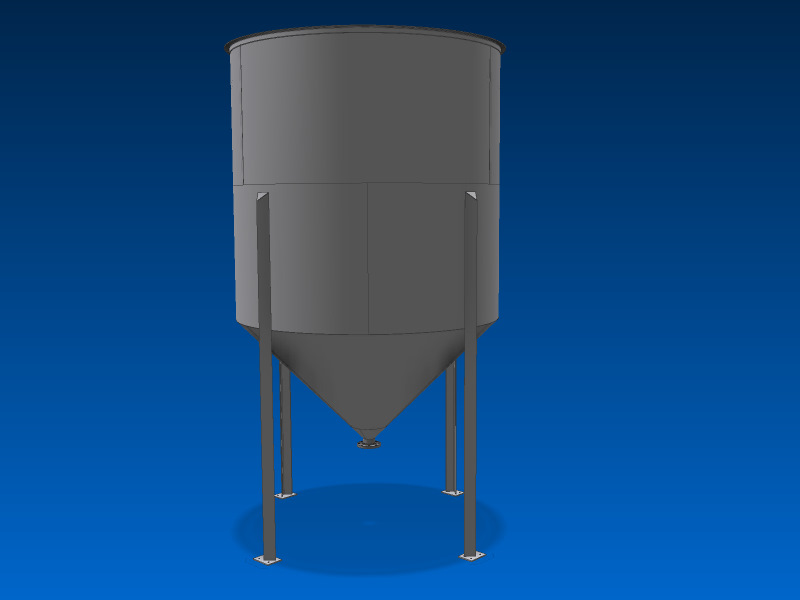
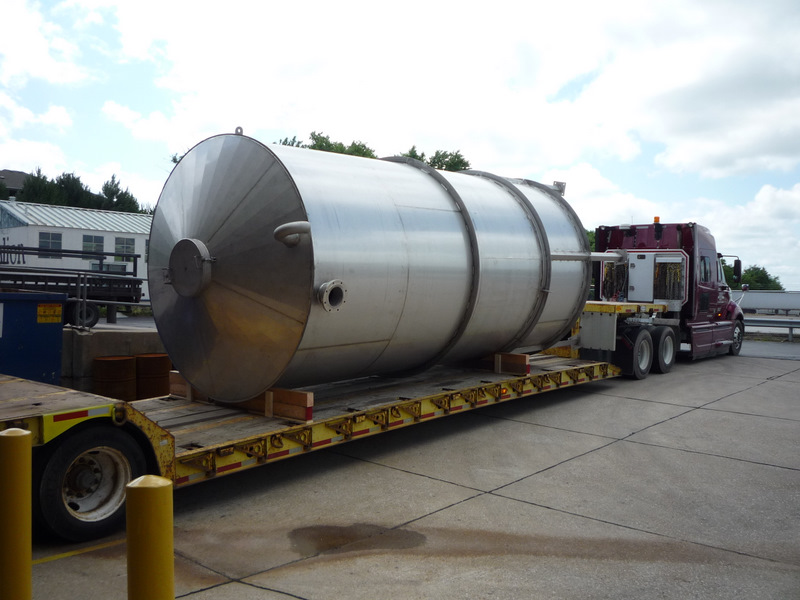
Tanks
Millard is experienced in building Tanks (Non-Pressure Vessels) of all sizes and shapes for the food processing industry. From just a few gallons to a 10,000 gallon liquid tank, we can fill your tank needs. Heavy duty stainless steel is used on most applications but carbon steel is available for non-sanitary applications. We can engineer your tanks complete with inlet and outlet fittings, inspection ports, supports, and lifting eyes if needed.
Features:
- Heavy Duty Stainless Steel
-
"In-House" PassivationPassivation treatment is intended to improve the surface condition of stainless steel by dissolving iron that has been embedded in the surface during forming or machining. If allowed to remain, the iron can corrode and give the appearance of rust spots on the stainless steel. Passivation restores the original corrosion-resistant surface by forming a thin, transparent oxide film and is the preferred method for the sanitary durability of stainless steel. Millard has one of the largest "In-House" Passivation operations available for our customer's fabricated items. See our case study on passivation for details. Finish for Sanitary Durability
- Manways
- Vents
- Drains
- Structural supports
- Lifting eyes
- Custom Engineering
- Sanitary & NPT Pipe Fittings

Tanks
Millard manufactures custom Tanks (non-pressure vessels) for the Food Industry in most any shape or size. Our Tanks are designed to Safe and Sanitary Design Standards with durable construction for years of service. See our Tanks in Support Equipment & Services for product descriptions and features.
Features:
- Heavy Duty Stainless Steel
-
"In-House" PassivationPassivation treatment is intended to improve the surface condition of stainless steel by dissolving iron that has been embedded in the surface during forming or machining. If allowed to remain, the iron can corrode and give the appearance of rust spots on the stainless steel. Passivation restores the original corrosion-resistant surface by forming a thin, transparent oxide film and is the preferred method for the sanitary durability of stainless steel. Millard has one of the largest "In-House" Passivation operations available for our customer's fabricated items. See our case study on passivation for details. Finish for Sanitary Durability
- Manways
- Vents
- Drains
- Structural supports
- Lifting eyes
- Custom Engineering
- Sanitary & NPT Pipe Fittings
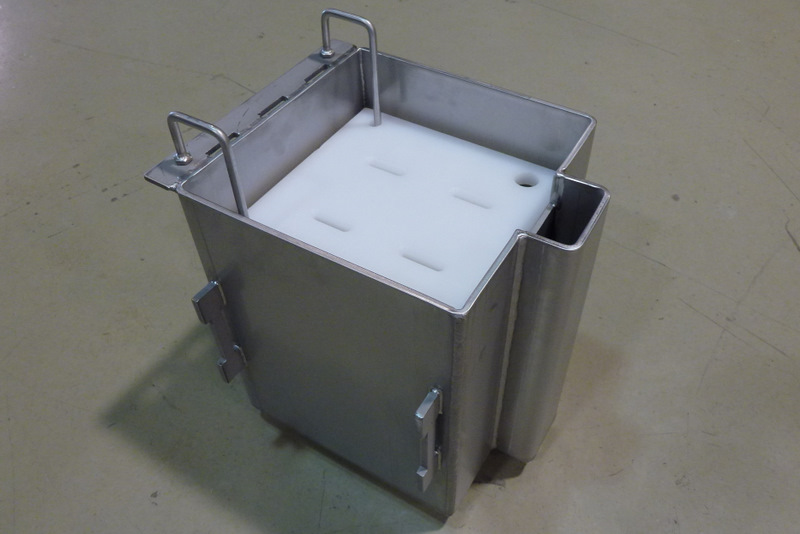
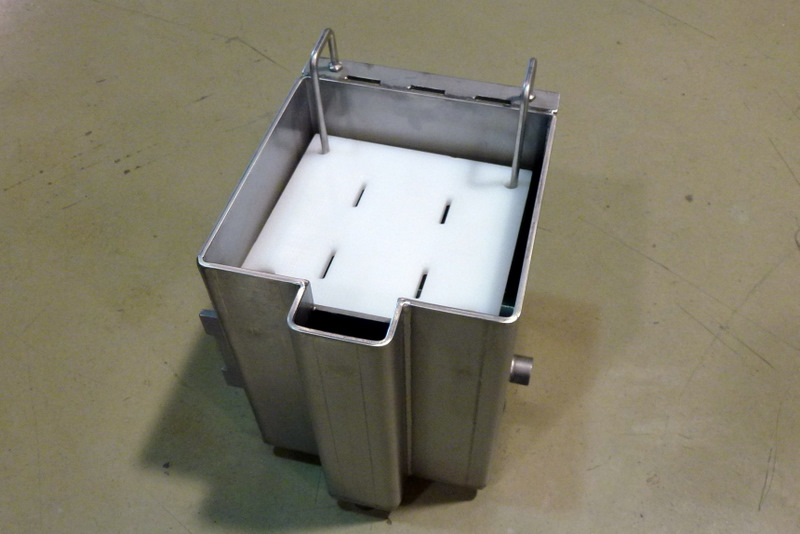
Tool Sterilizer
Millard can provide a sterilizer tank for most any tool you use. We will custom design and build your tank to fit in the space available and support the process to provide a safe and sanitary operation.
- Split
- Saw
- Hock
- Dehorner
- Weasand Rod
- Whizard Knife
- Others
Features:
- Heavy Duty Stainless Steel
- Custom Sizes and Shapes
- Steam fittings
- Water Fittings
- Drains
- Overflows
- Multiple mount configurations
Media:
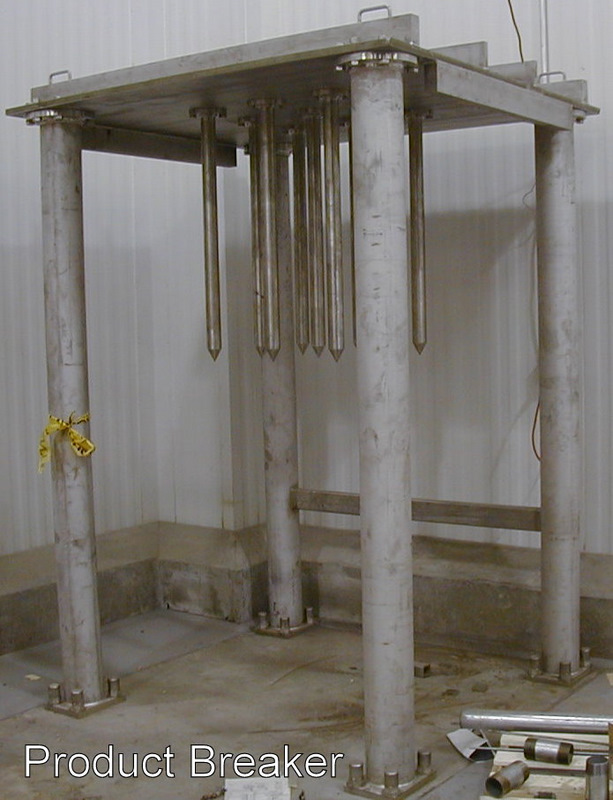
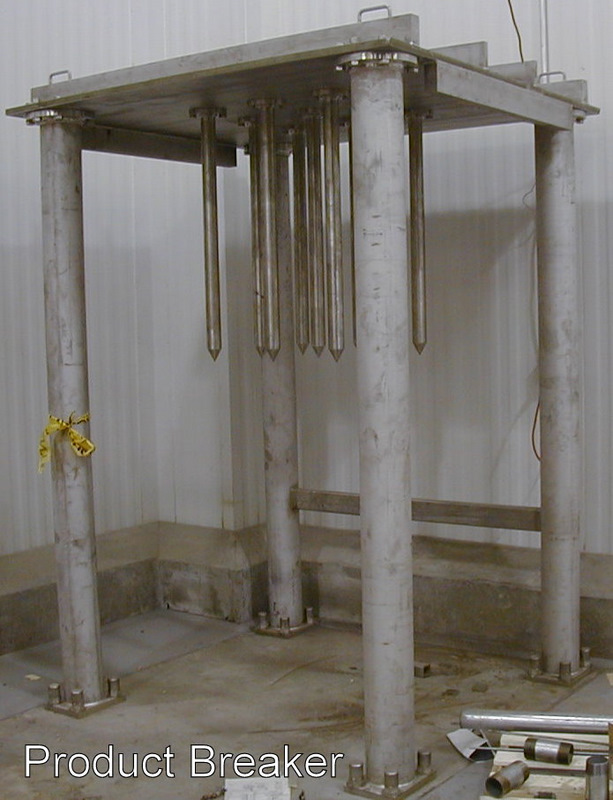
Tote / Product Breaker
Millard's Tote/Product Breaker is a stationary fixture that uses the power of a fork lift to break up product frozen in totes, bins or vats. The Tote Breaker is comprised of spikes that are pointed down with a frame that is anchored to a 1" plate secured to the floor.
Features:
- (9) or more spikes 2.5" diameter
- All Stainless Steel HD construction
- (4) 6" support posts
- 1" bottom plate secured to the floor
- Custom designed to any size or spike configuration you may need
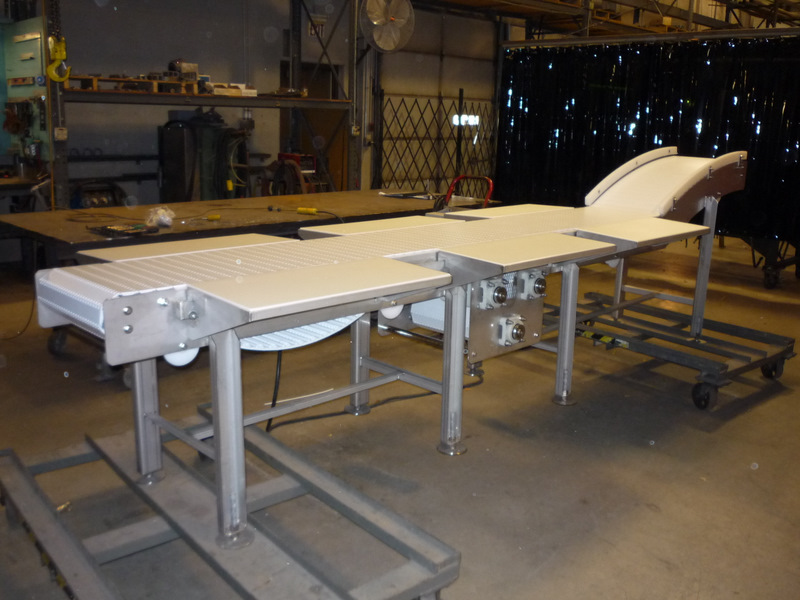
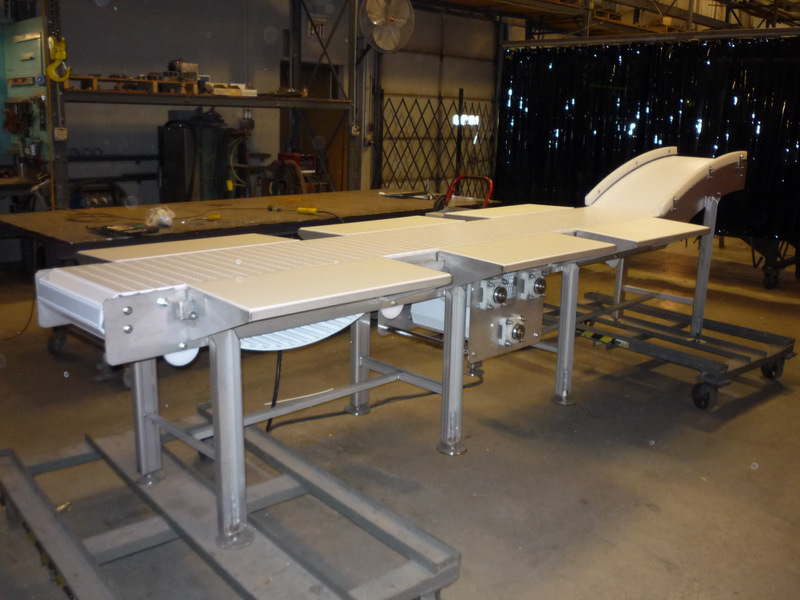
Tray Pack Conveyor w/Tray Stations
Our Tray Pack Conveyor w/Tray Stations provides a multiple conveyor system applicable for all cuts of beef. We provide a standard 18" center conveyor delivering the product while an overhead shelf houses the trays for production. A lower conveyor takes away the package or trimmed product that is processed on moveable trays along the main center conveyor.
Features:
- Unique Millard Sliding Tray feature
- Sliding Trays can be used for trimming or packaging
- Tray surface options
- Ergonomic Designed
- Wash-down duty for ease of cleaning
- HD SS construction
- Applicable to all beef cuts as well as box packaging
- Same standard features as our Belt Conveyors
-
"In-House" PassivationPassivation treatment is intended to improve the surface condition of stainless steel by dissolving iron that has been embedded in the surface during forming or machining. If allowed to remain, the iron can corrode and give the appearance of rust spots on the stainless steel. Passivation restores the original corrosion-resistant surface by forming a thin, transparent oxide film and is the preferred method for the sanitary durability of stainless steel. Millard has one of the largest "In-House" Passivation operations available for our customer's fabricated items. See our case study on passivation for details. for Sanitary Durability

Tray Pack Conveyor w/Tray Stations
Our Tray Pack Conveyor w/Tray Stations provides a multiple conveyor system applicable for all cuts of pork. We provide a standard 18" center conveyor delivering the product while an overhead shelf houses the trays for production. A lower conveyor takes away the package or trimmed product that is processed on moveable trays along the main center conveyor.
Features:
- Unique sliding tray feature
- Sliding trays can be used for trimming or packaging
- Tray surface options
- Ergonomic designed
- Wash-down duty for ease of cleaning
- HD stainless steel construction
- Applicable to all pork cuts as well as box packaging
- Same standard features as our Belt Conveyors
-
"In-House" PassivationPassivation treatment is intended to improve the surface condition of stainless steel by dissolving iron that has been embedded in the surface during forming or machining. If allowed to remain, the iron can corrode and give the appearance of rust spots on the stainless steel. Passivation restores the original corrosion-resistant surface by forming a thin, transparent oxide film and is the preferred method for the sanitary durability of stainless steel. Millard has one of the largest "In-House" Passivation operations available for our customer's fabricated items. See our case study on passivation for details. for Sanitary Durability
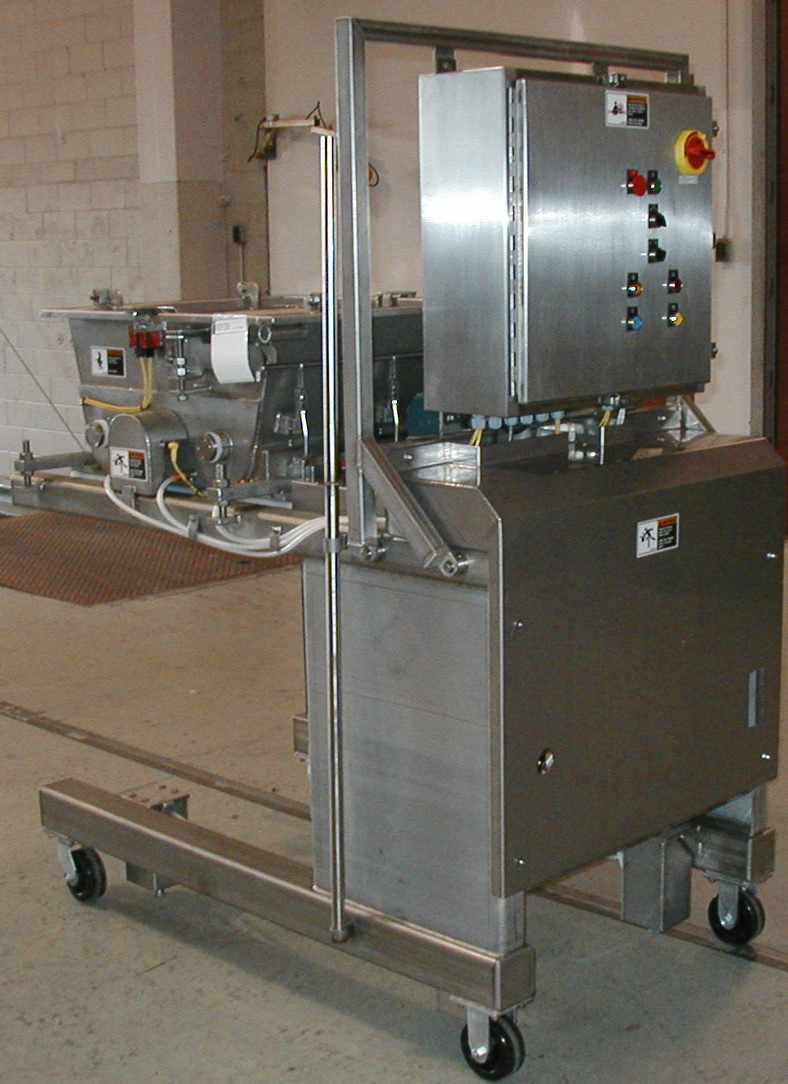
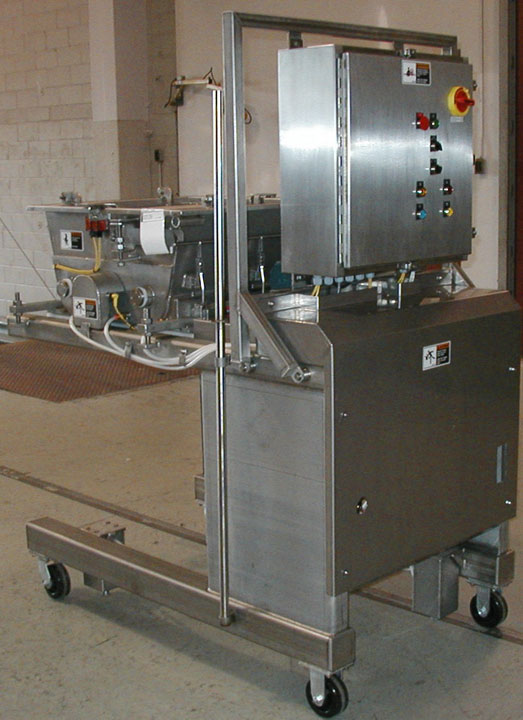
Twelve Pocket Filler
Millard manufactures several types of specialty pocket fillers, one of which is our 12-Pocket Filler. This filler is made to fill (12) pockets simultaneously as the trays or containers are passed under the machine. This multiple volumetric filler is well suited for applications where space is limited and capacity needs to be increased. See our "Case Study" for more details.
Features:
- "In-House" PassivationPassivation treatment is intended to improve the surface condition of stainless steel by dissolving iron that has been embedded in the surface during forming or machining. If allowed to remain, the iron can corrode and give the appearance of rust spots on the stainless steel. Passivation restores the original corrosion-resistant surface by forming a thin, transparent oxide film and is the preferred method for the sanitary durability of stainless steel. Millard has one of the largest "In-House" Passivation operations available for our customer's fabricated items. See our case study on passivation for details. for Sanitary durability
- Sanitary Wash-Down Duty for Easy Cleaning operations
- Safety Guarding of machine
- (3) Second cycle depositing
- (12) pockets of food per cycle
- Servo drive system
- Automated Volumetric Filling
- Pneumatic cylinders to anchor machine during operations
- Agitation screw in hopper to circulate product and prevent bridging
- Heavy duty Stainless Steel construction
- Custom designs available per application
Media:
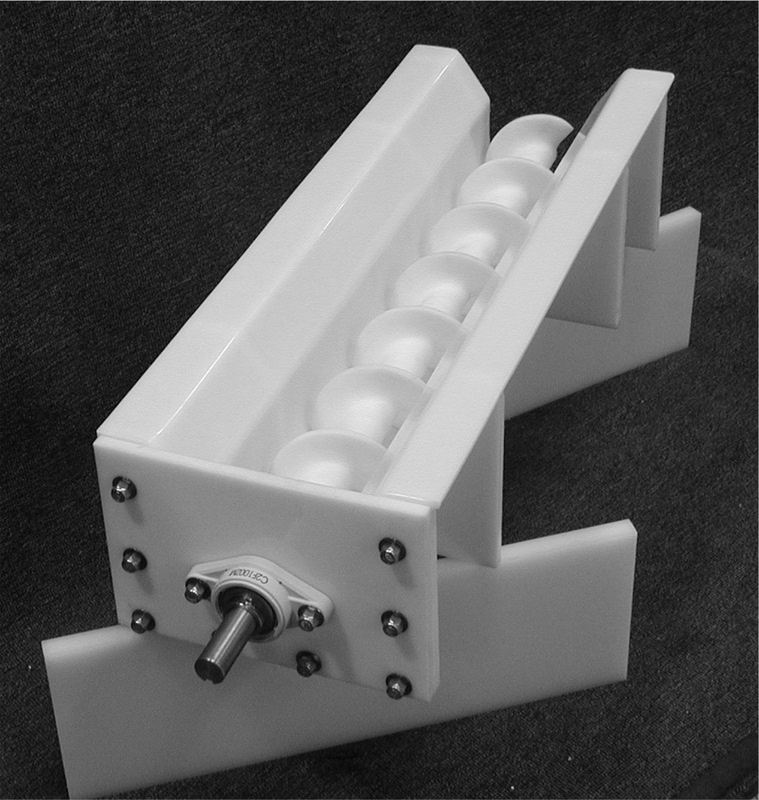
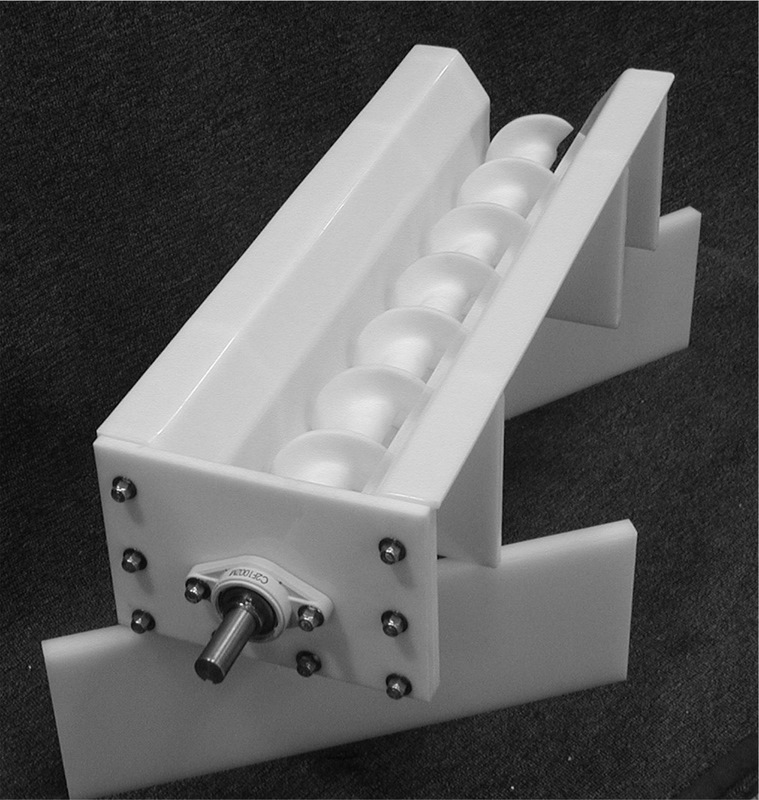
UHMW Screw Conveyors
Our smaller UHMW Screw Conveyor is used in removing the fines from skinning operations. UHMW screws provide a better method to move this extremely sticky substance without building up or sticking to belts.
Features:
- UHMW USDA approved Plastic
- 4" diameter flights
- Custom lengths up to 60"
- Compact design
- Little to no maintenance required
- Low Speed - High Torque Direct drive hydraulic coupled motor
- Easy to clean
Media:
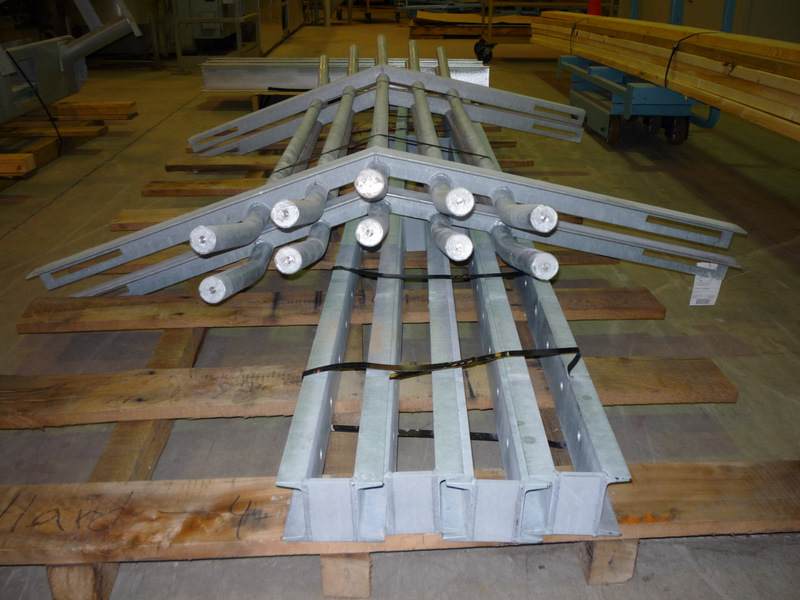
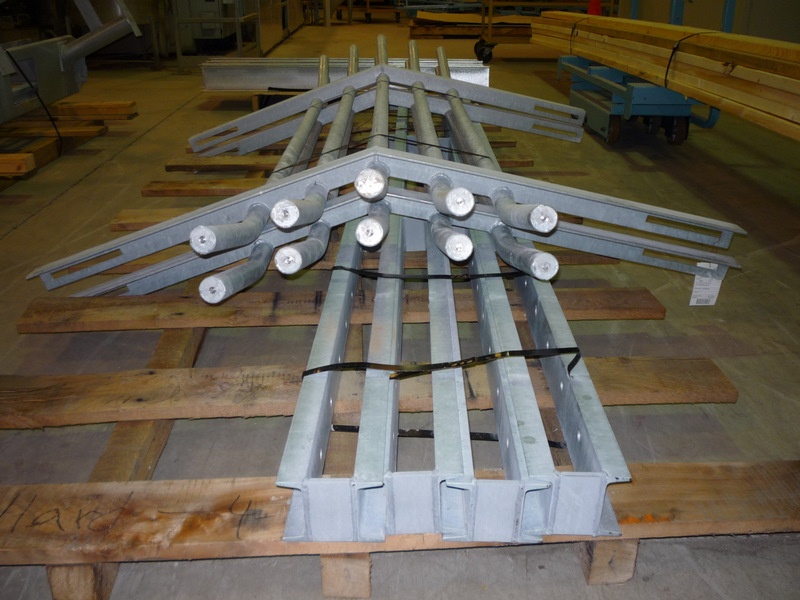
V-Restrainer
V-Restrainer is a V-shaped restraining system which conveys and holds the hog in a still upright position for smooth and efficient stunning. Hogs walk into the restrainer and are carried by the belts forward.
Features:
- Conveyor Driven
- Stainless Steel available
- Variable Speed Heavy Duty Drives
- Up to 750 hogs per hour
- Overhead restrainer to keep hogs down
- 14' standard length (custom lengths available)
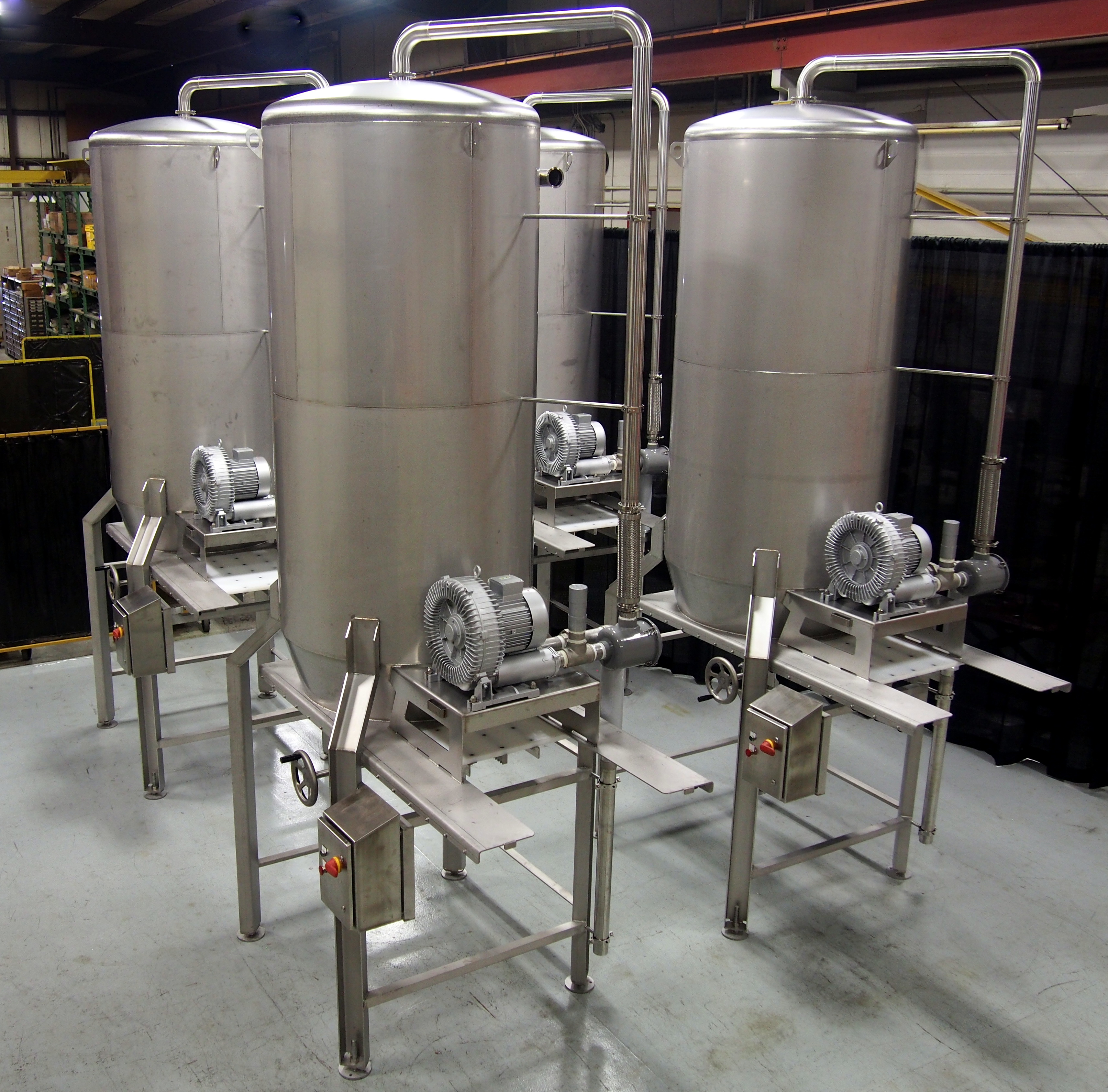
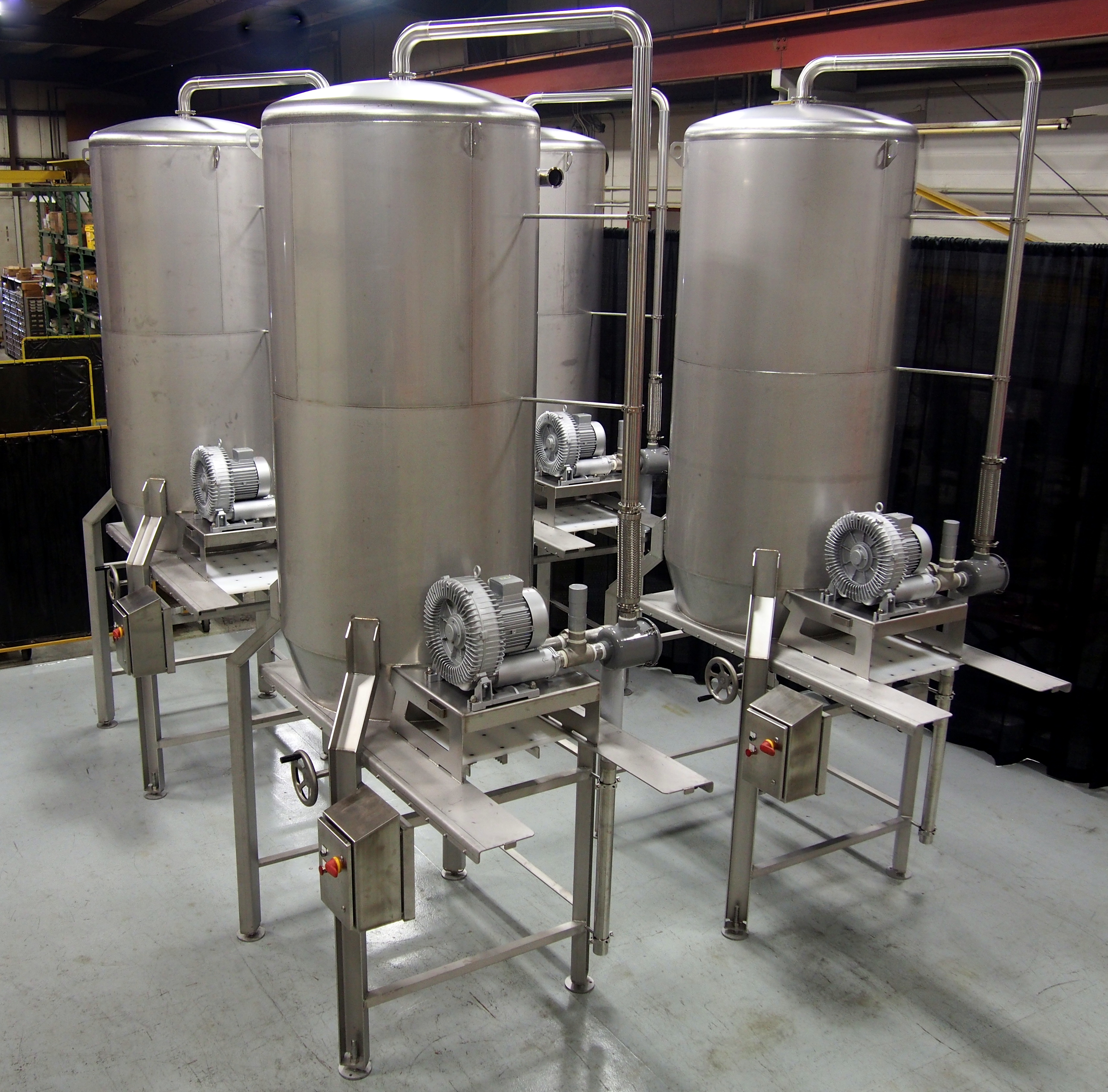
Vacuum Accumulator
This Vacuum Accumulator Unit is used in dry sausage peeling applications where the peeled casing is vacuum conveyed to the chamber and held within until the load is dumped into a combo or trash bin at breaks. A typical unit holds 250 lbs. of expended casing material in a three-hour time frame and can easily discharge through the 40" diameter opening and rack/pinion gate assembly. The R.T.E. grade unit is designed for high cleanability and ease of use and can be custom designed to fit within your workspace.
Features:
- Heavy Duty Stainless Steel
-
"In-House" PassivationPassivation treatment is intended to improve the surface condition of stainless steel by dissolving iron that has been embedded in the surface during forming or machining. If allowed to remain, the iron can corrode and give the appearance of rust spots on the stainless steel. Passivation restores the original corrosion-resistant surface by forming a thin, transparent oxide film and is the preferred method for the sanitary durability of stainless steel. Millard has one of the largest "In-House" Passivation operations available for our customer's fabricated items. See our case study on passivation for details. Finish for Sanitary
- Rack and Pinion Gate Assembly
- Lifting eyes
- Custom Engineering
- Sanitary & NPT Pipe Fittings
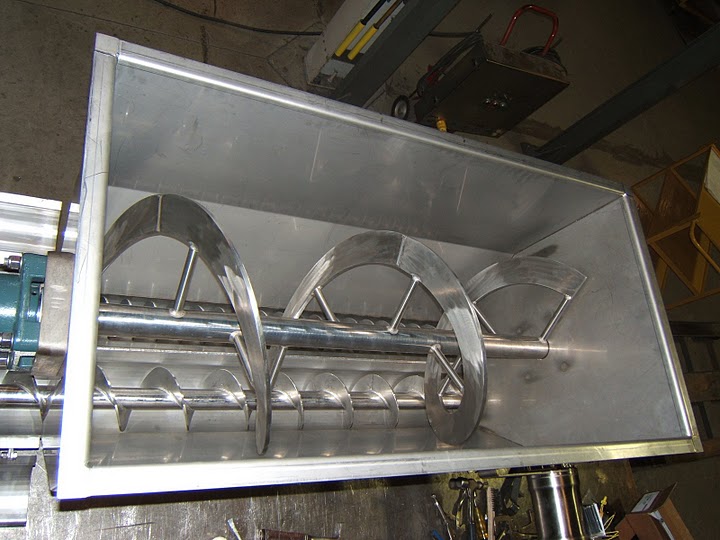
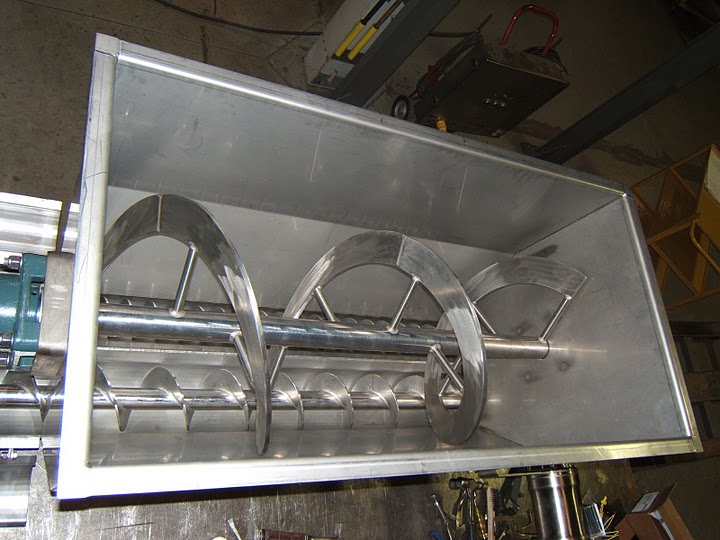
Volumetric Screw Hoppers
Millard produces some highly specialized machinery like our Volumetric Screw Hopper. This equipment uses a two-screw dispensing system to present an exact amount of product (generally tissue type like Hamburger) into a weigh hopper or scale for a secondary operation.
Features:
- All stainless steel construction
- Polished screw
- PLC driven
- Complete with controls
- Custom built to specific product applications
- Heavy duty motors and gearboxes
-
"In-House" PassivationPassivation treatment is intended to improve the surface condition of stainless steel by dissolving iron that has been embedded in the surface during forming or machining. If allowed to remain, the iron can corrode and give the appearance of rust spots on the stainless steel. Passivation restores the original corrosion-resistant surface by forming a thin, transparent oxide film and is the preferred method for the sanitary durability of stainless steel. Millard has one of the largest "In-House" Passivation operations available for our customer's fabricated items. See our case study on passivation for details. for sanitary durability
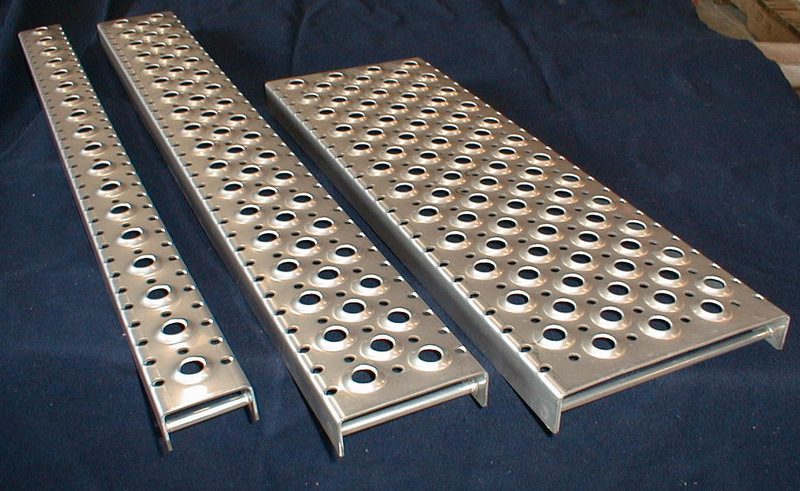
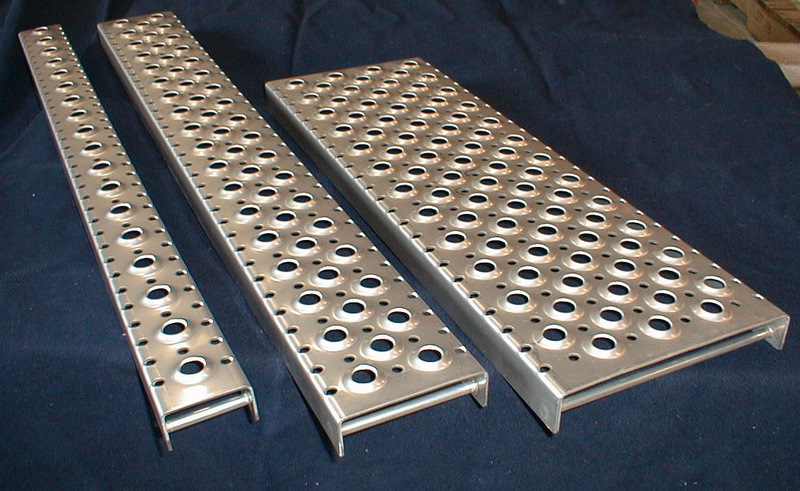
Walk Surfaces
Millard's walk surfaces include: OptiGrip®, Fiberglass Grating, Bar Grating, Grip Ladder Rungs, and more. We can fabricate complete structures using our walk surfaces or provide components cut or made to your specifications. (e.g. risers, stairs, treads, platforms, ladders, walkways, catwalks, mezzanines, walk overs)
Features:
- OptiGrip®
- Fibergrate®
- Fiberplate®
- SlipNOT®
- Bar Grating
- Safe and Sanitary construction
- Custom cut to size
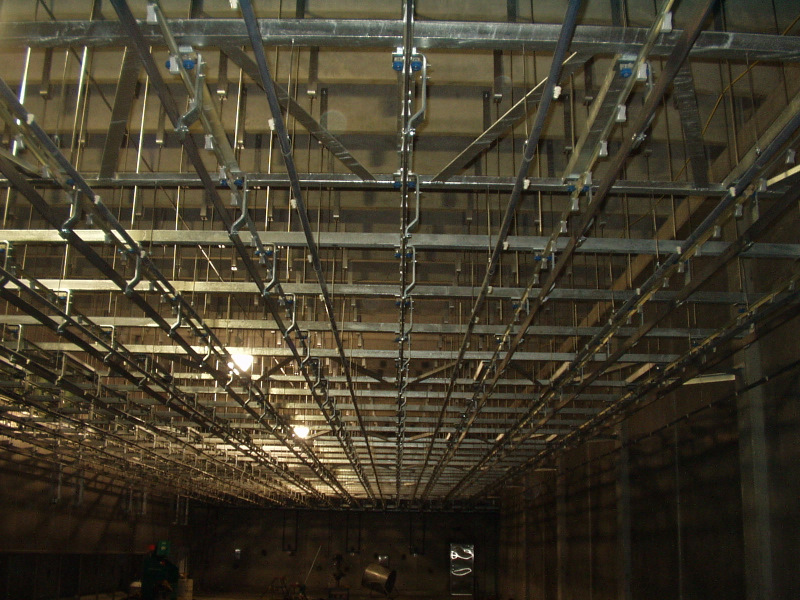

Walking Beam Cooler Systems
The "walking" beam type conveyor system uses a hydraulic driven cylinder to "walk" your product through a cooler from the infeed switches to the outfeed switches. We can supply the entire system including all the support structure, the infeed conveyors and the outfeed conveyors using either X458 or X678 chain, and the electrical controls that interface to the customer's control system. Our system uses a trolley assembly that is pushed along on rounded meat rail using aluminum drop fingers on 9" spacing. These drop fingers are mounted on a T-bar track that is guided by a bearing block mounted on the walking beam support hangers and are driven by a hydraulic cylinder. Supports can be beamless or support steel type. Most other parts are galvanized, zinc plated, or stainless for sanitation.
Features:
- Upgrades, retrofits, and new constuction
- Sized for your layout and design requirements.
- Installation services available.
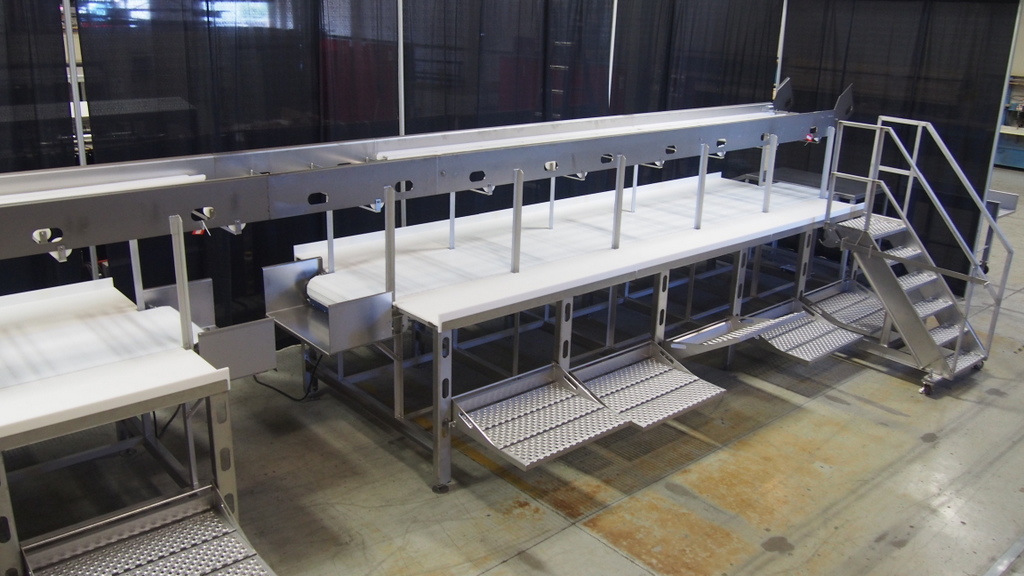

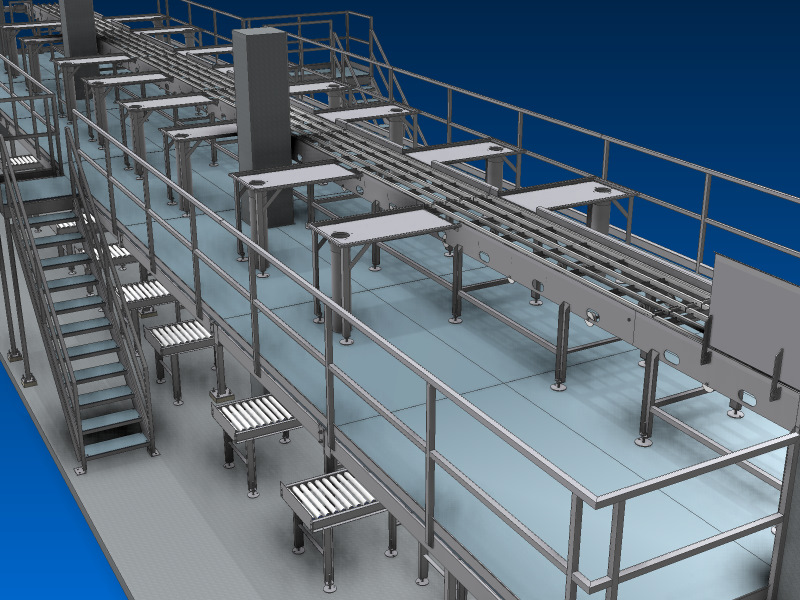
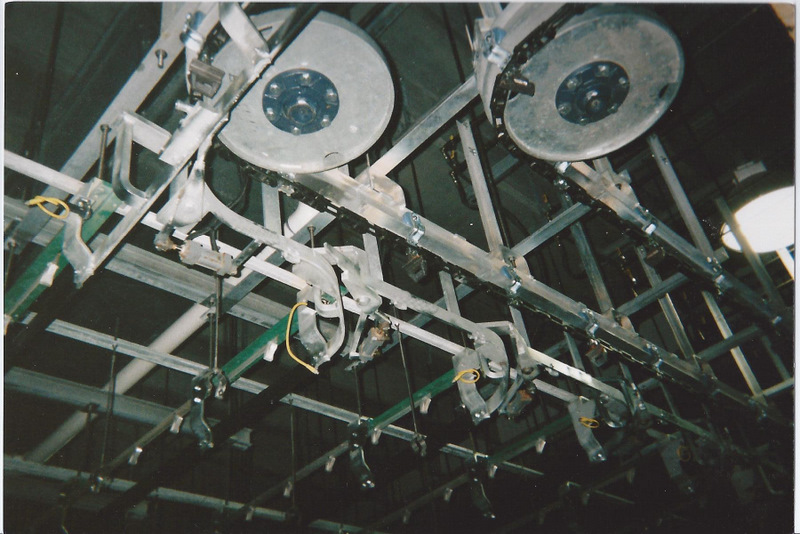


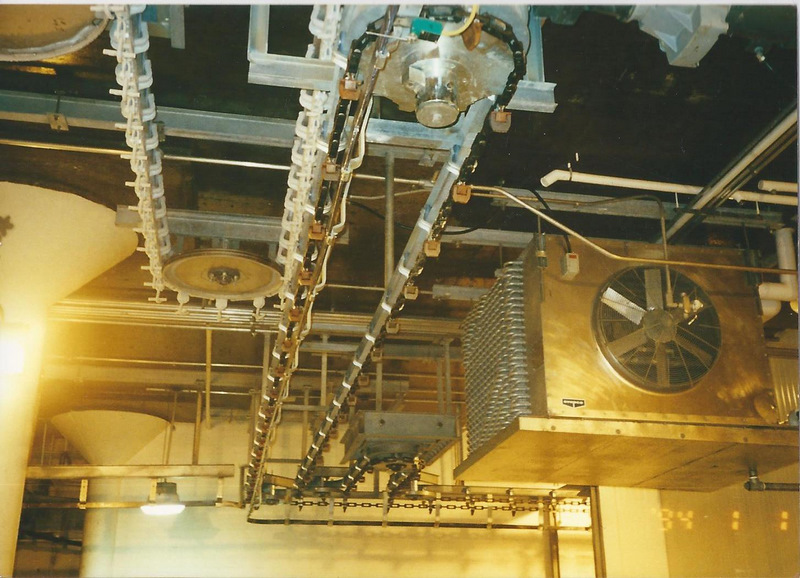
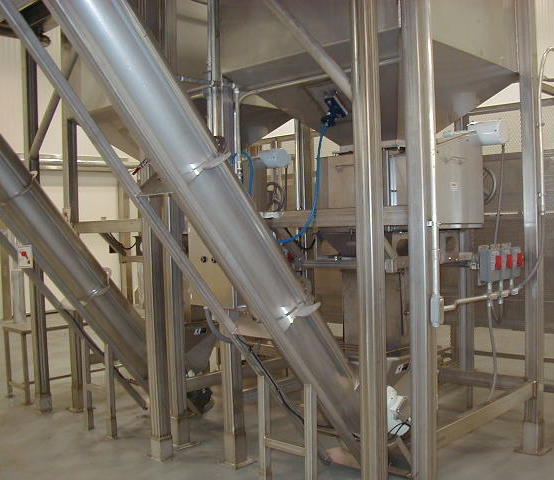
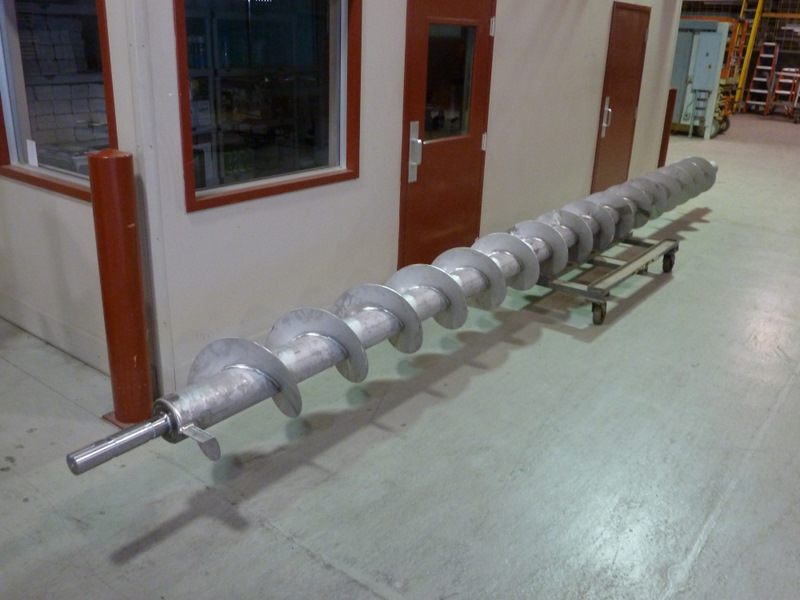
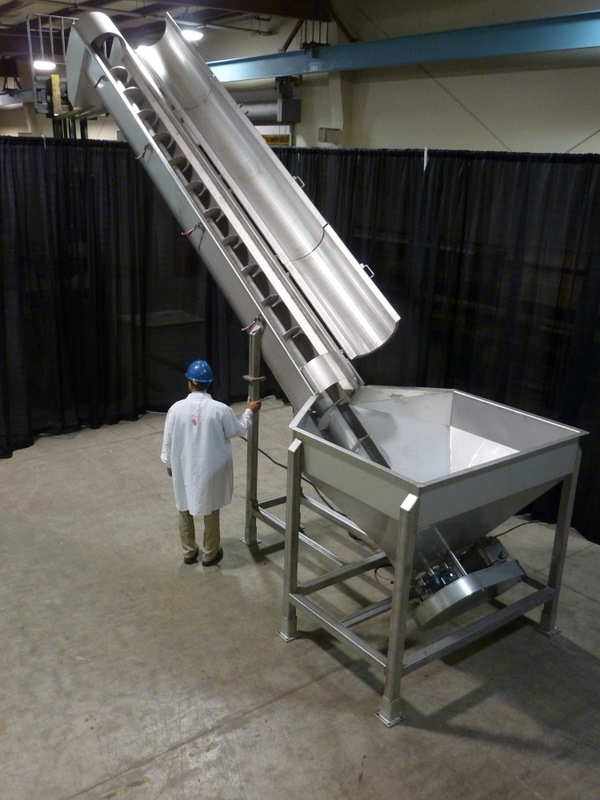
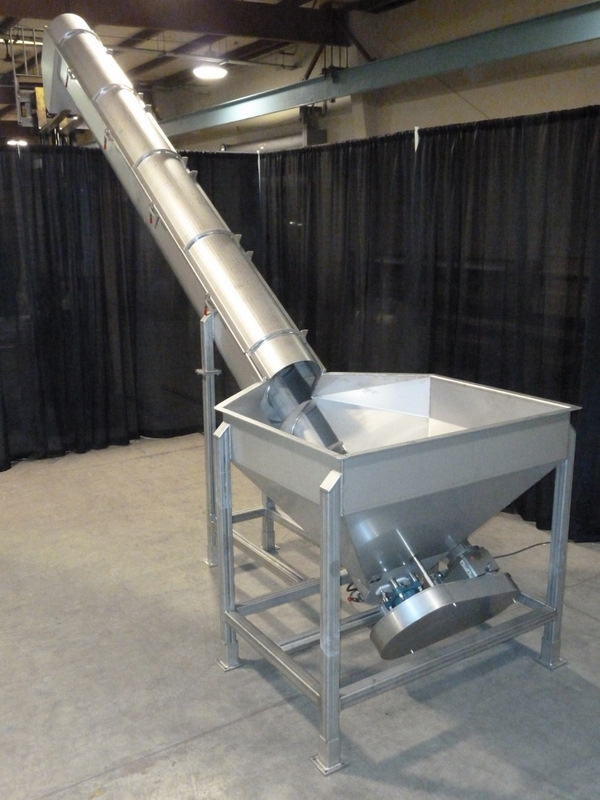

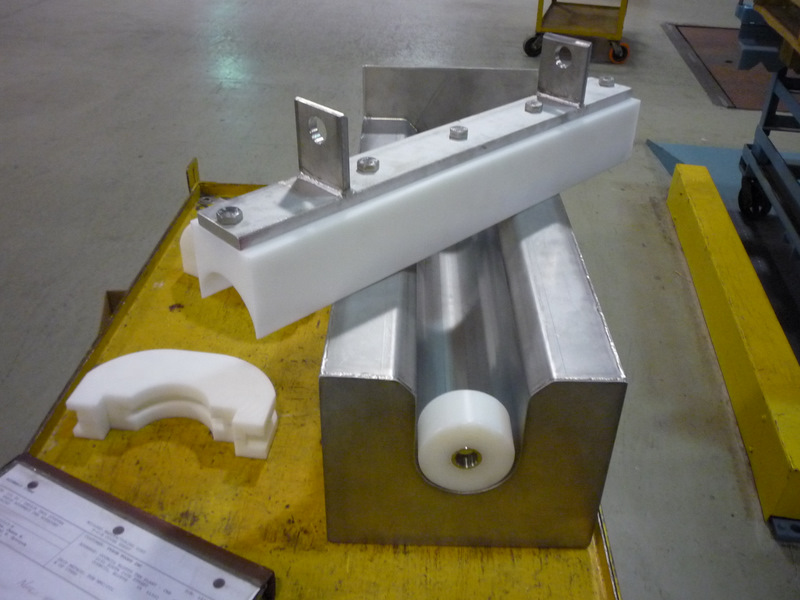
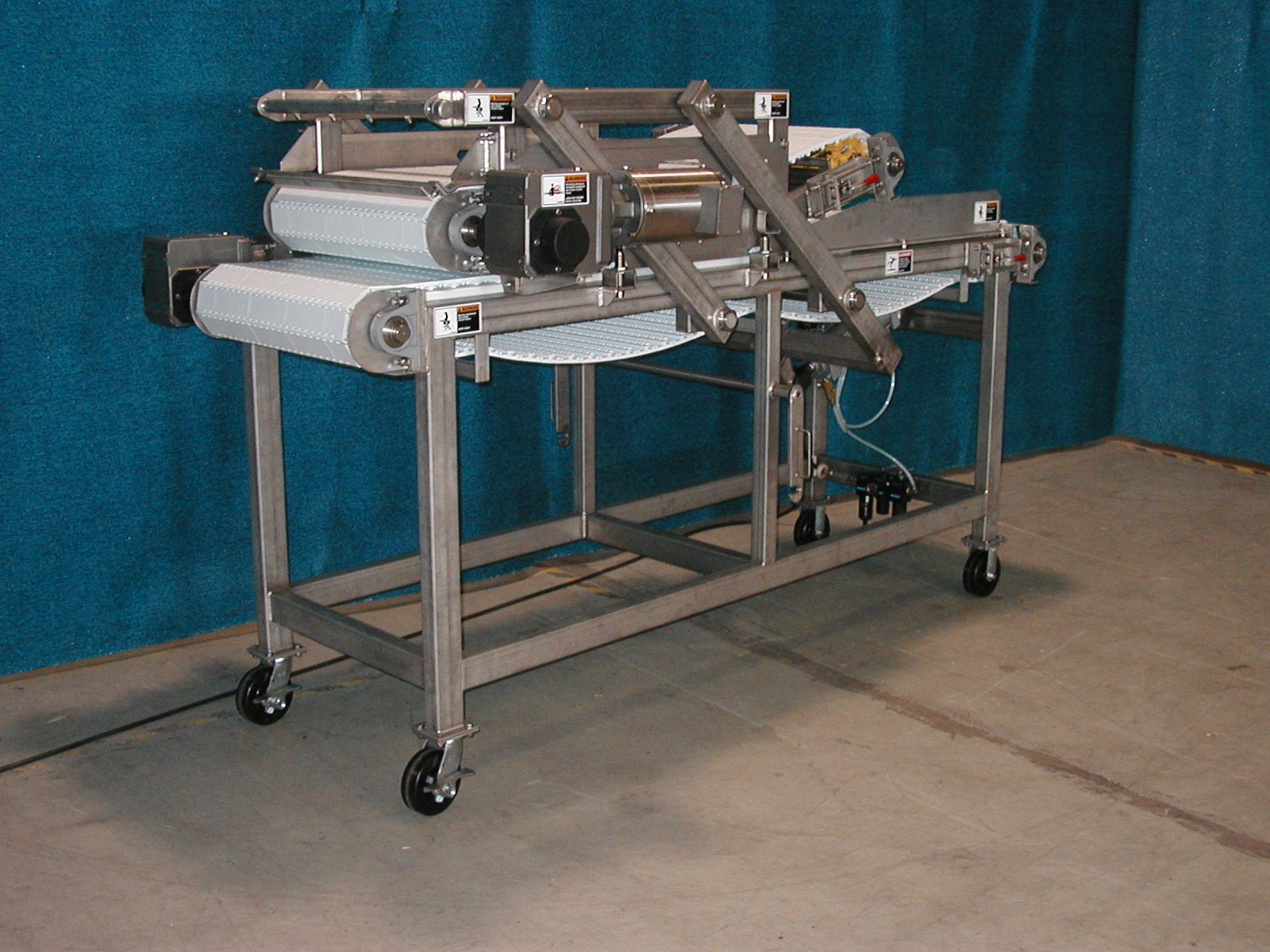
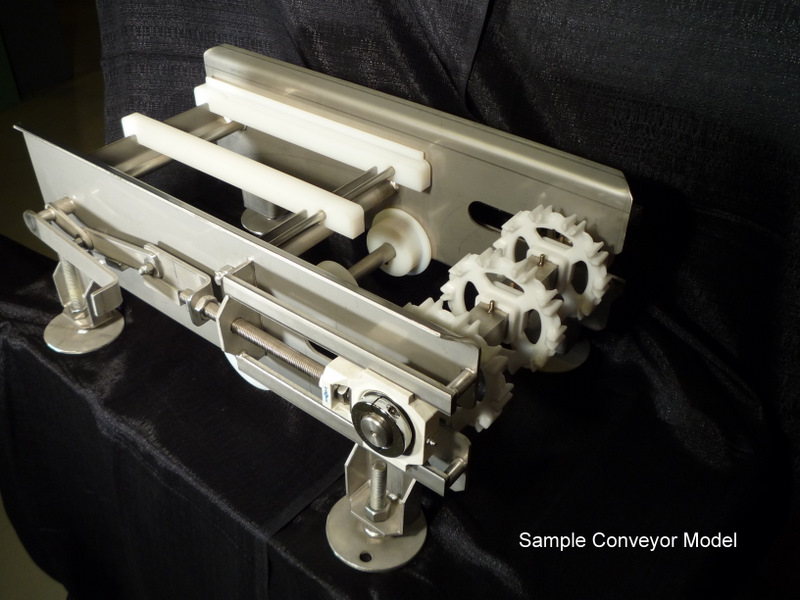


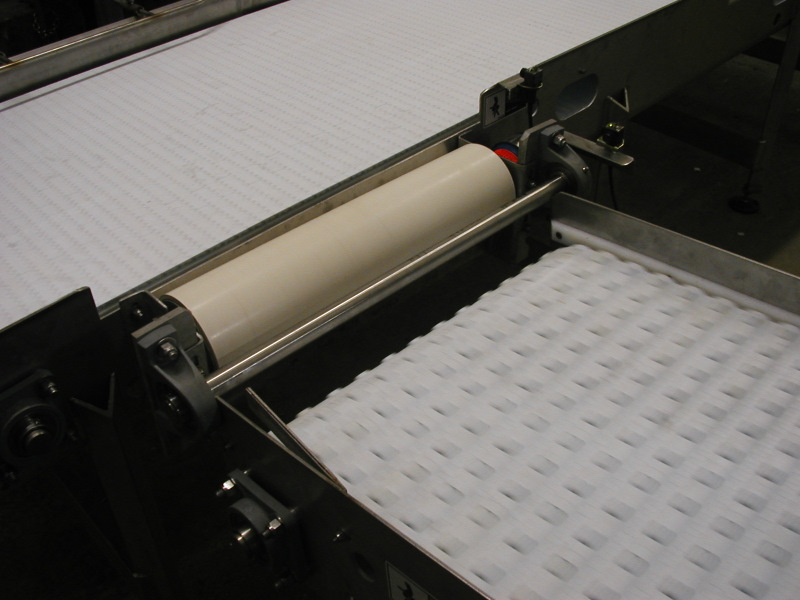

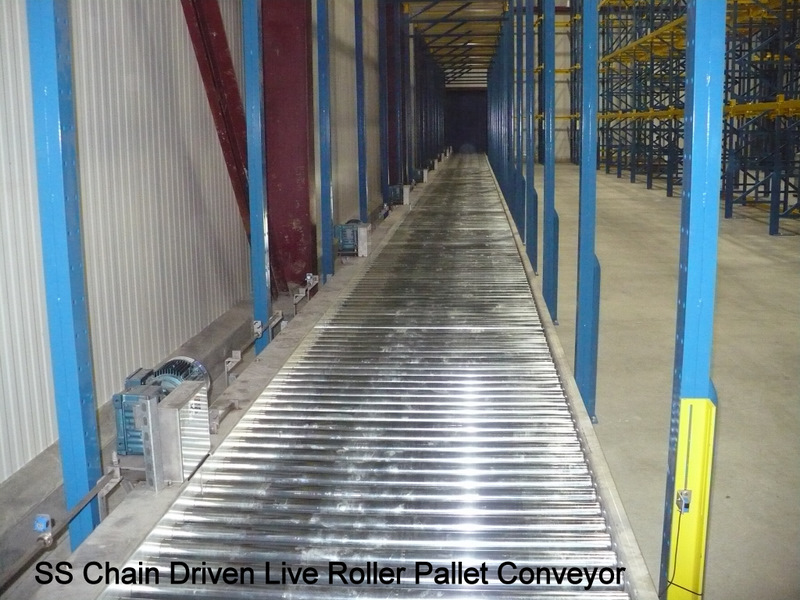
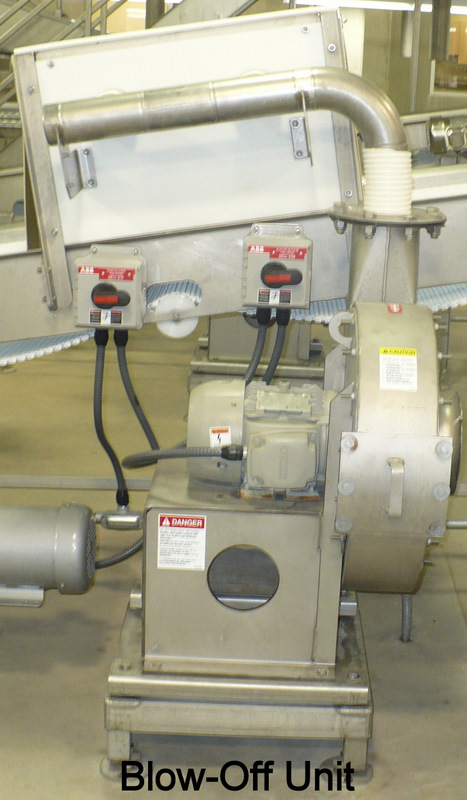

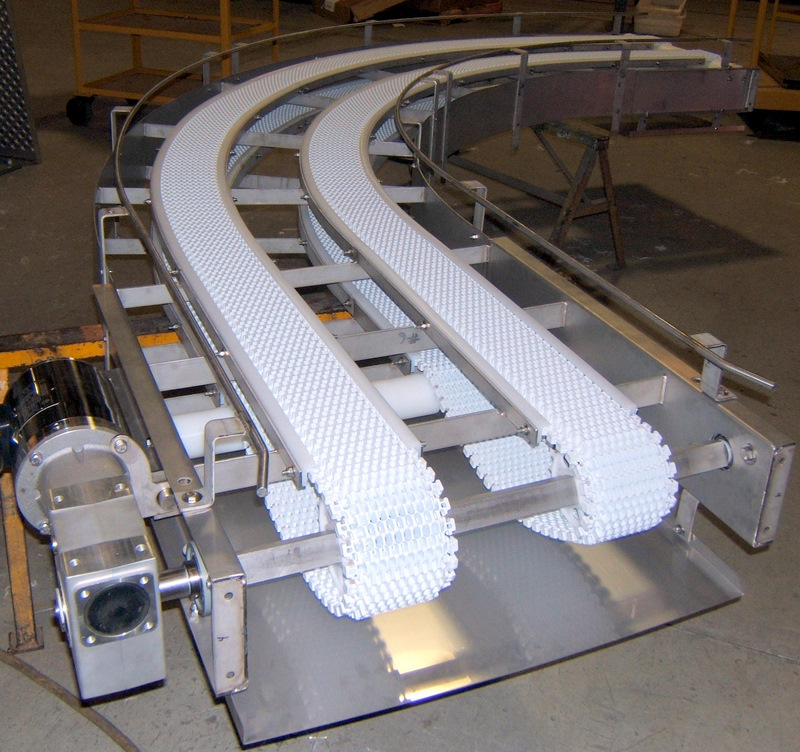
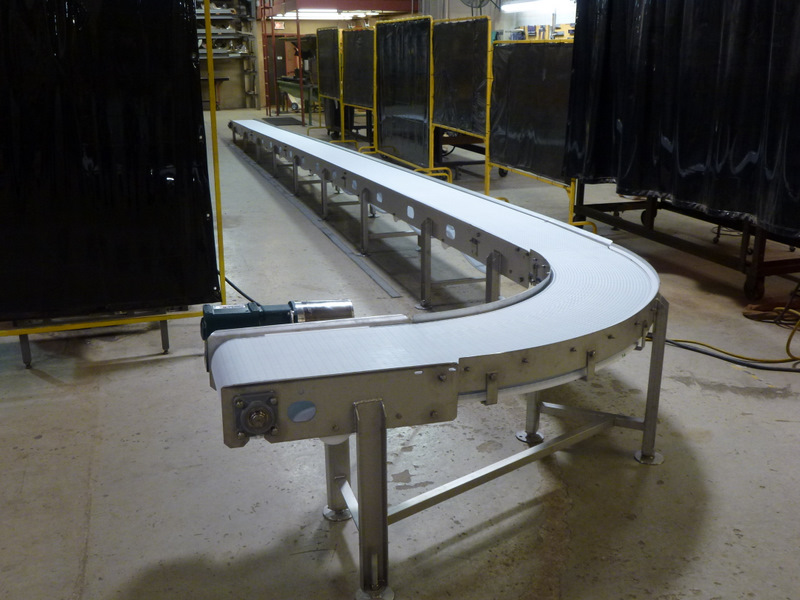
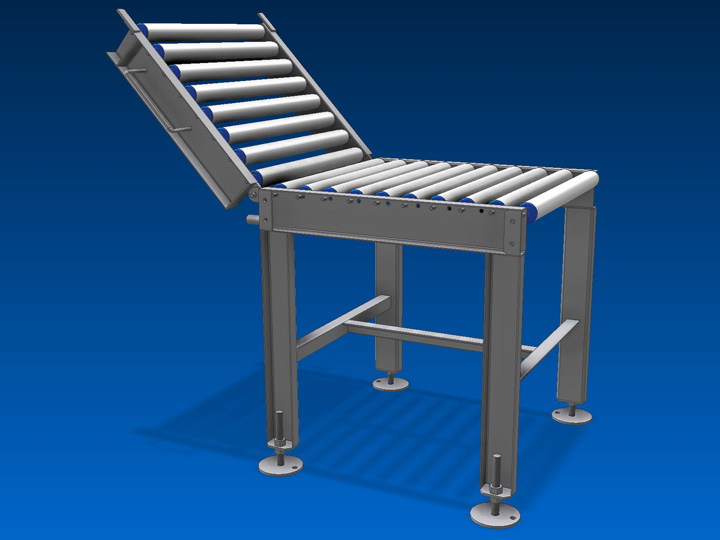
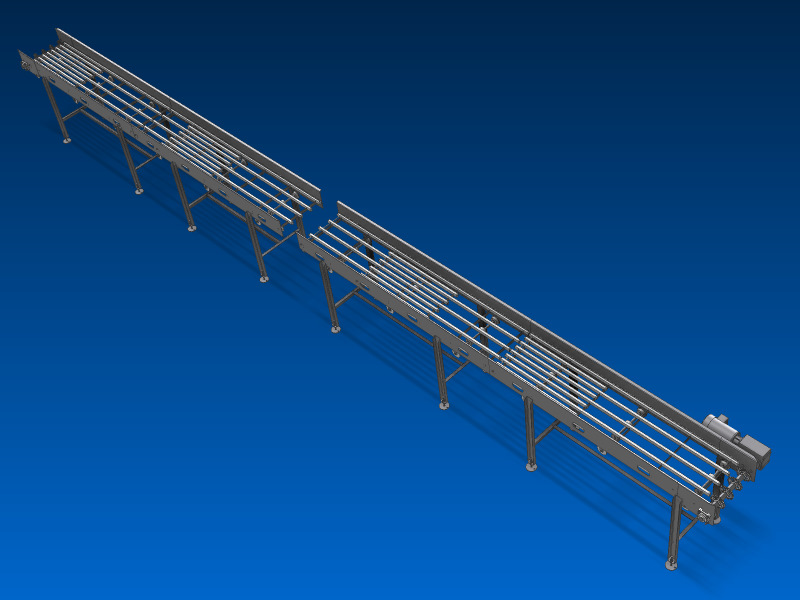
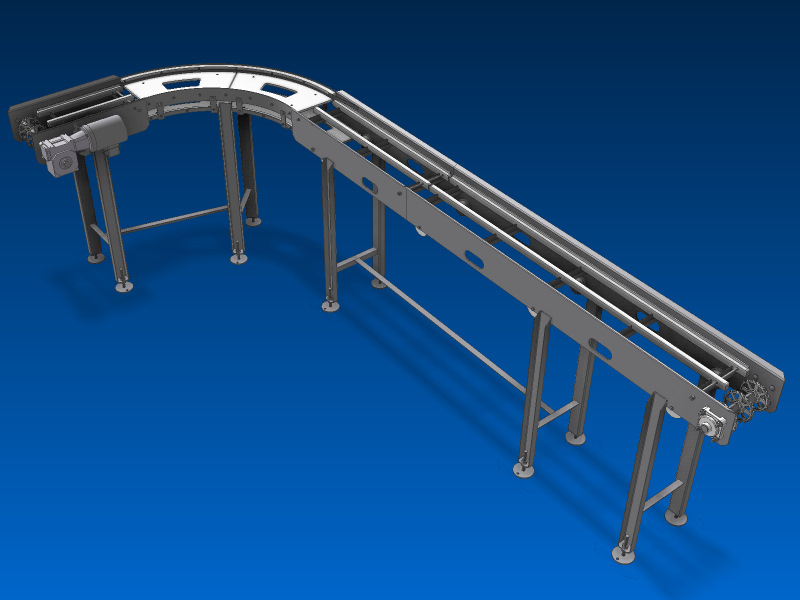
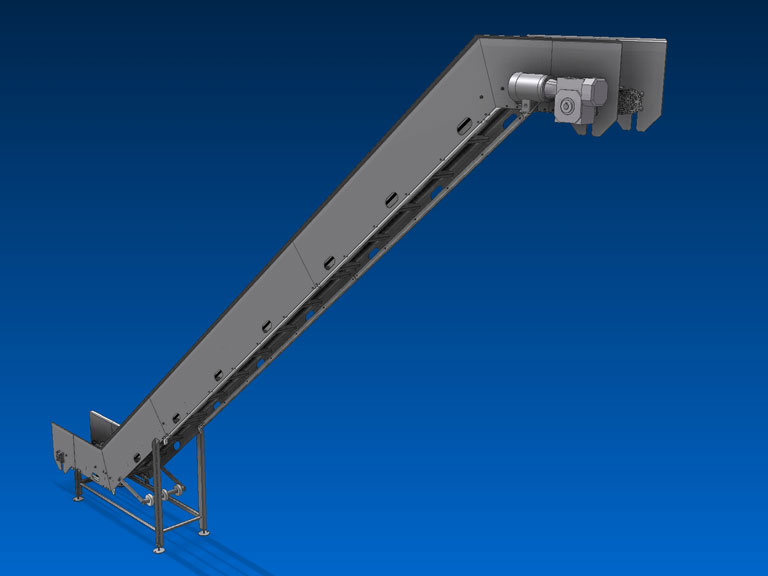
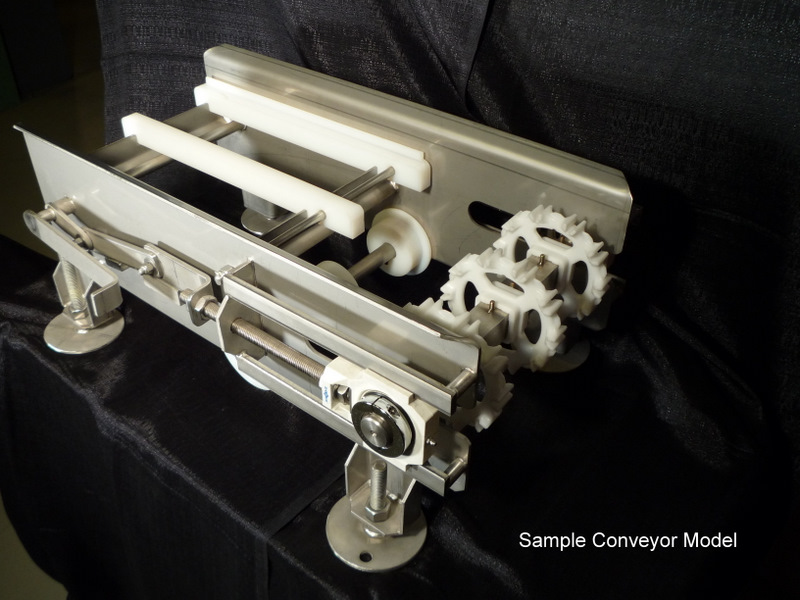
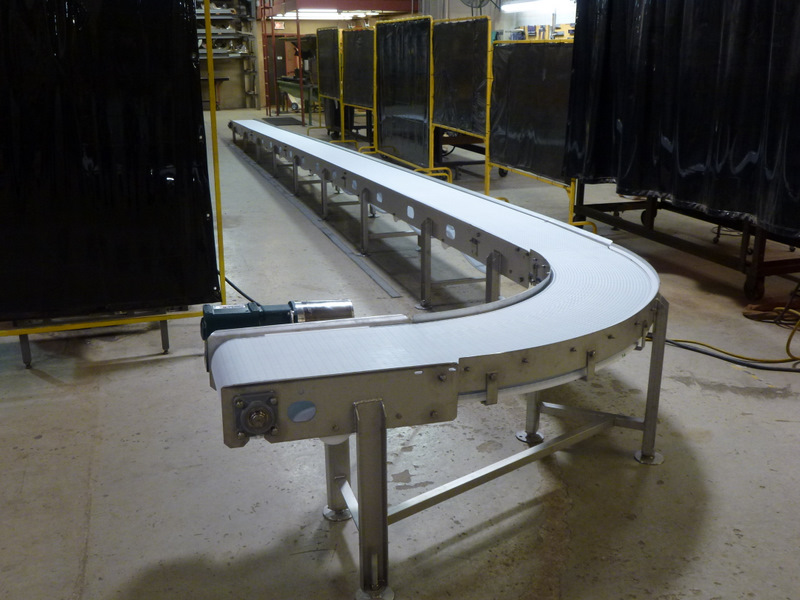

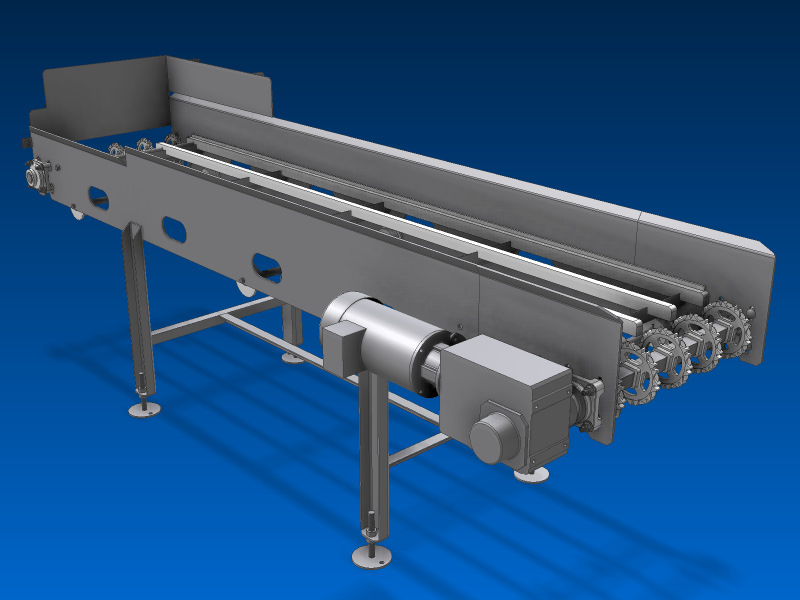

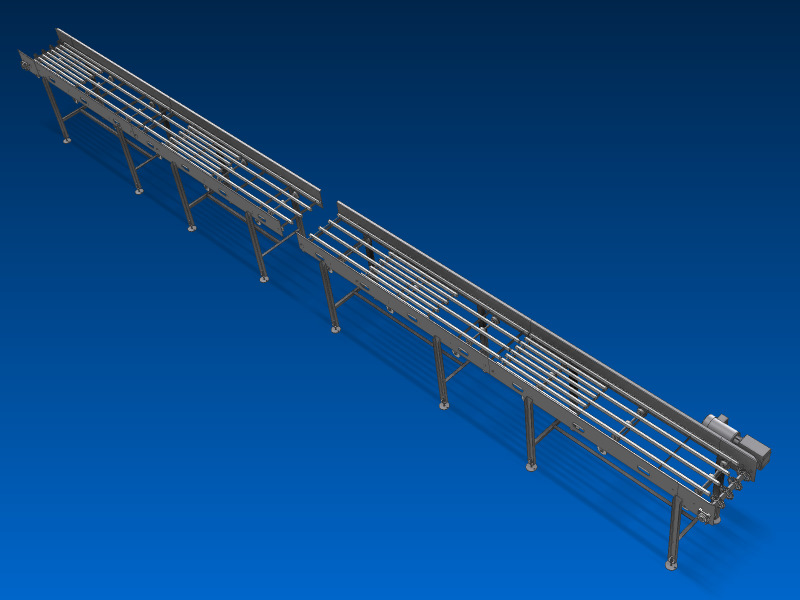
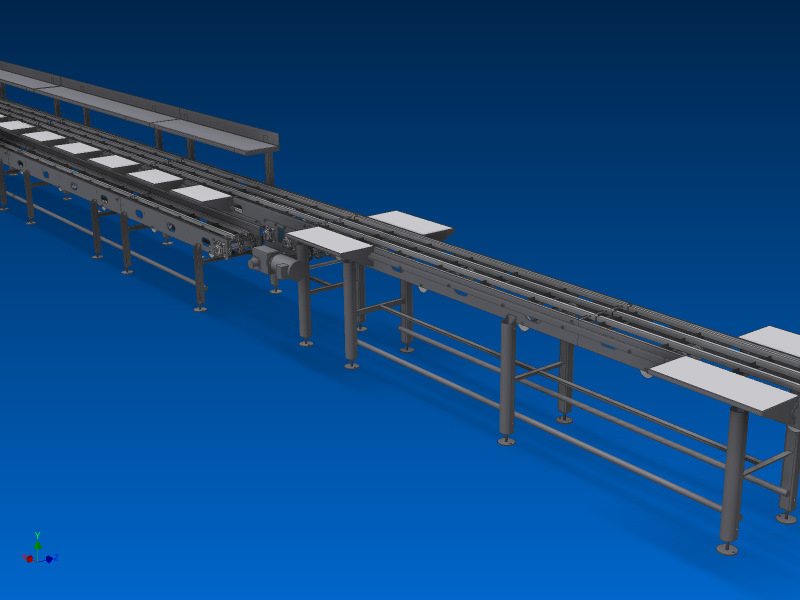
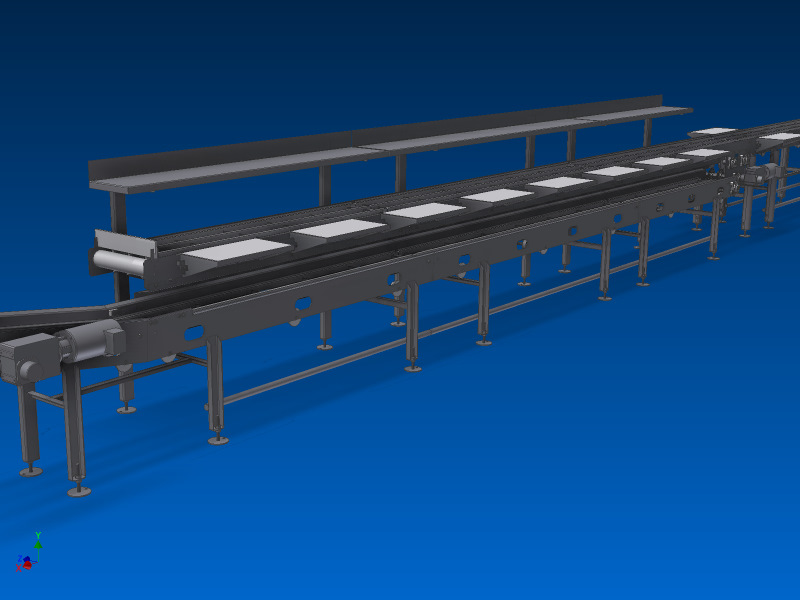
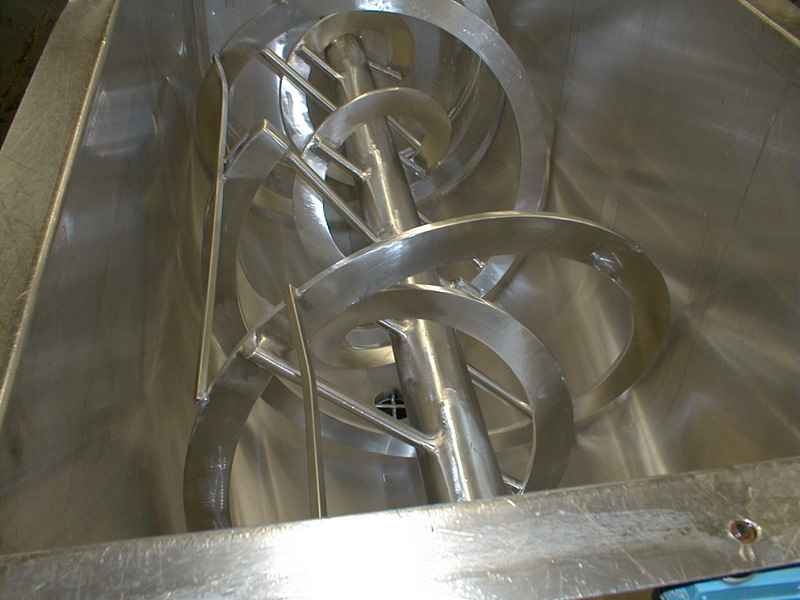
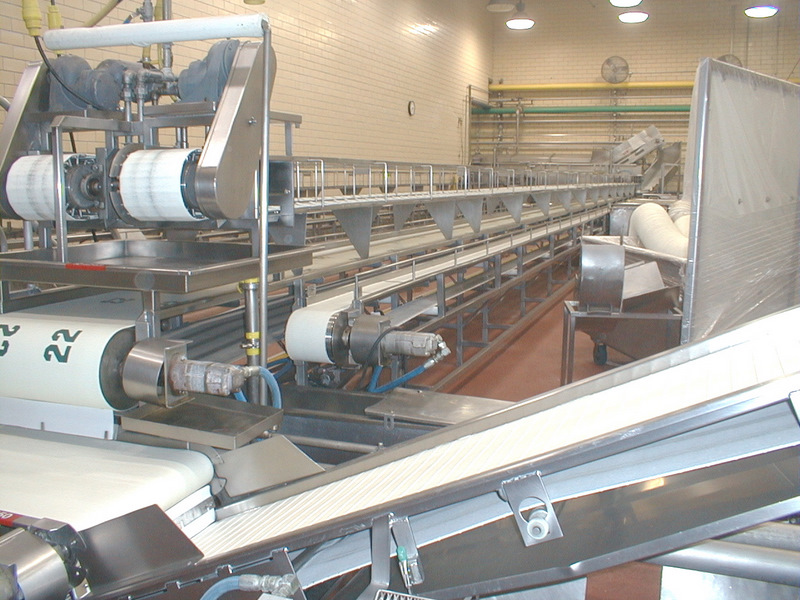

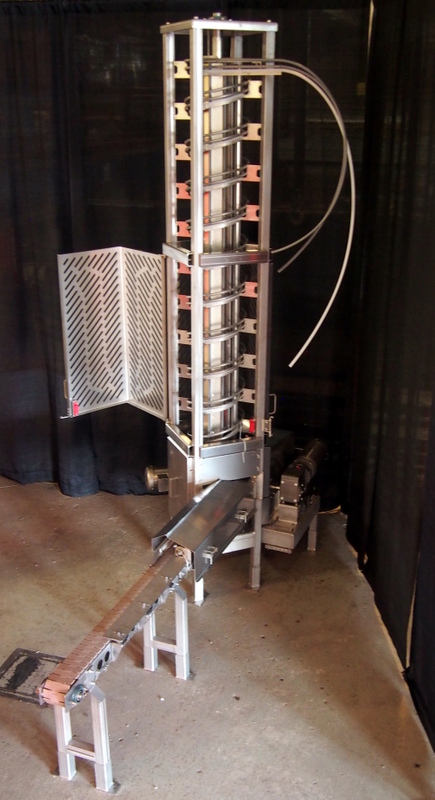
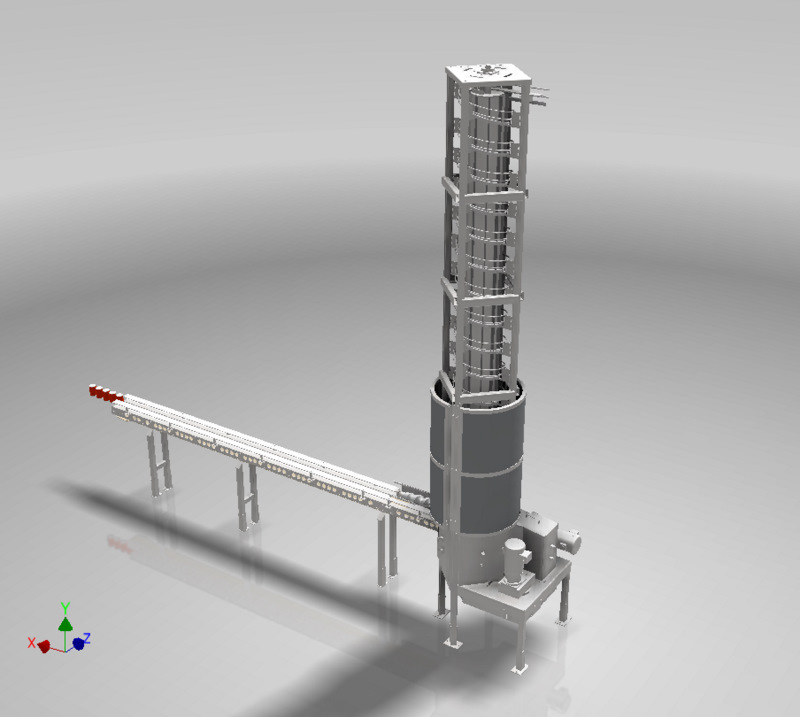
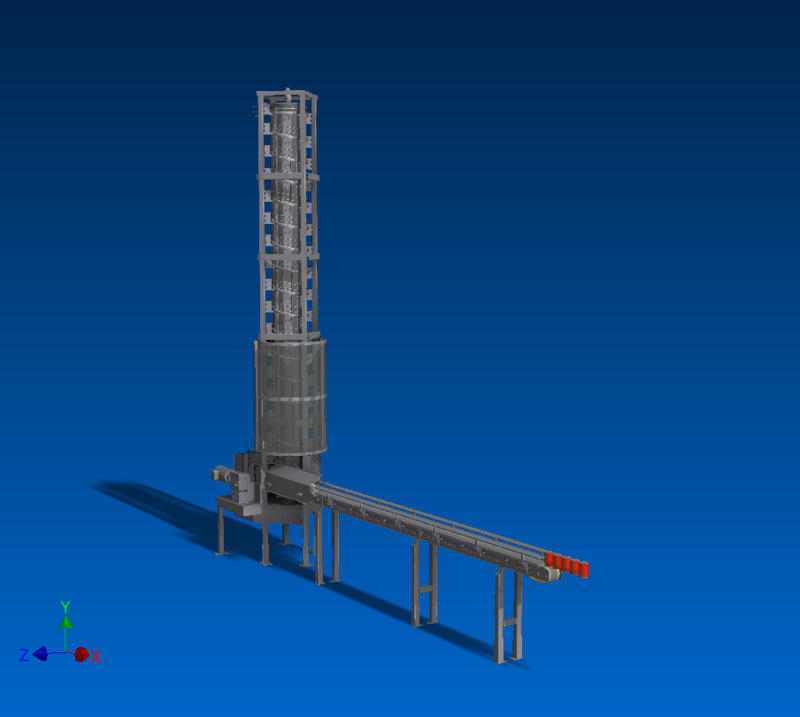
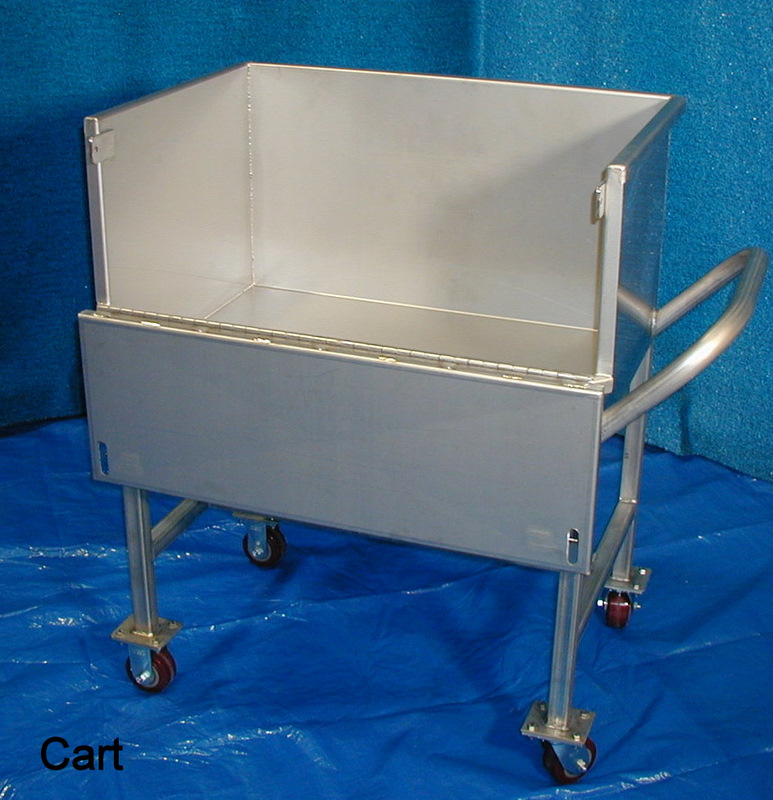


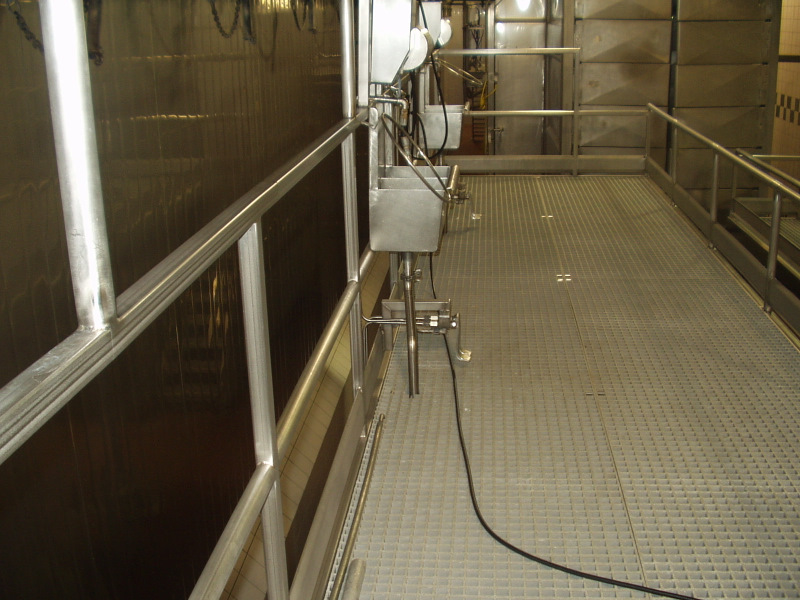

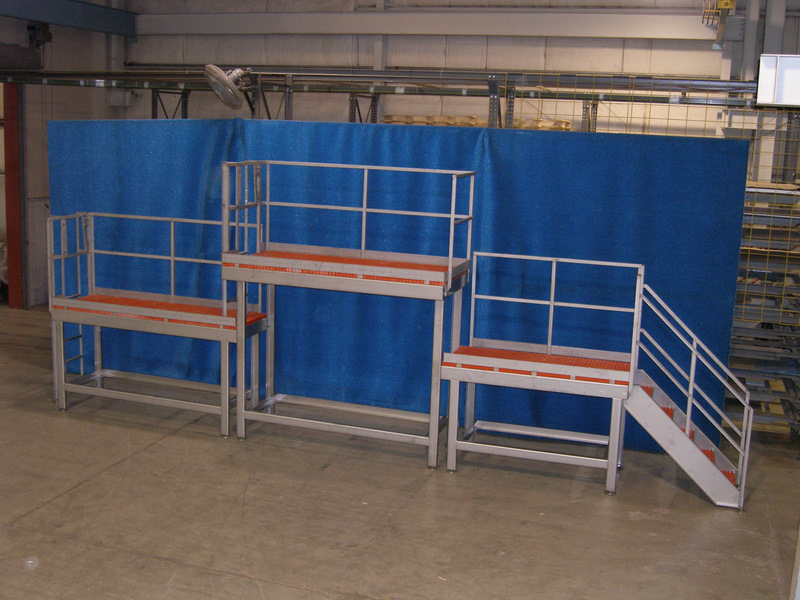
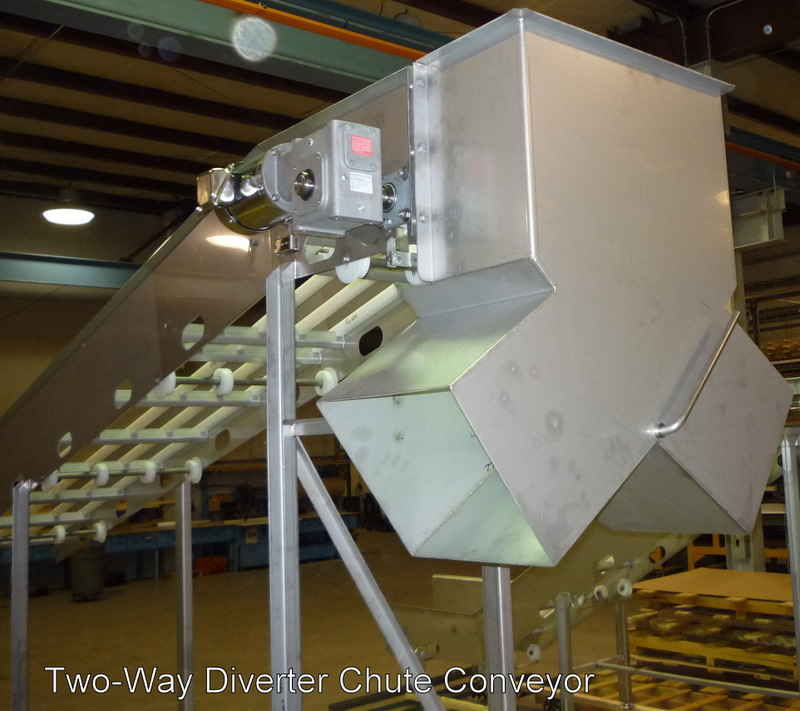
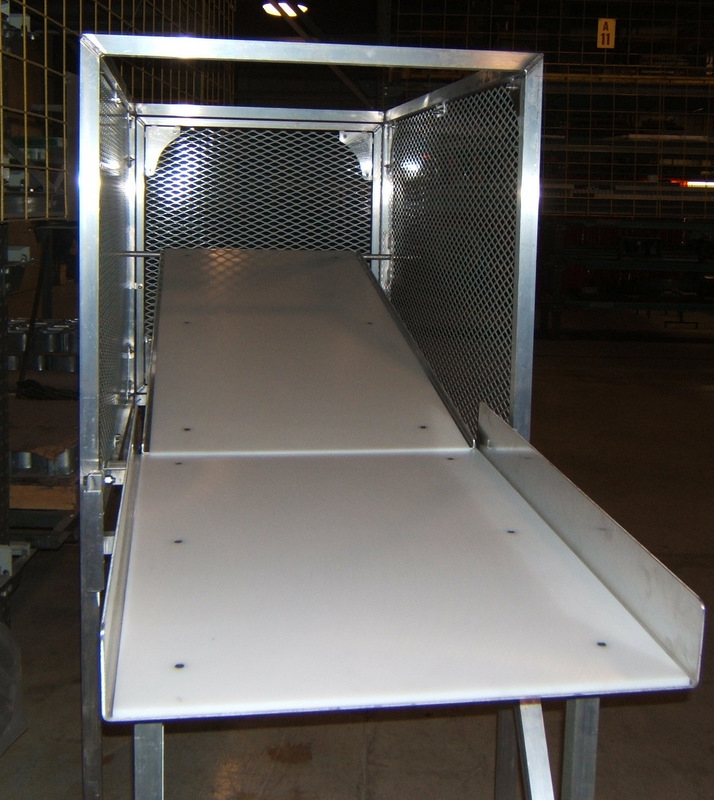
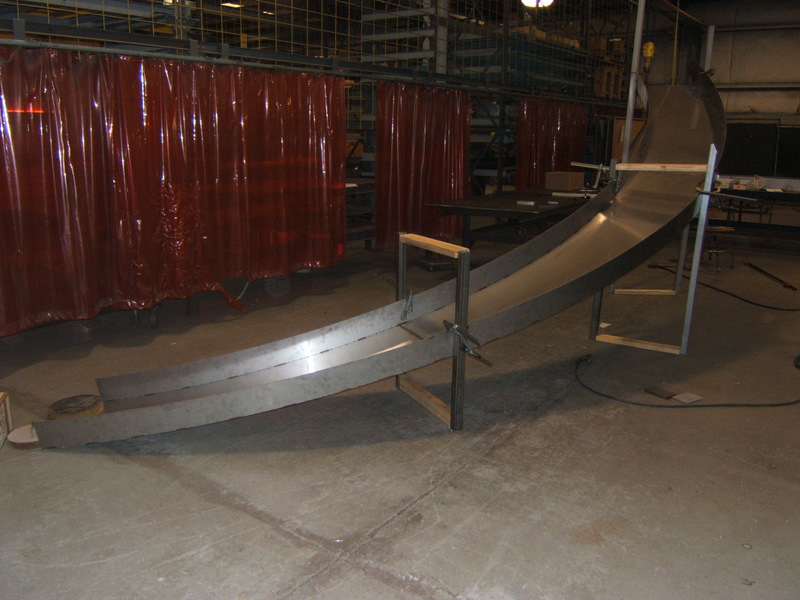
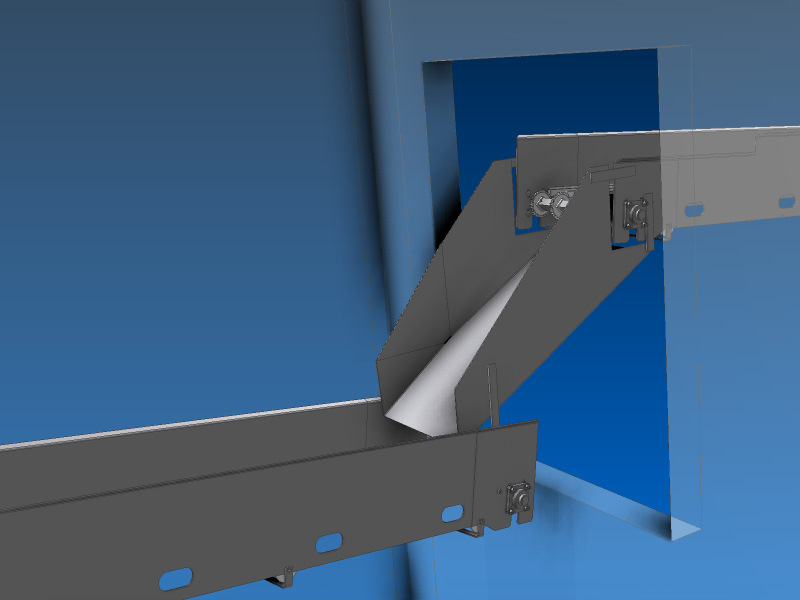
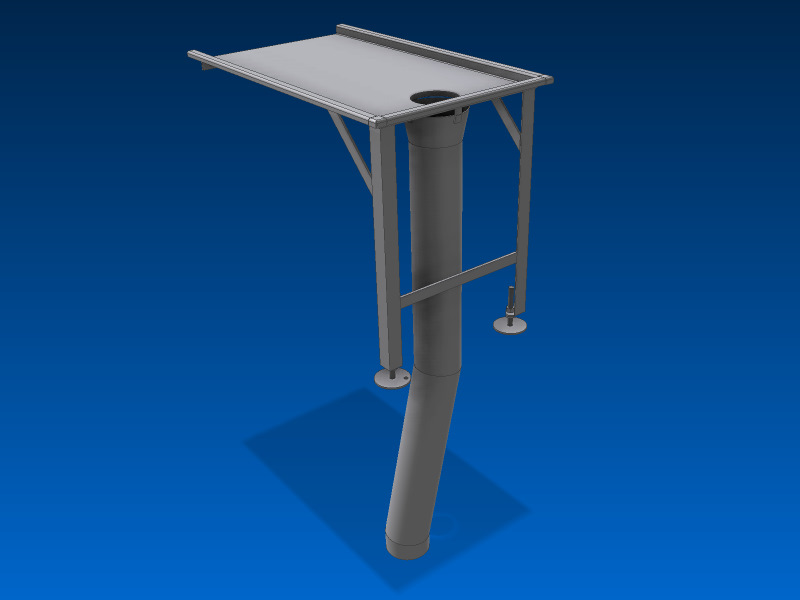
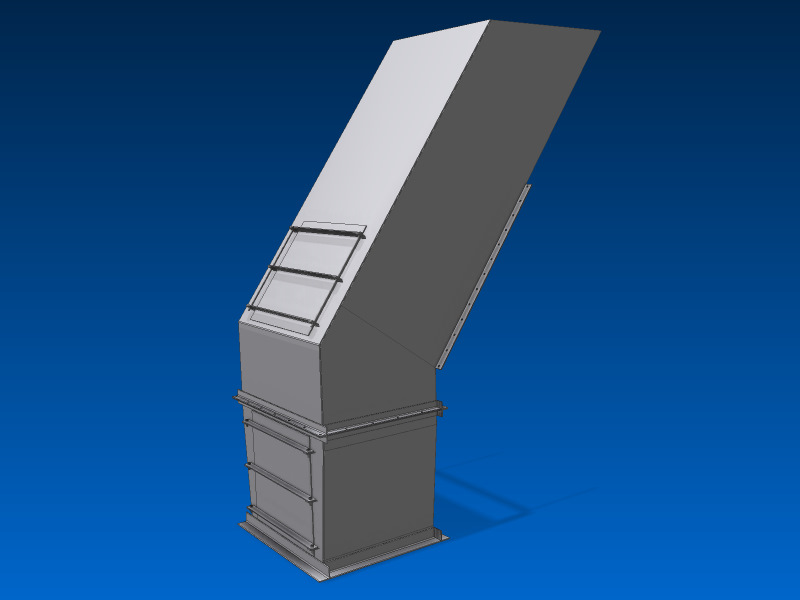
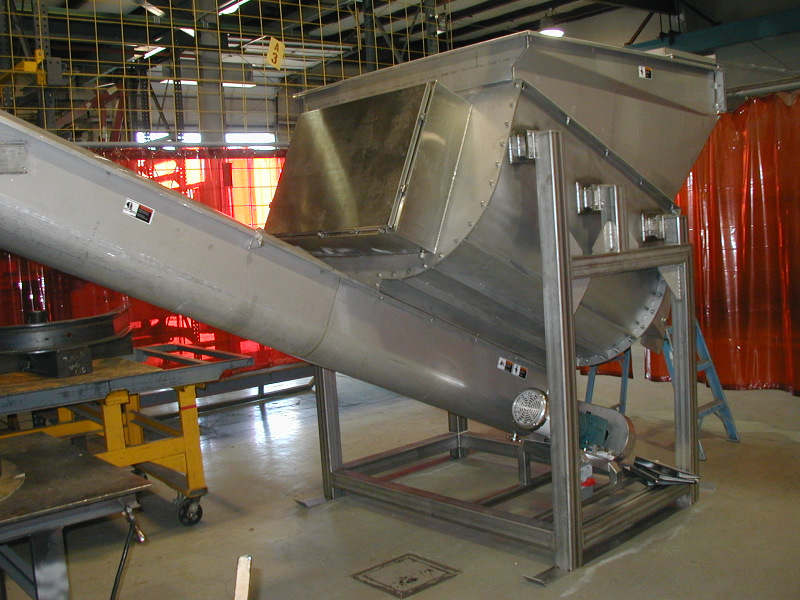
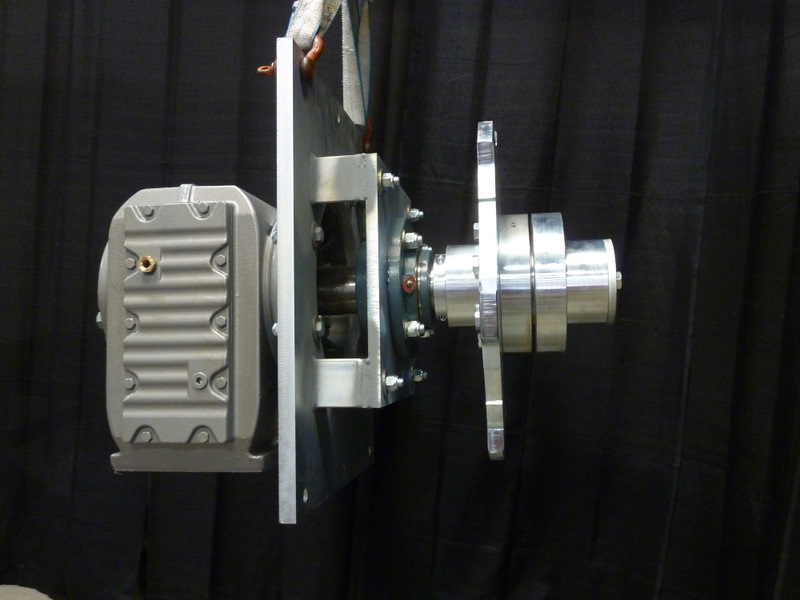
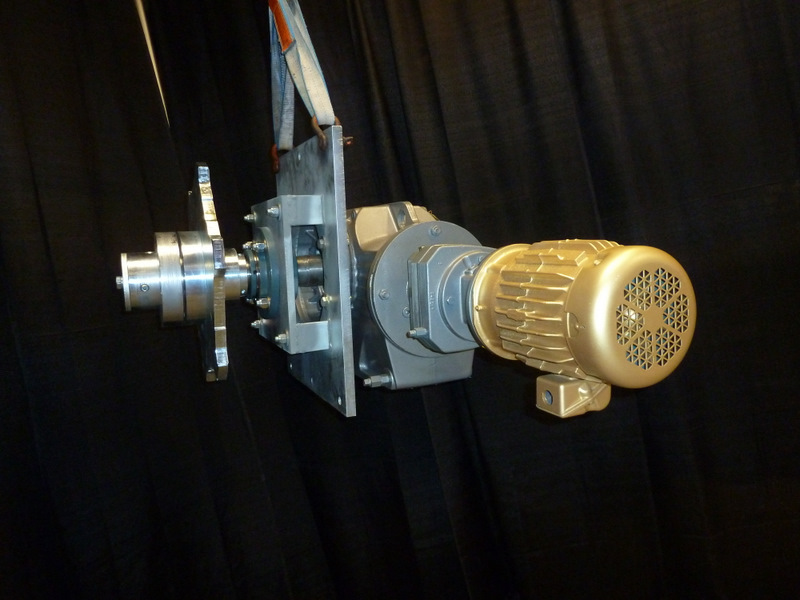
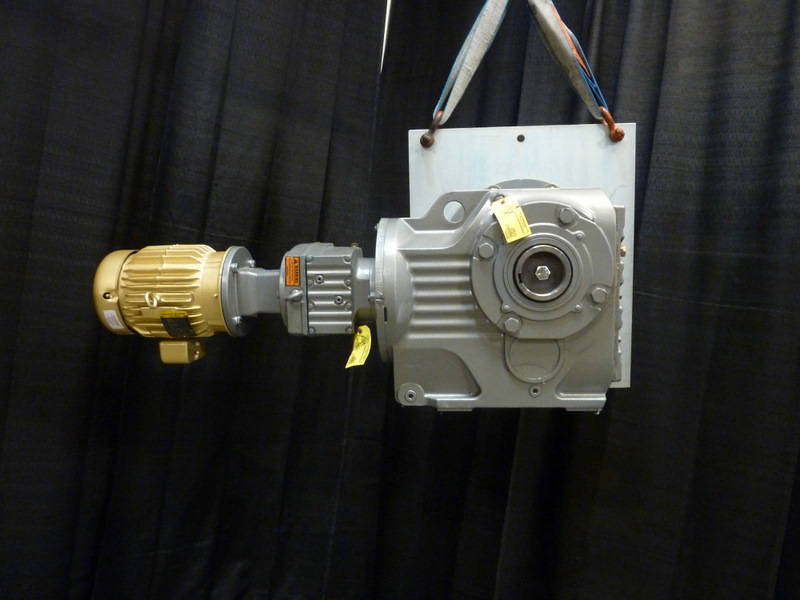
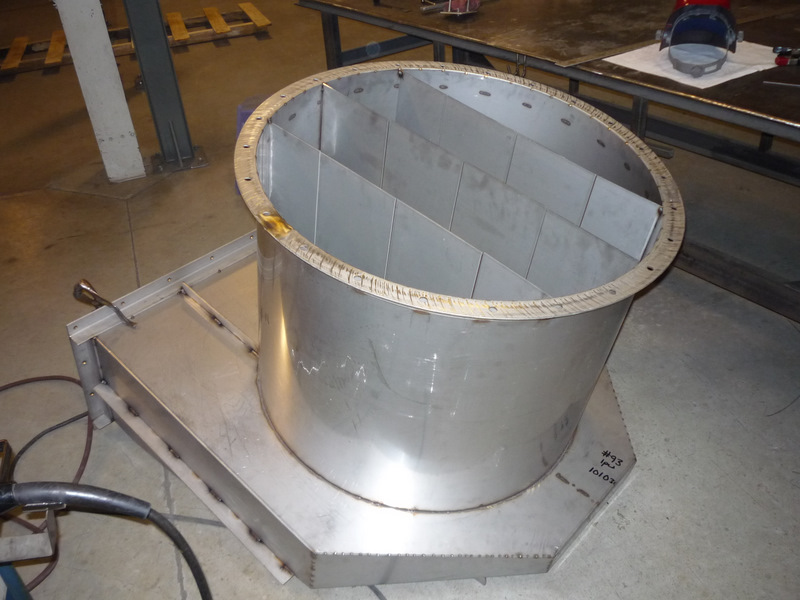

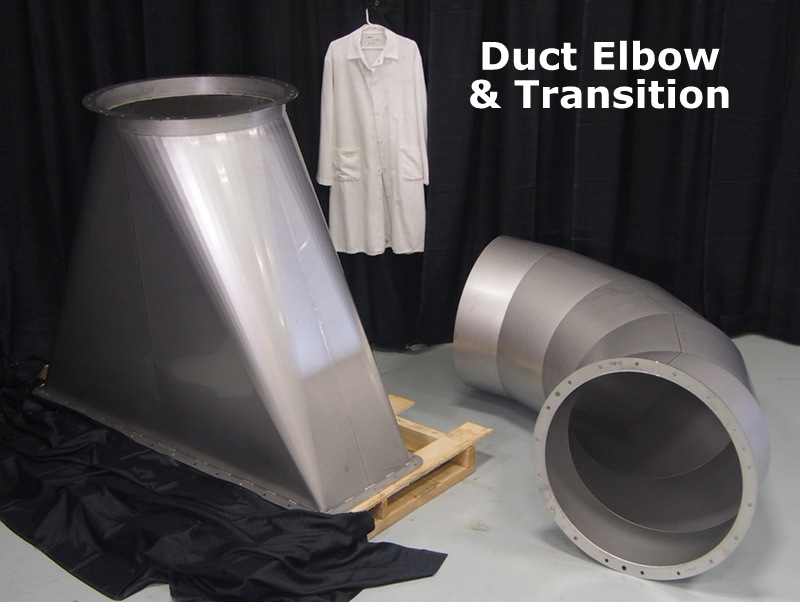
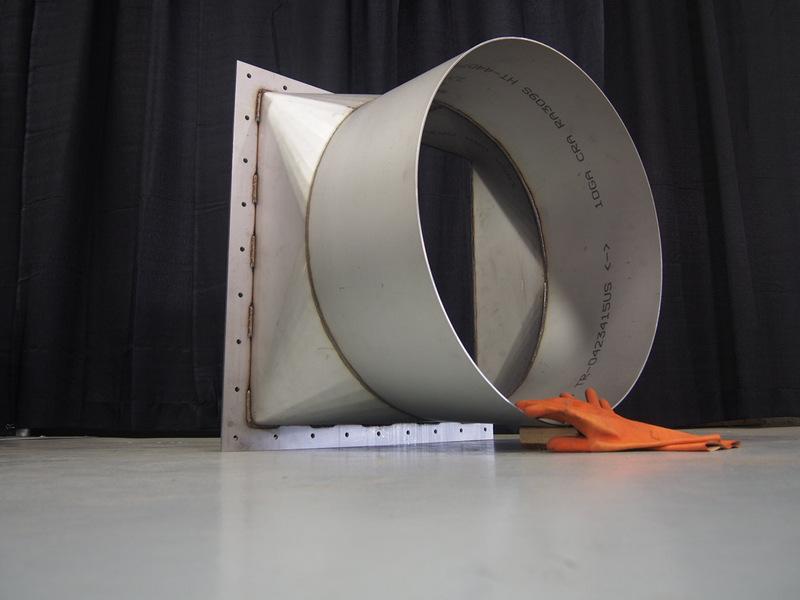
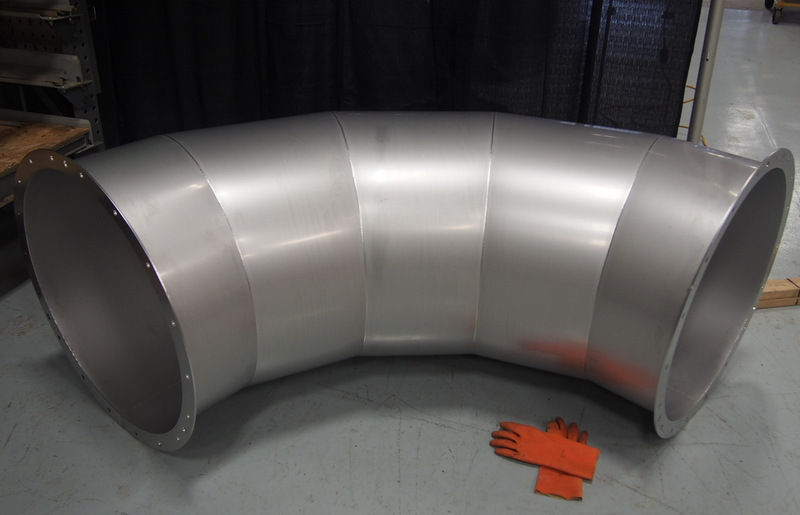
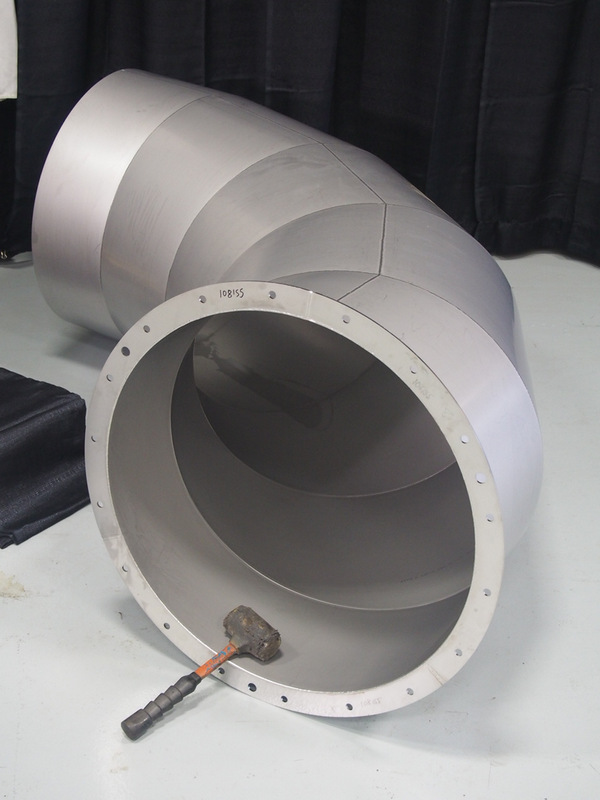
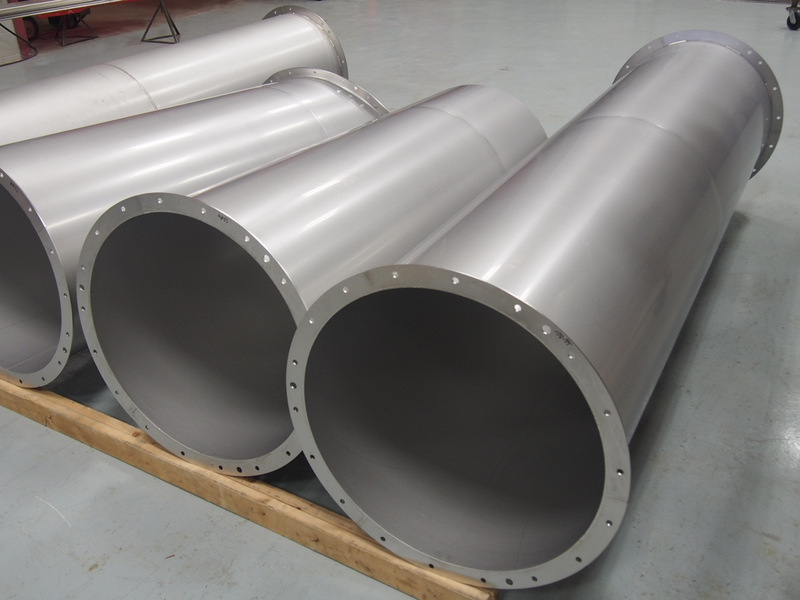
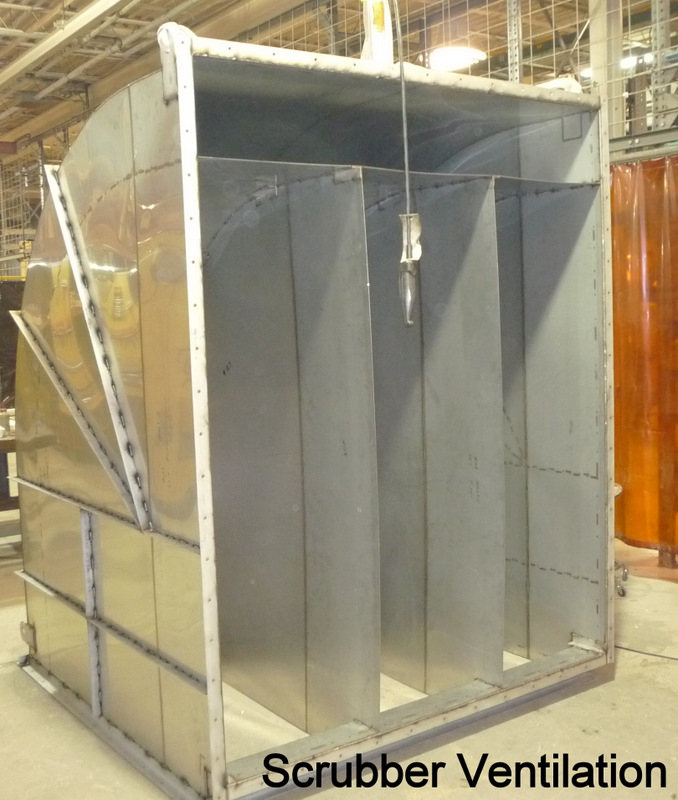
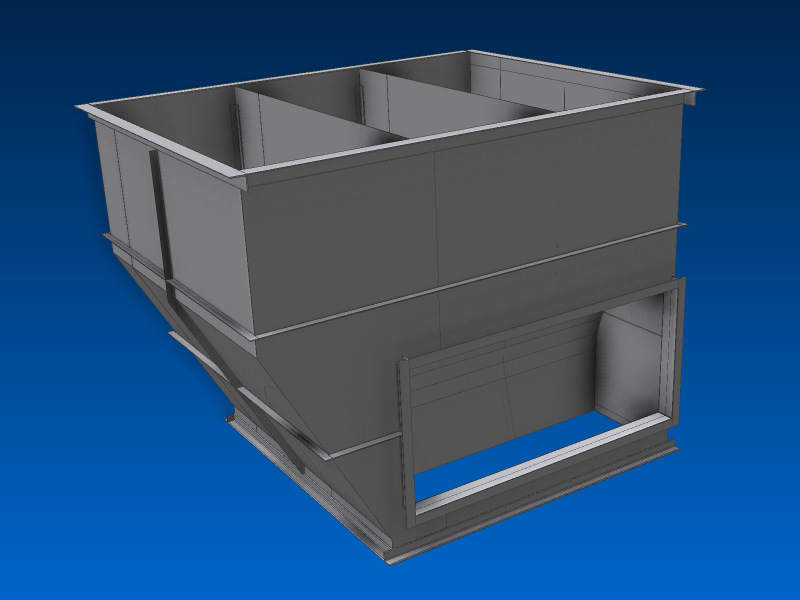
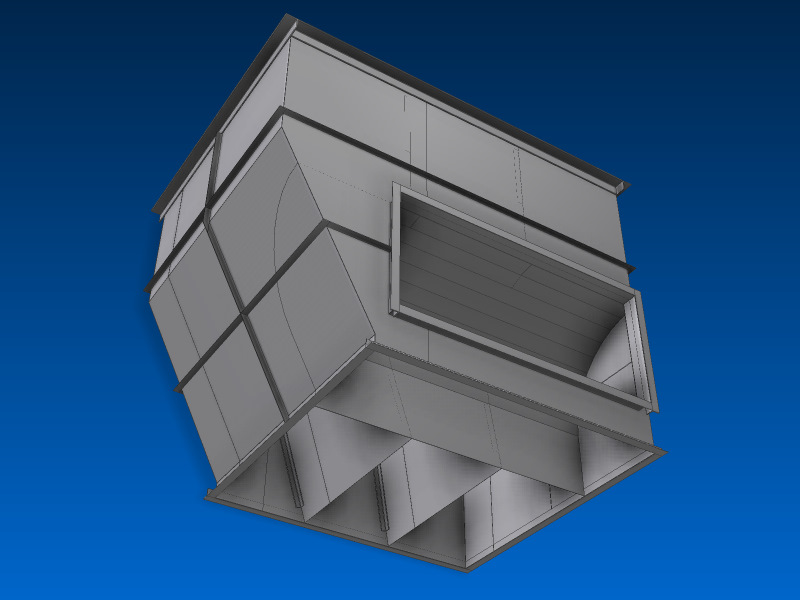
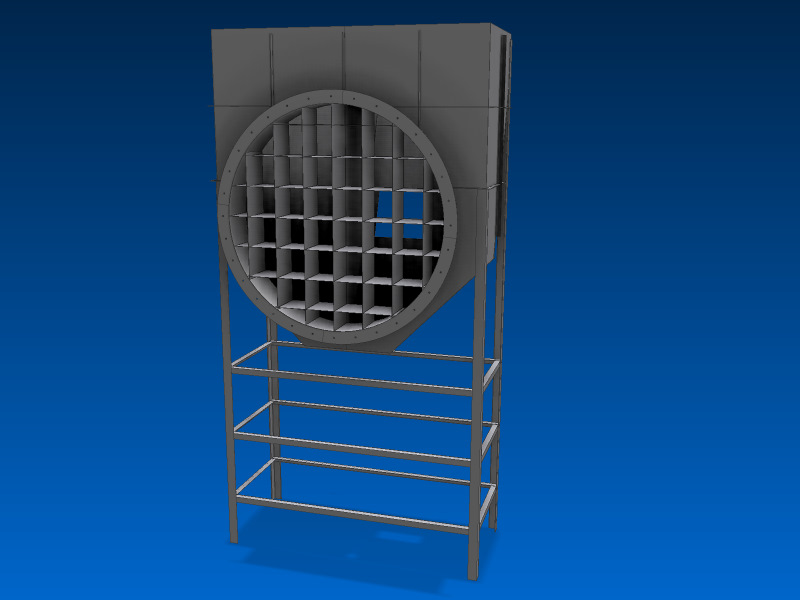
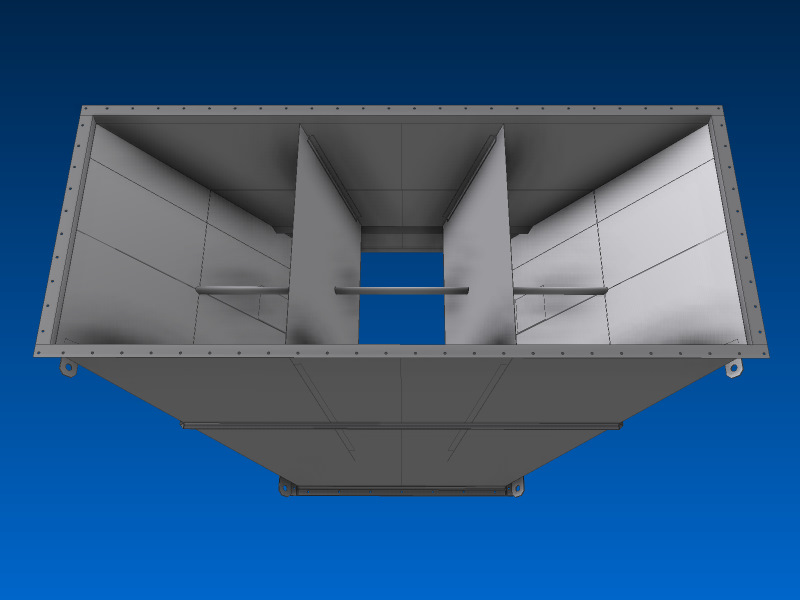

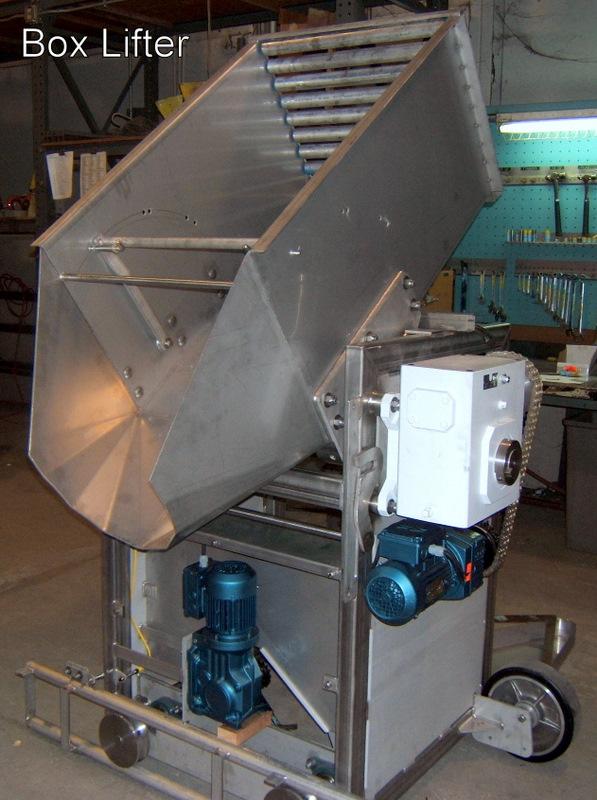
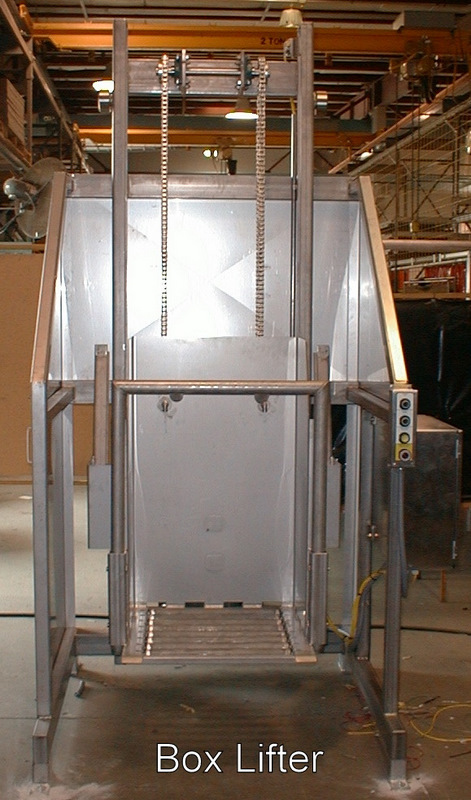
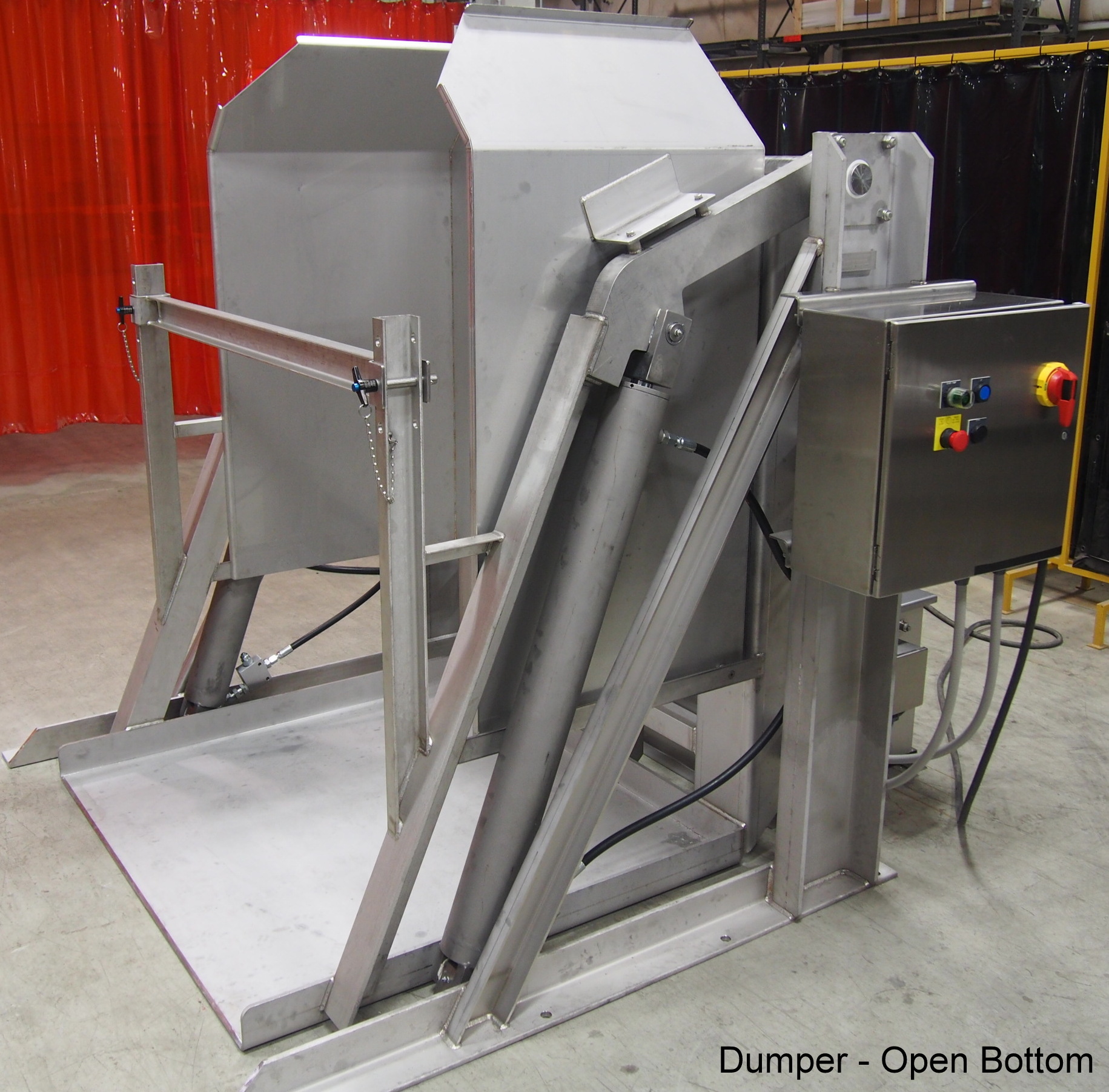
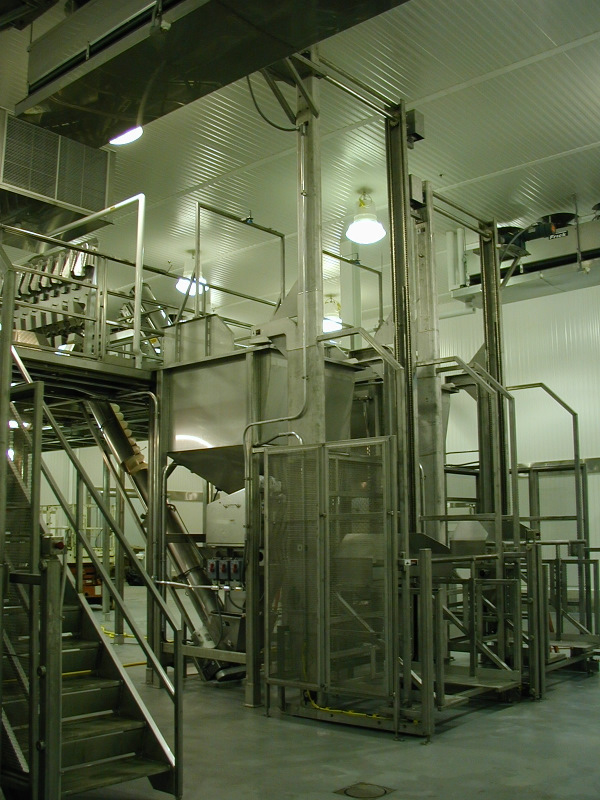
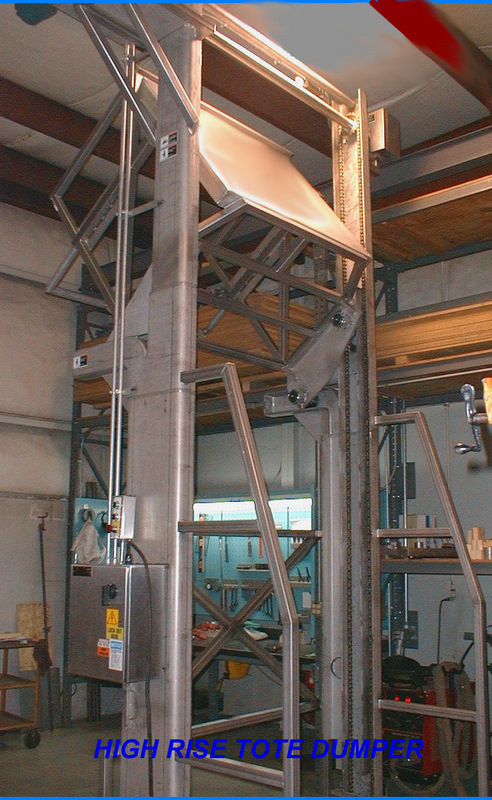
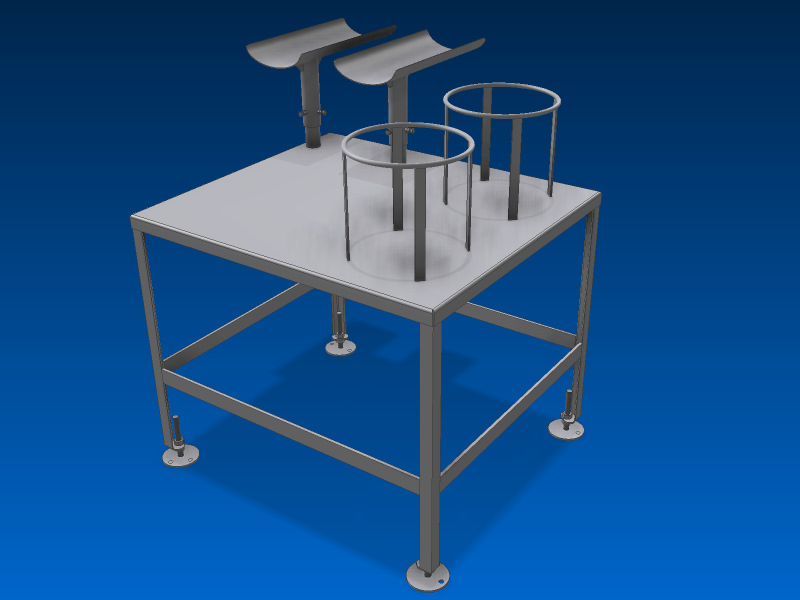
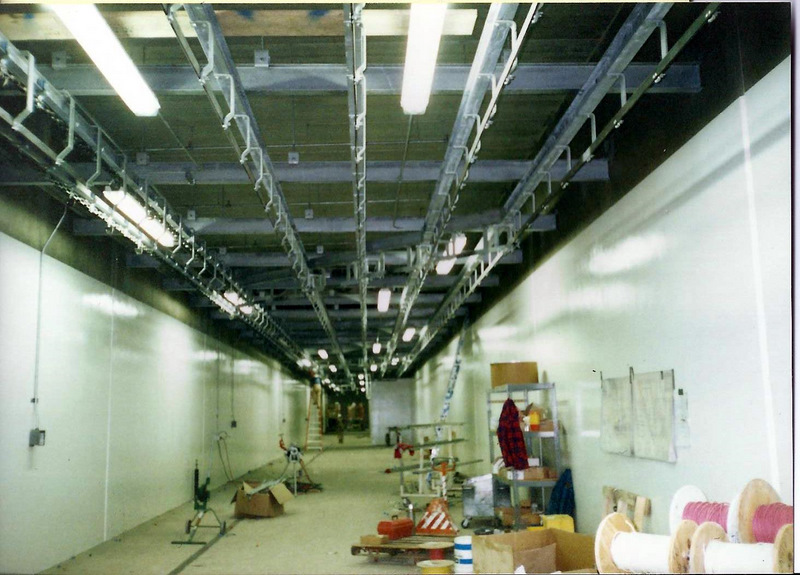
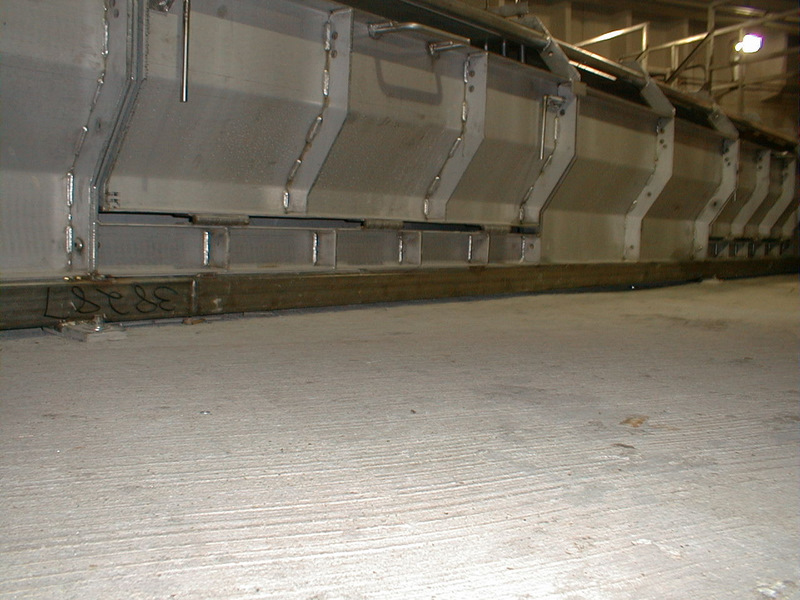
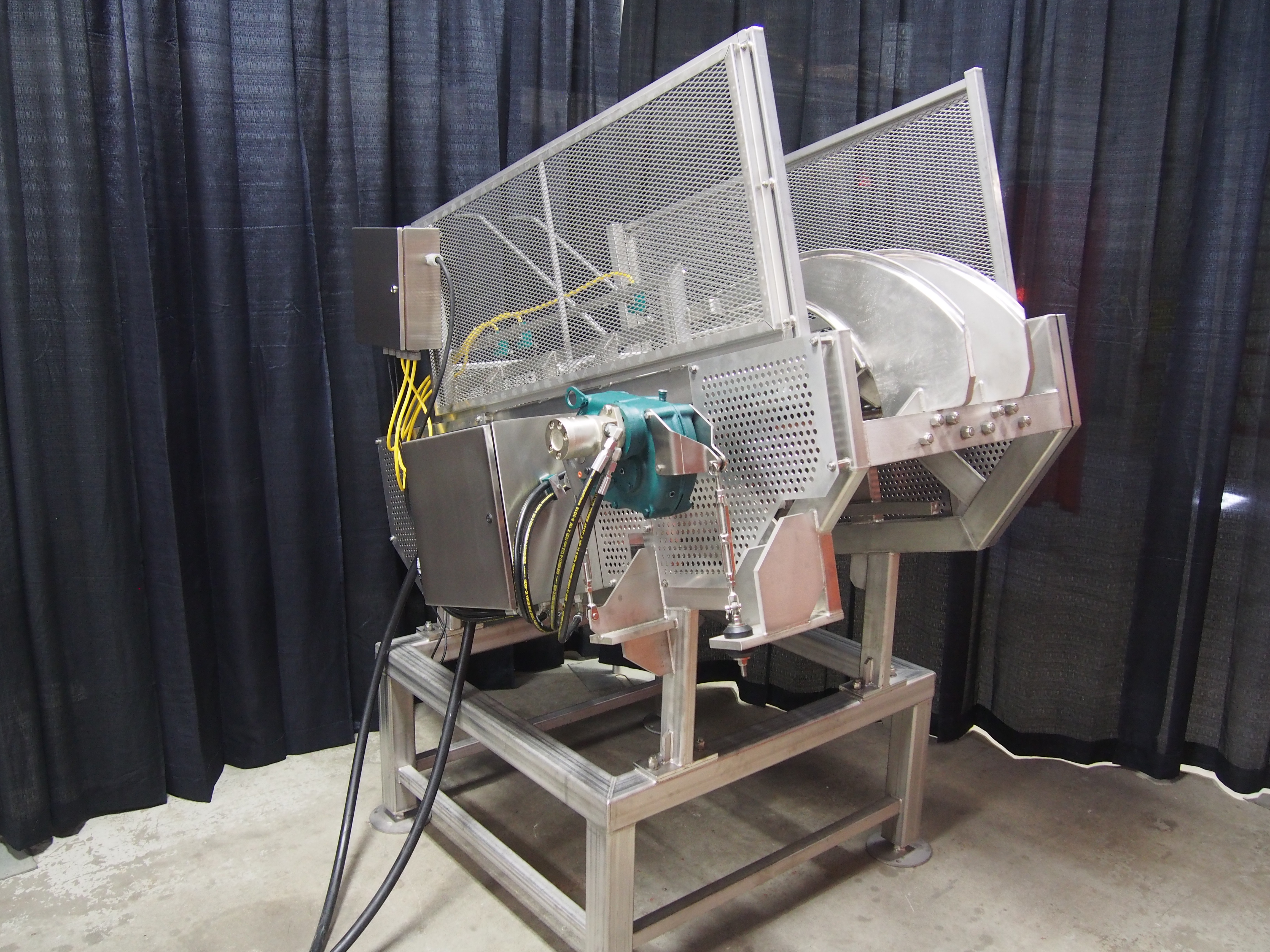
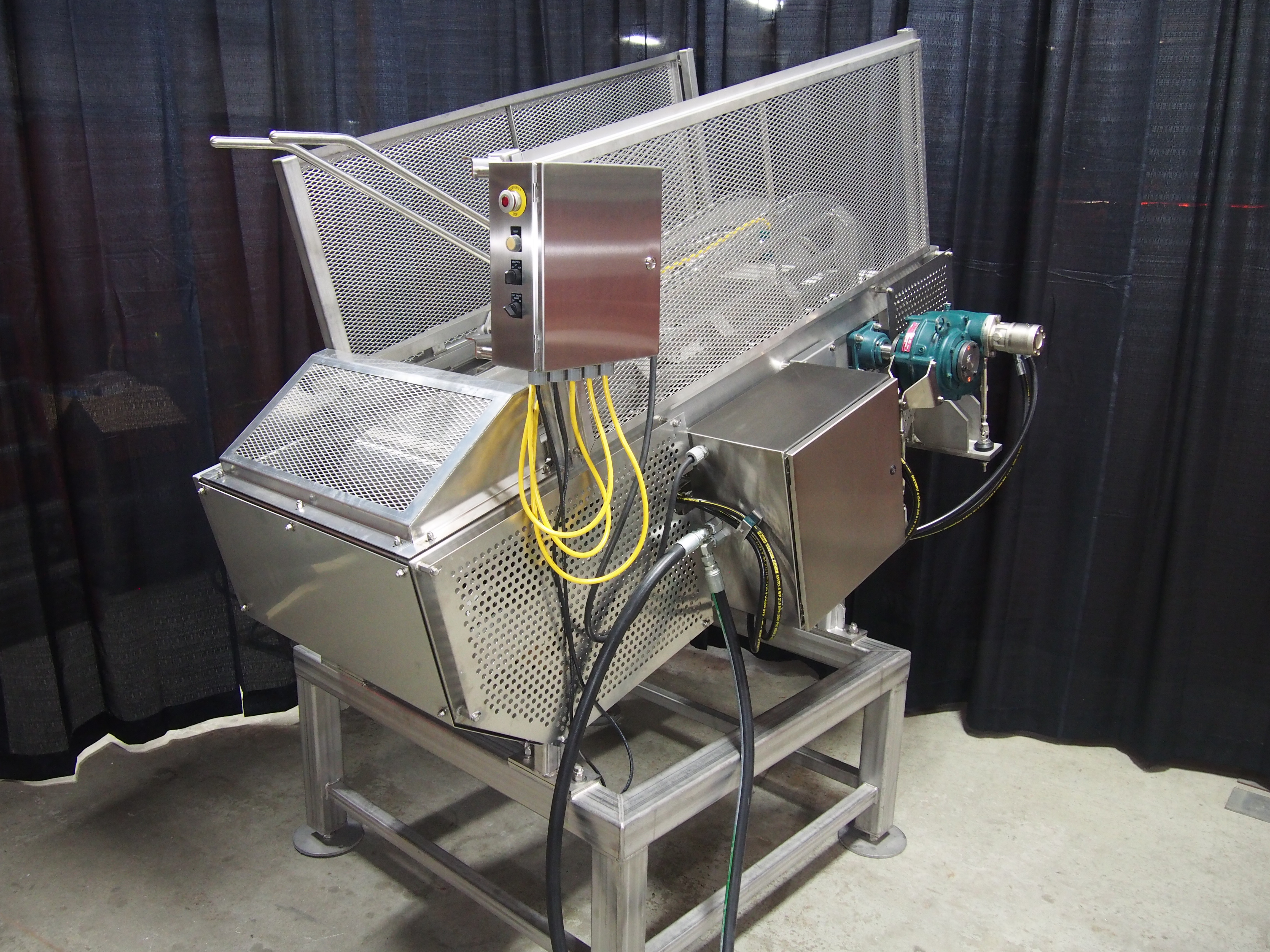
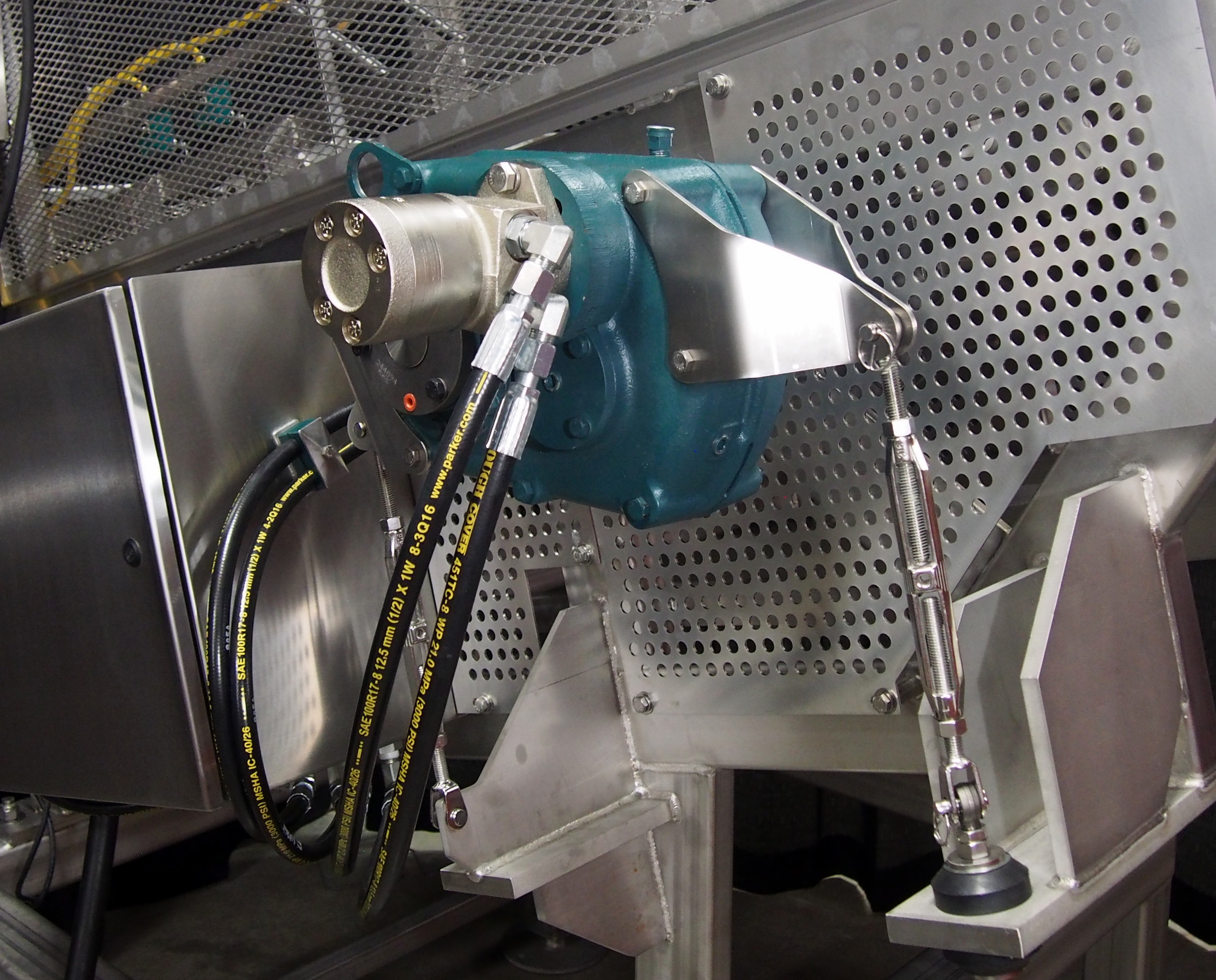
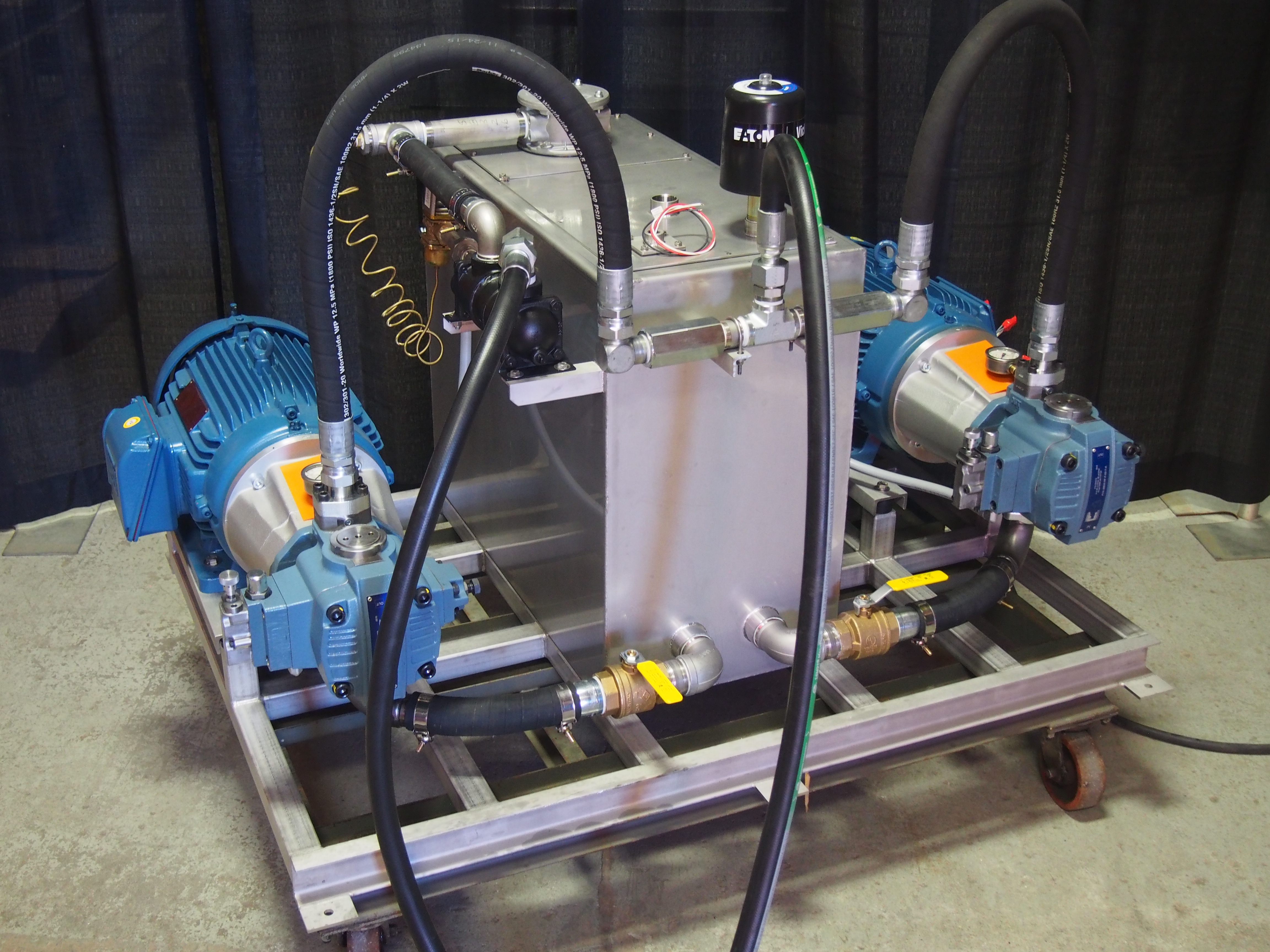
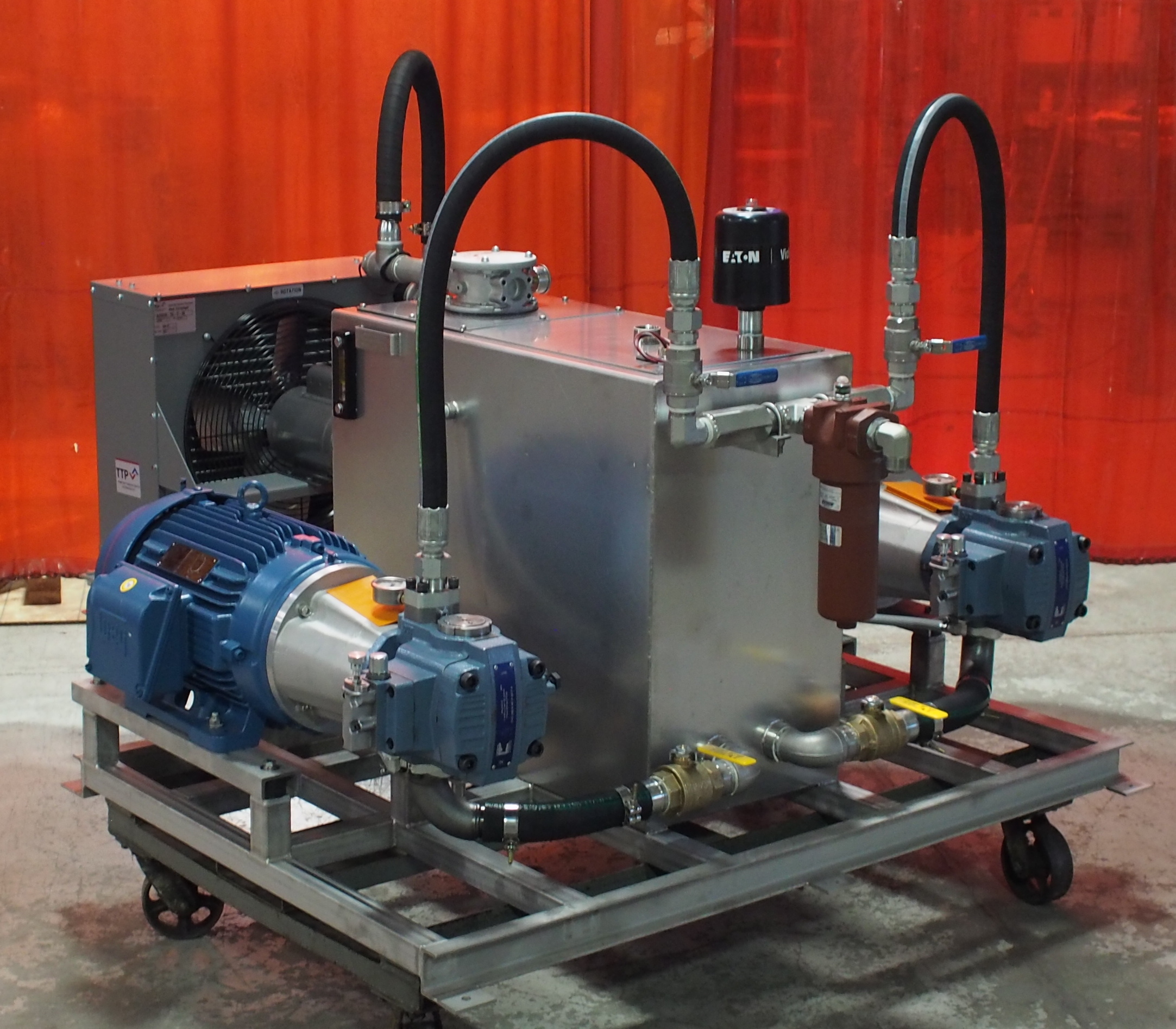


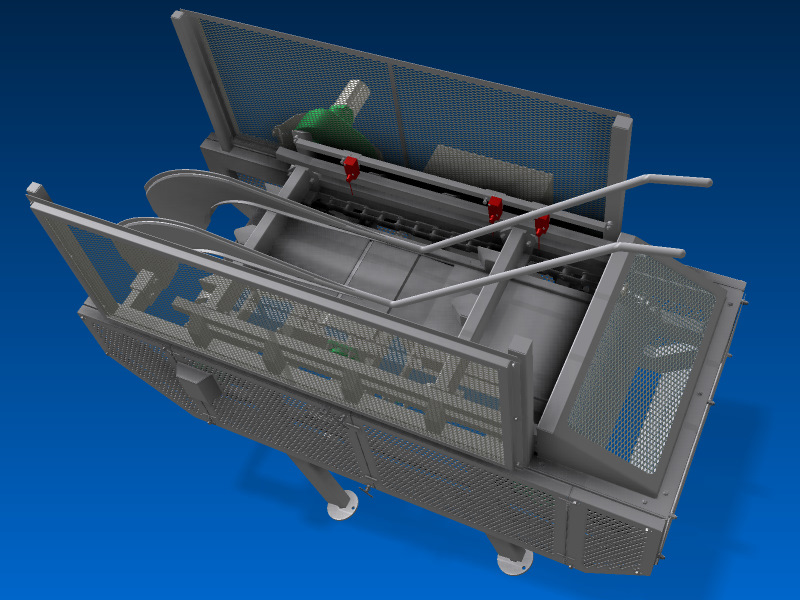
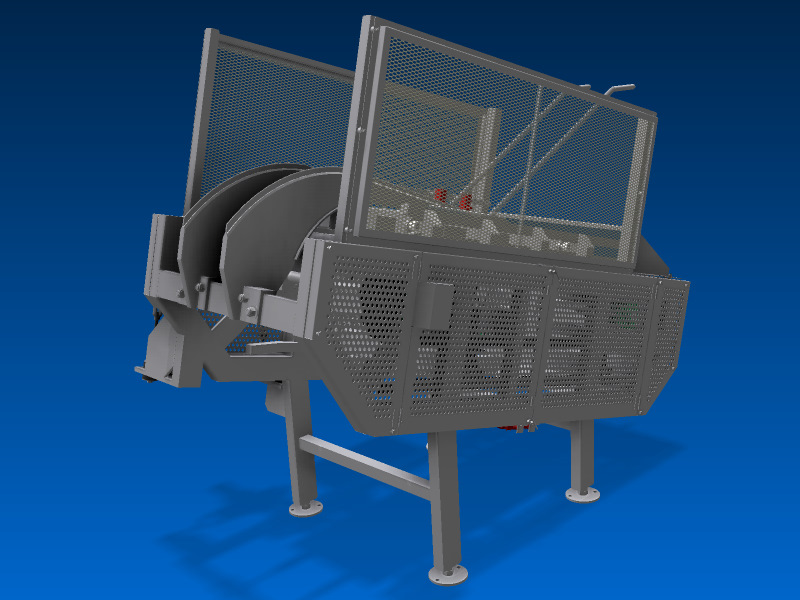
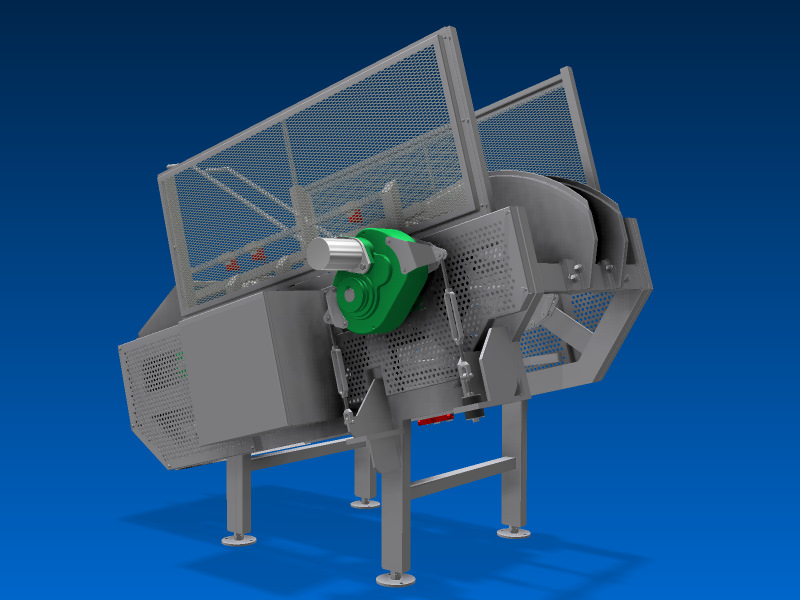
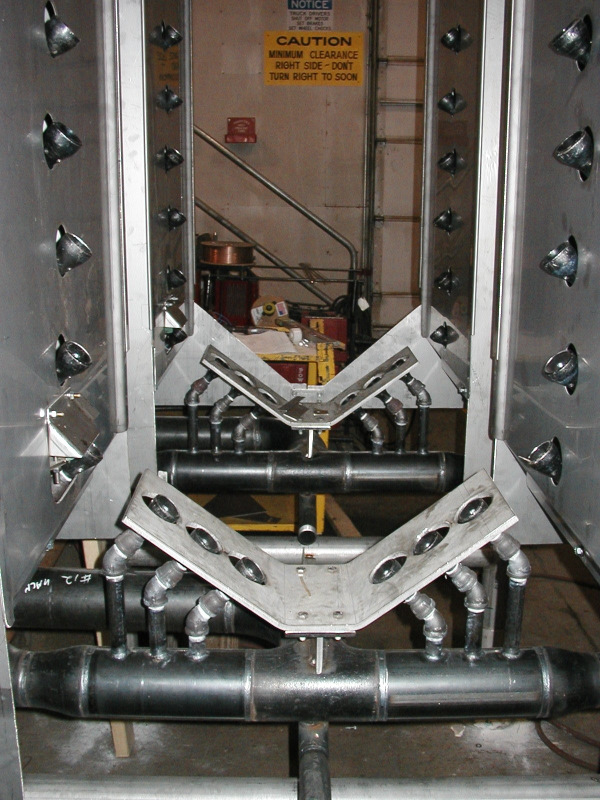
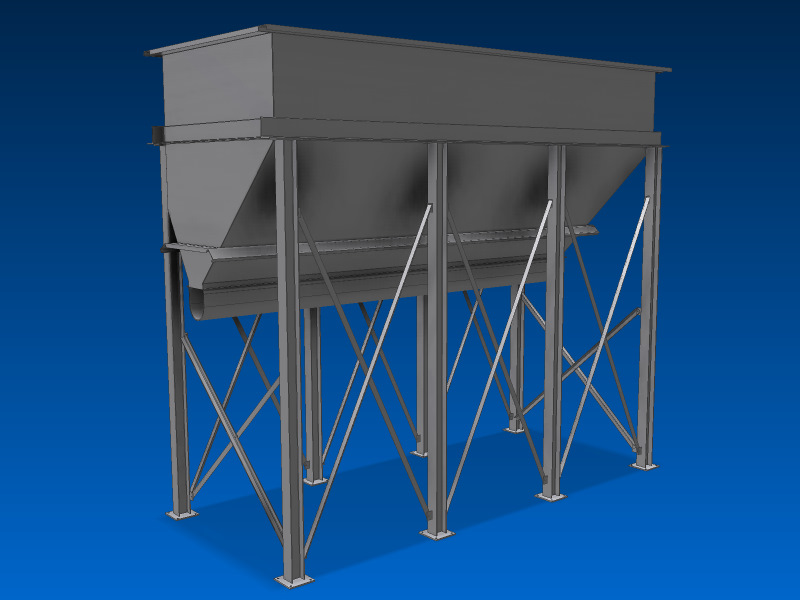
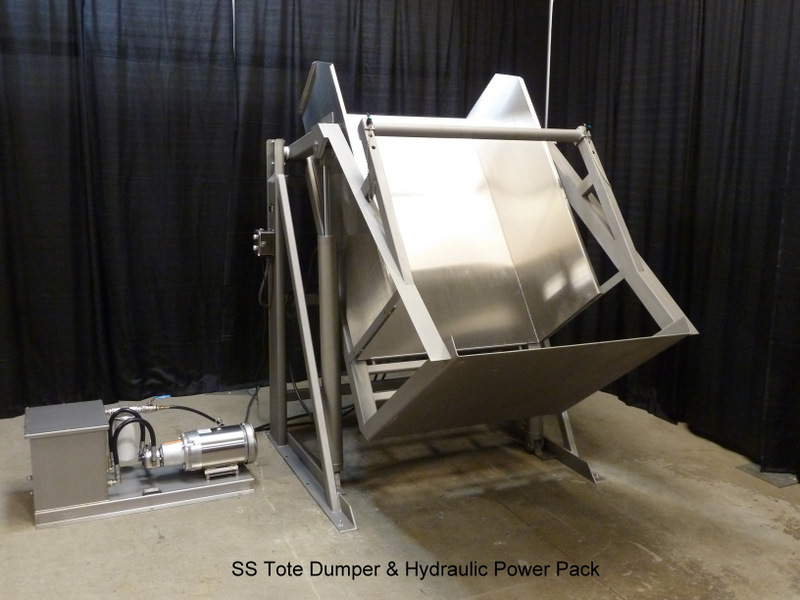
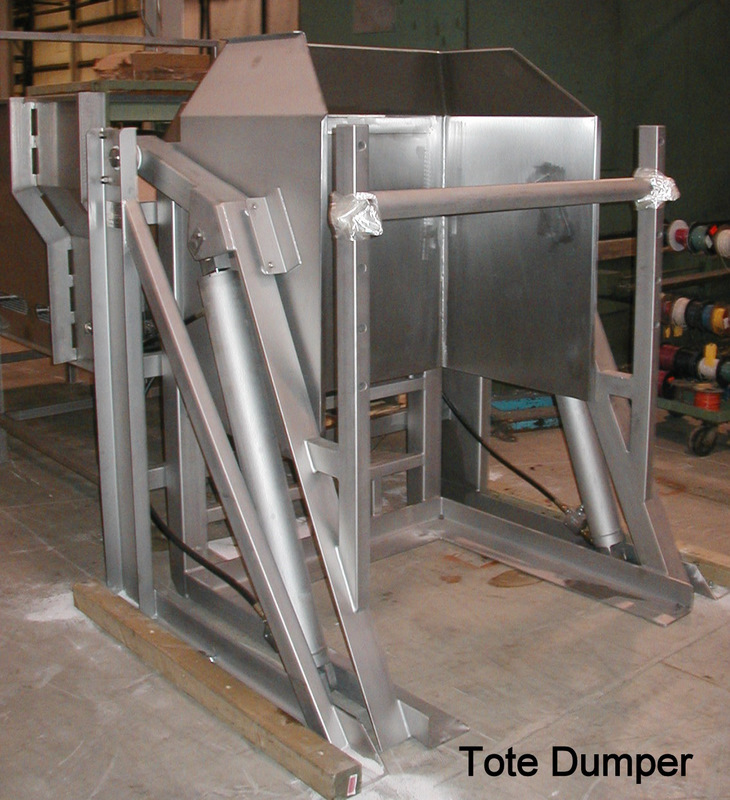
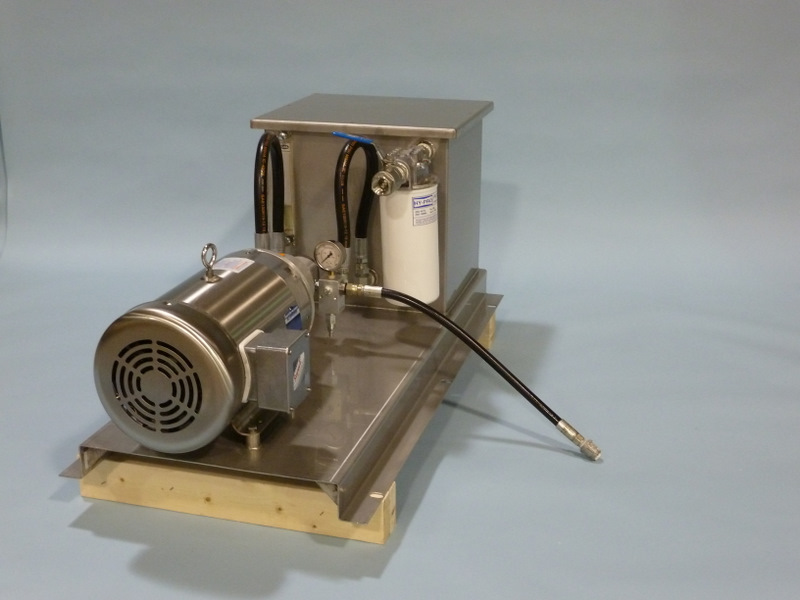
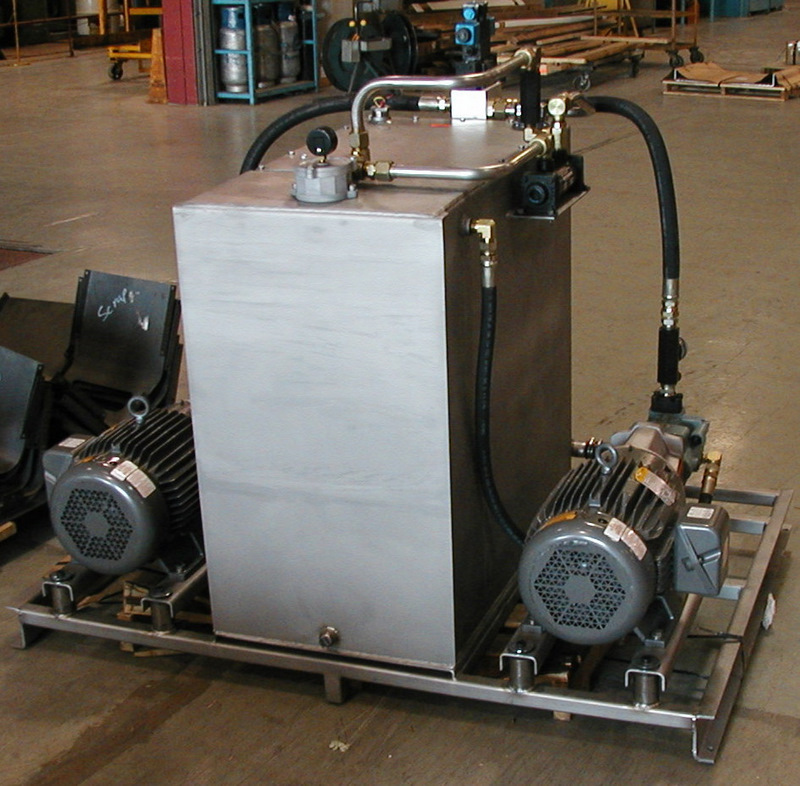
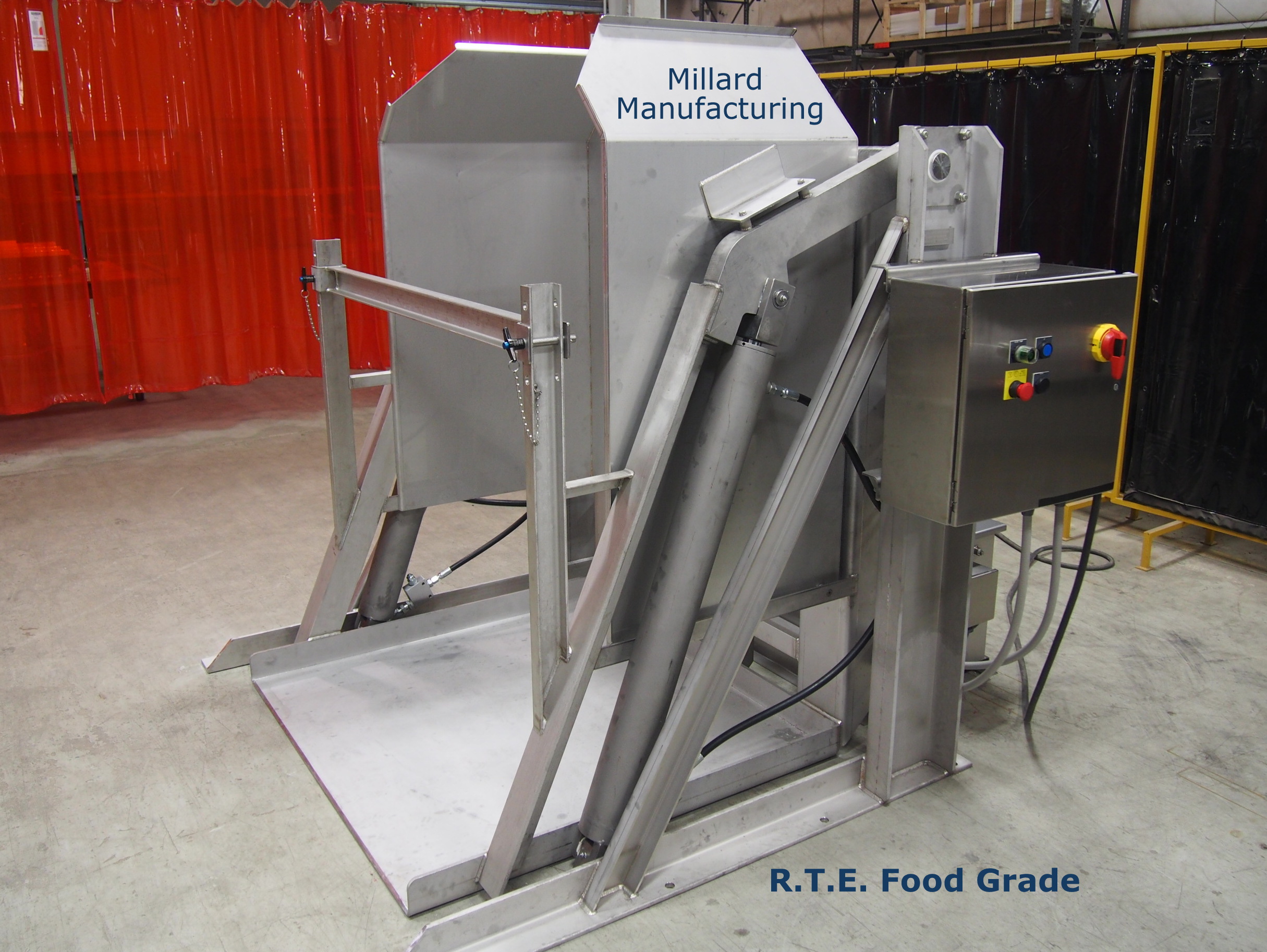
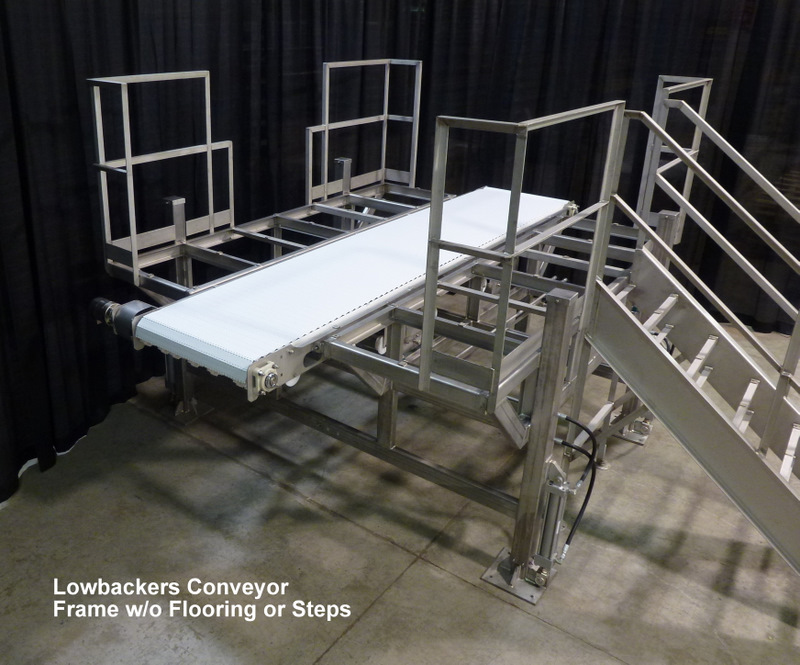
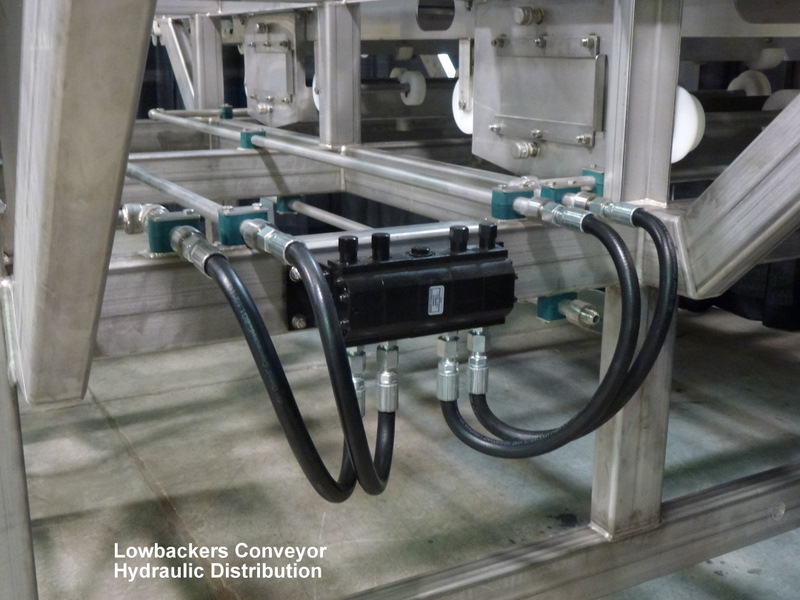
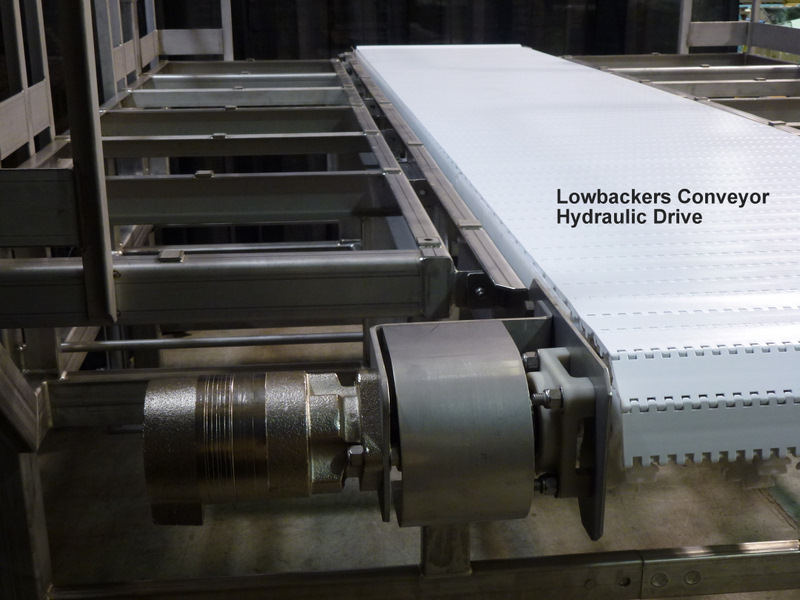
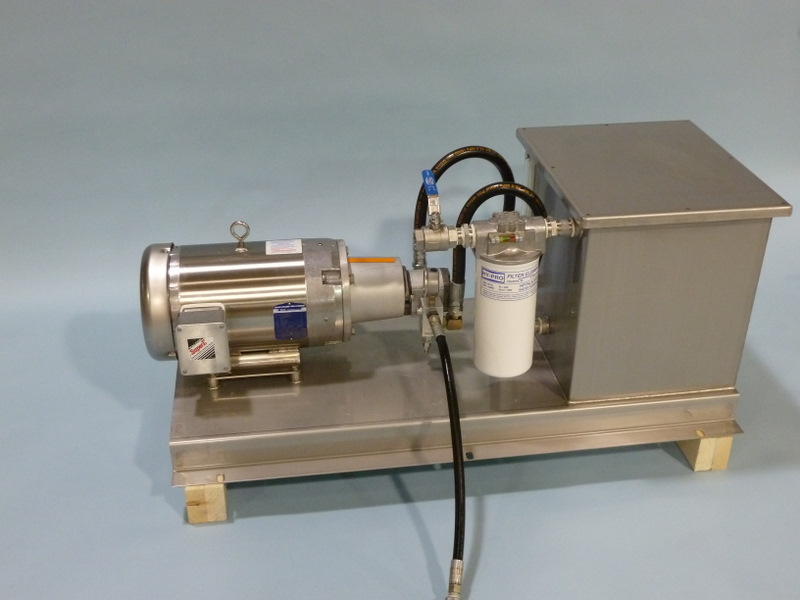
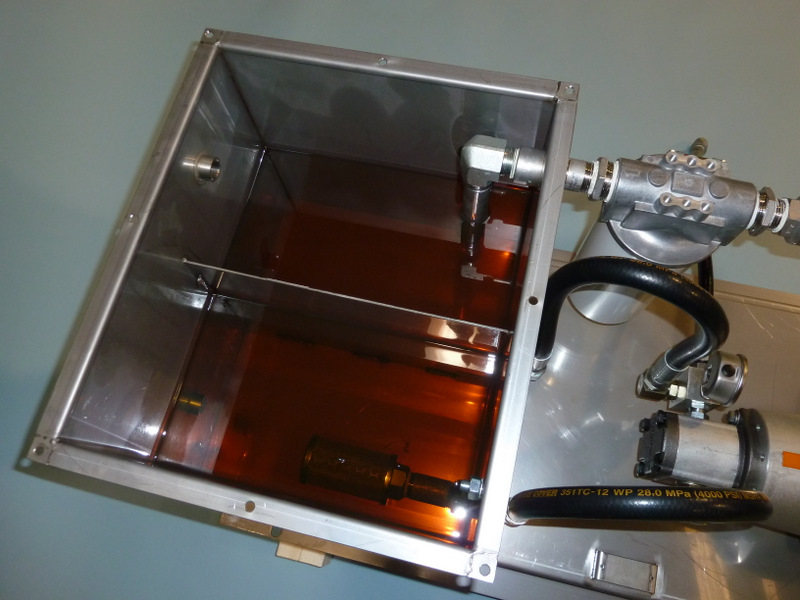
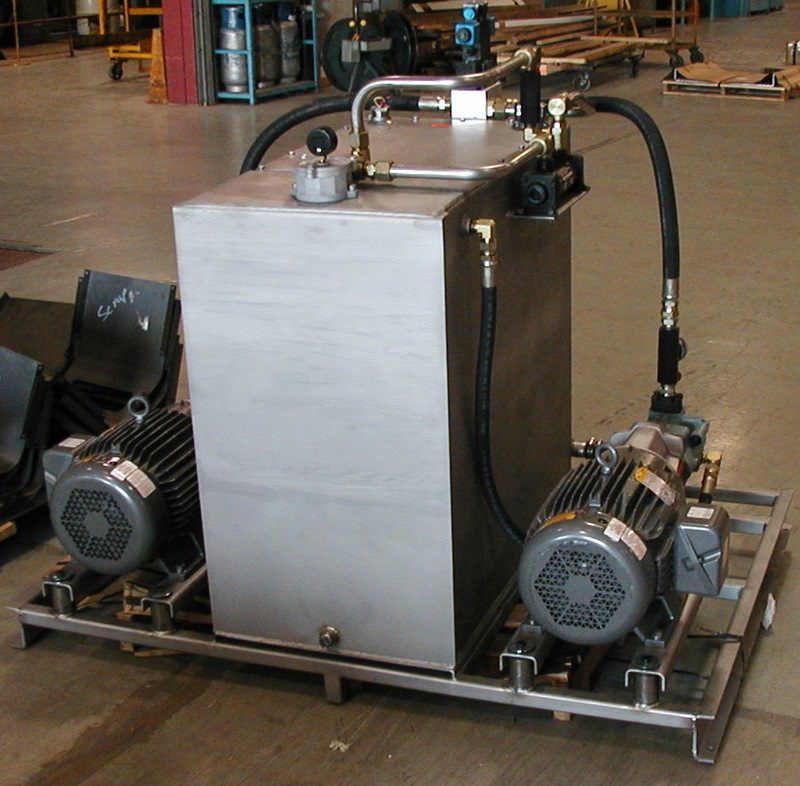
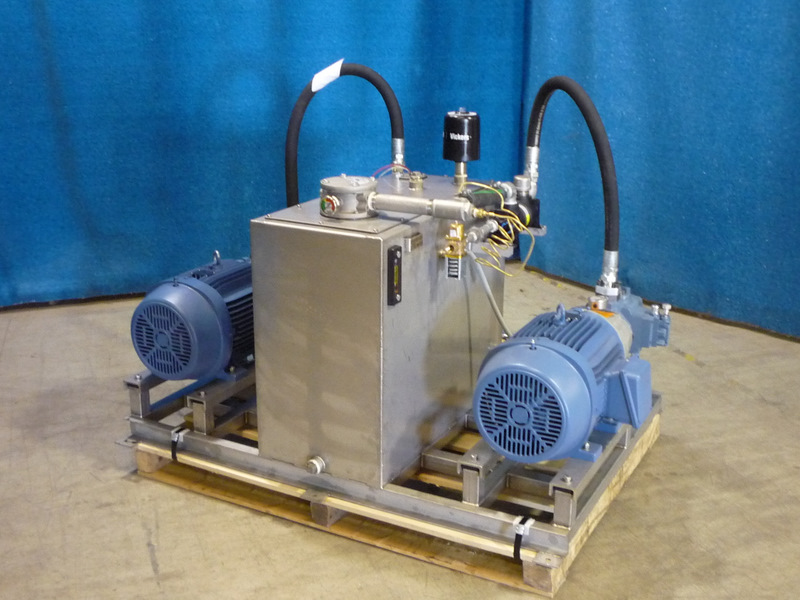
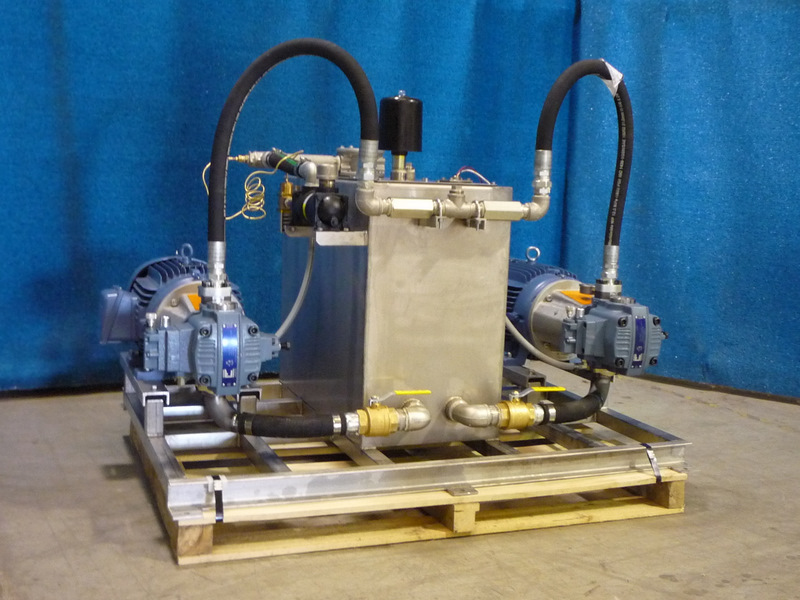
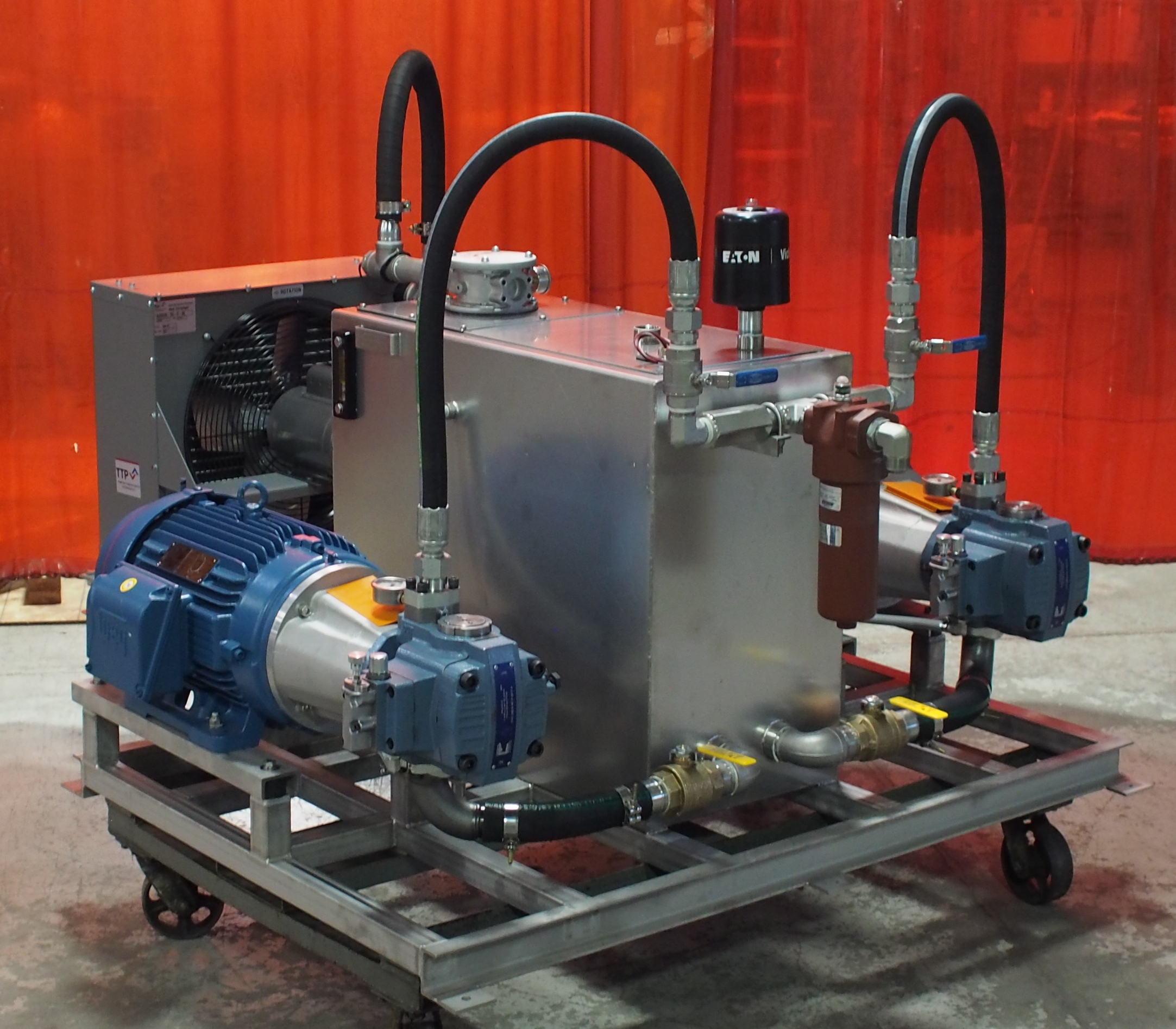
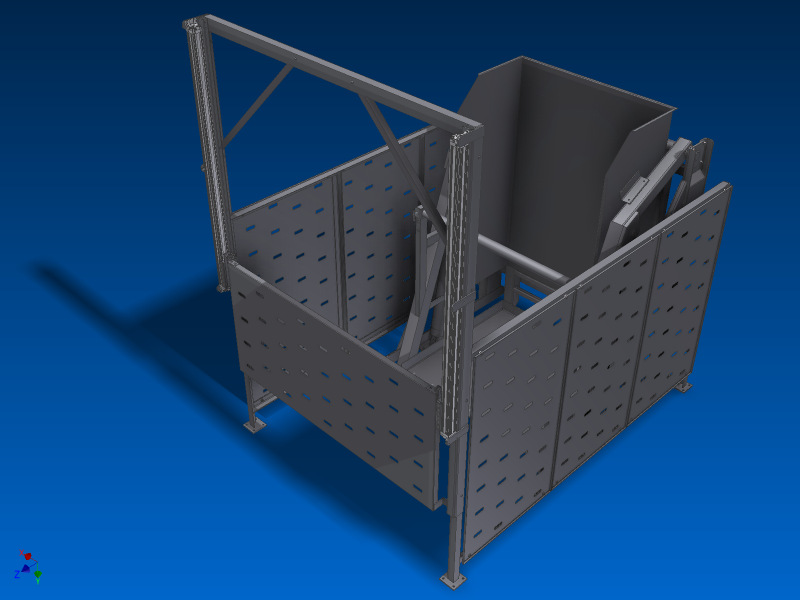
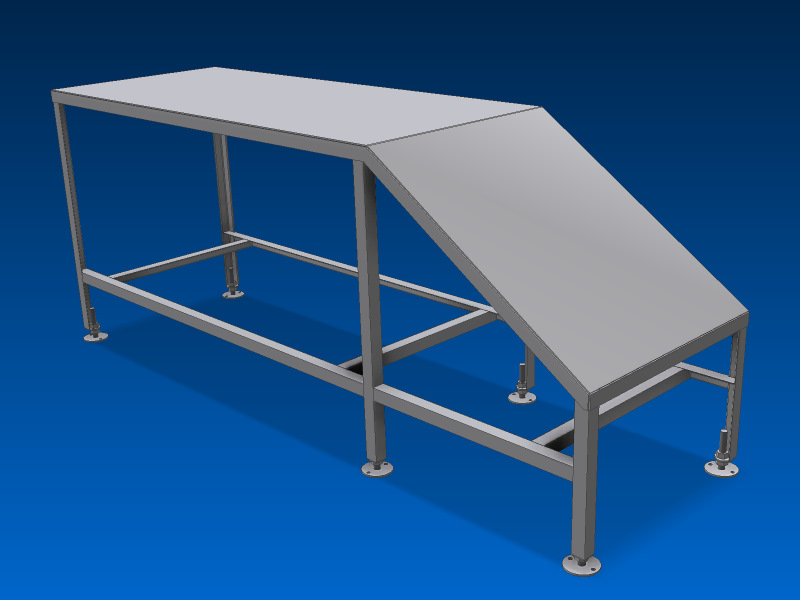

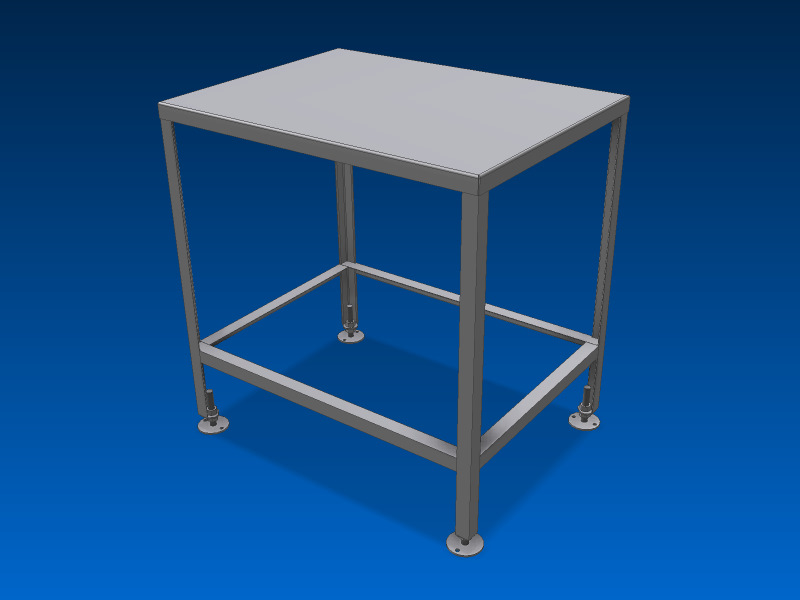
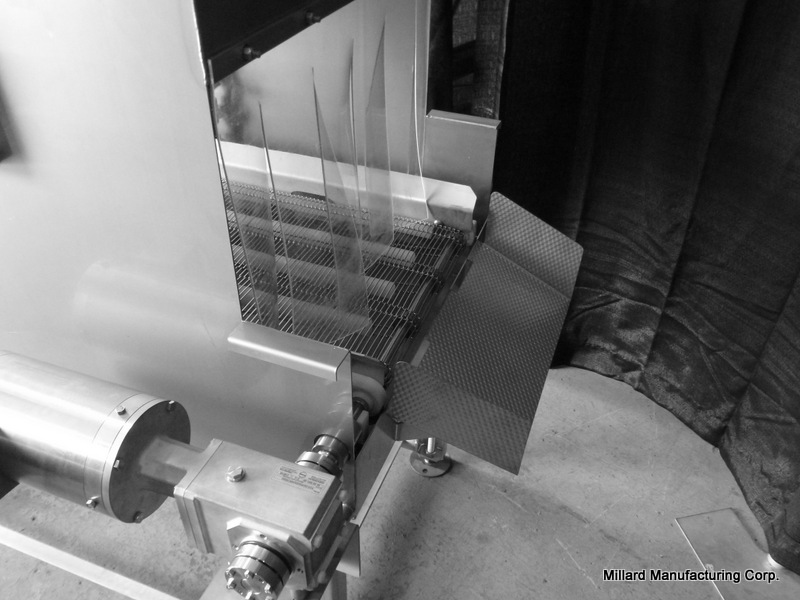
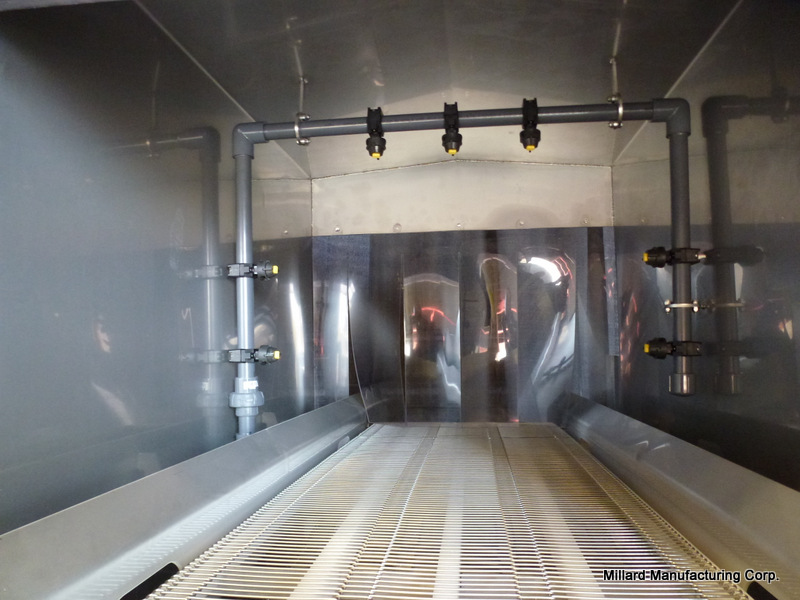
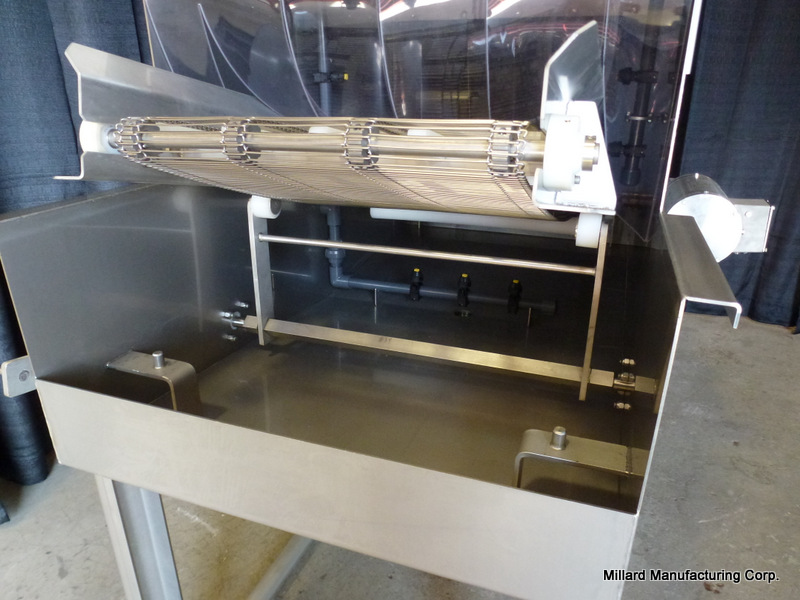
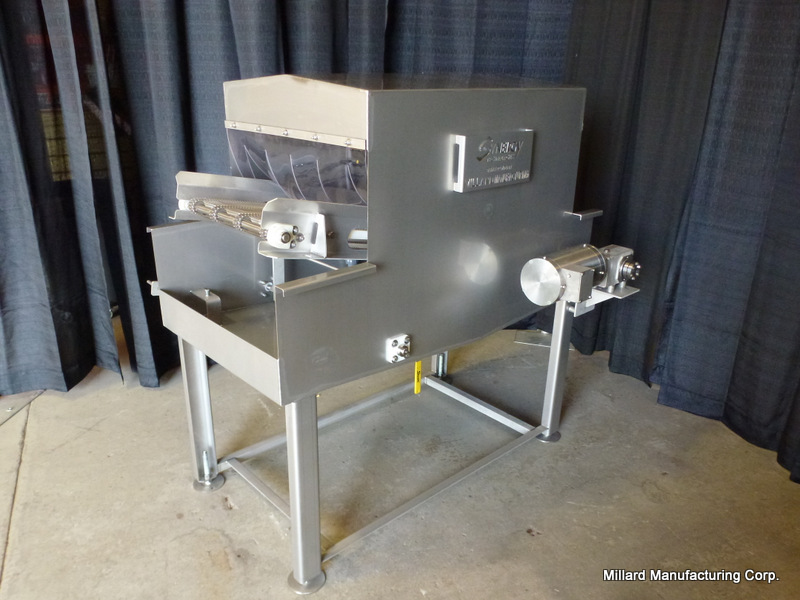
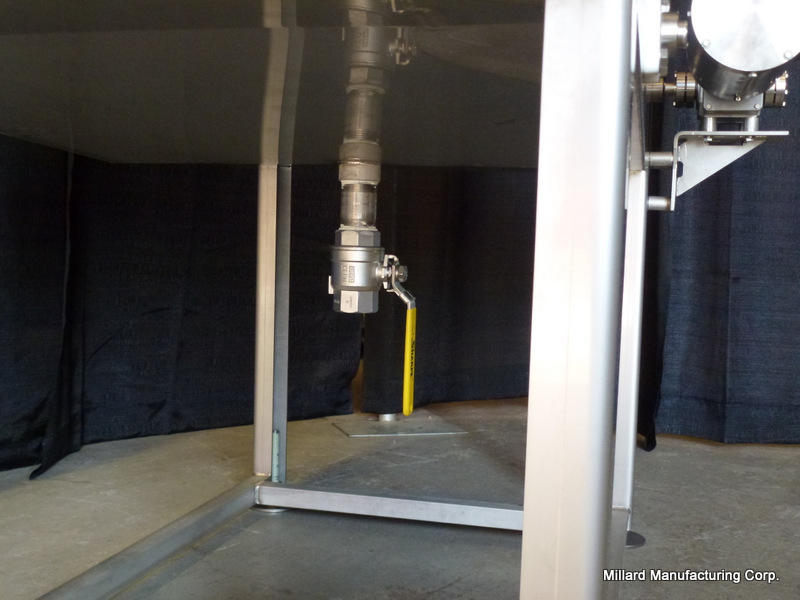
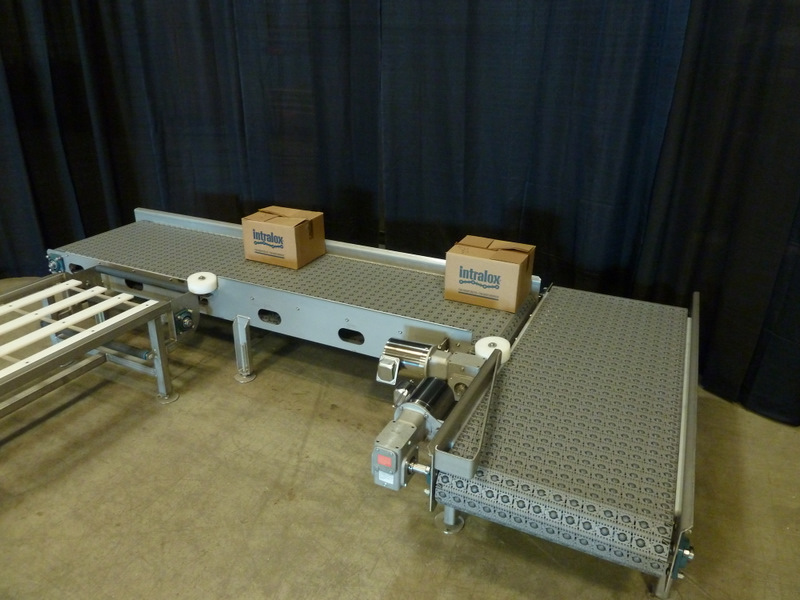
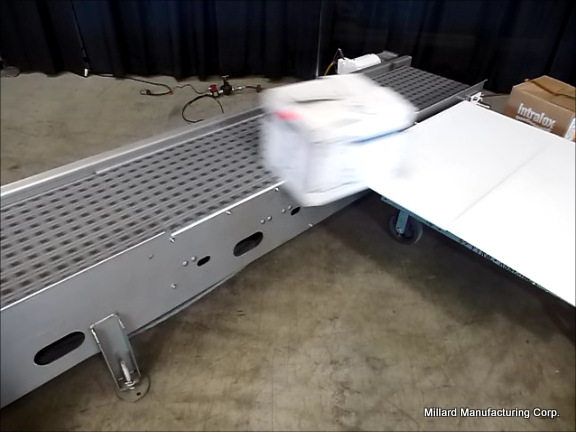
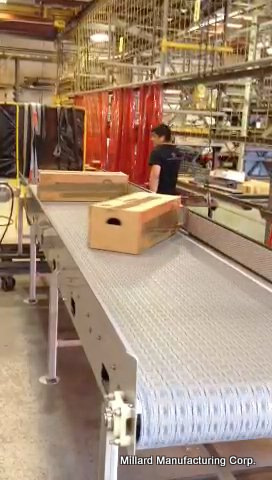

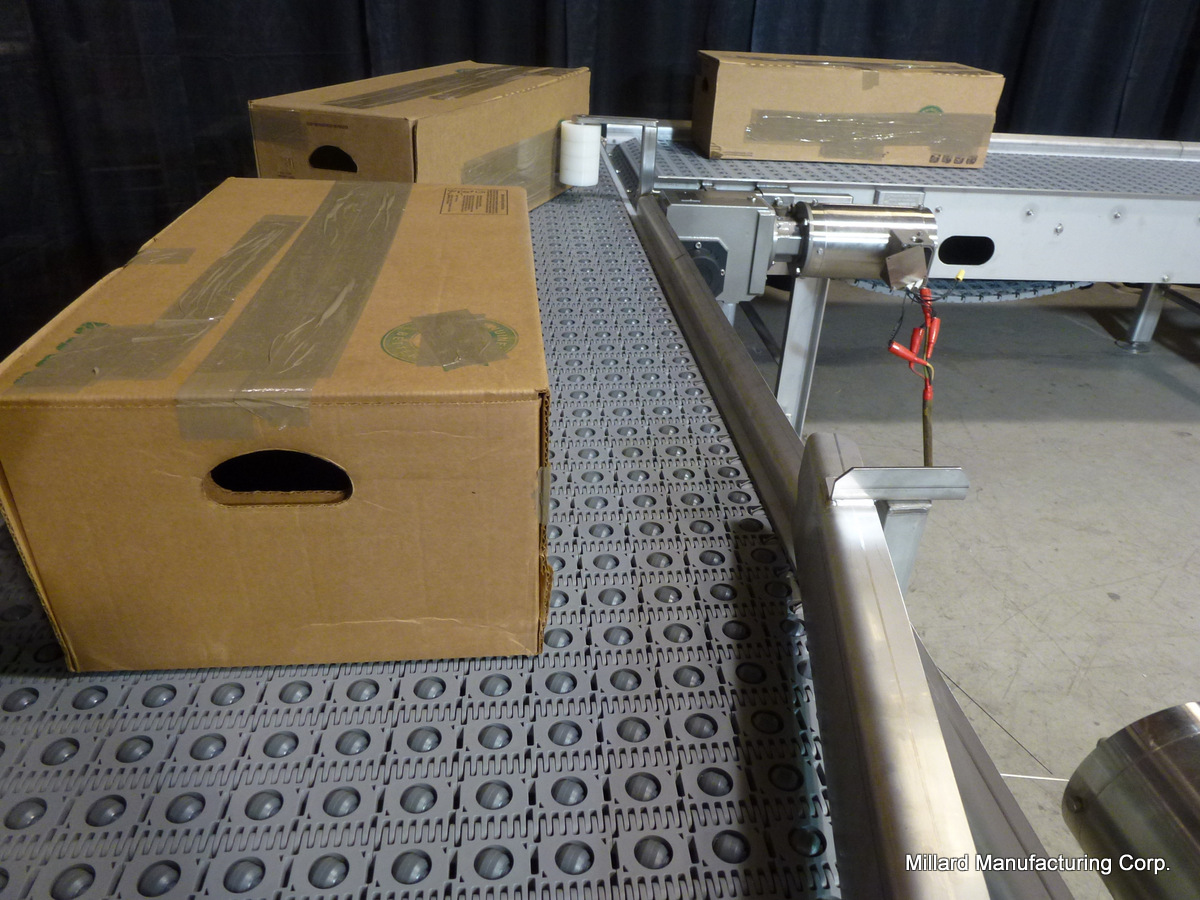
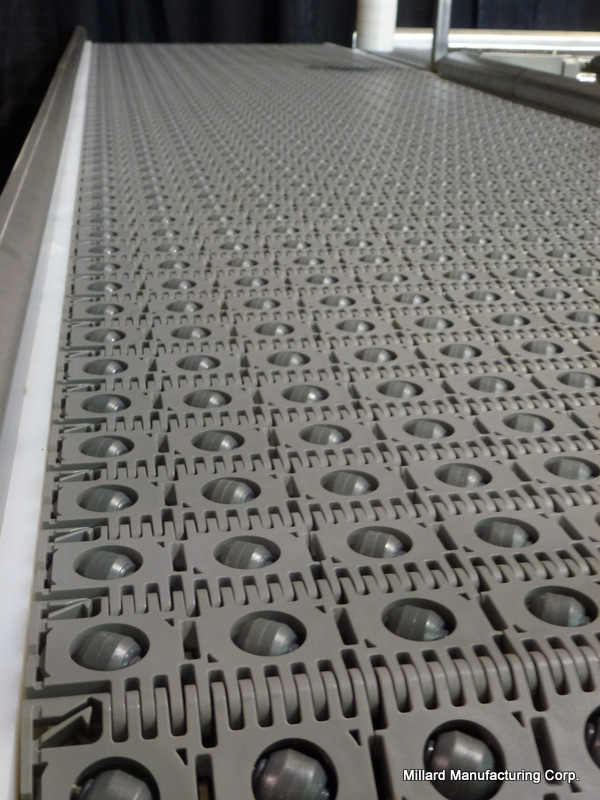
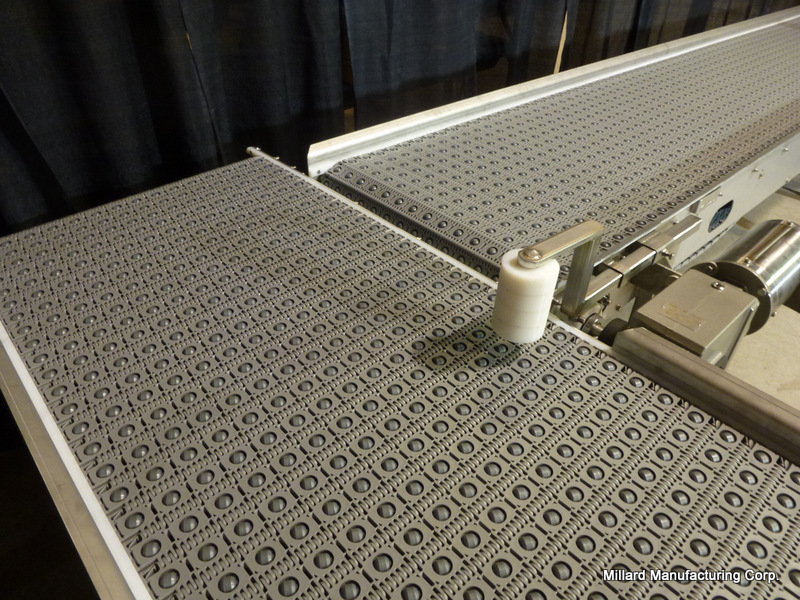
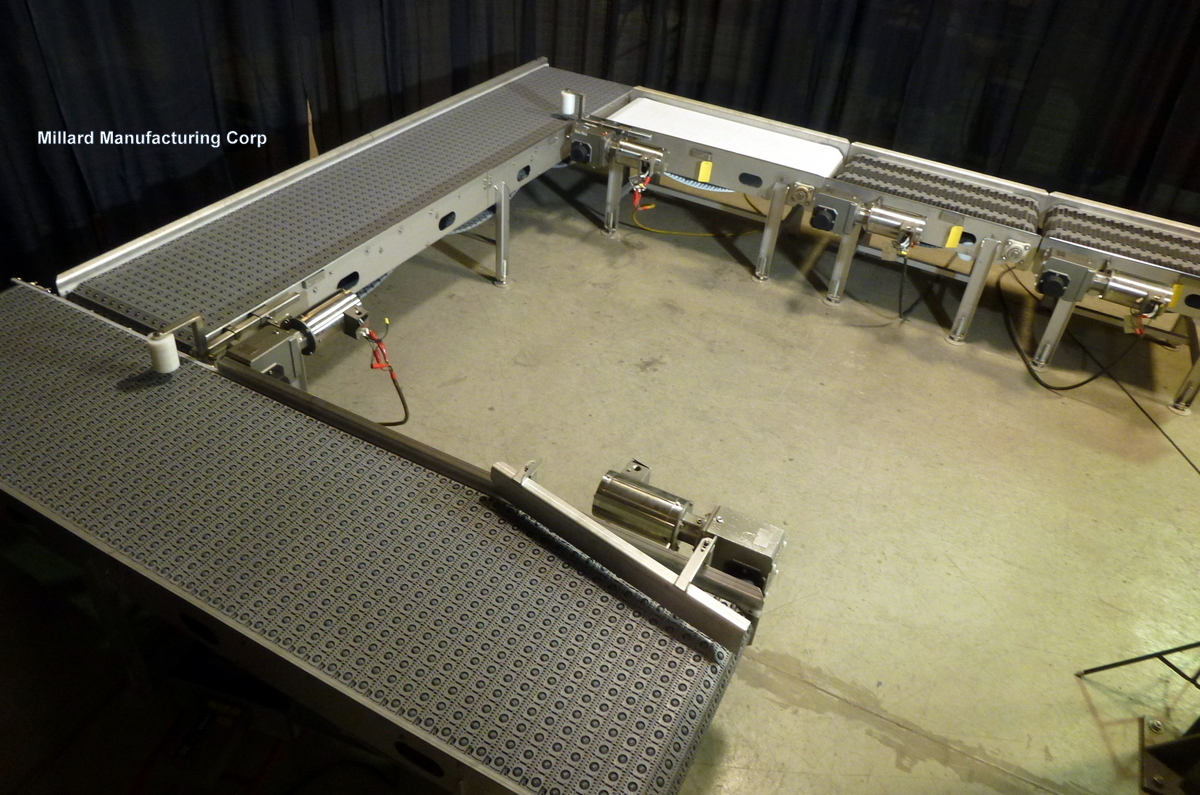

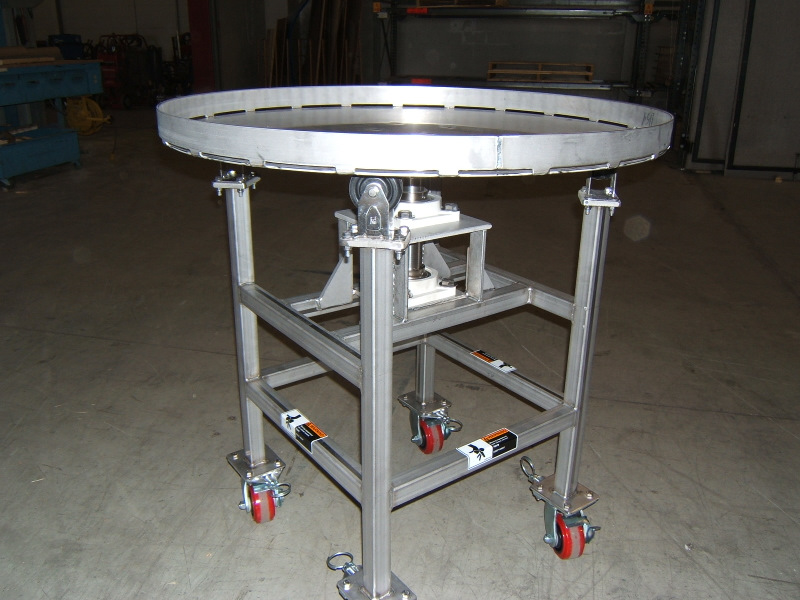
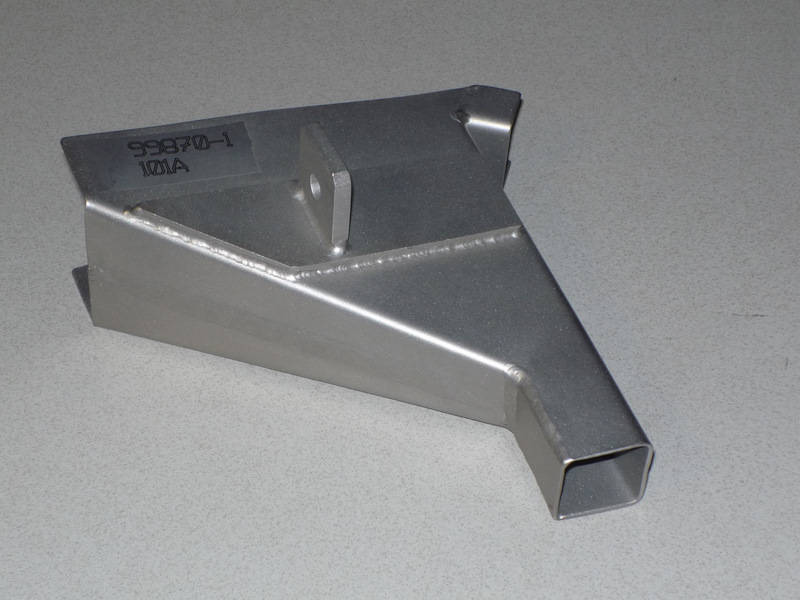
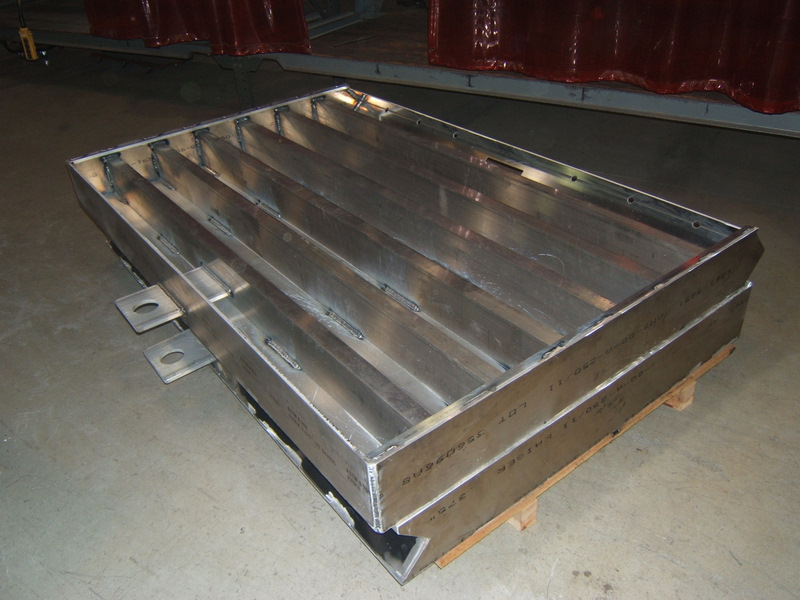
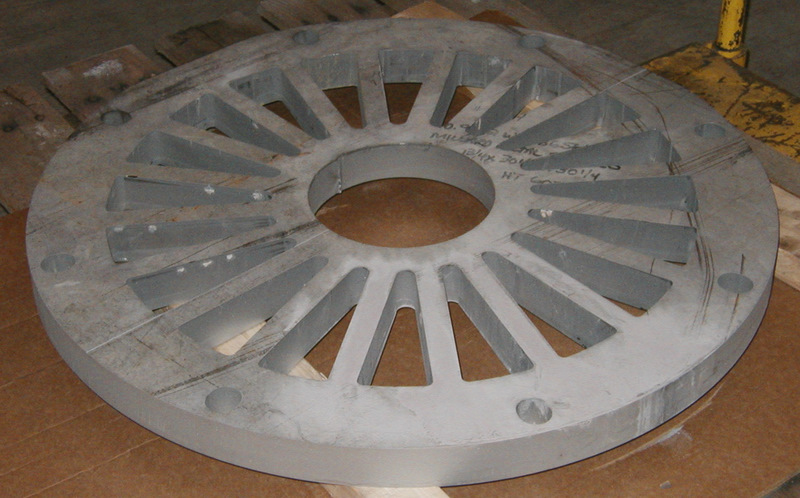
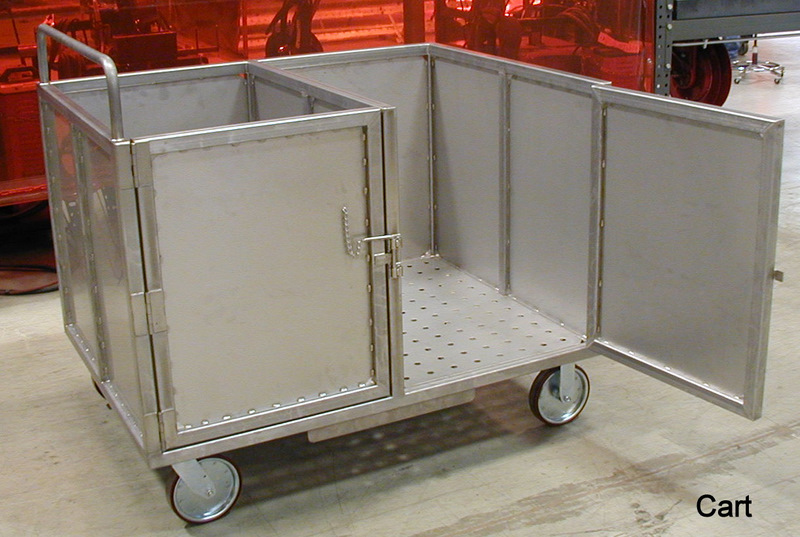

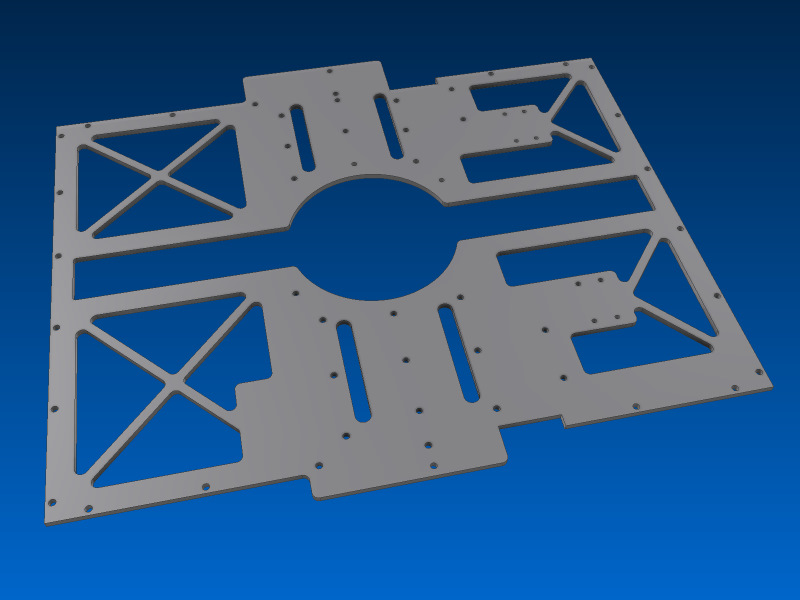
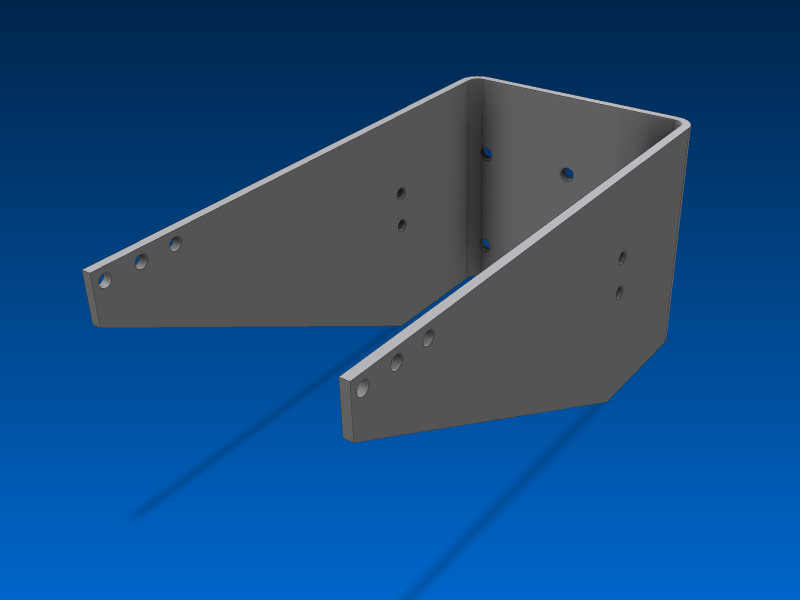
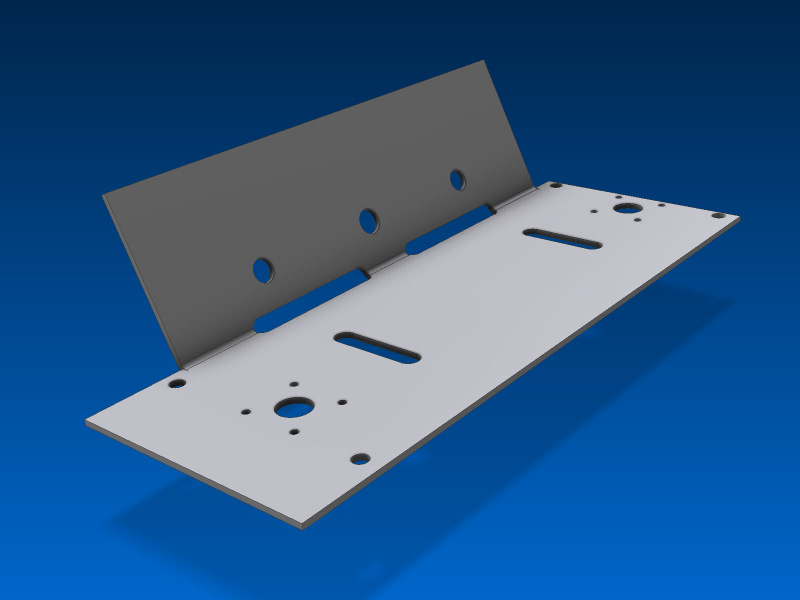

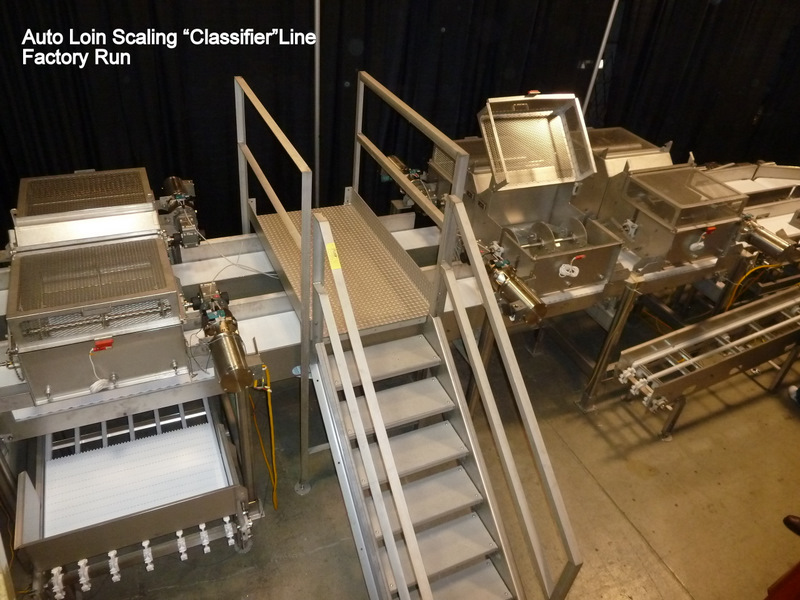
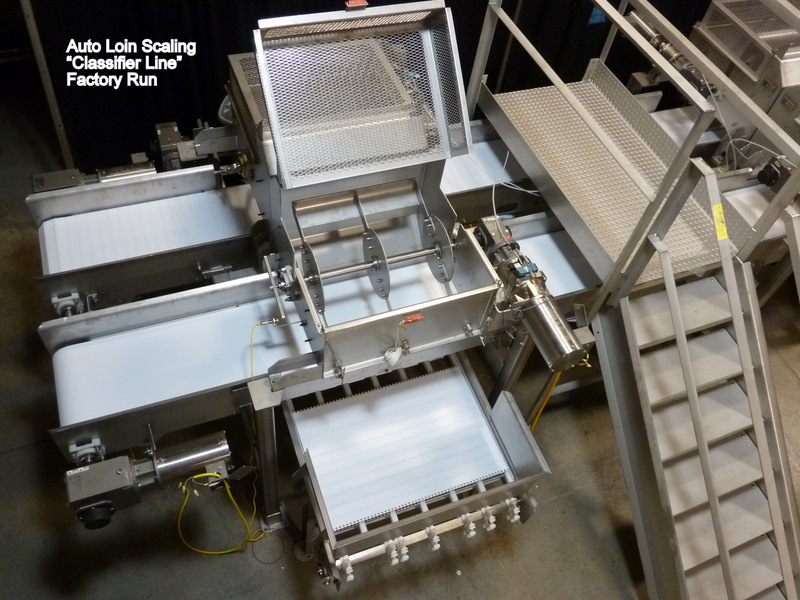

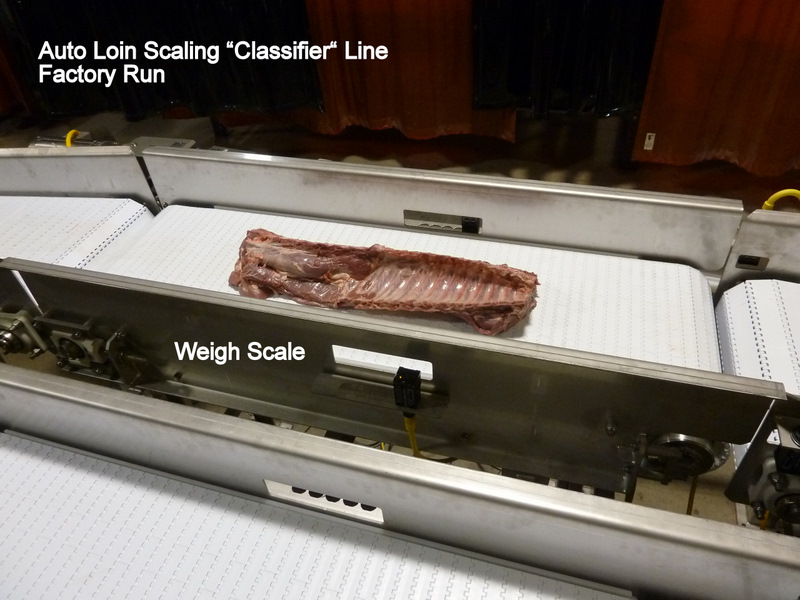
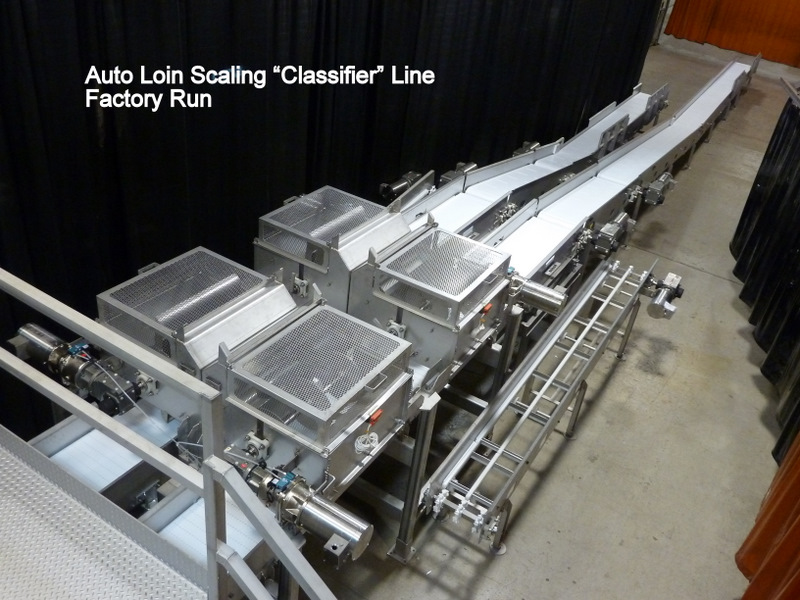
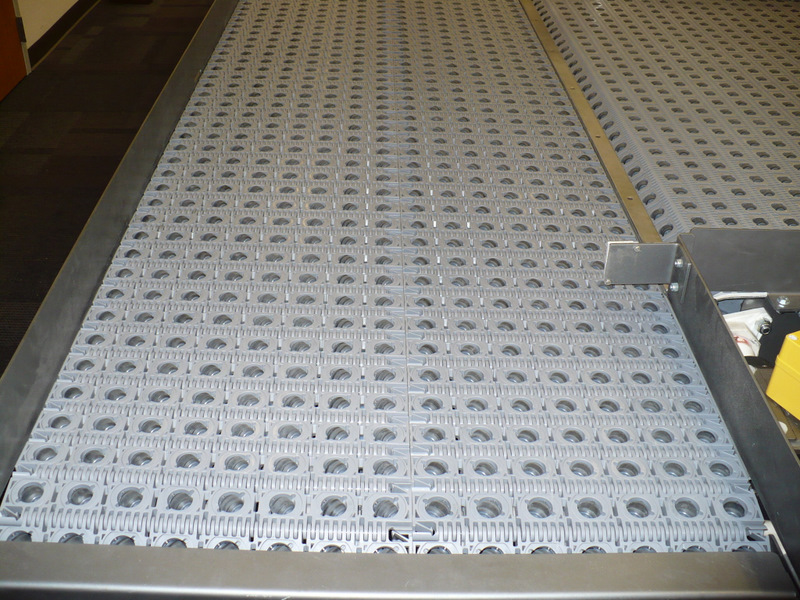
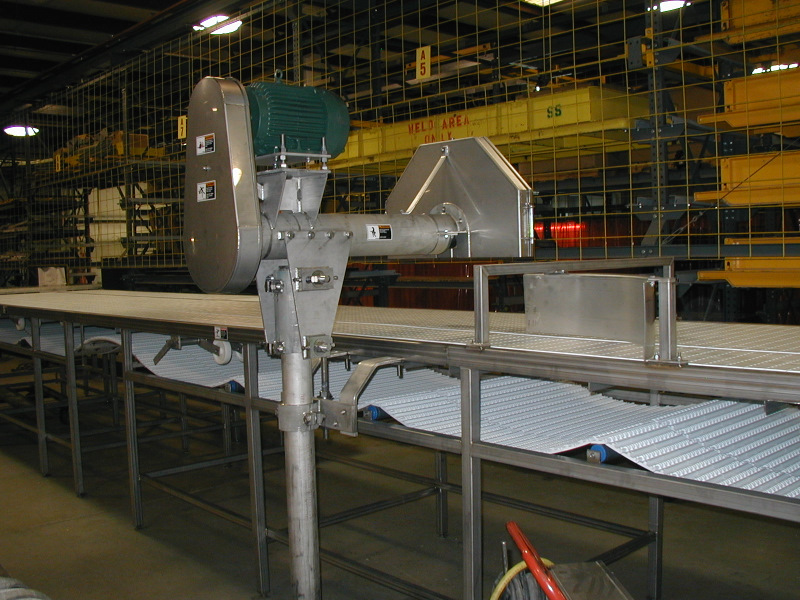
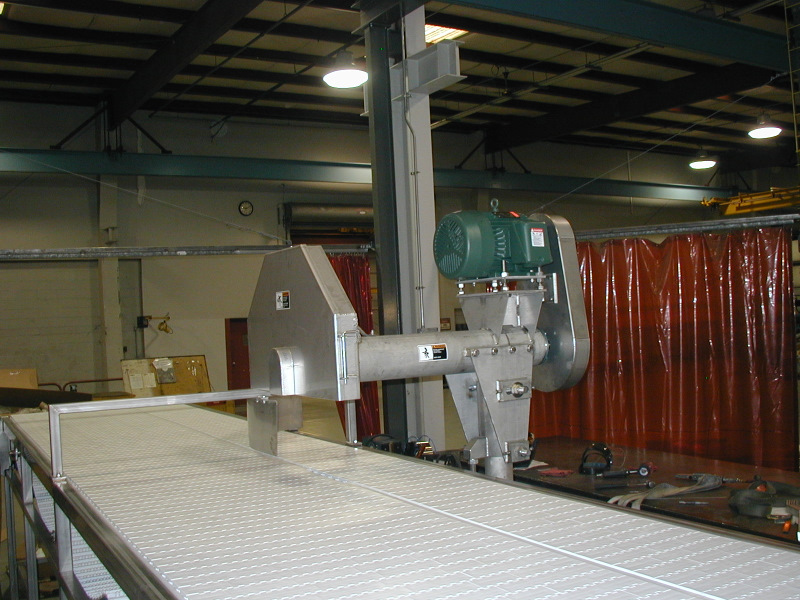
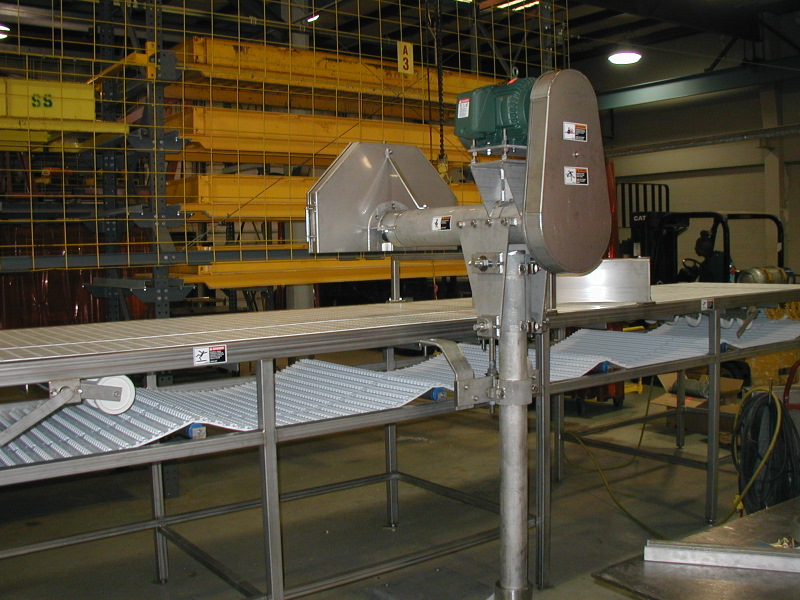
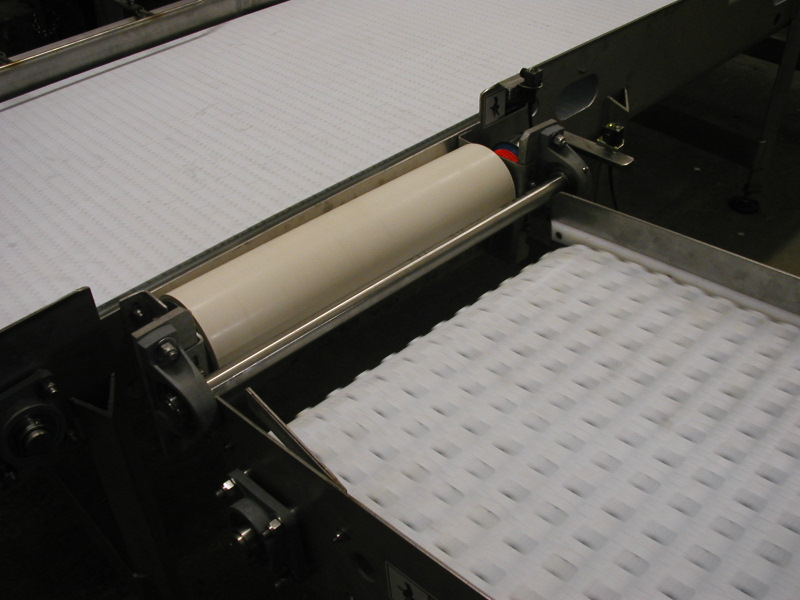

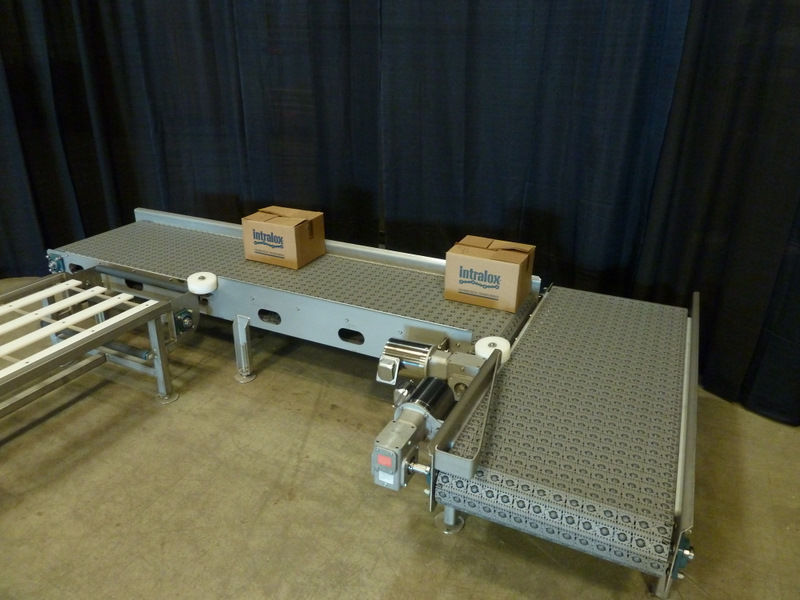

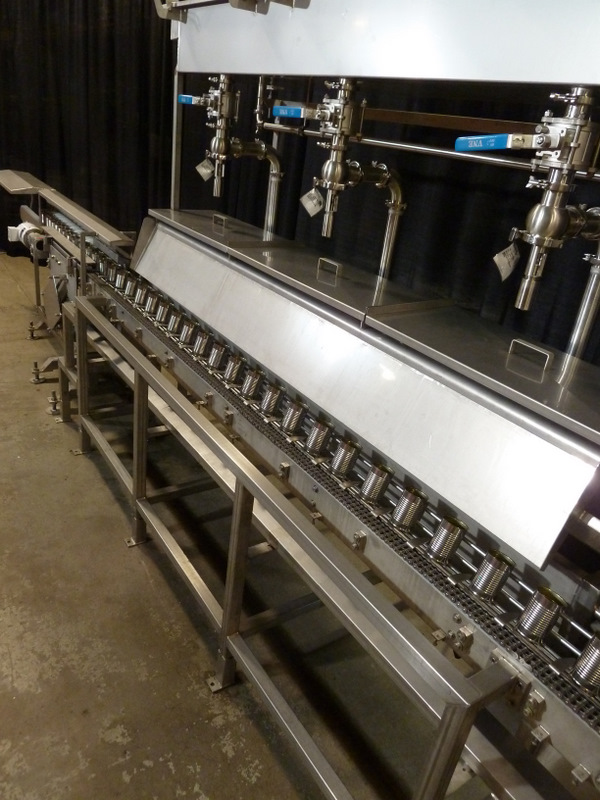

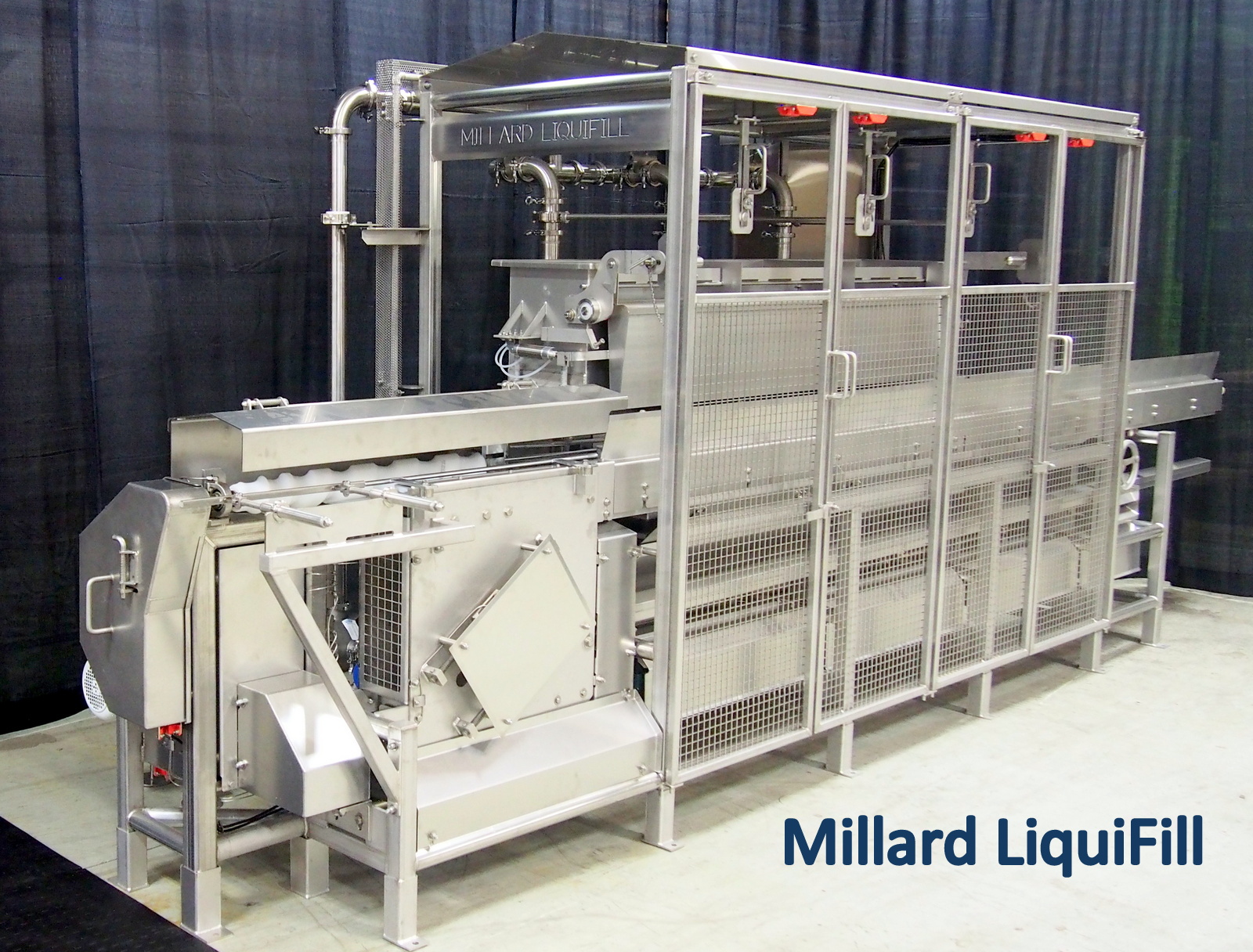
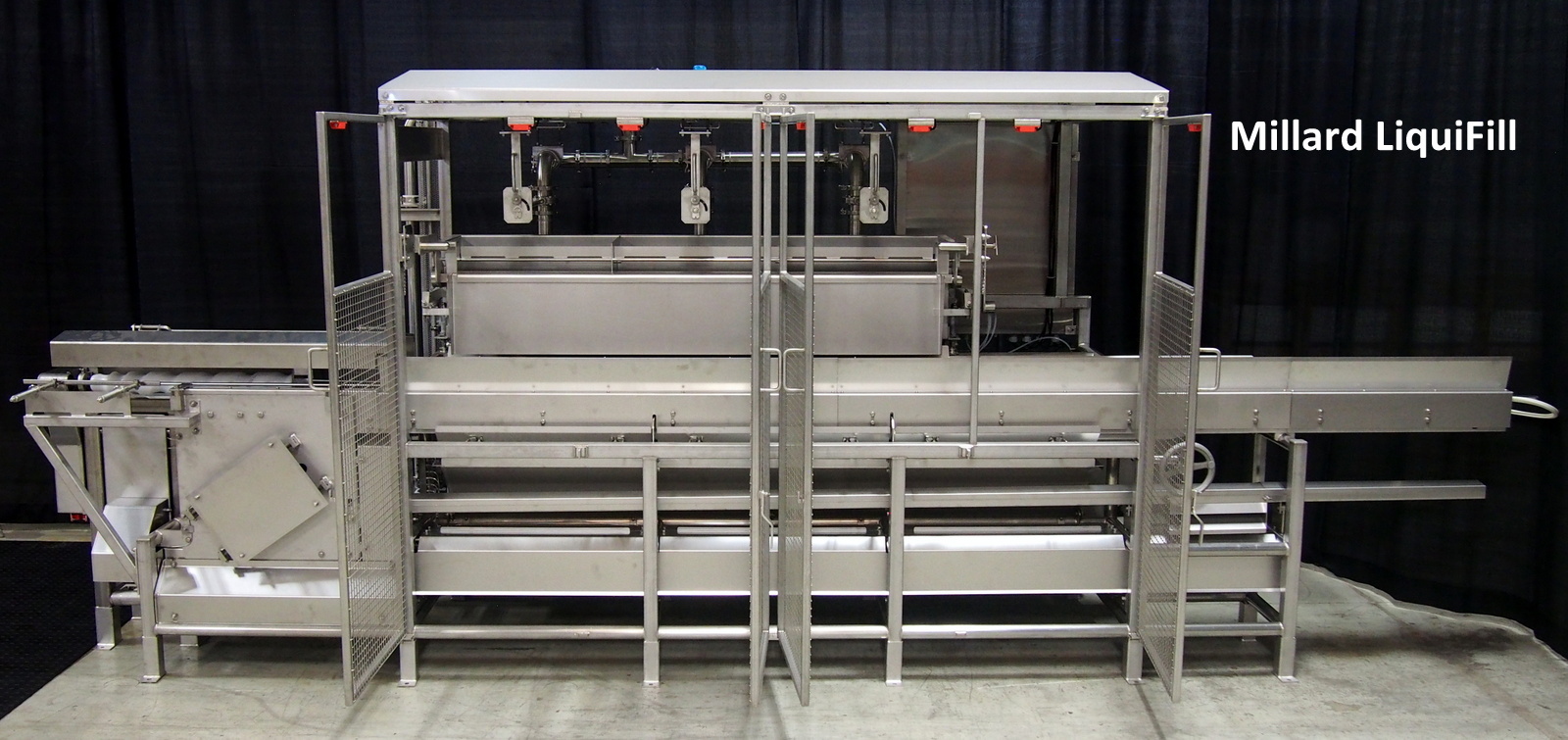
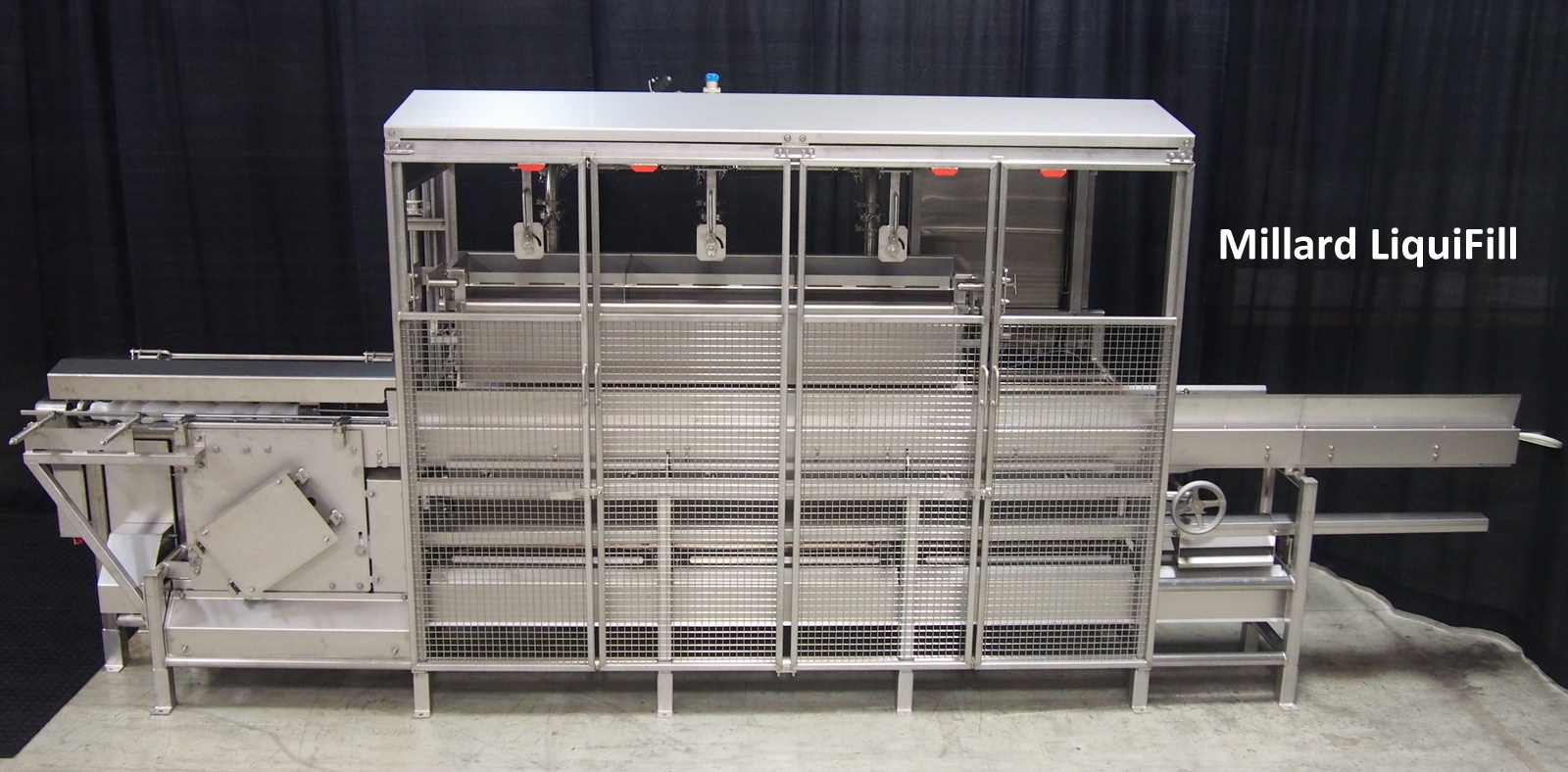
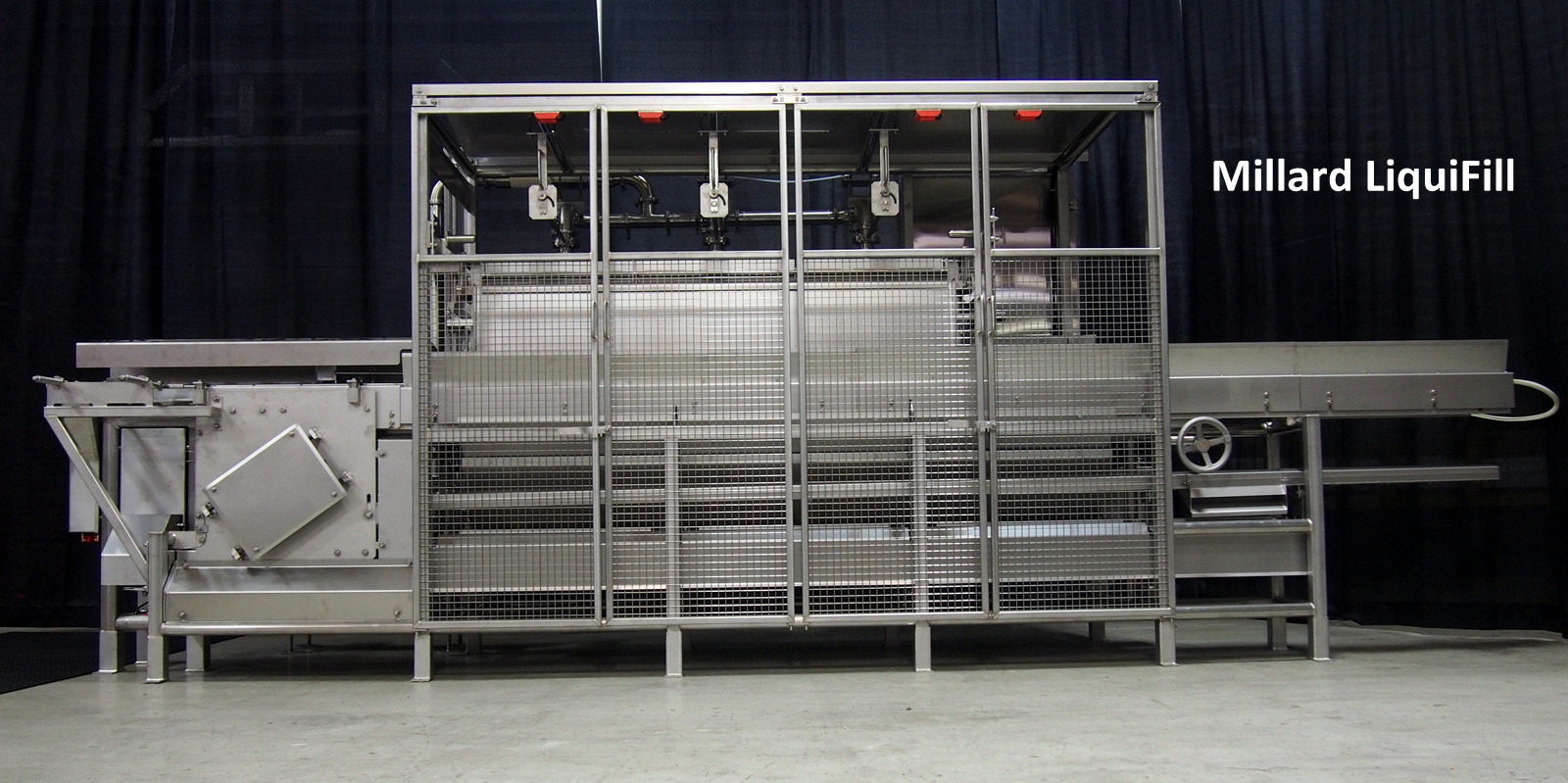
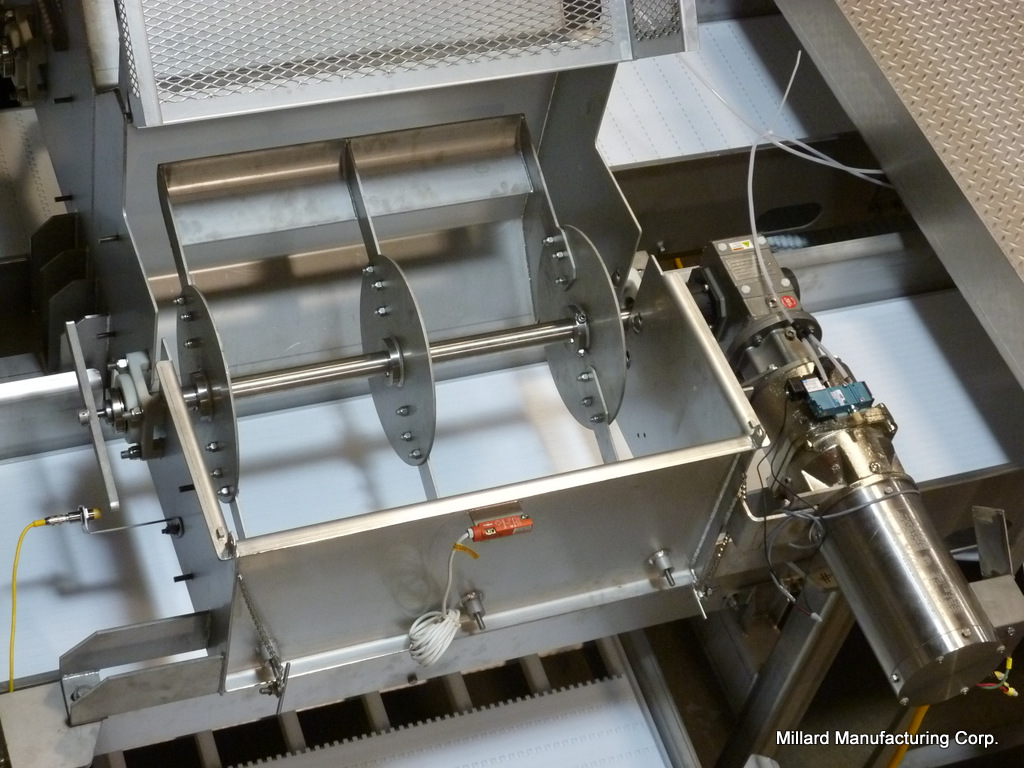
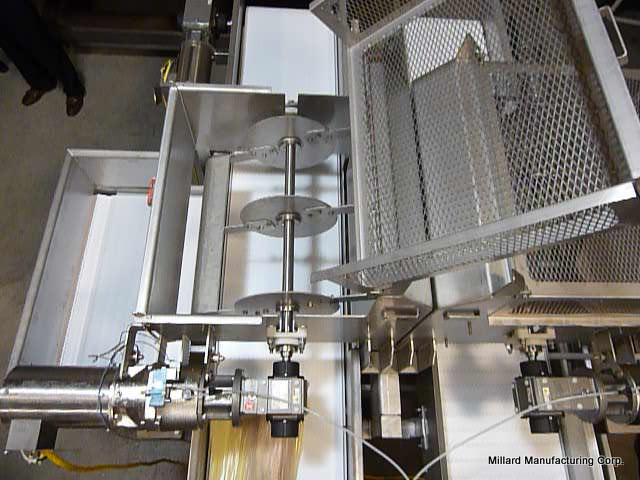
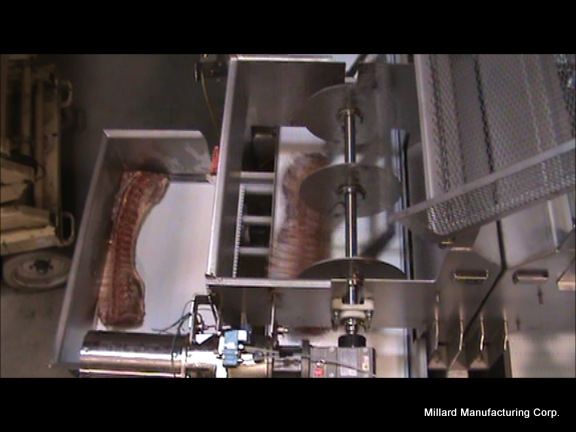
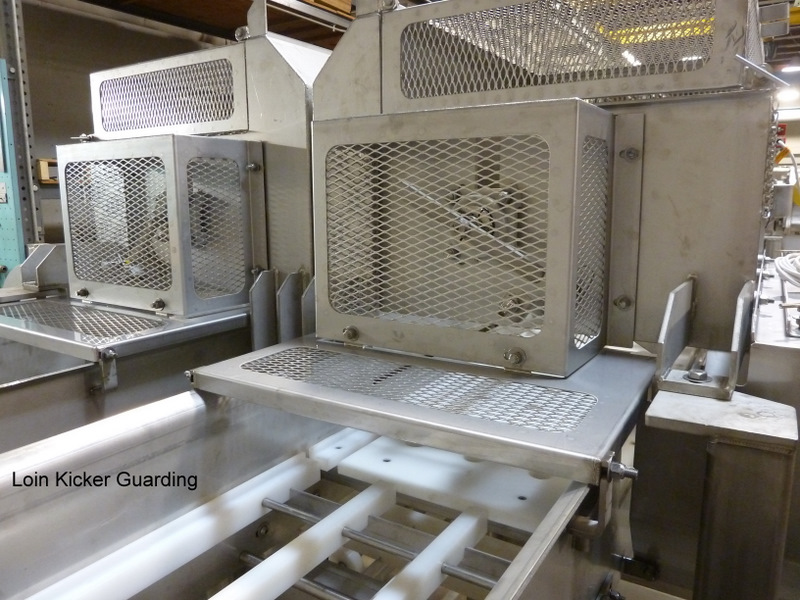
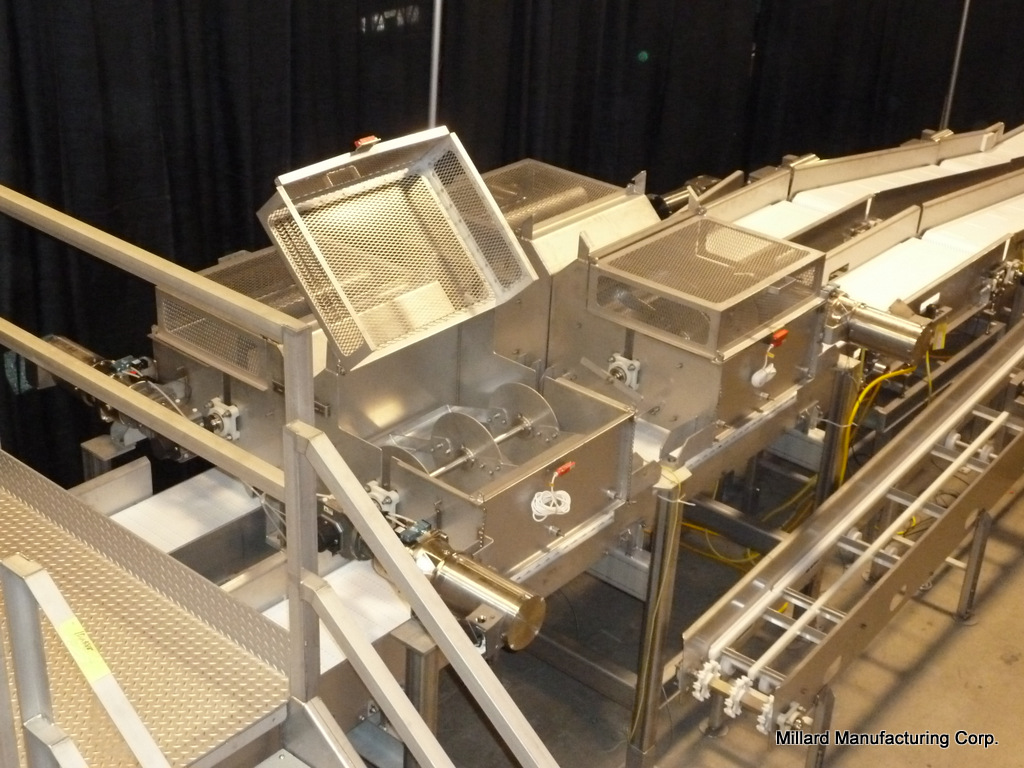
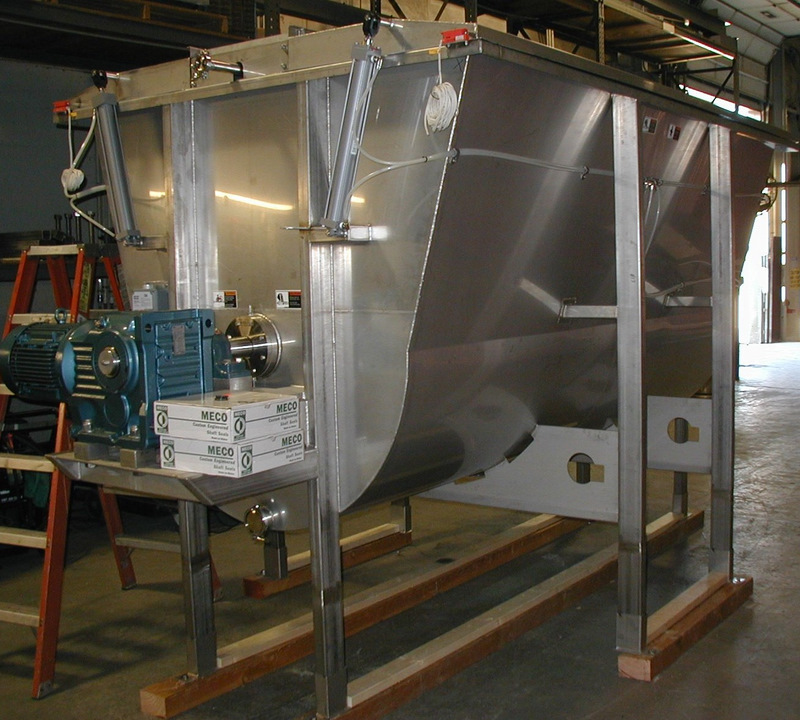
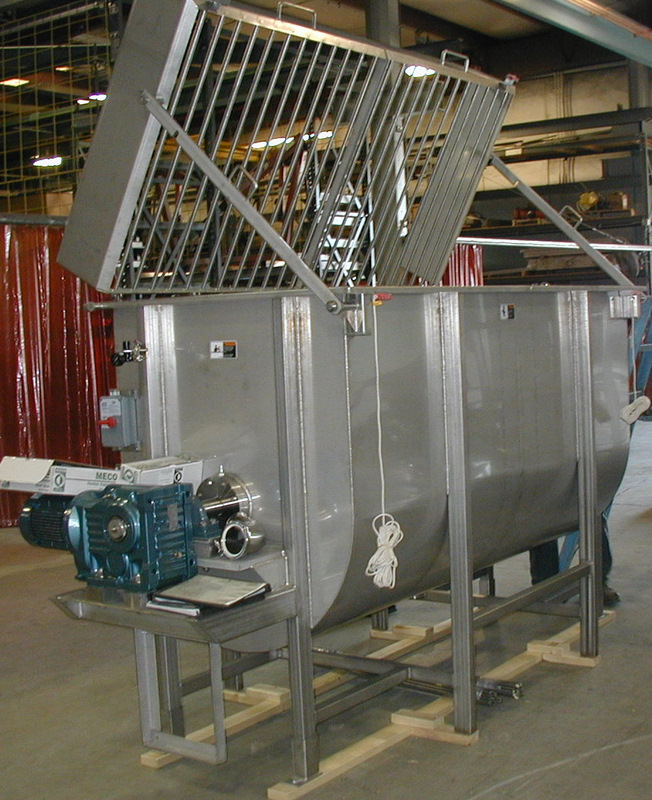


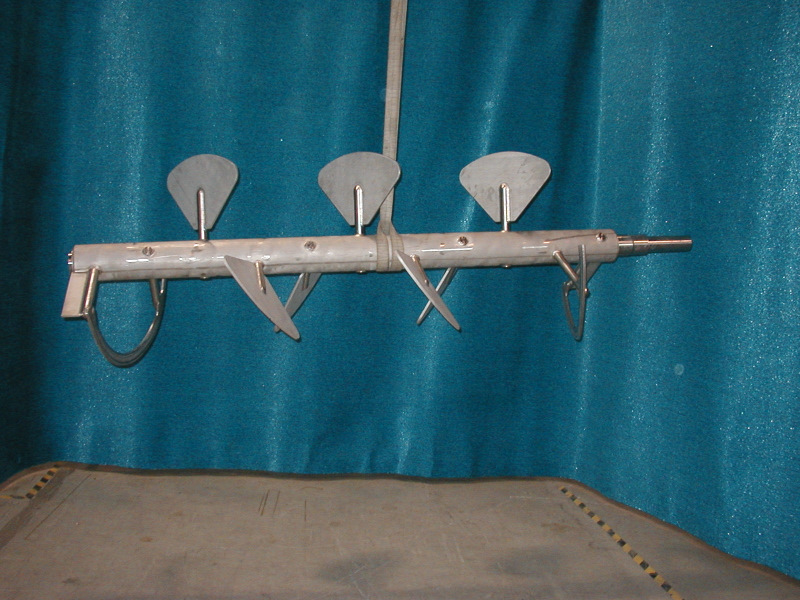
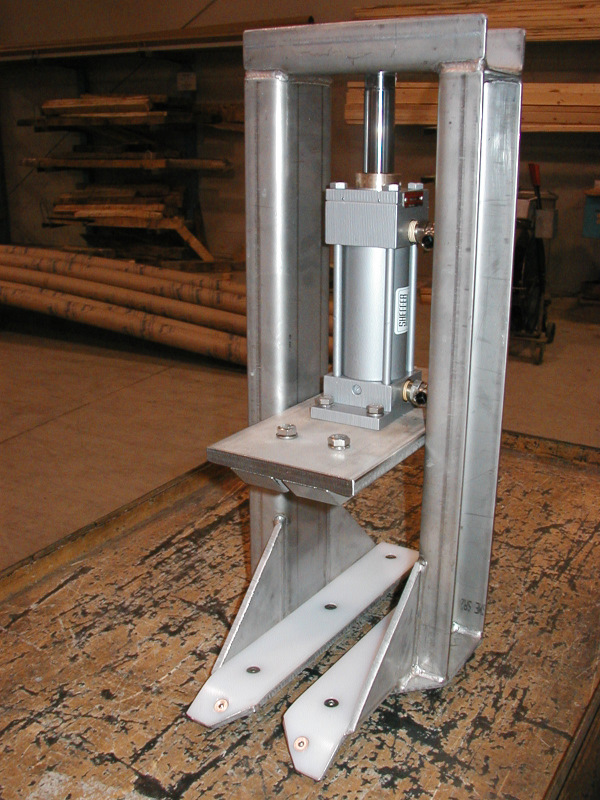
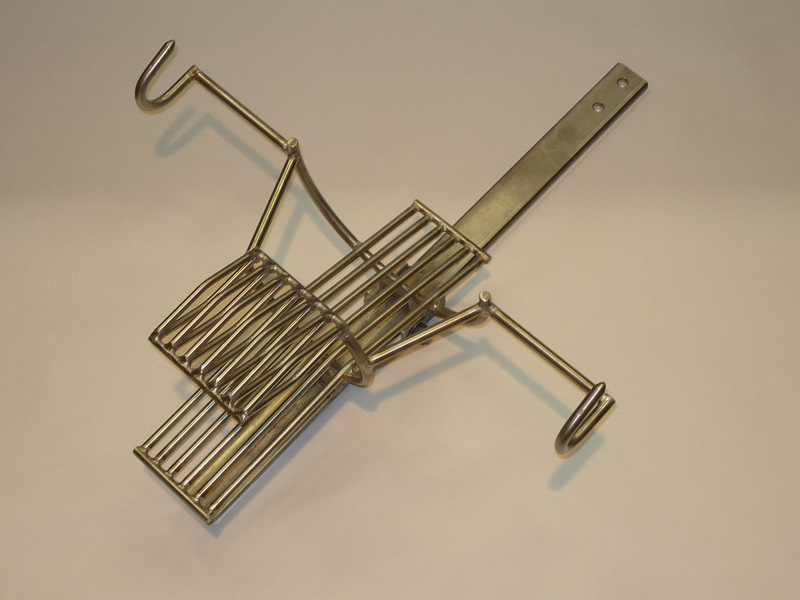
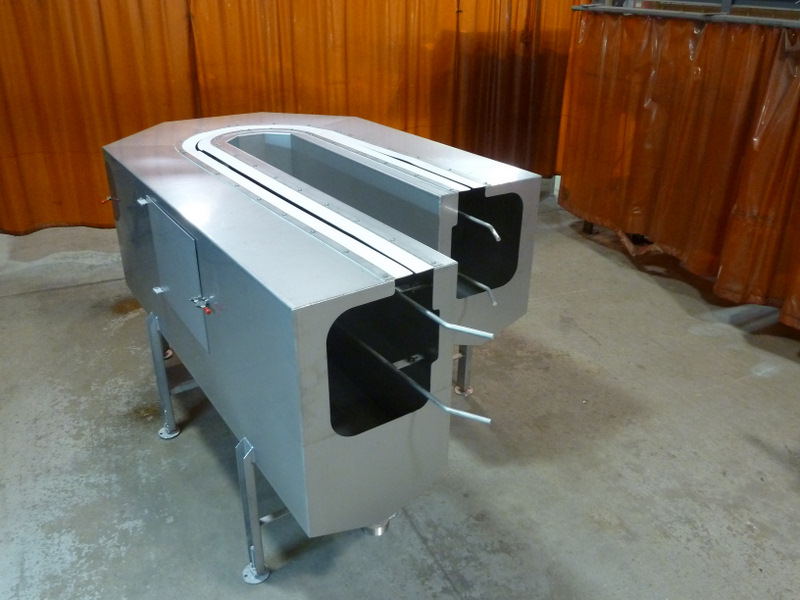
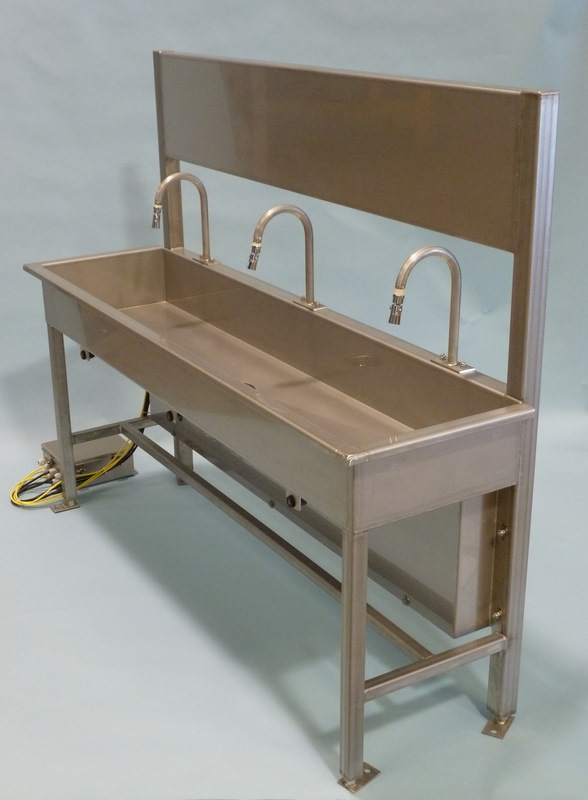

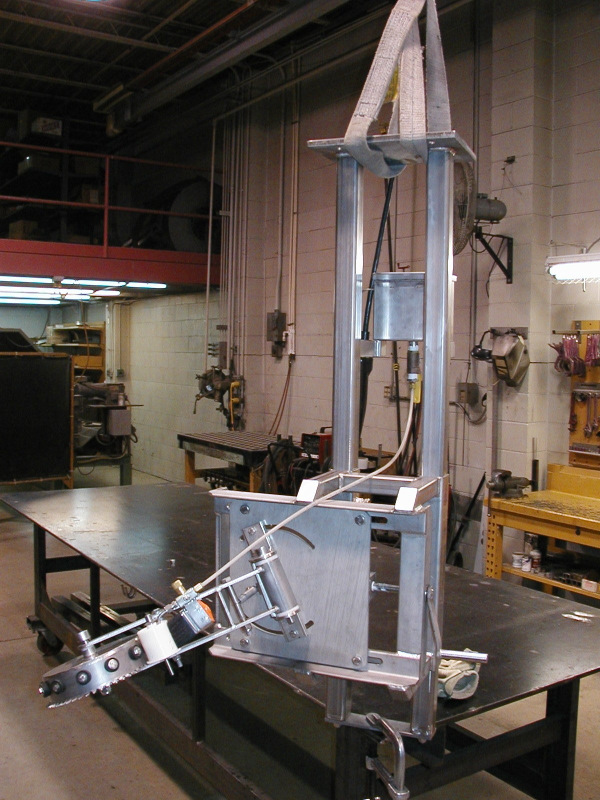
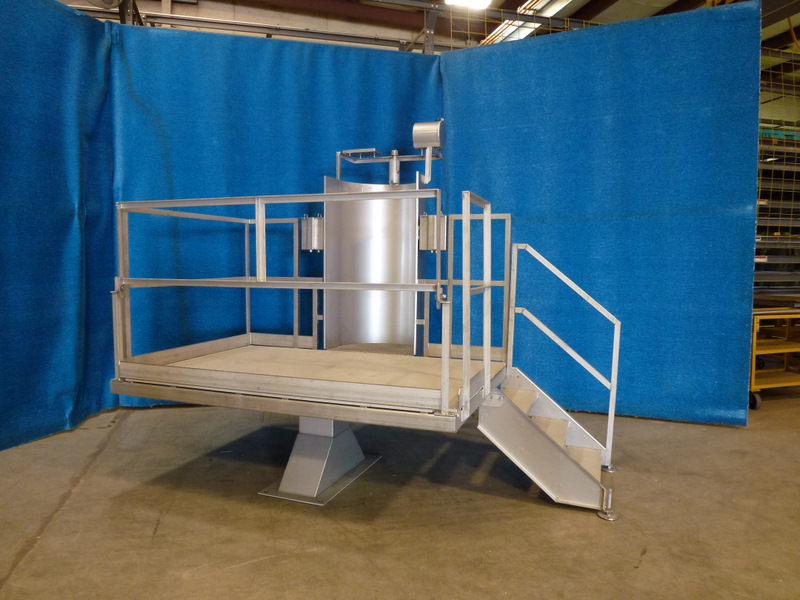
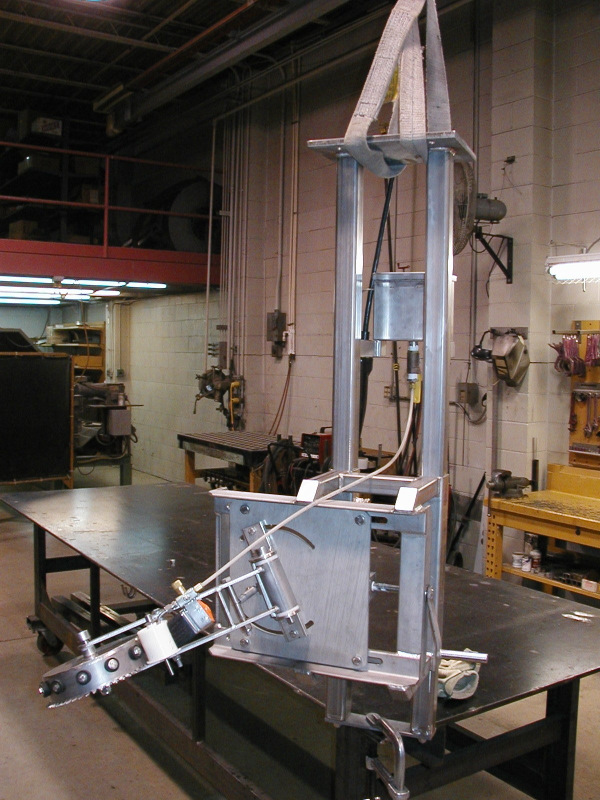
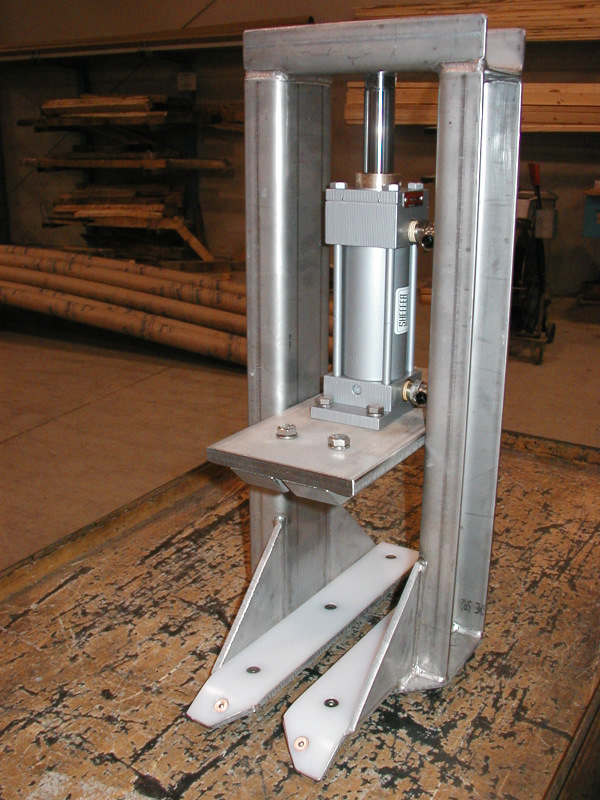
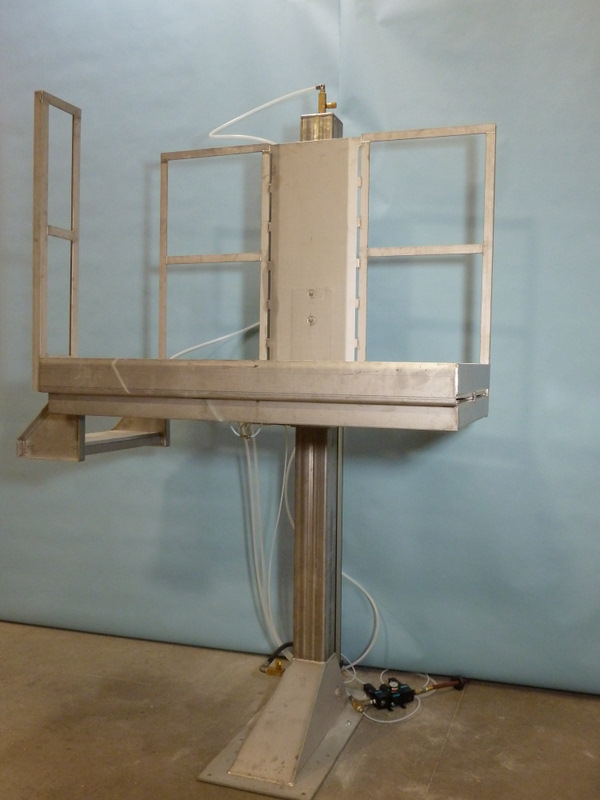
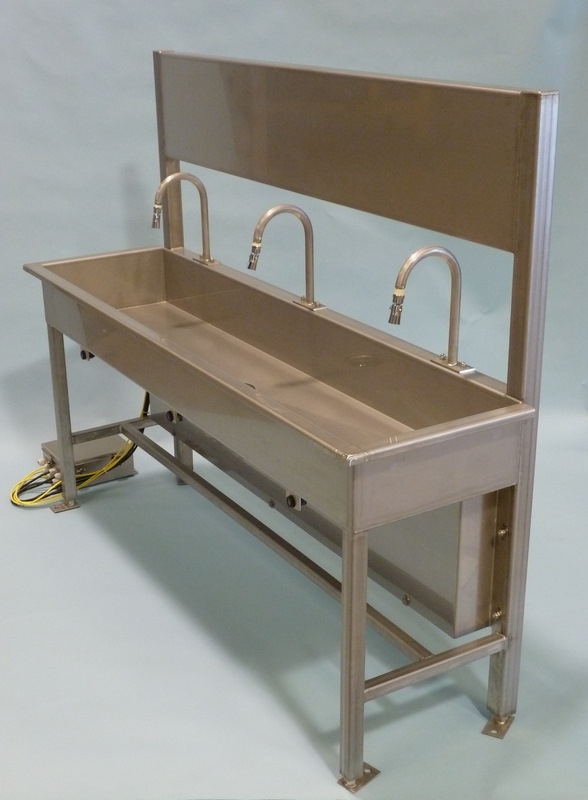

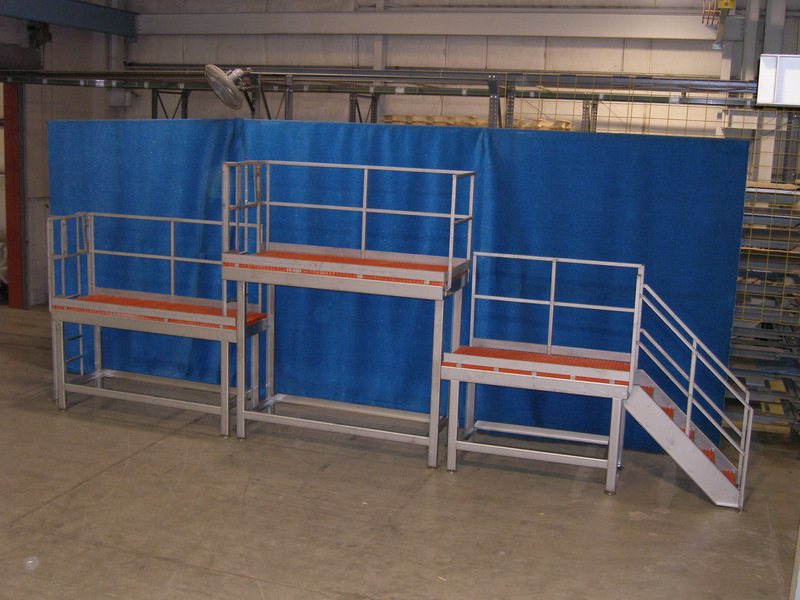
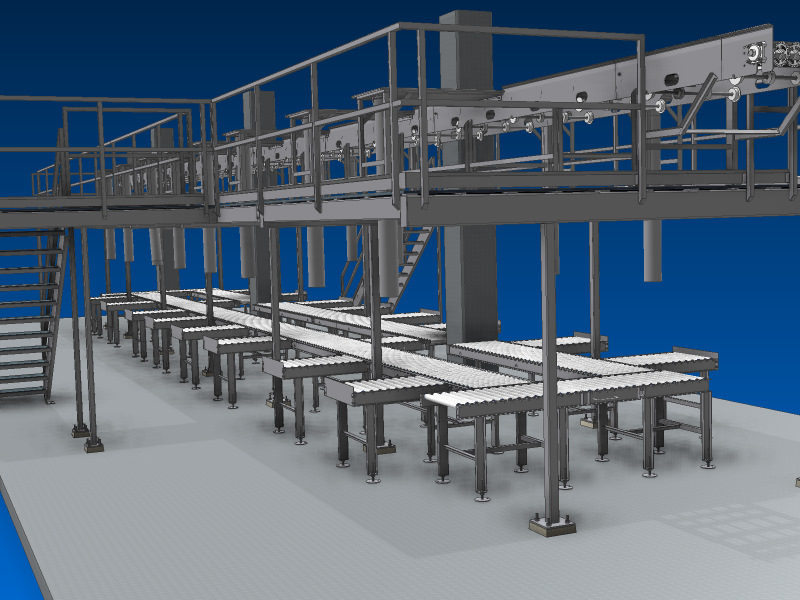
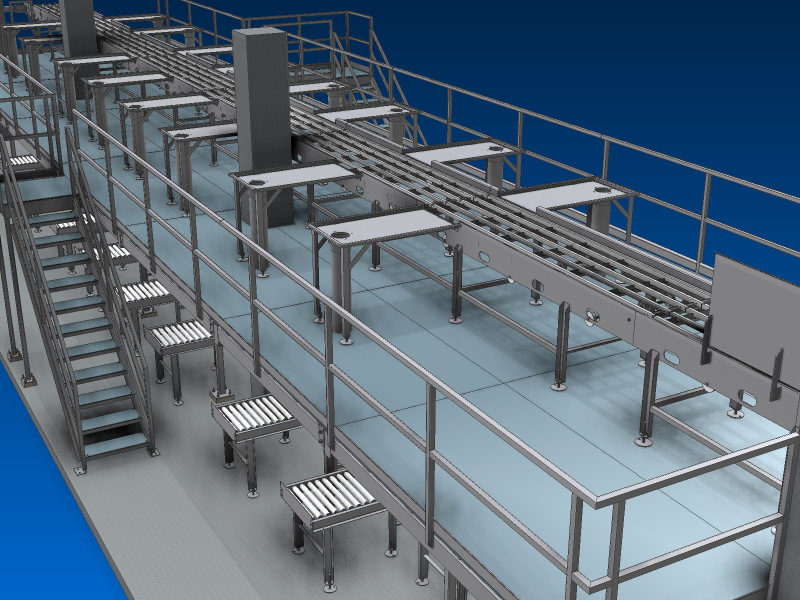

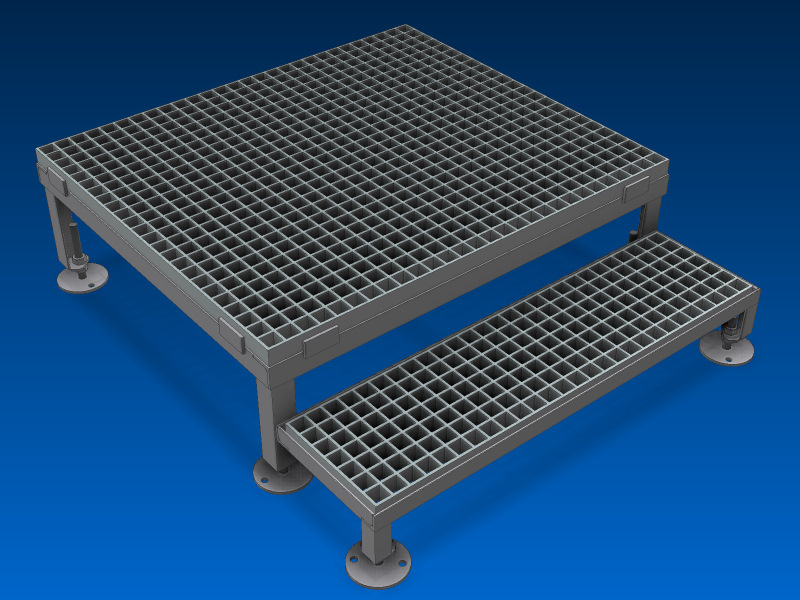
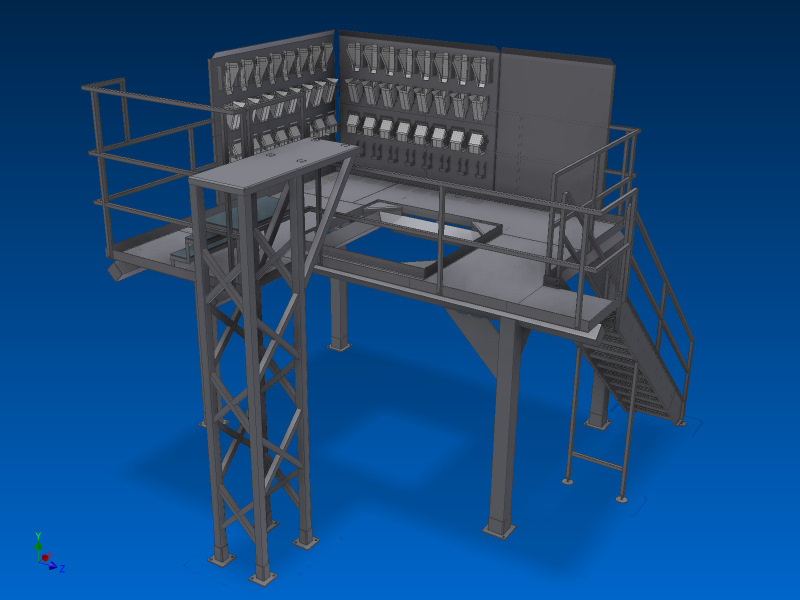
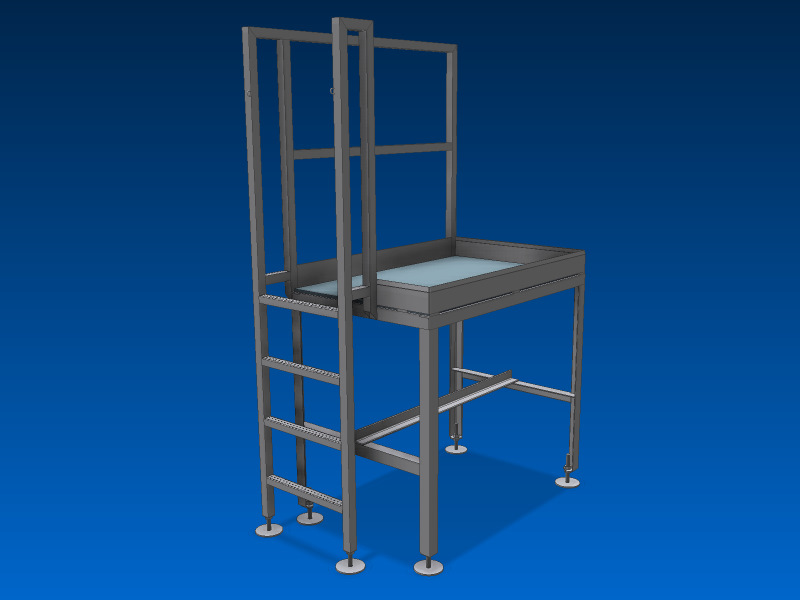
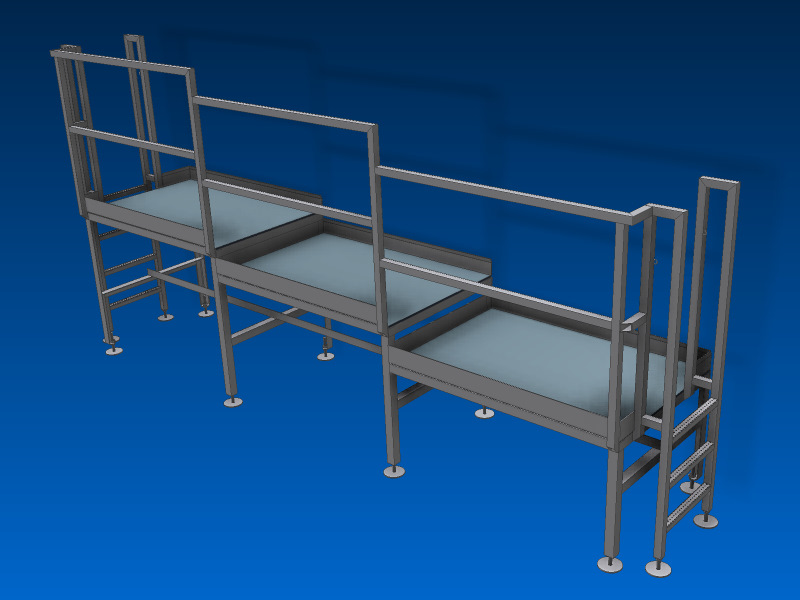
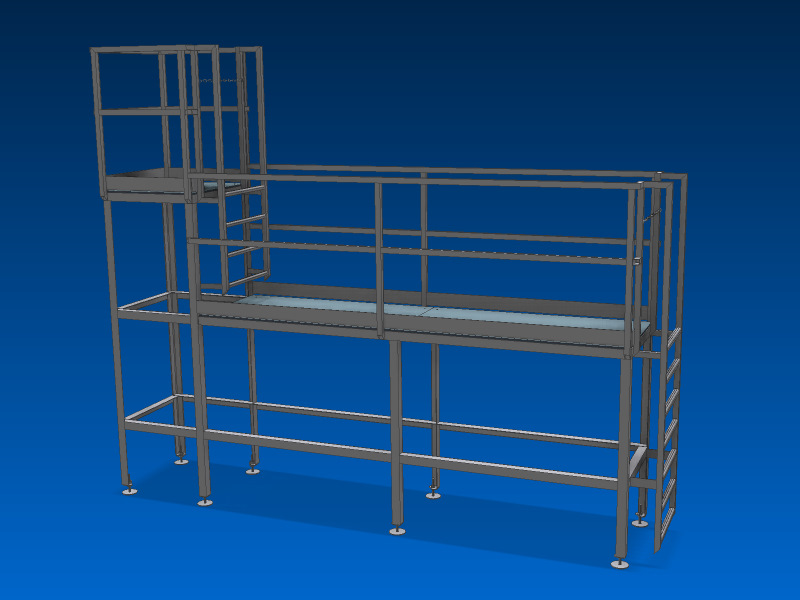
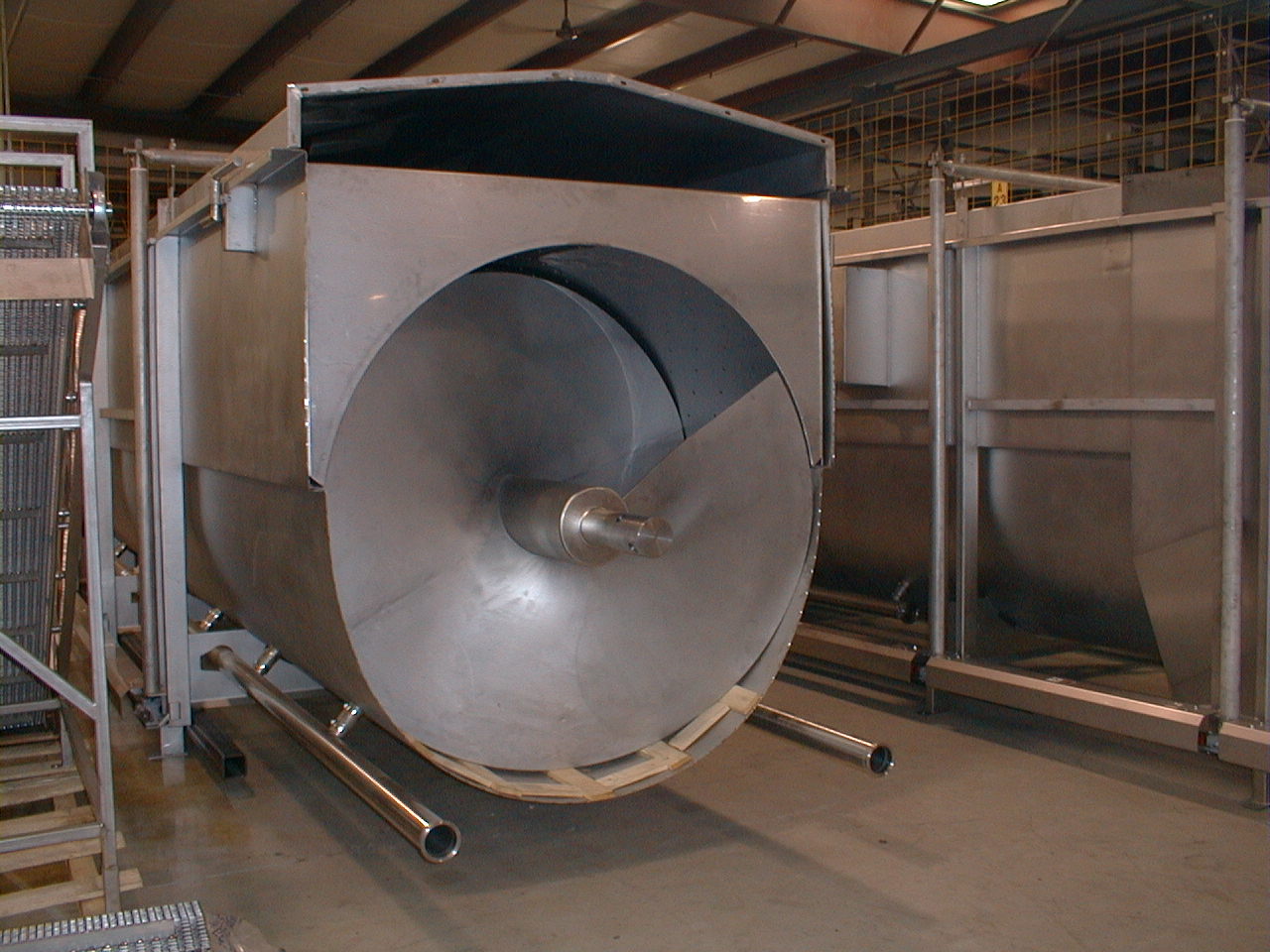
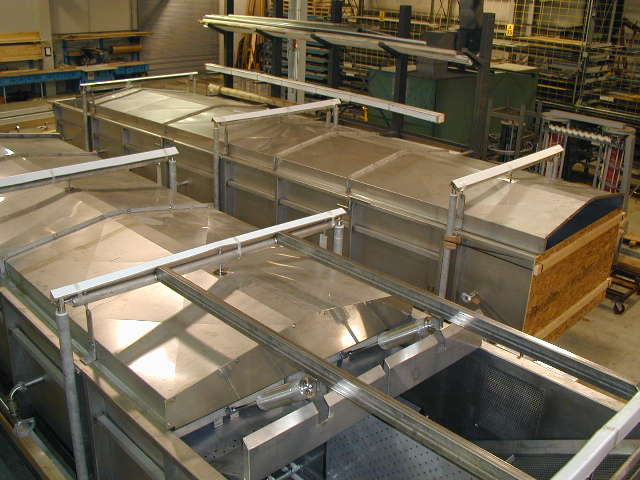
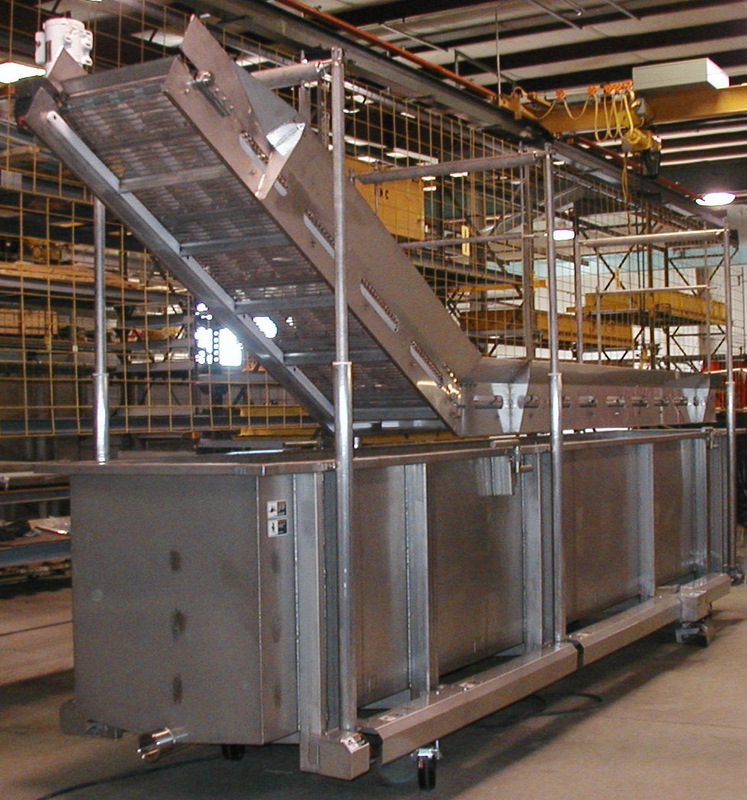
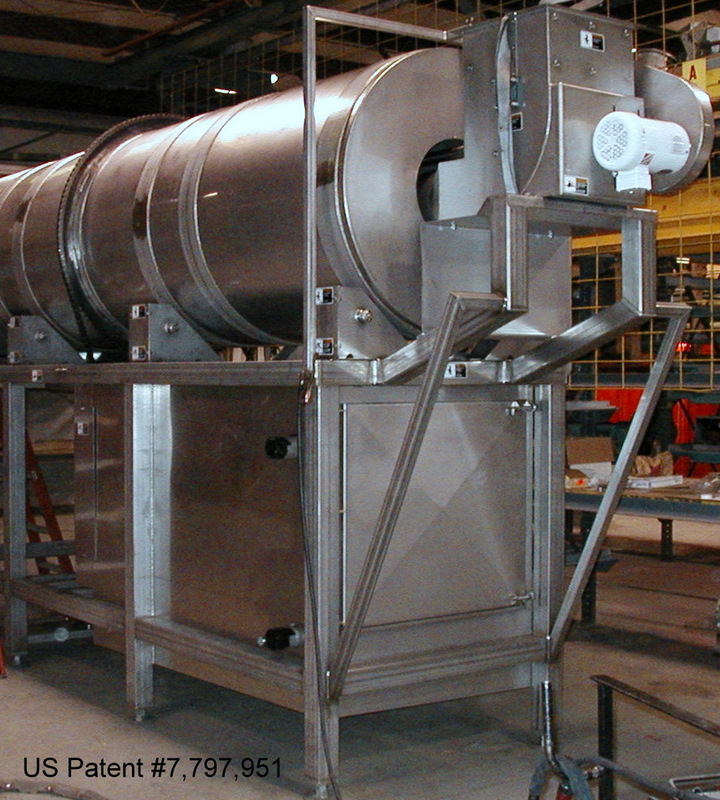
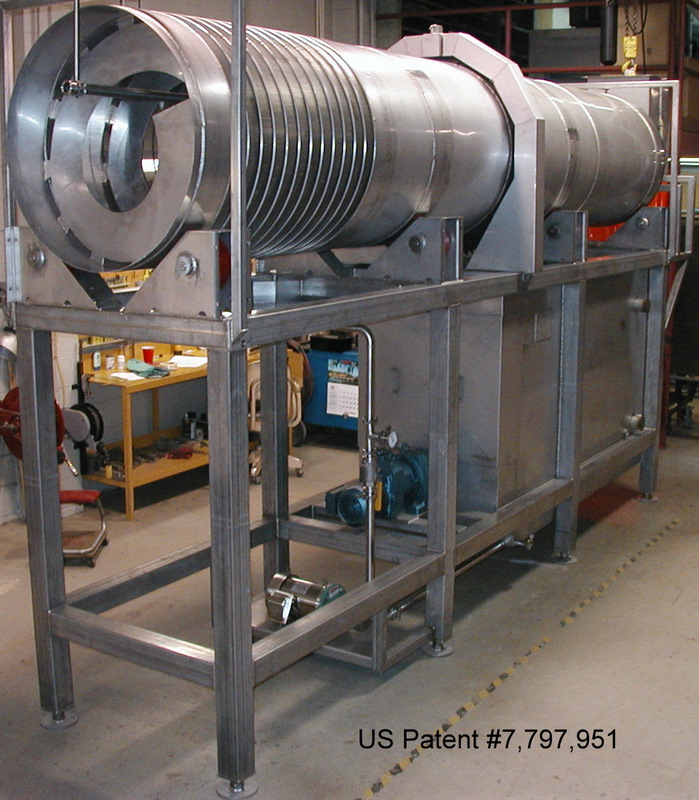
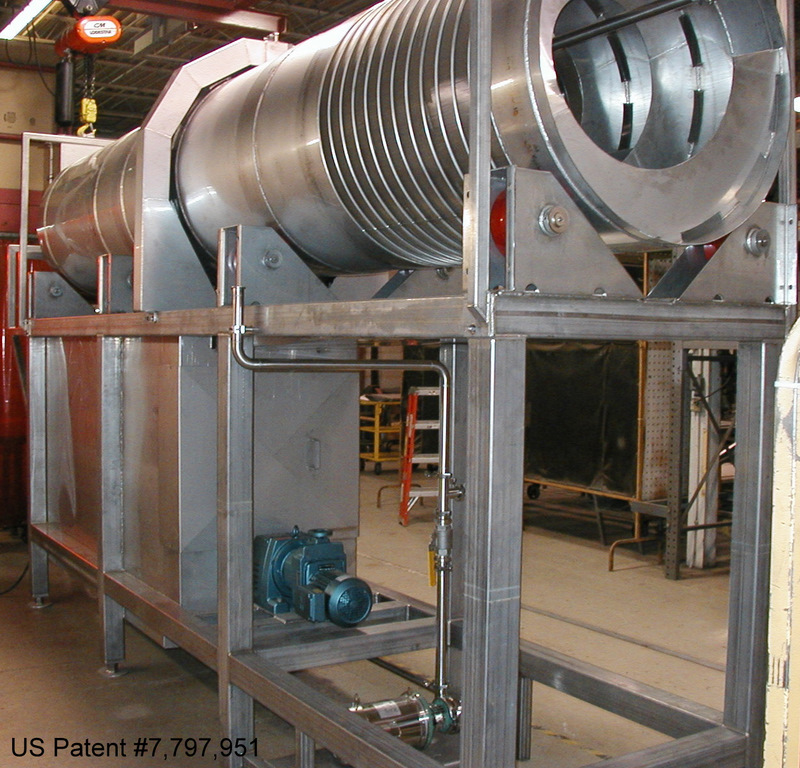
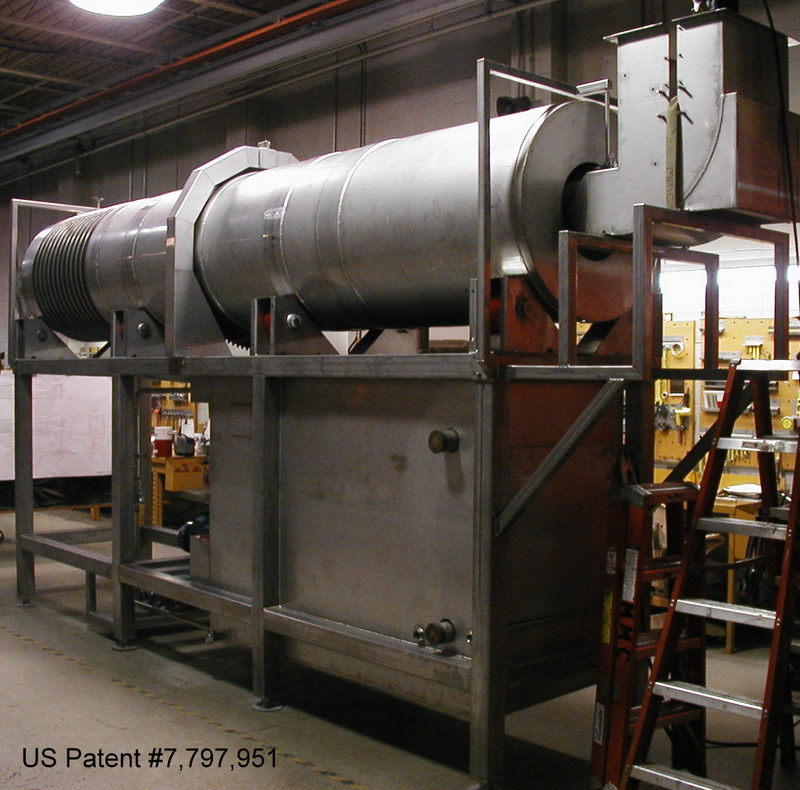
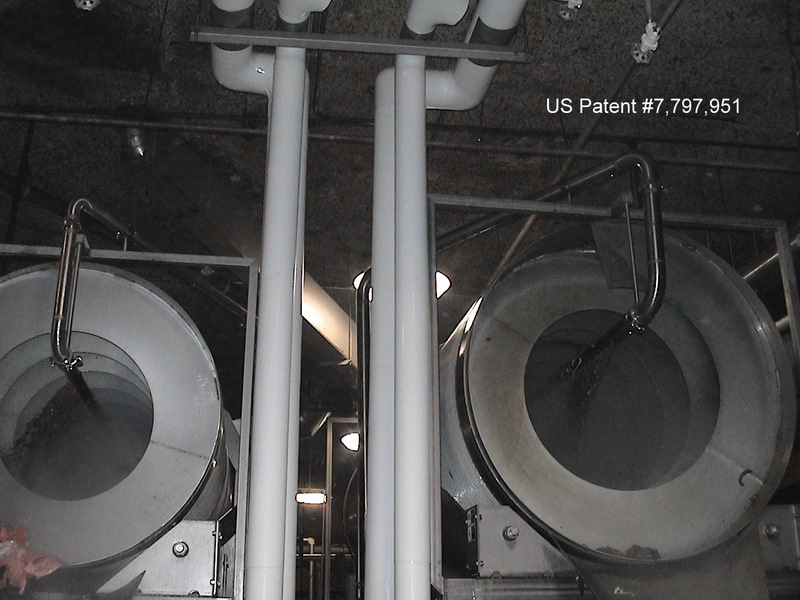

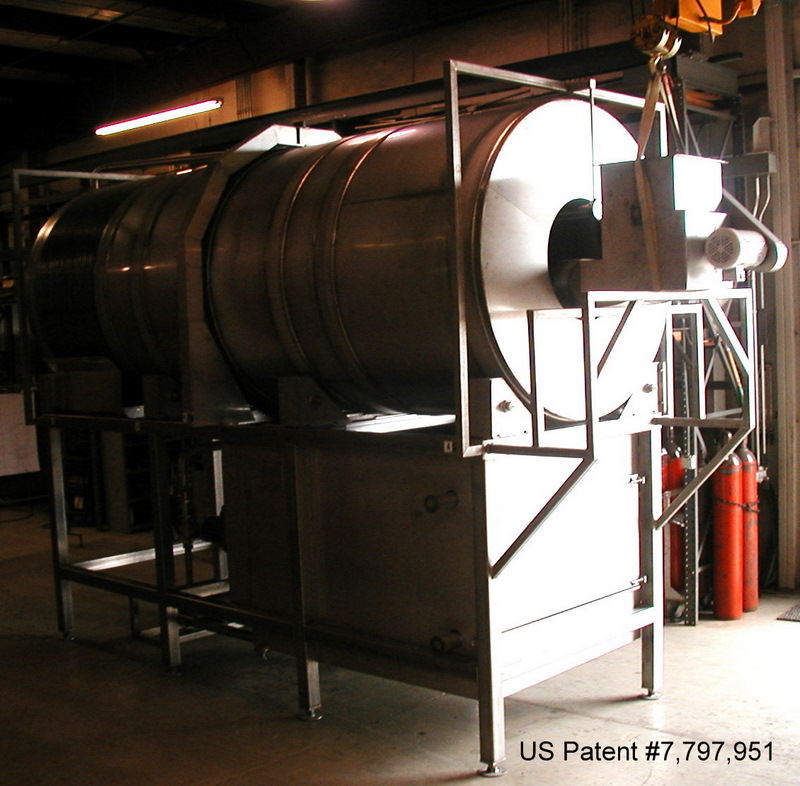
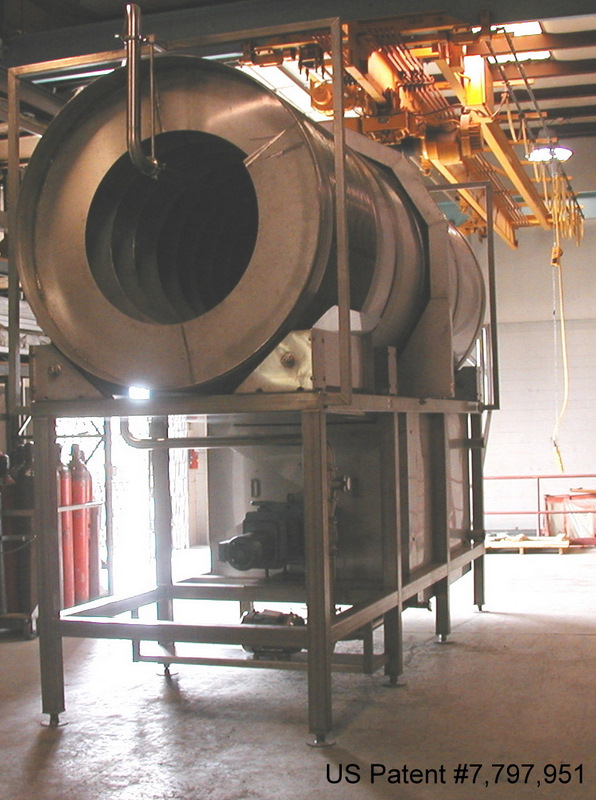

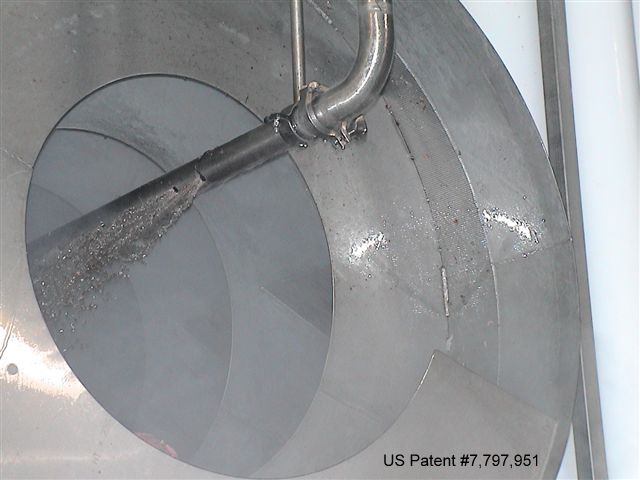
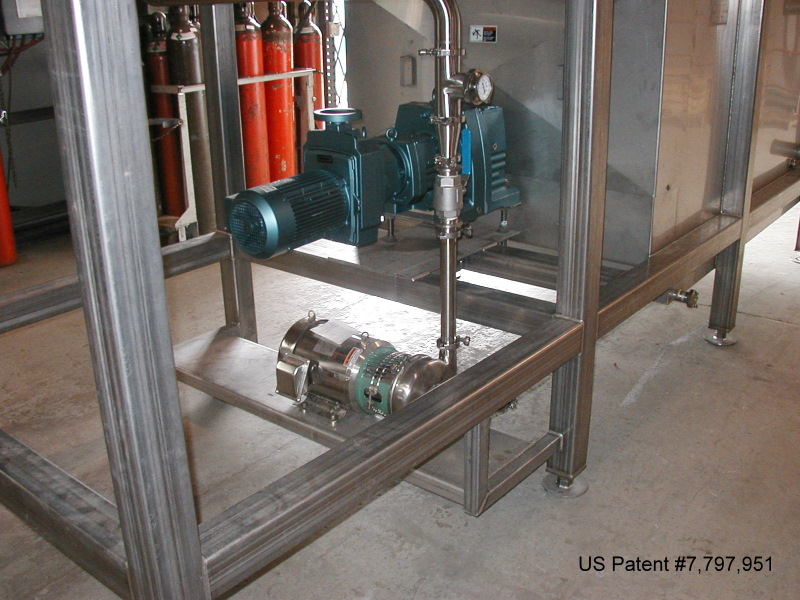

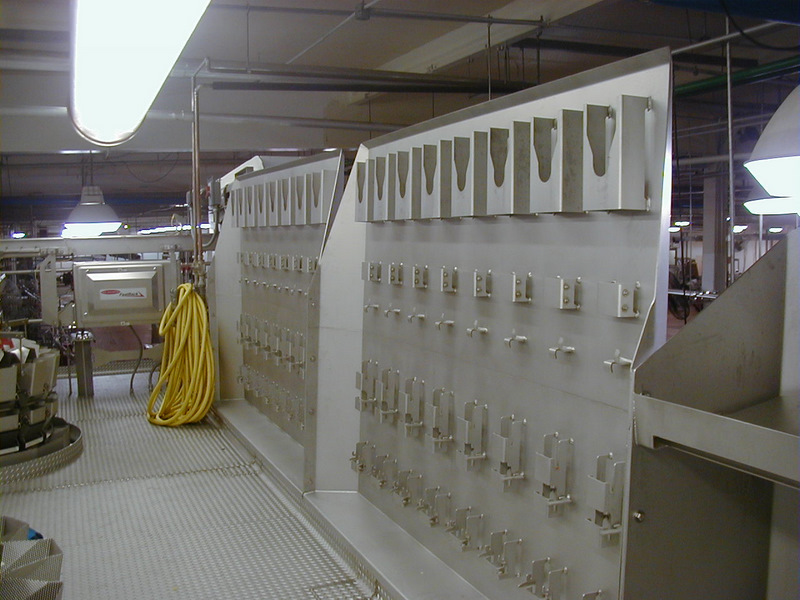
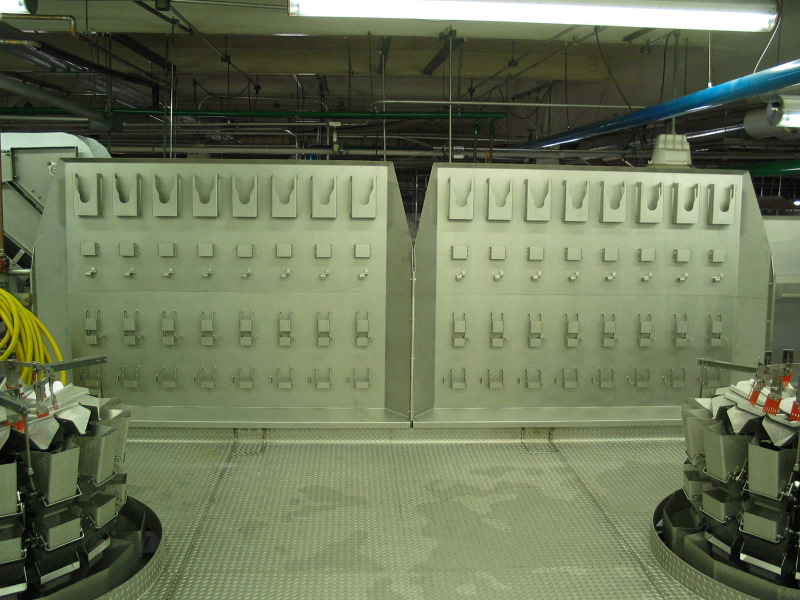
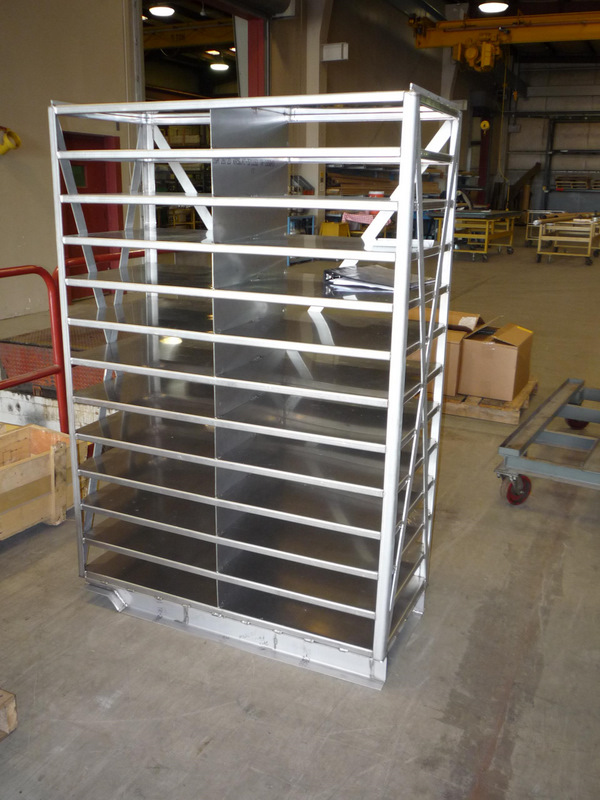
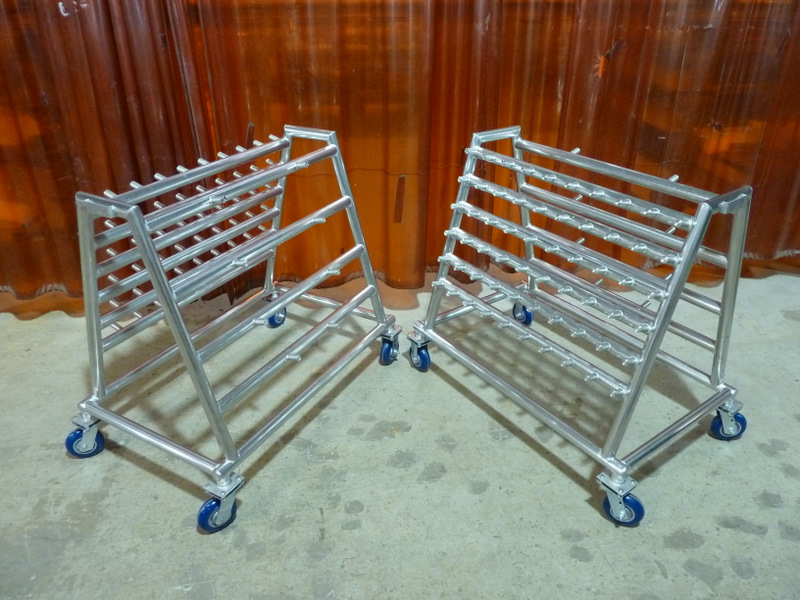
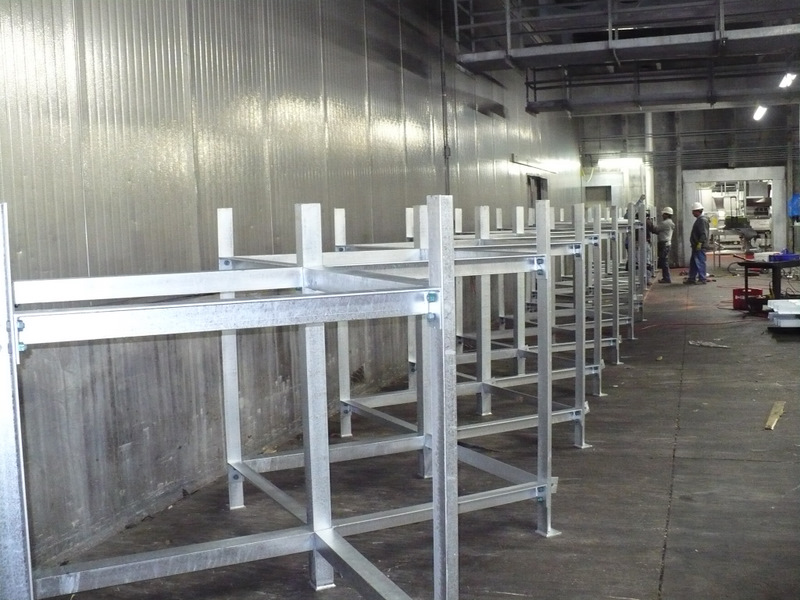
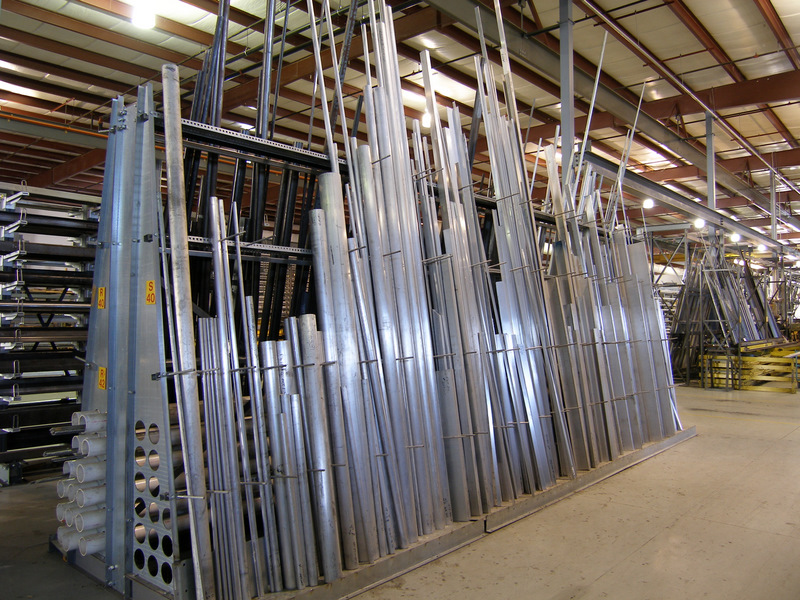
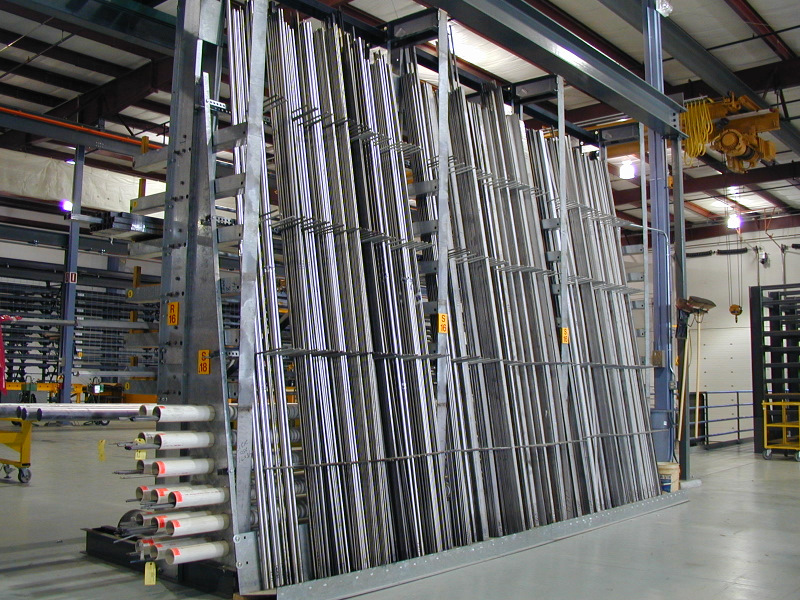
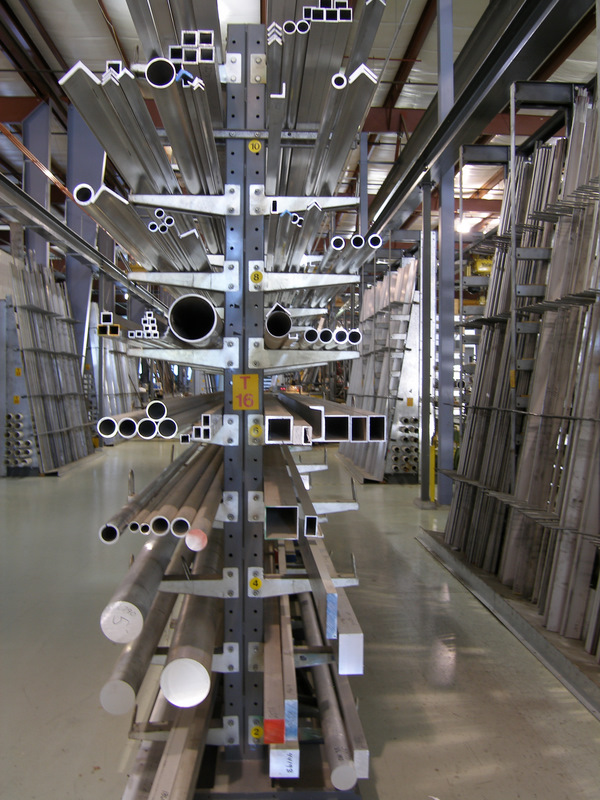

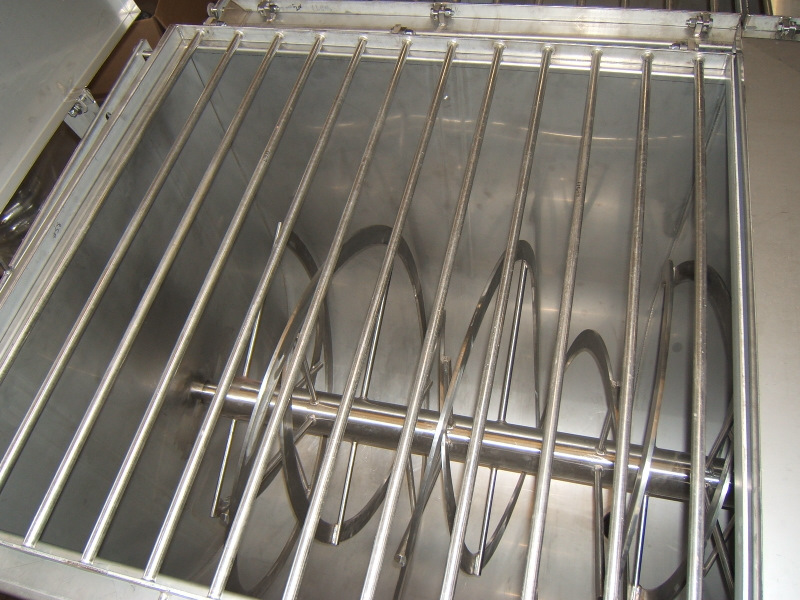
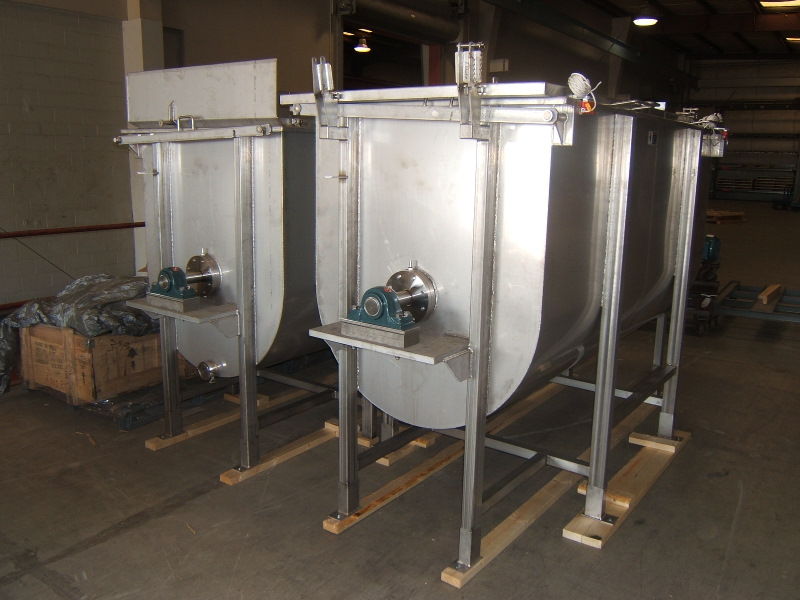
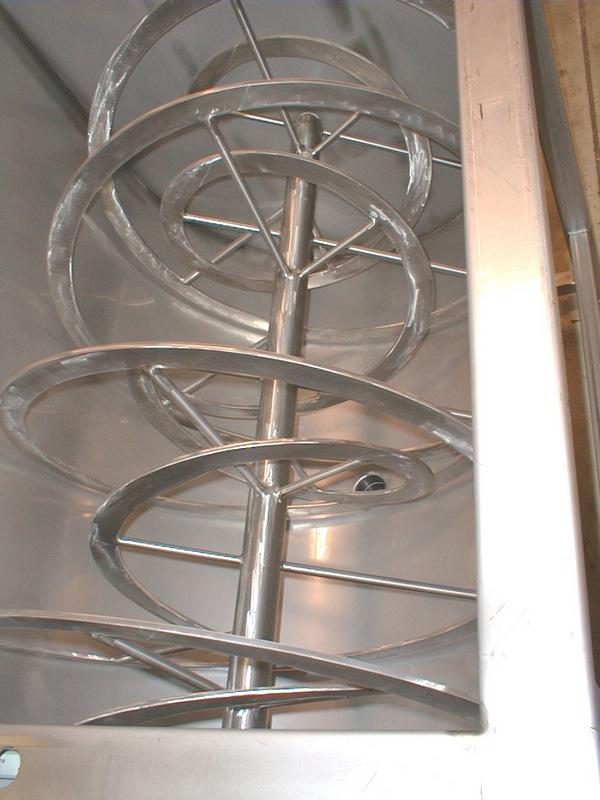
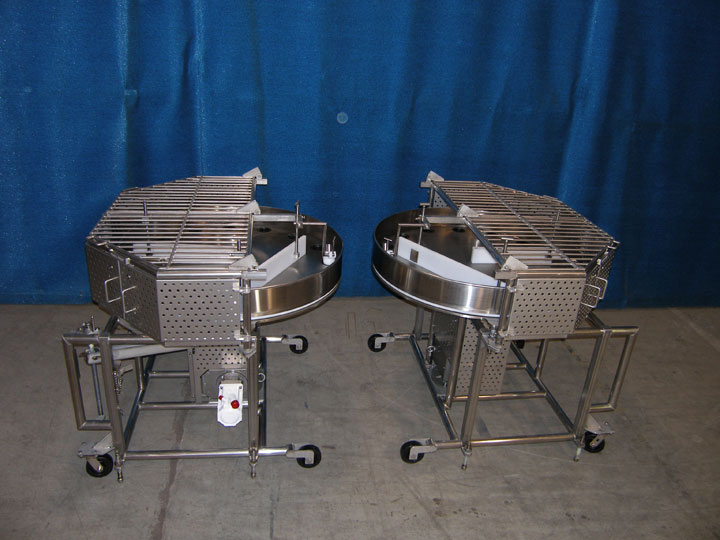
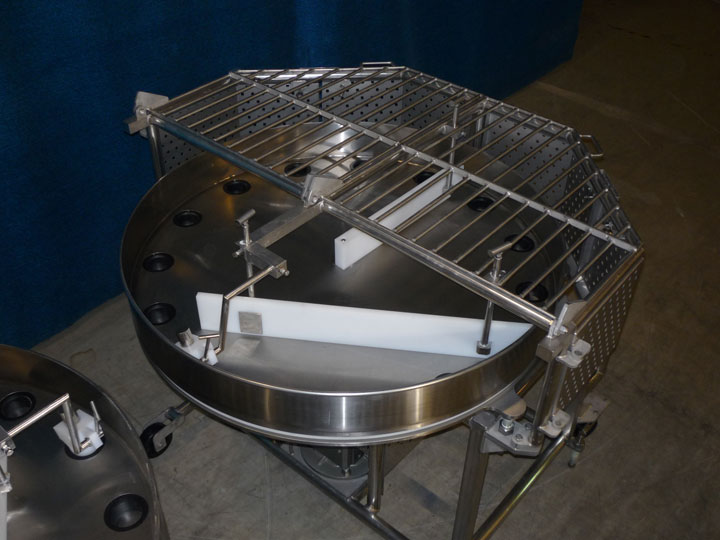
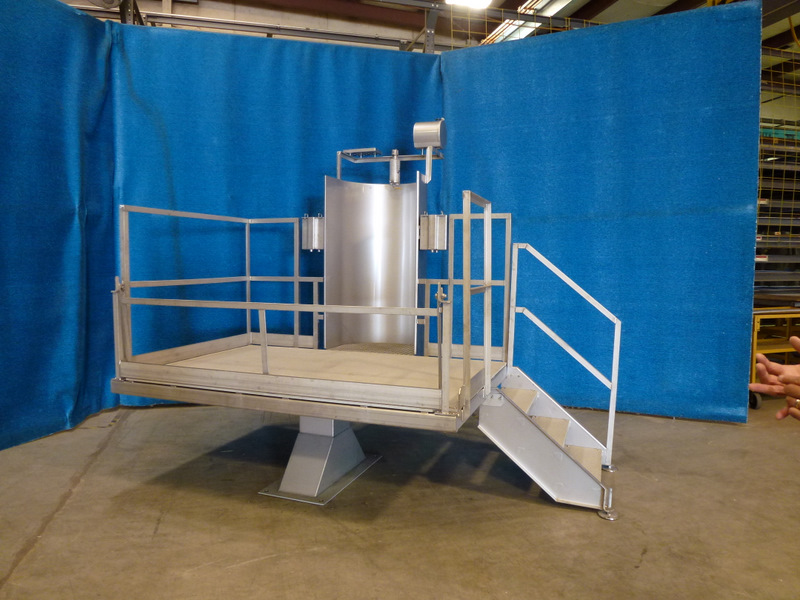
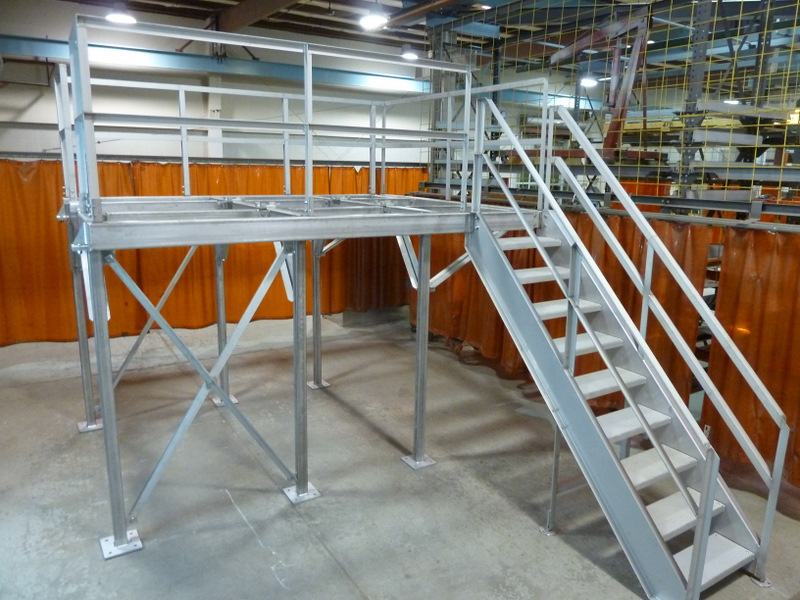
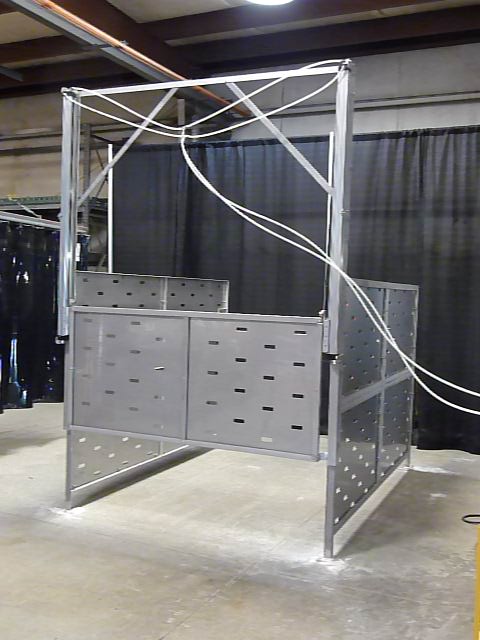

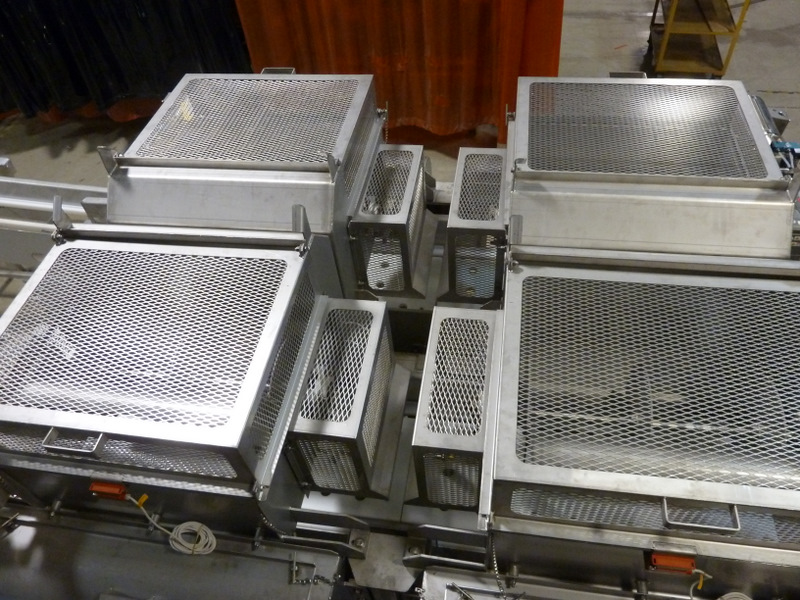
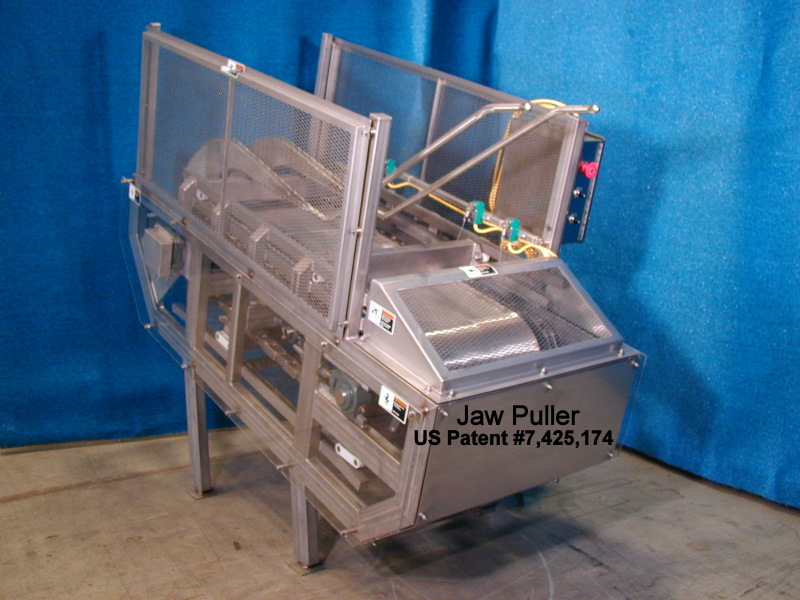
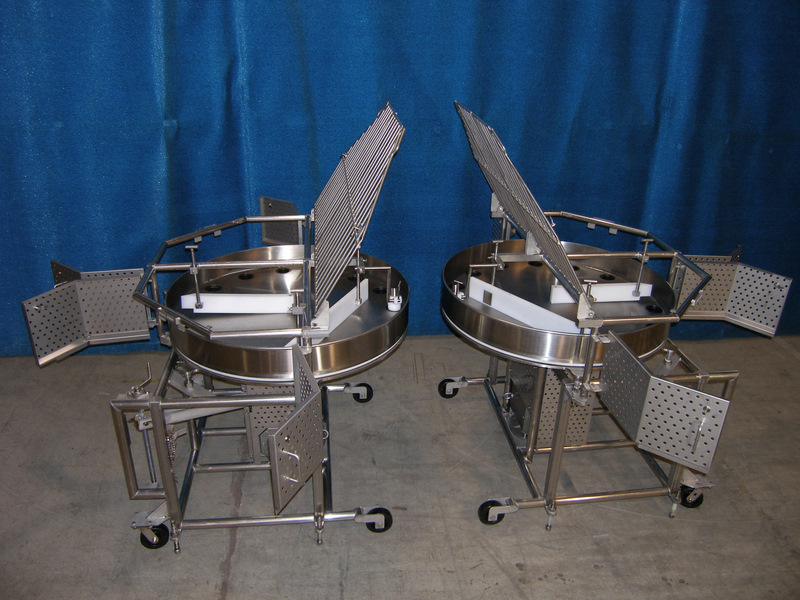
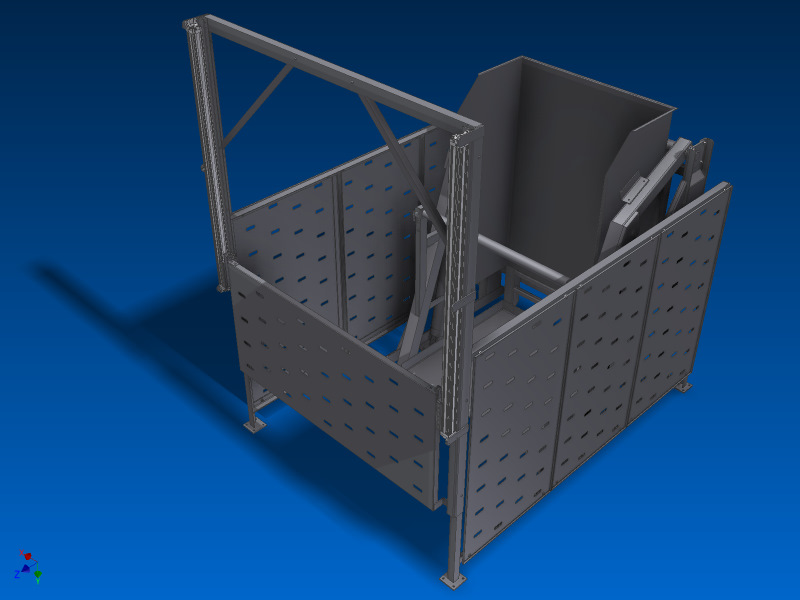

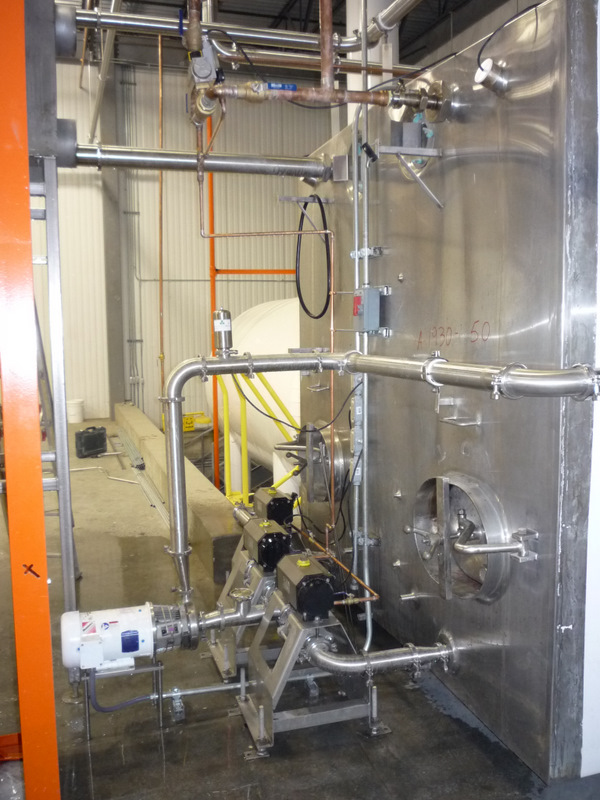
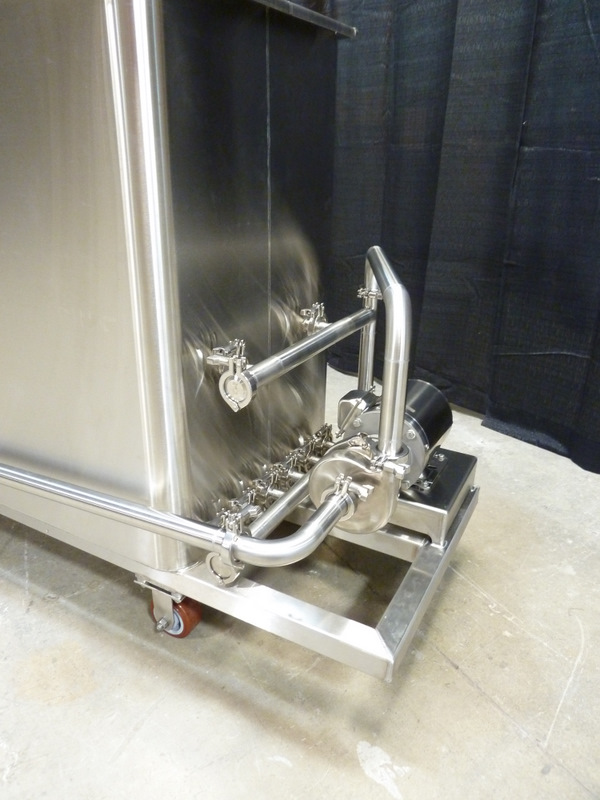
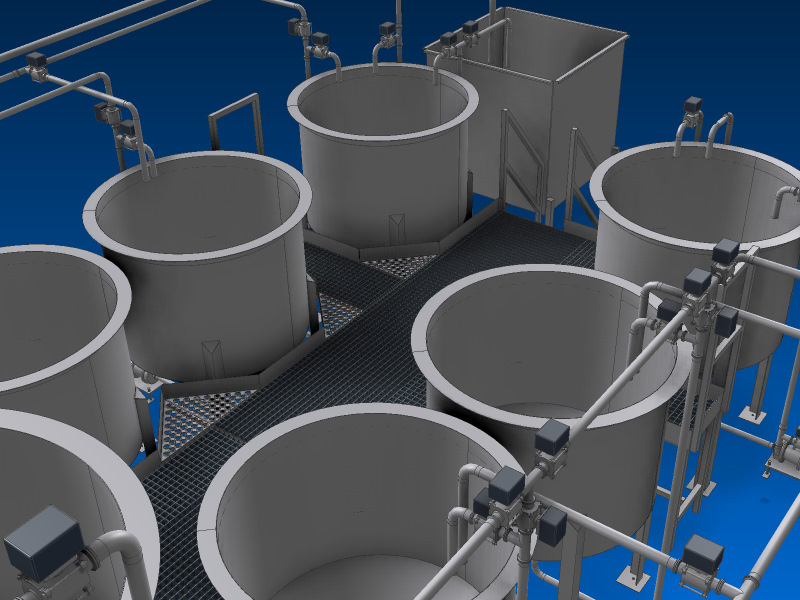
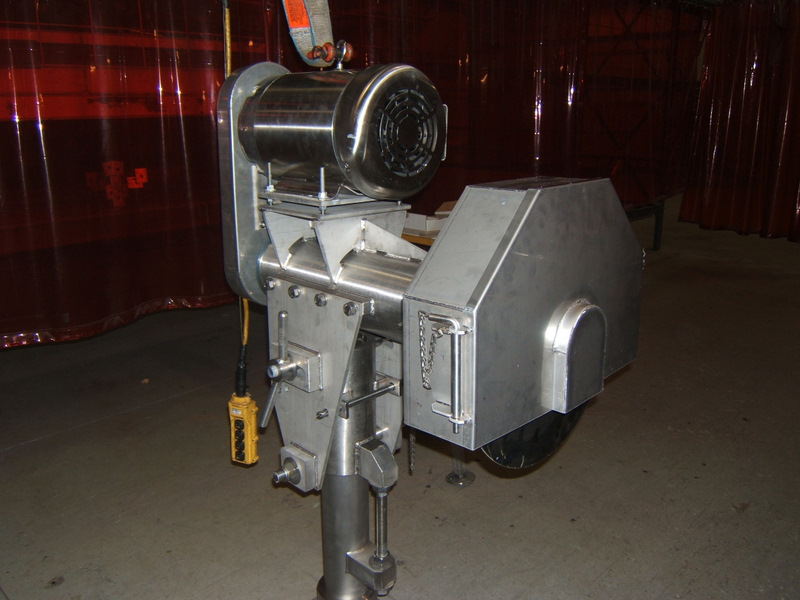
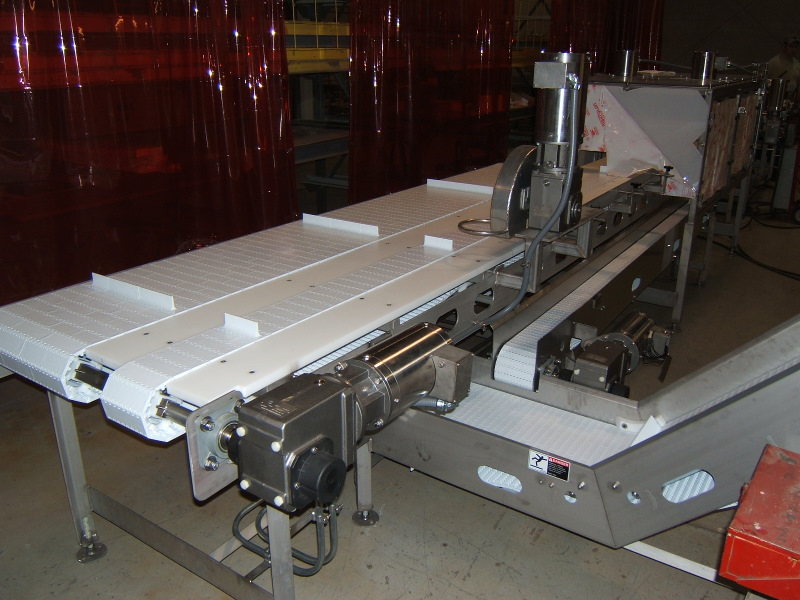
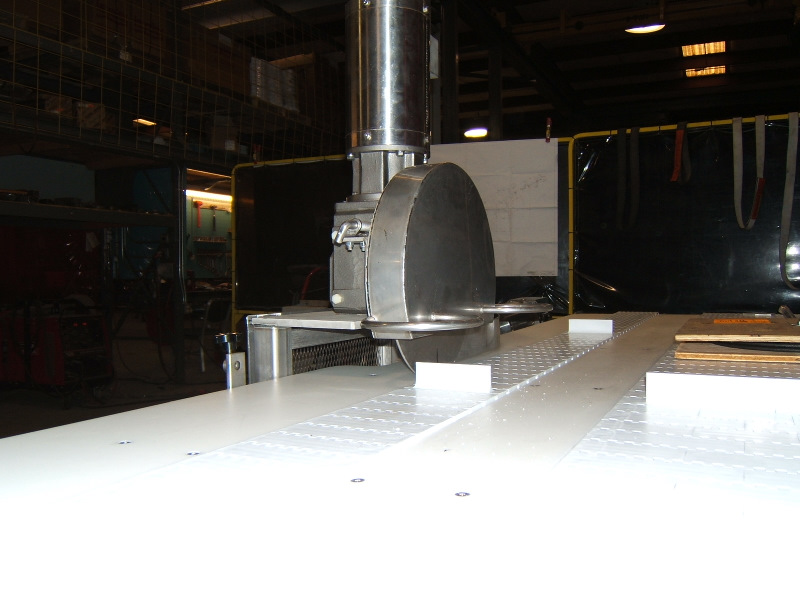

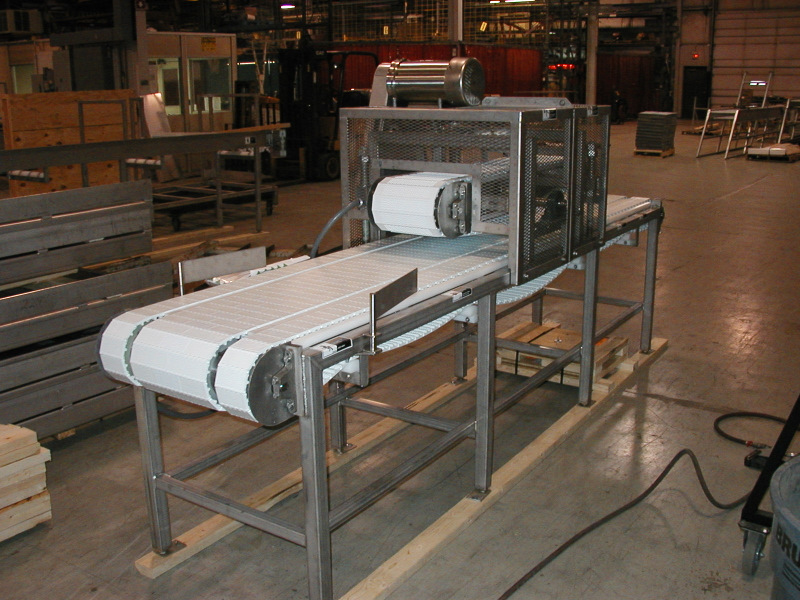
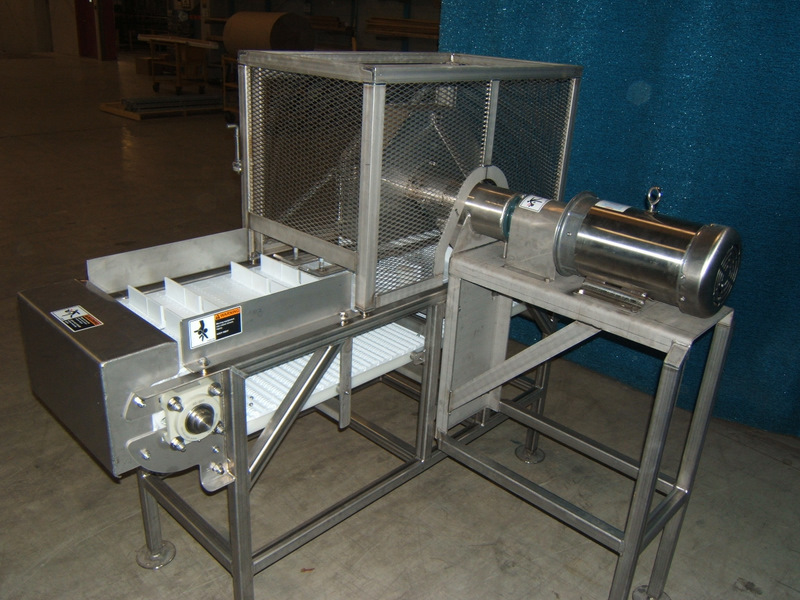
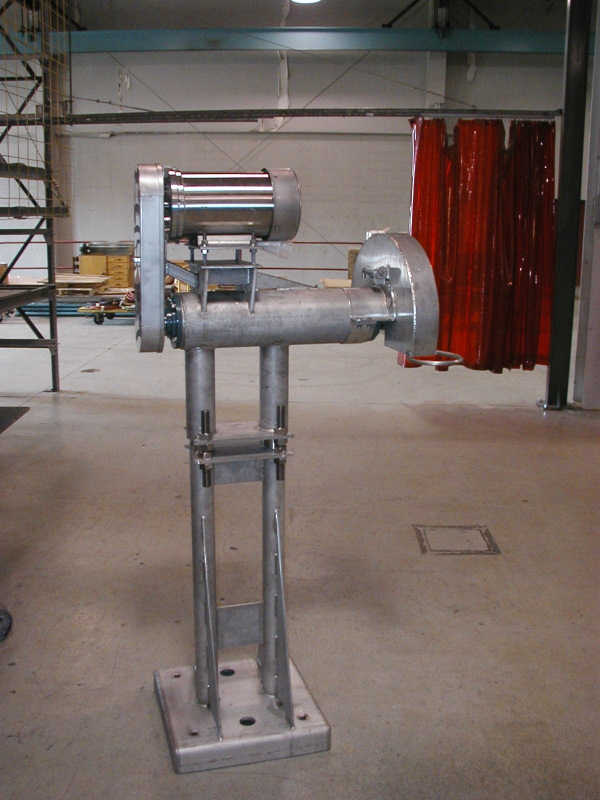
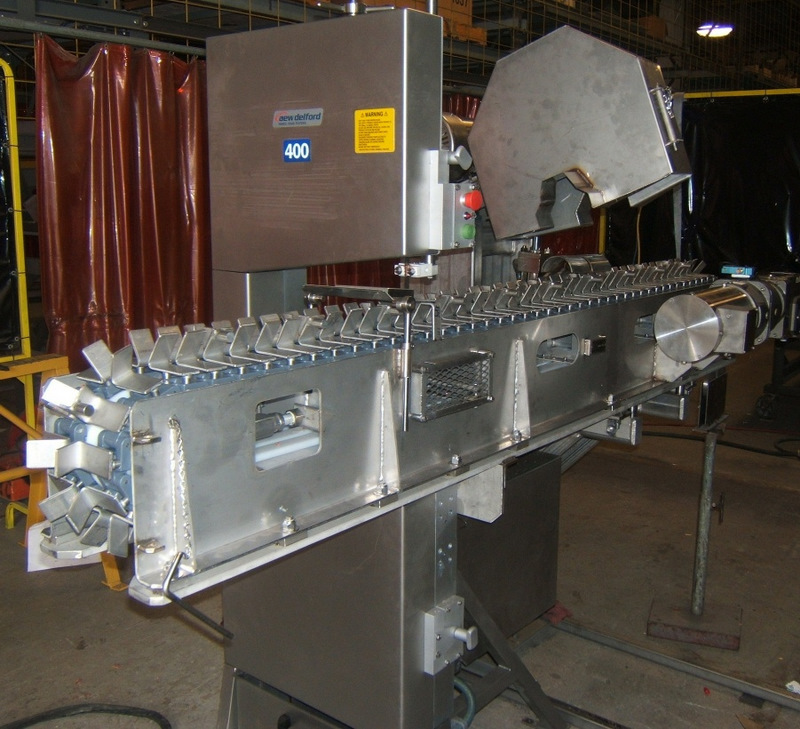
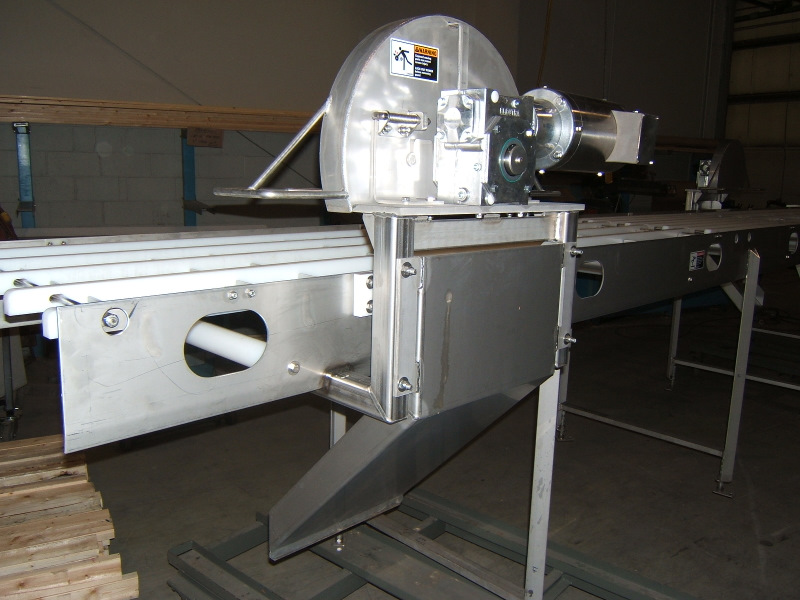
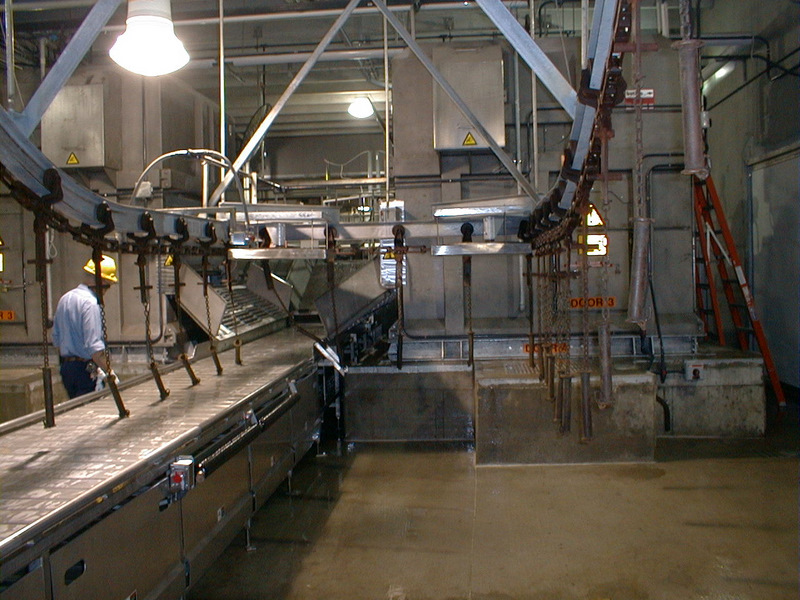
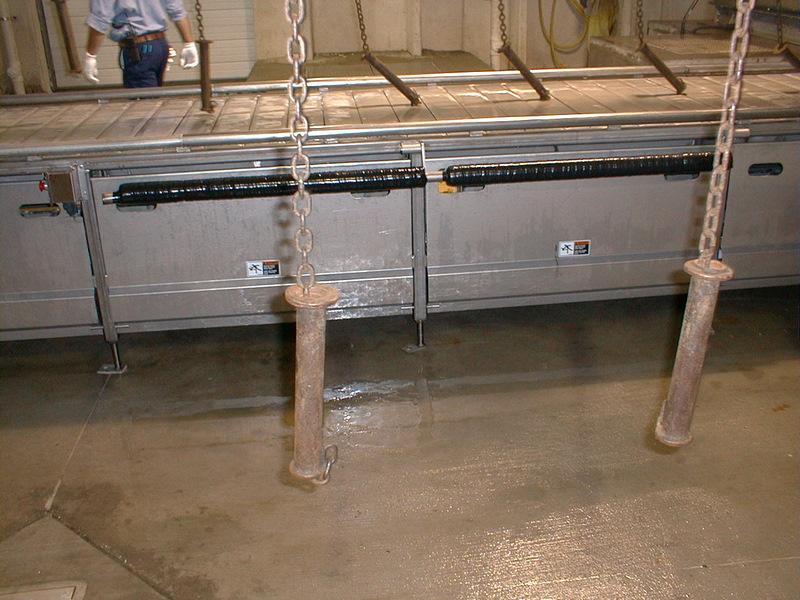

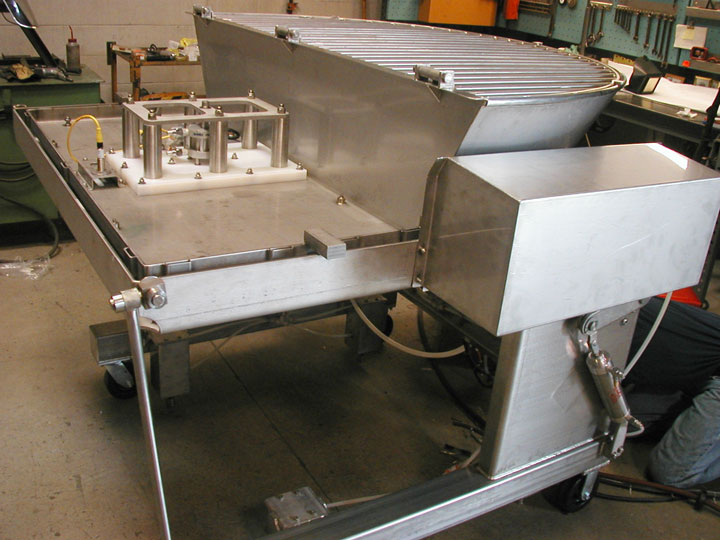

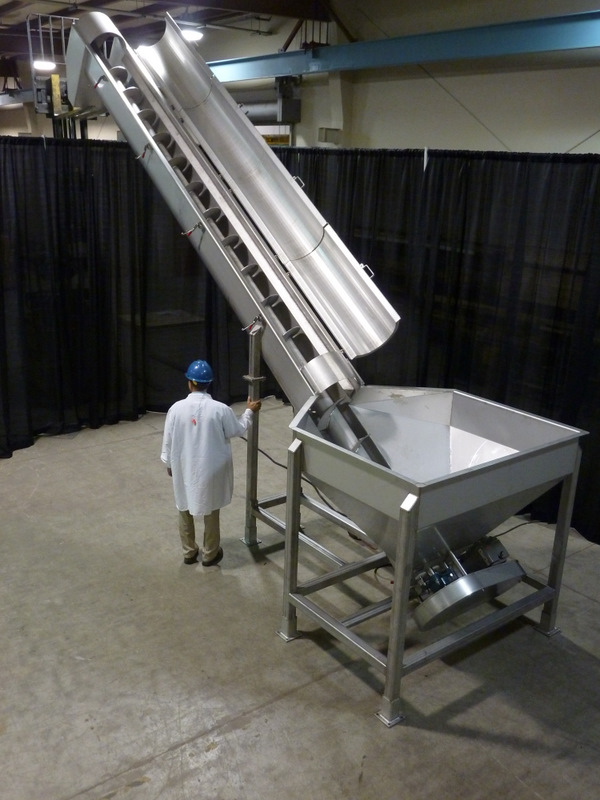
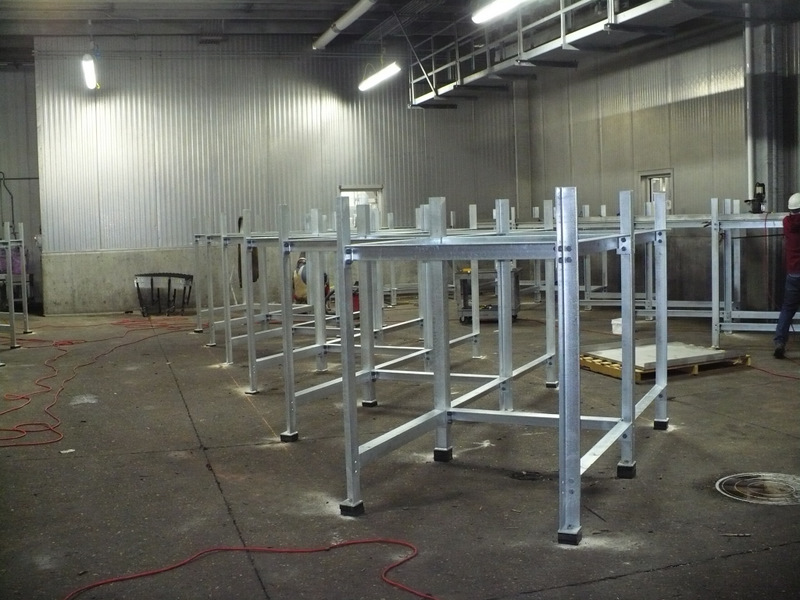
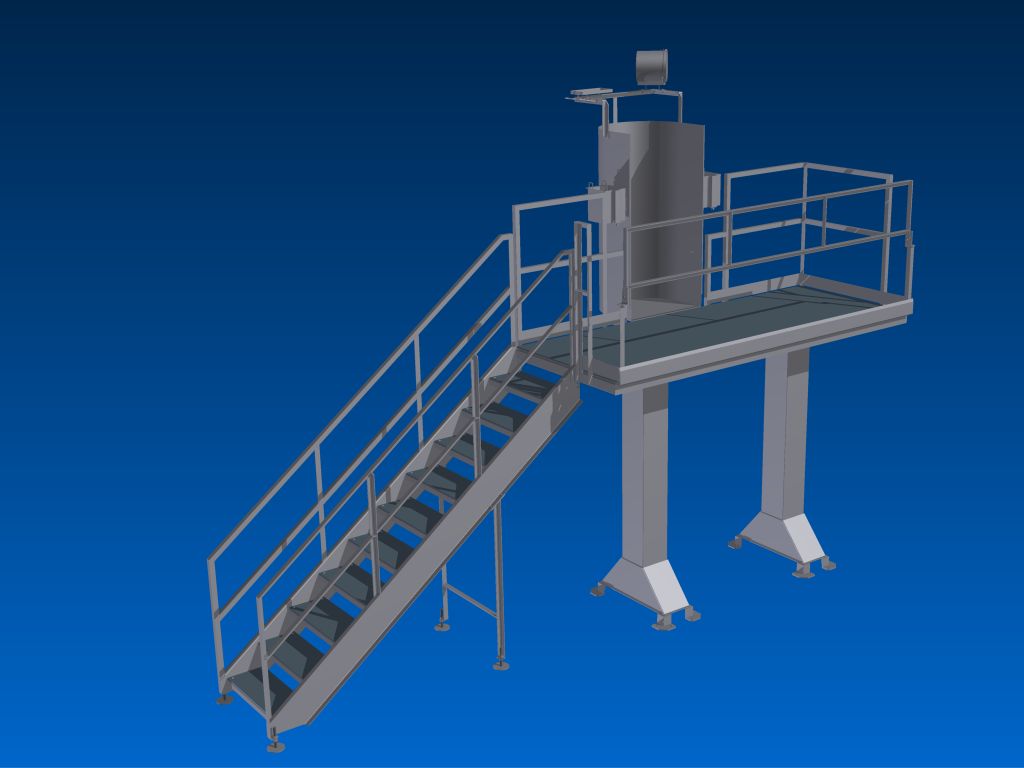

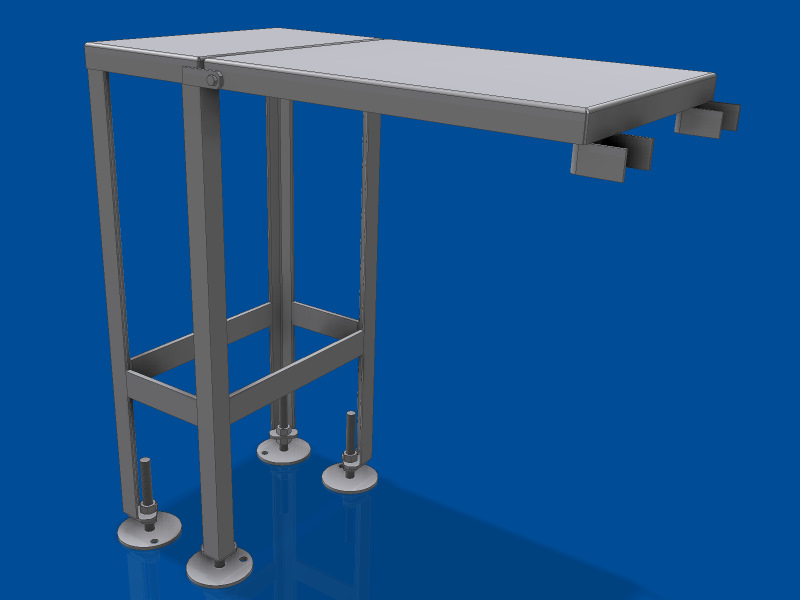

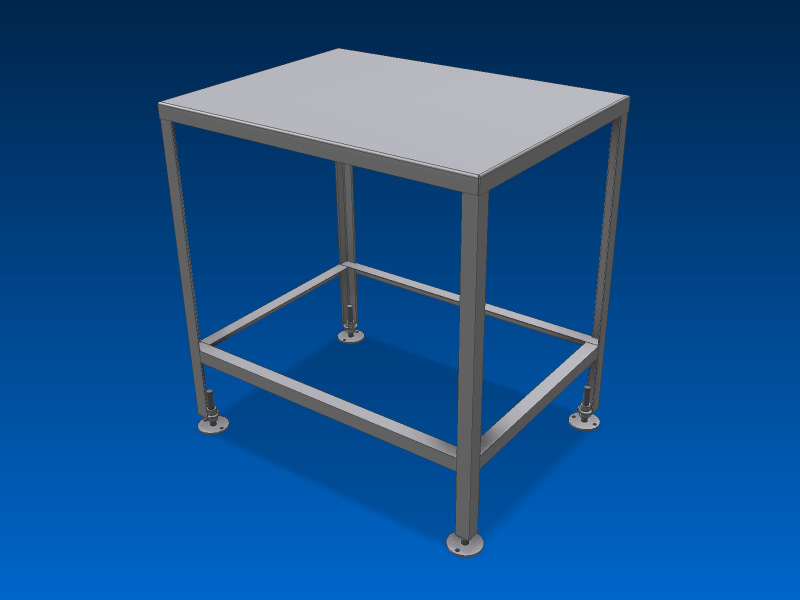
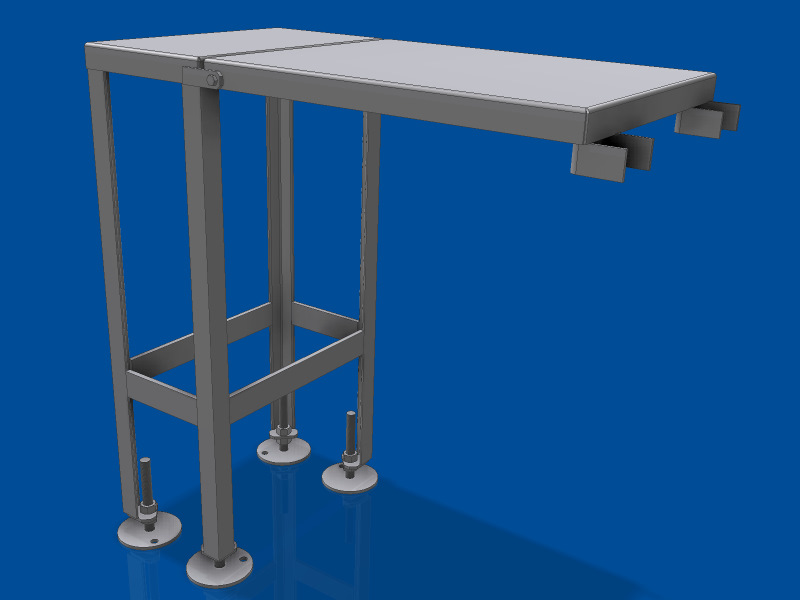
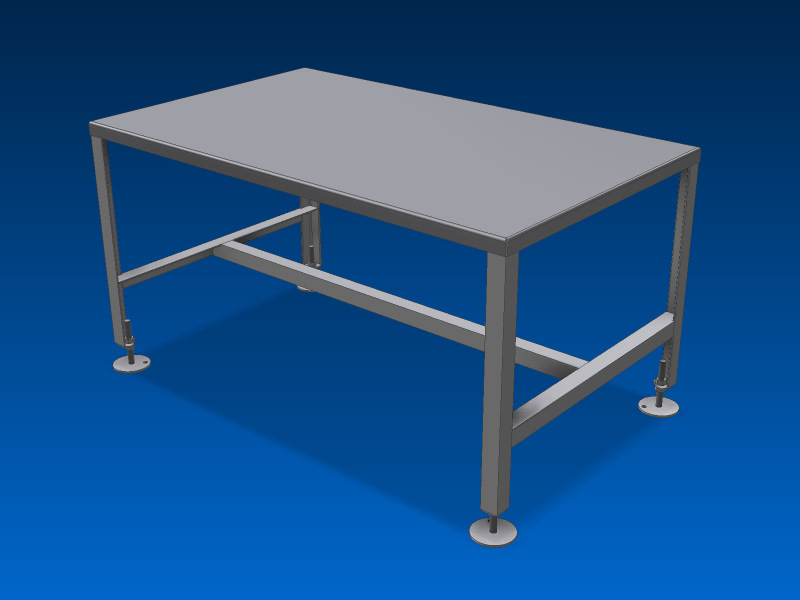

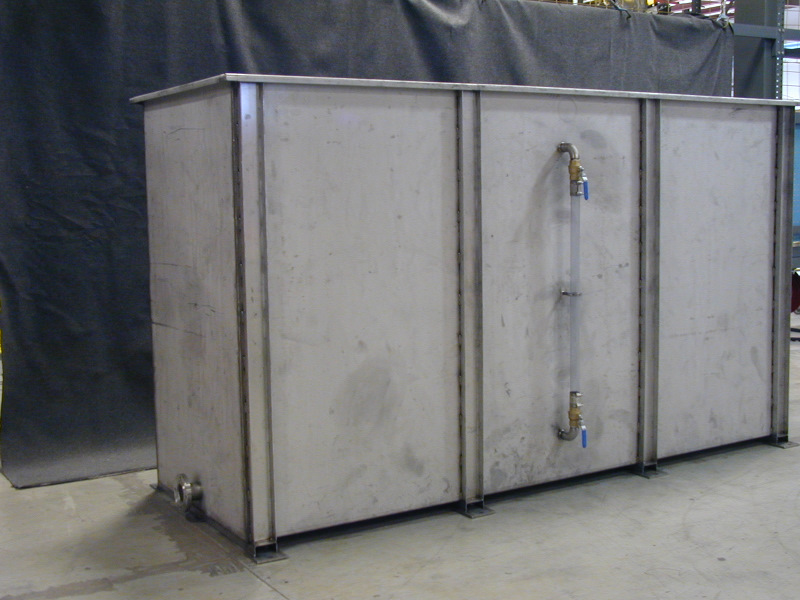
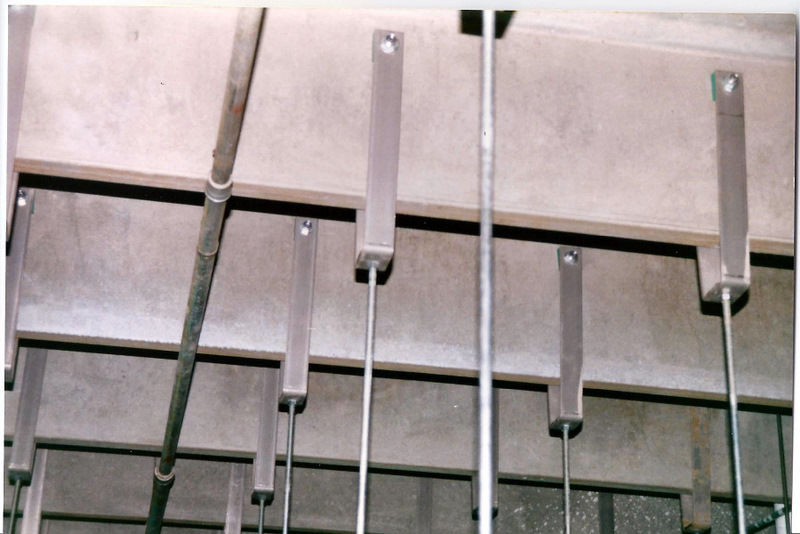
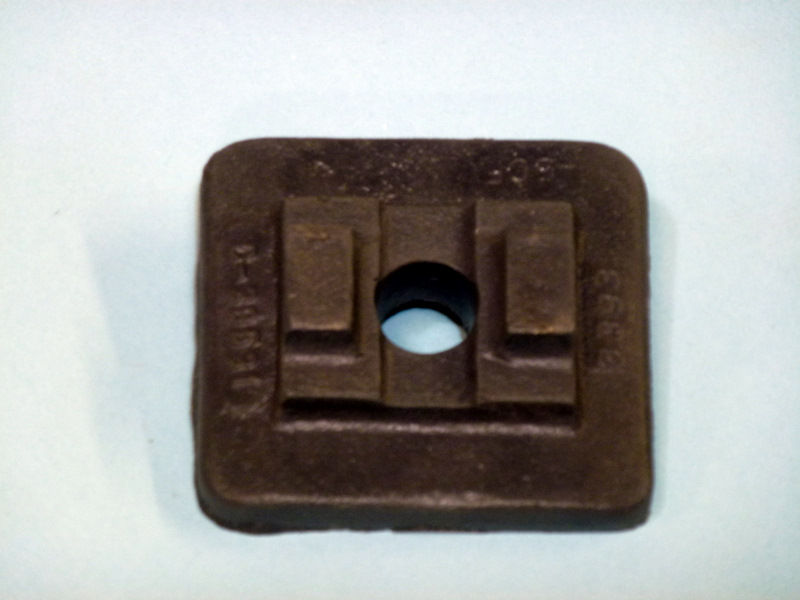
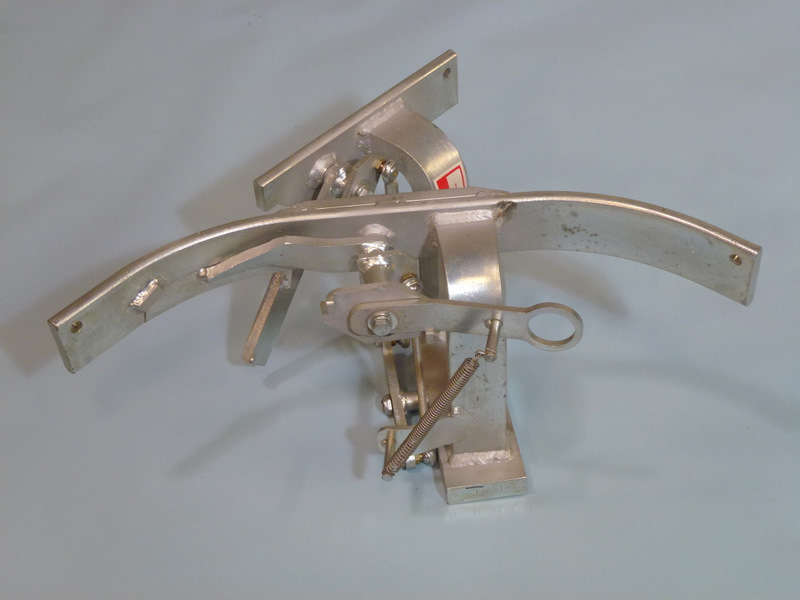
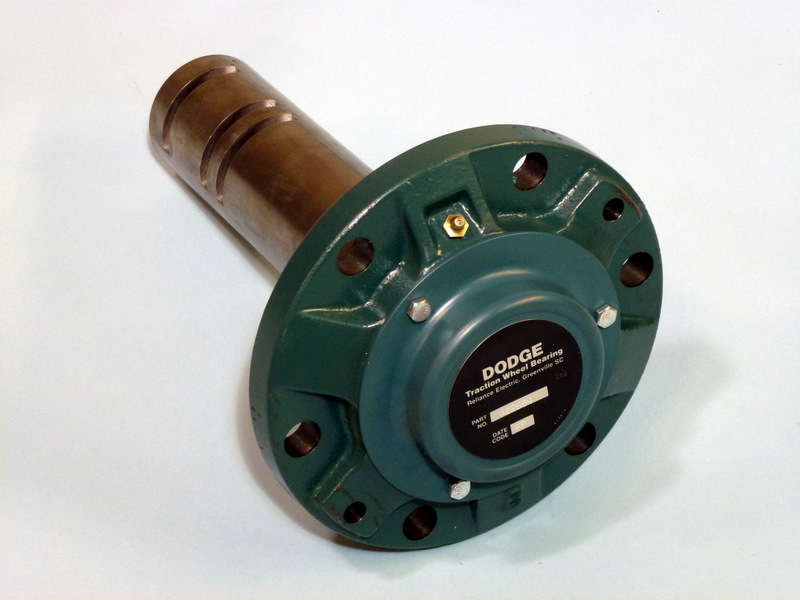

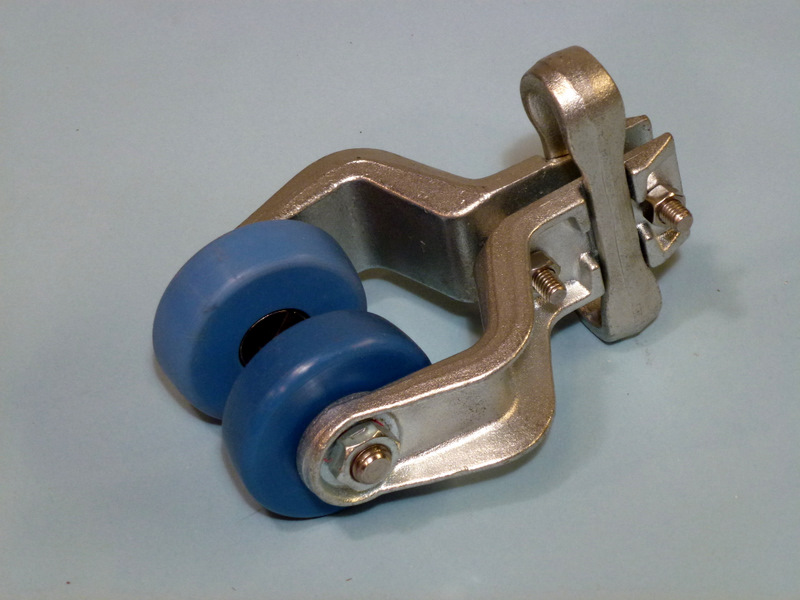
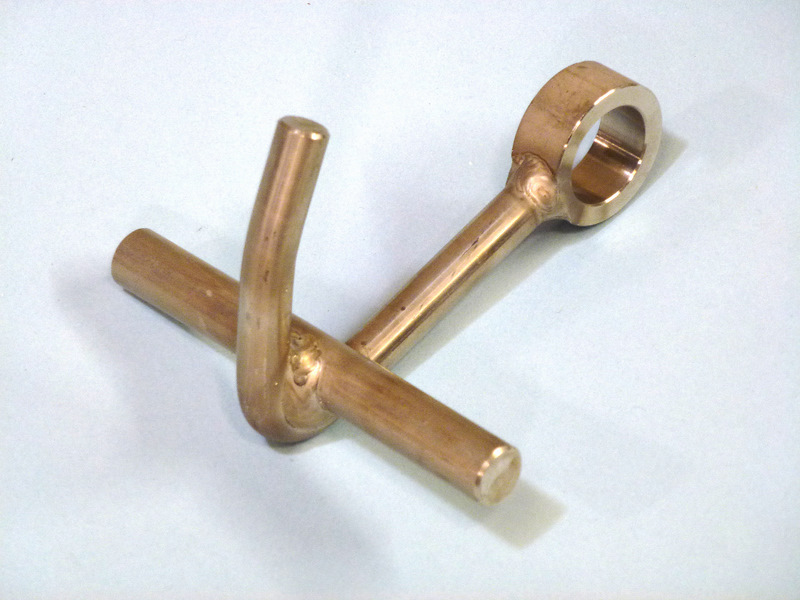
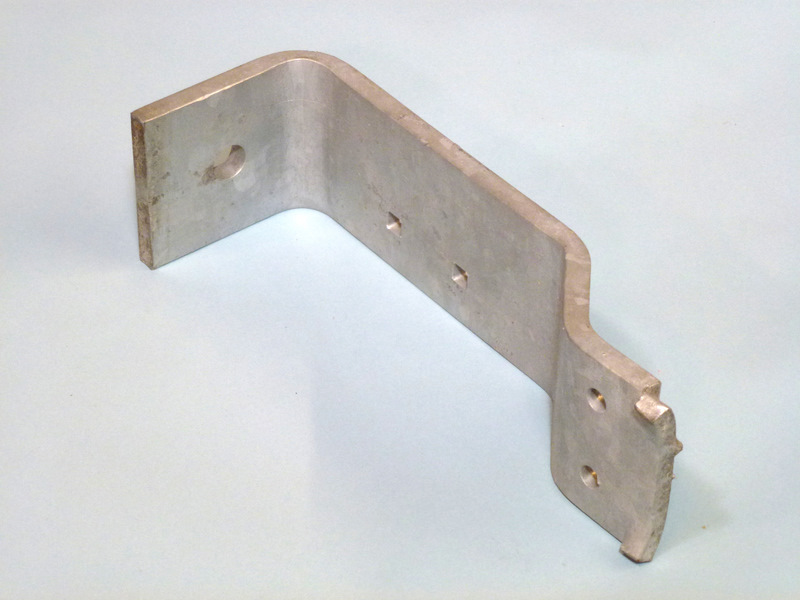
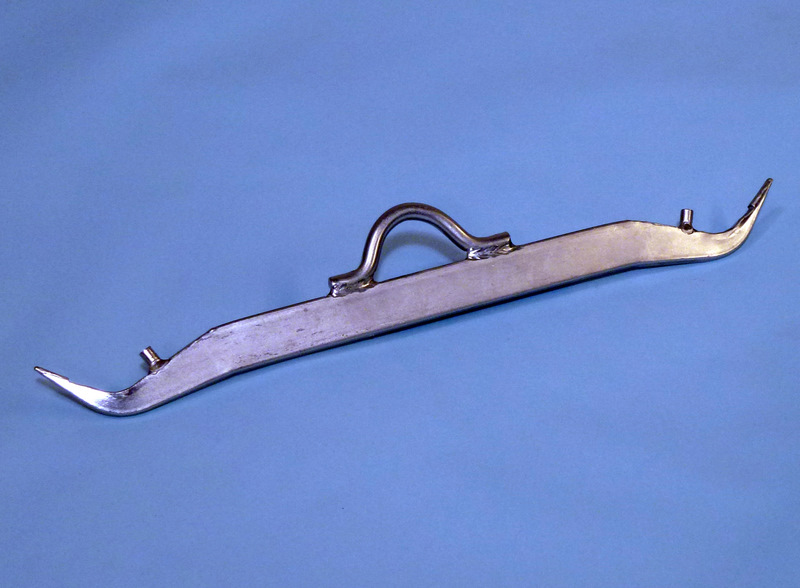
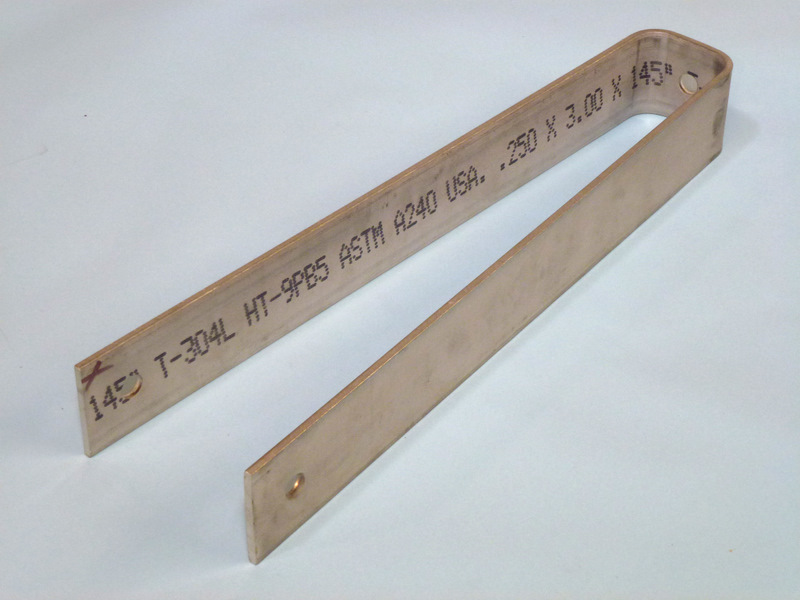
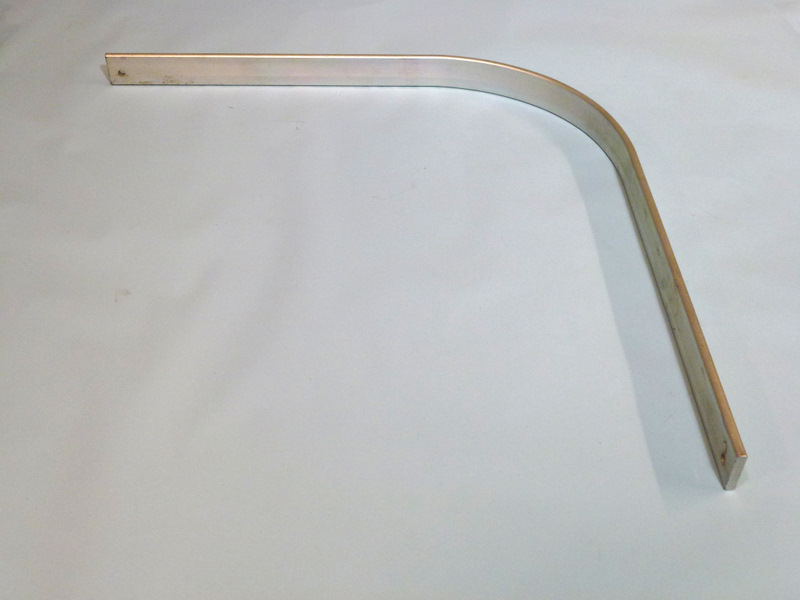
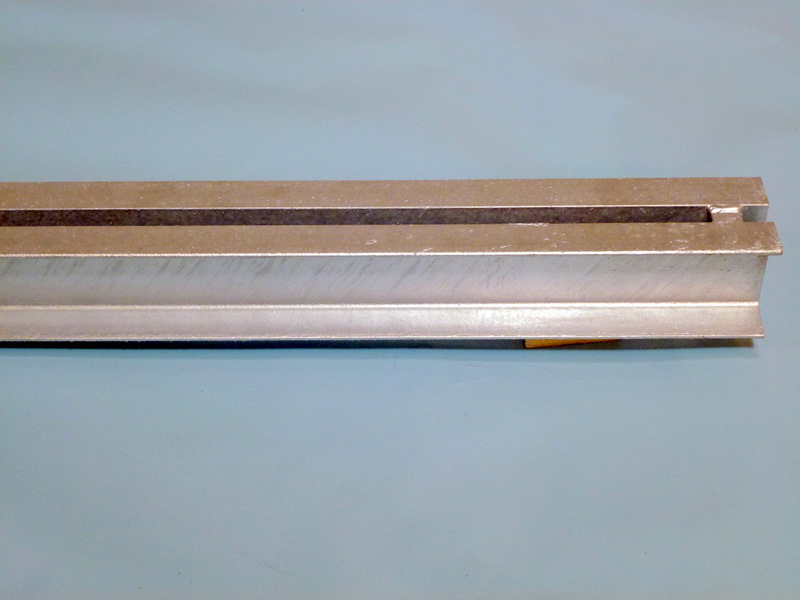


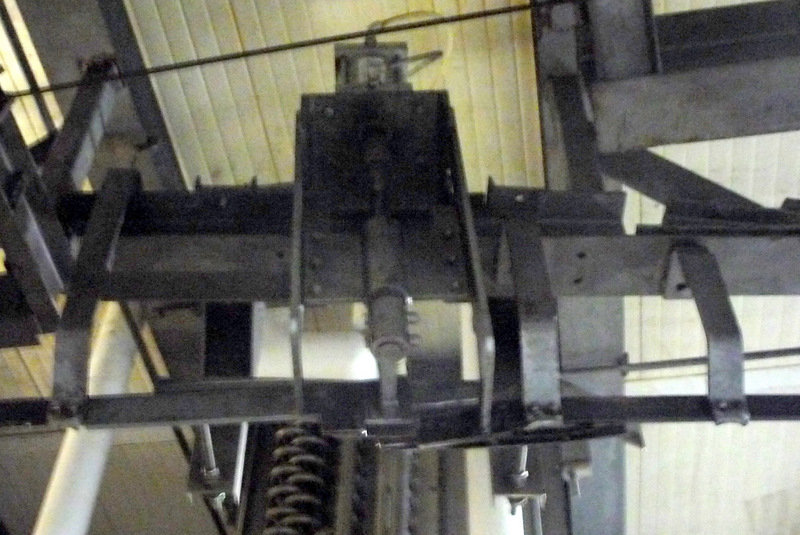
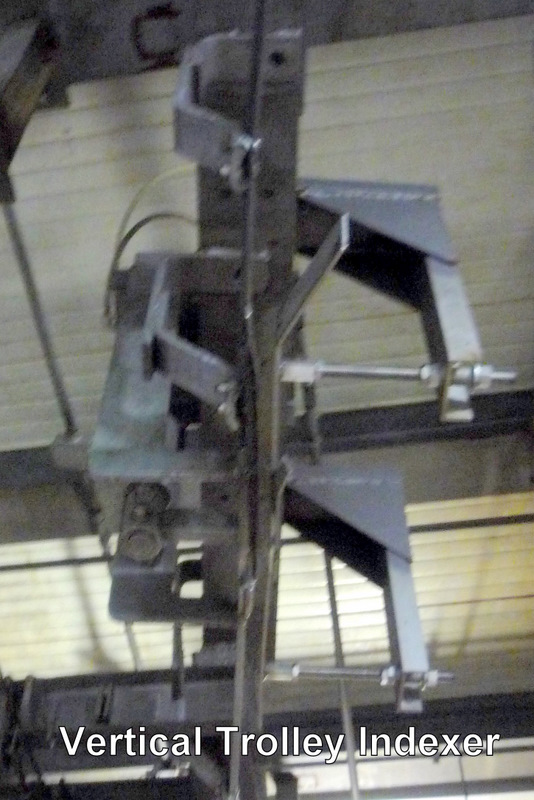
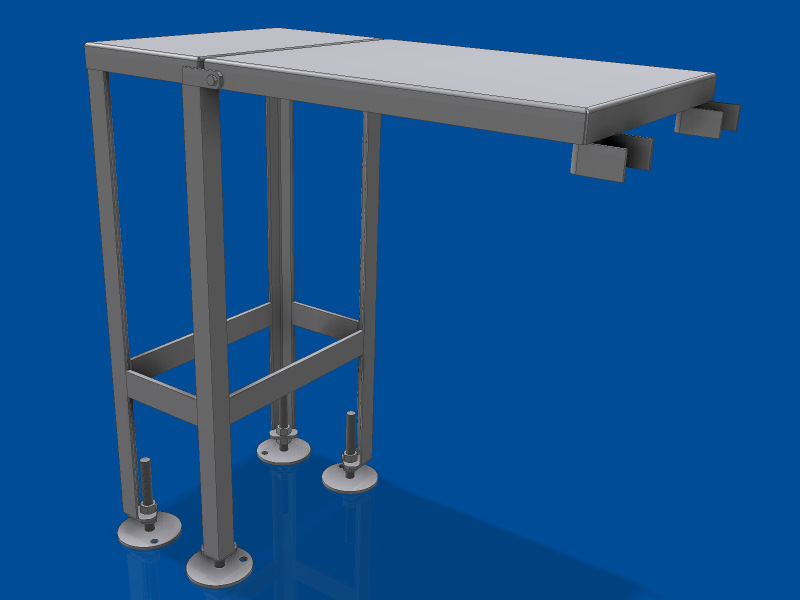
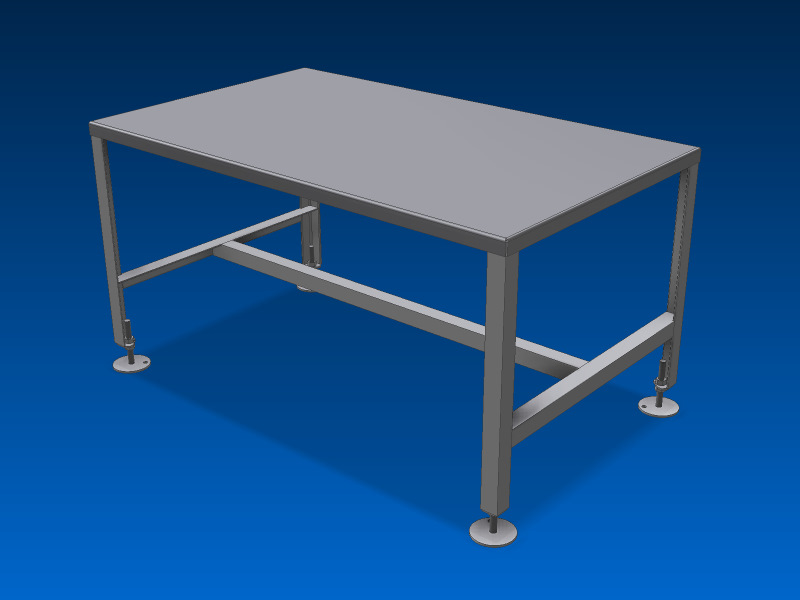
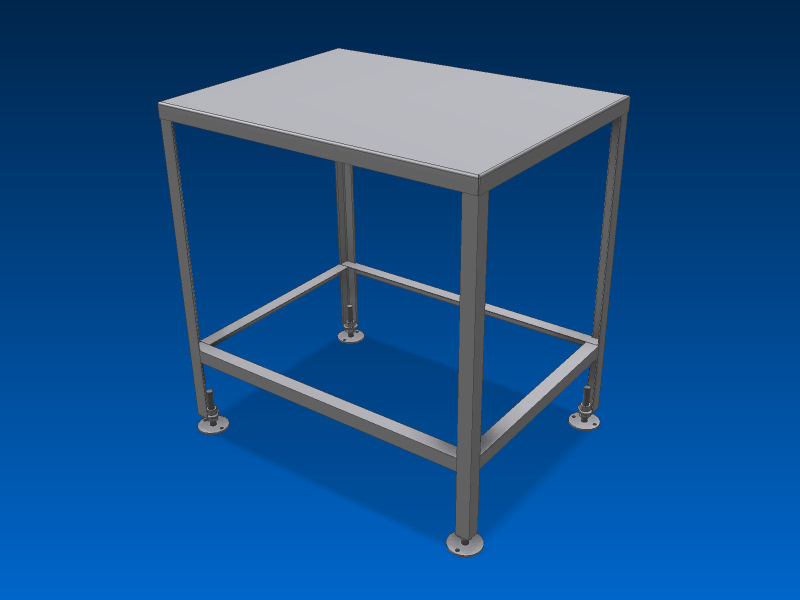
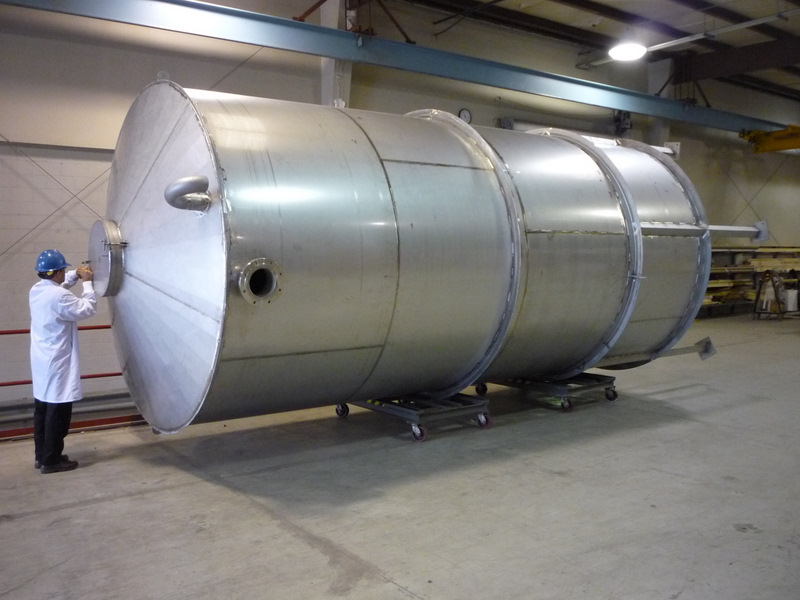
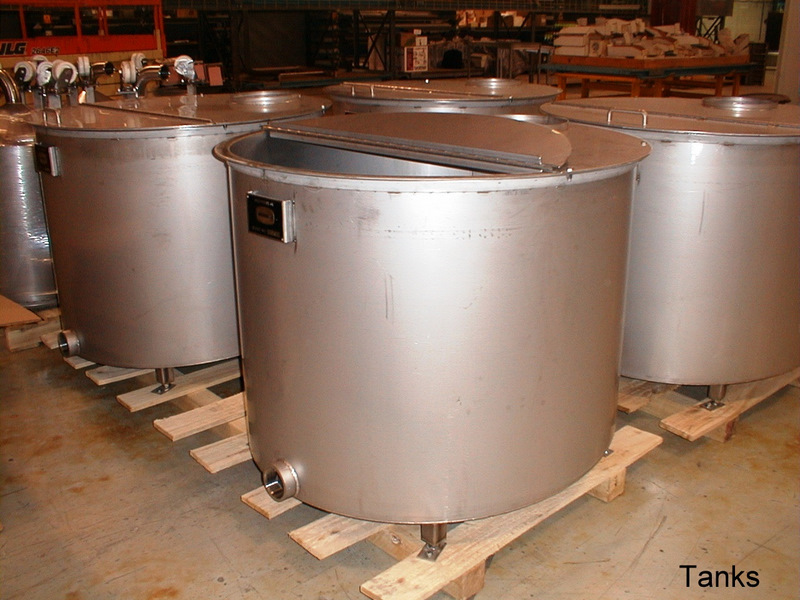
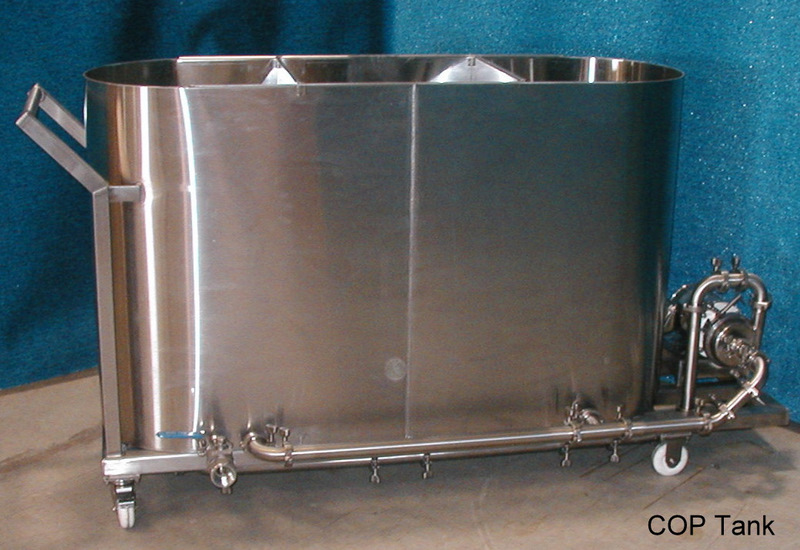
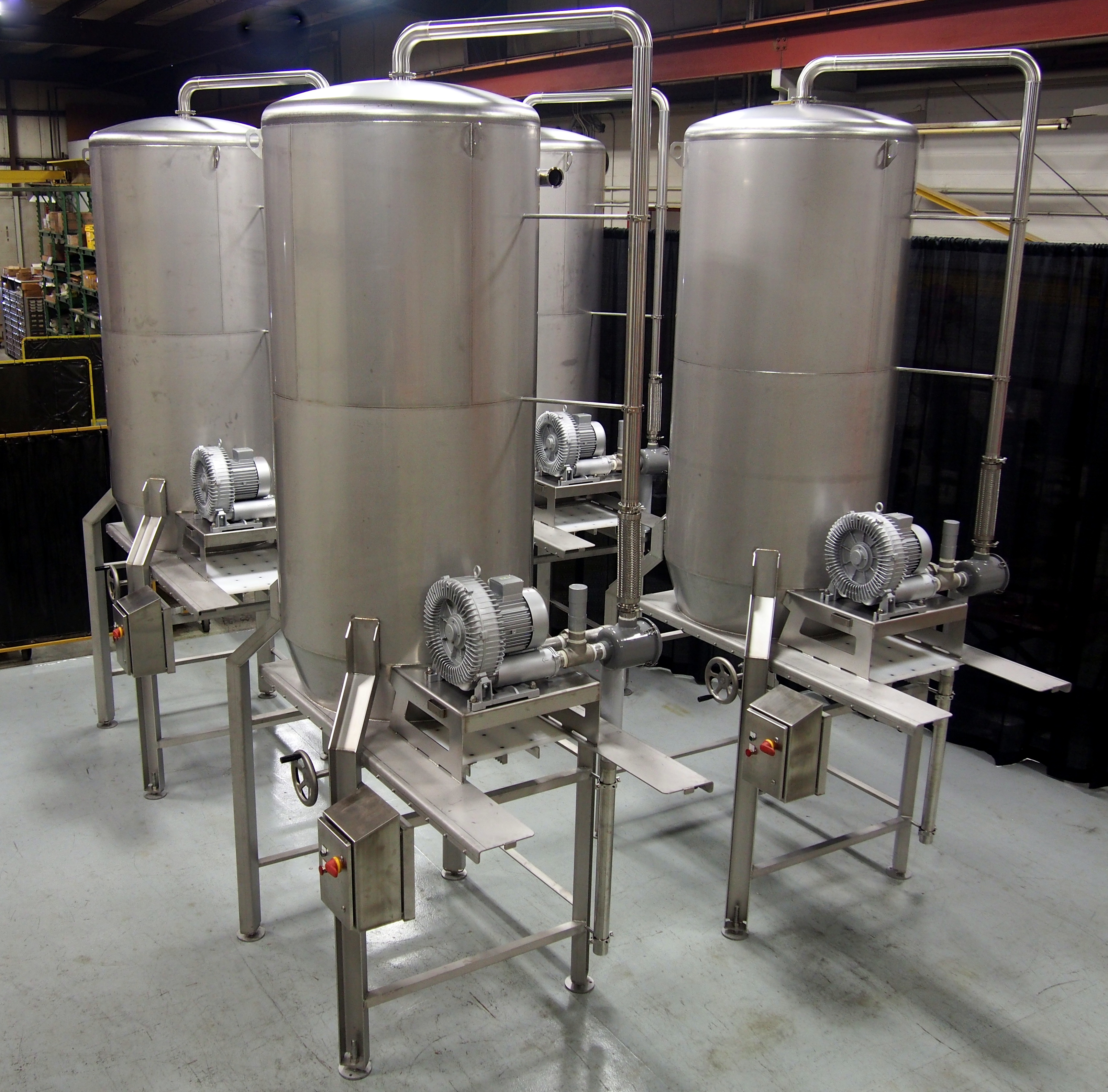
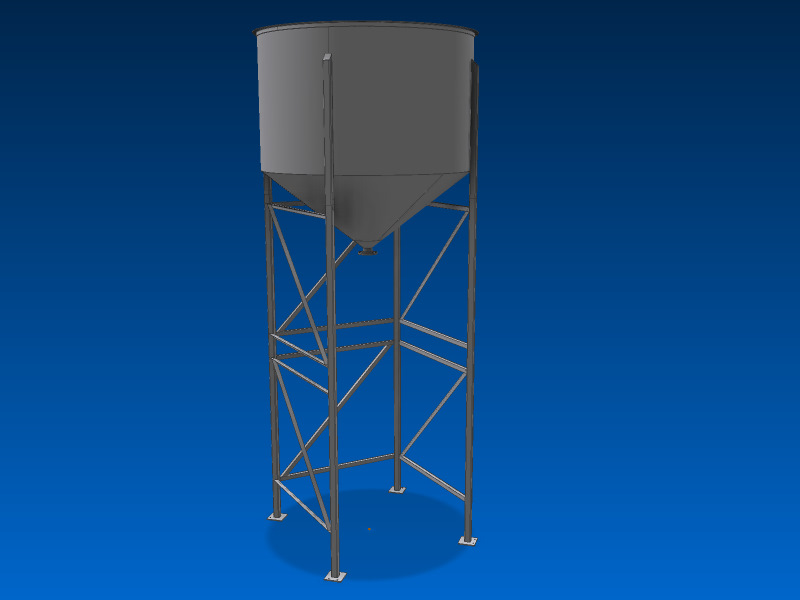
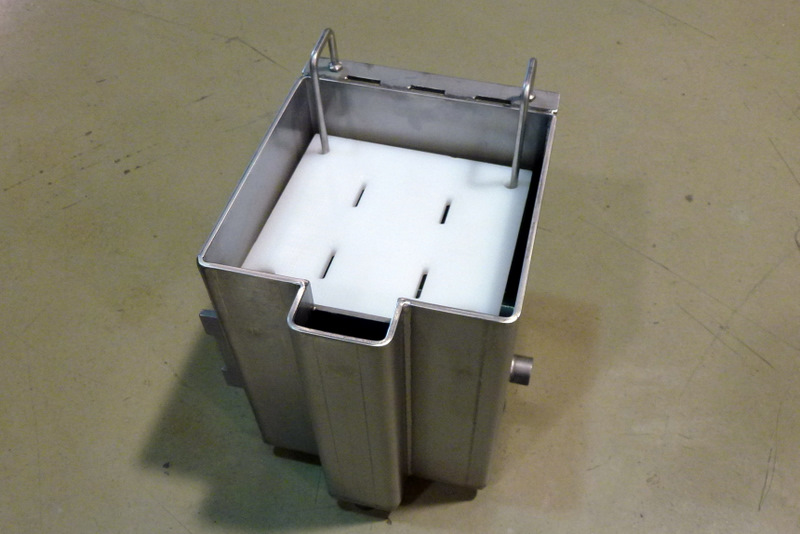
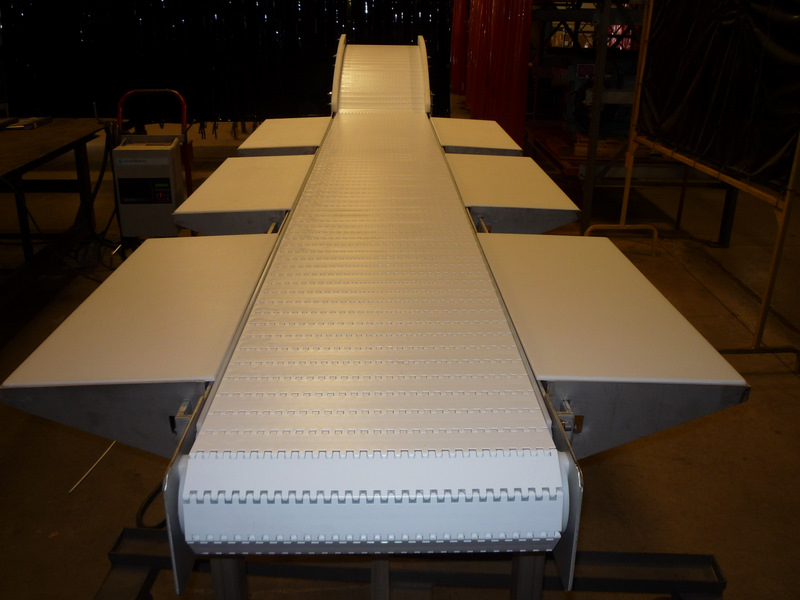
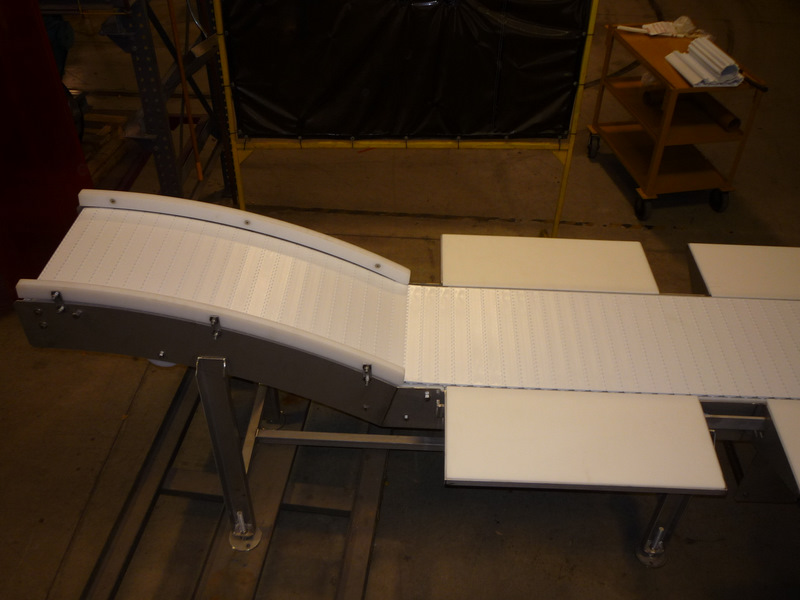
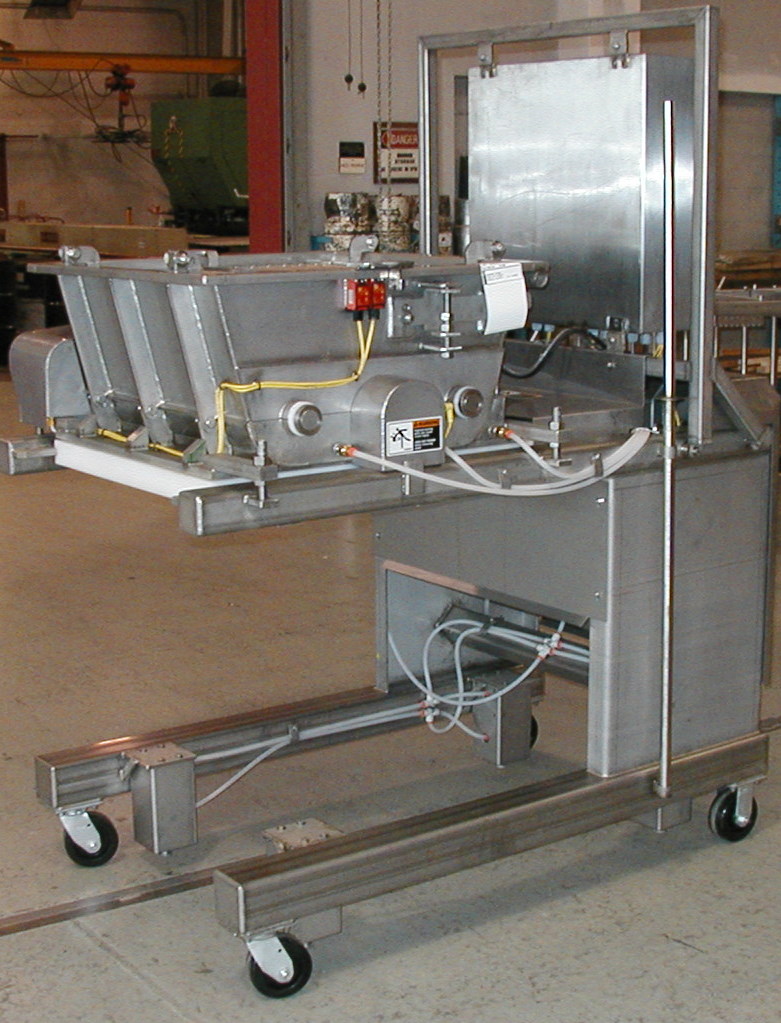
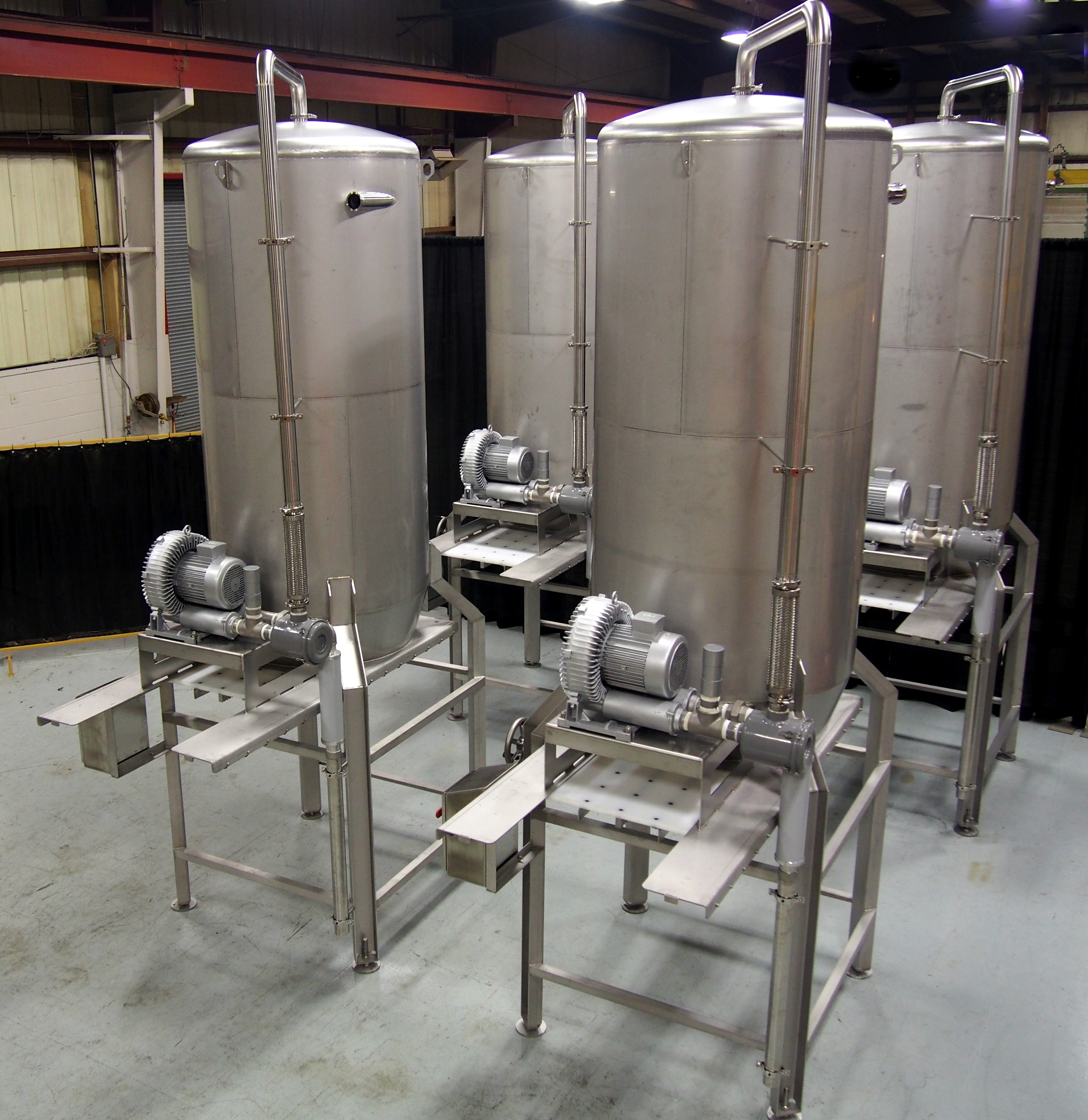
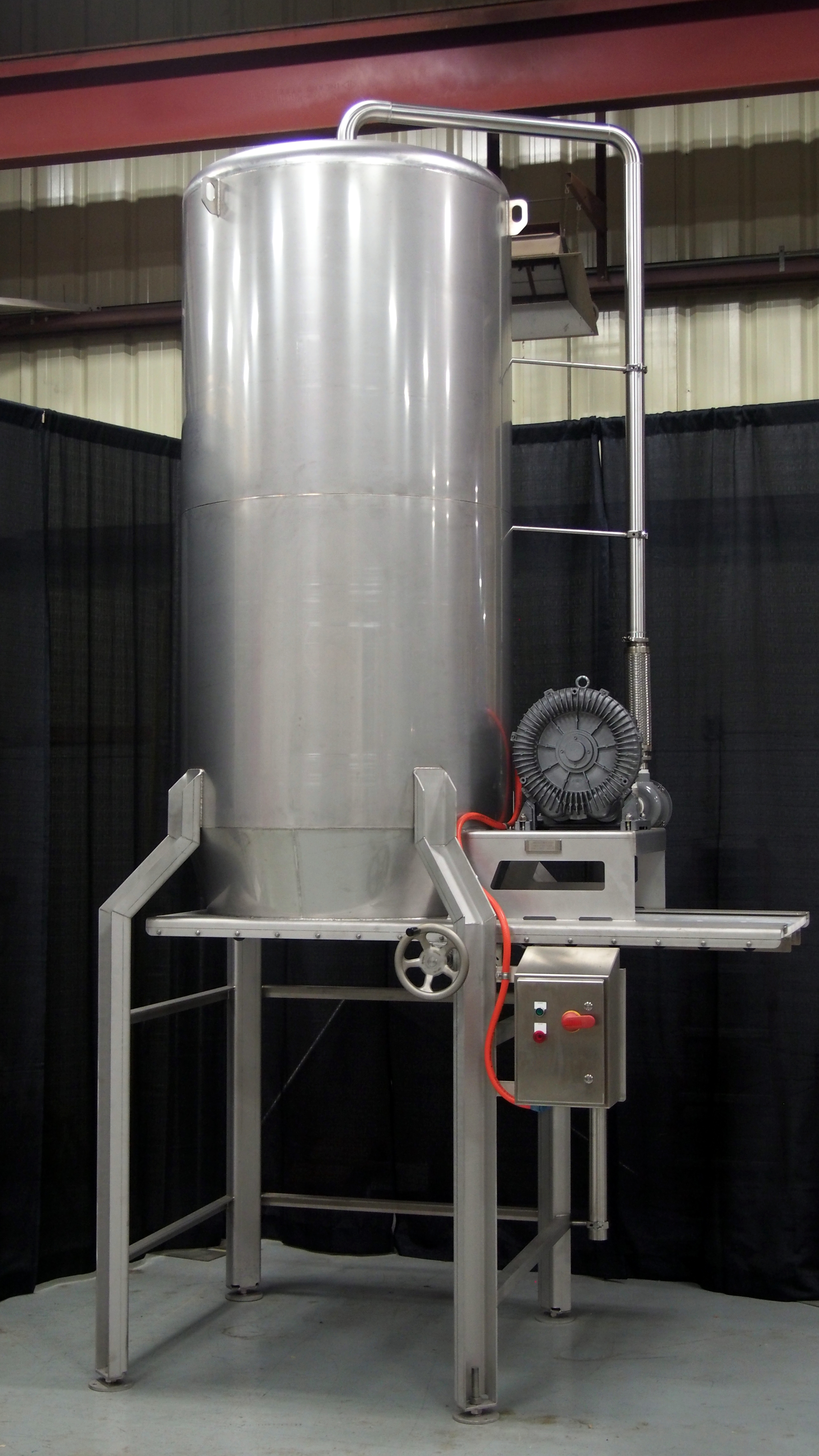
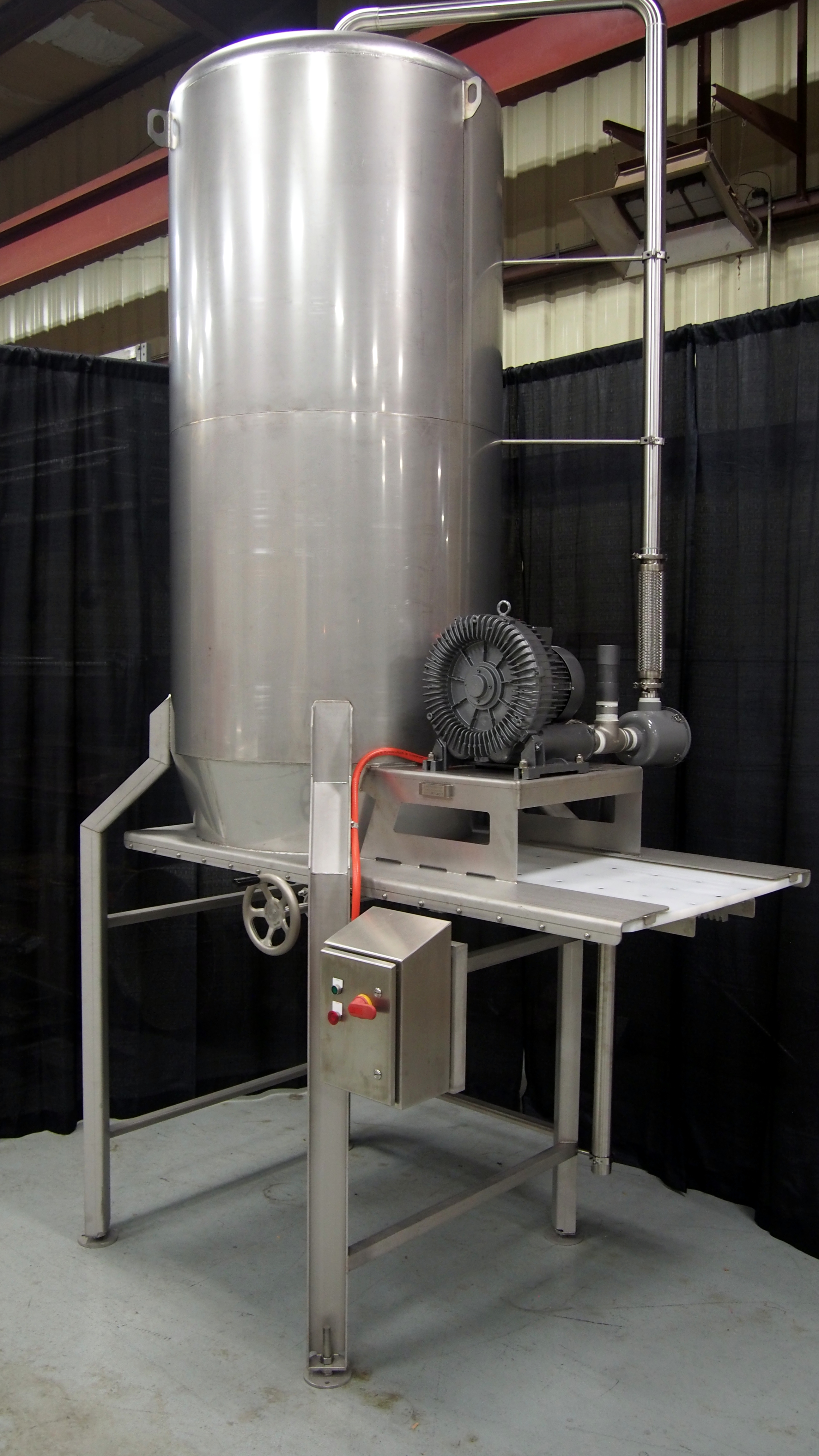
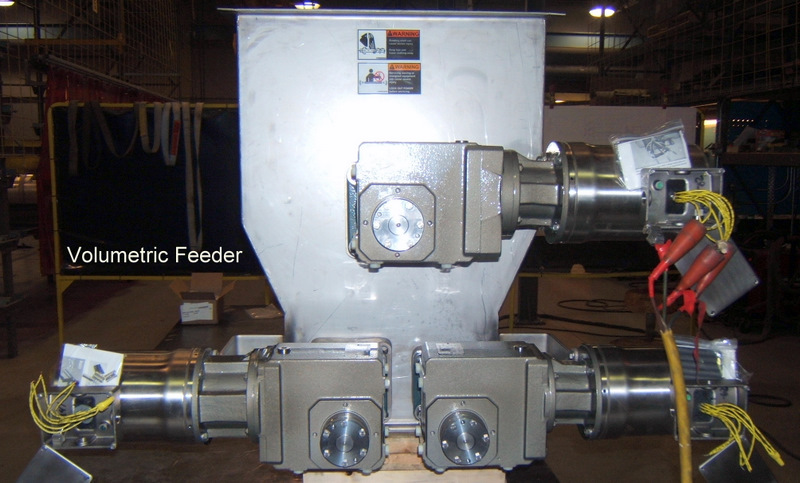

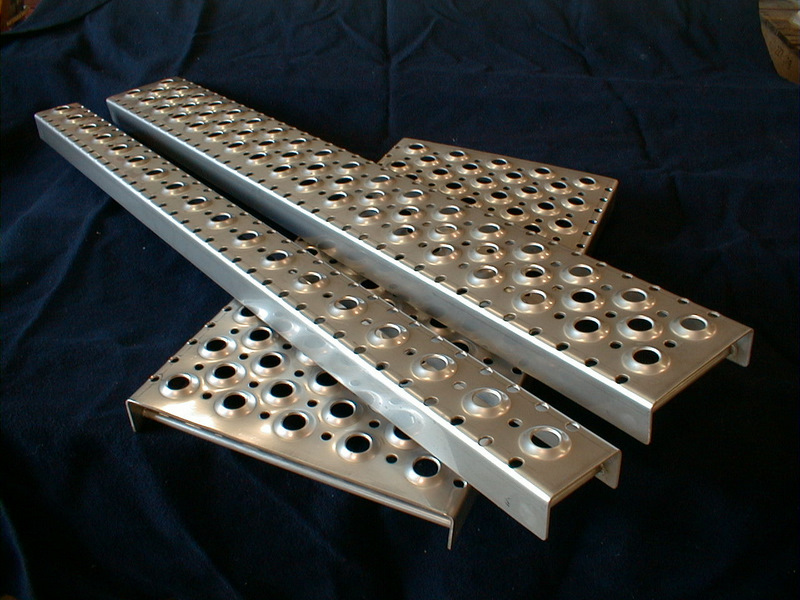
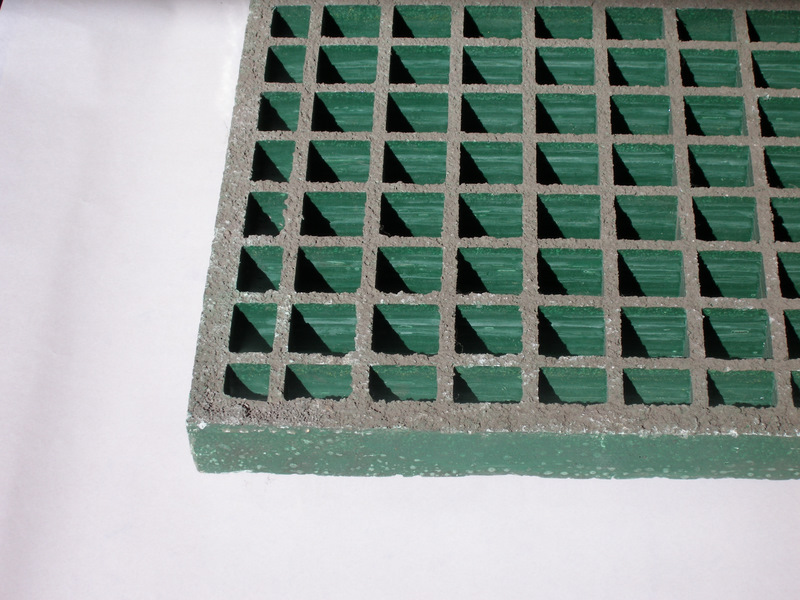
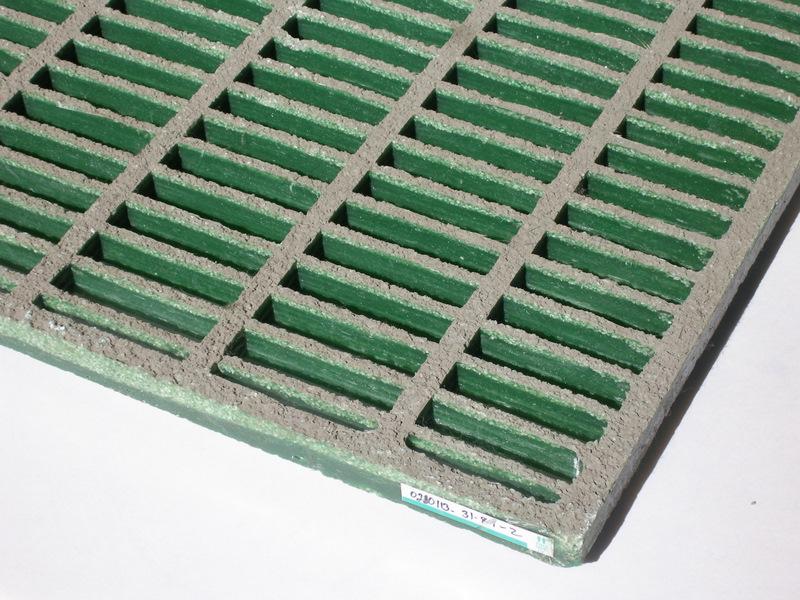
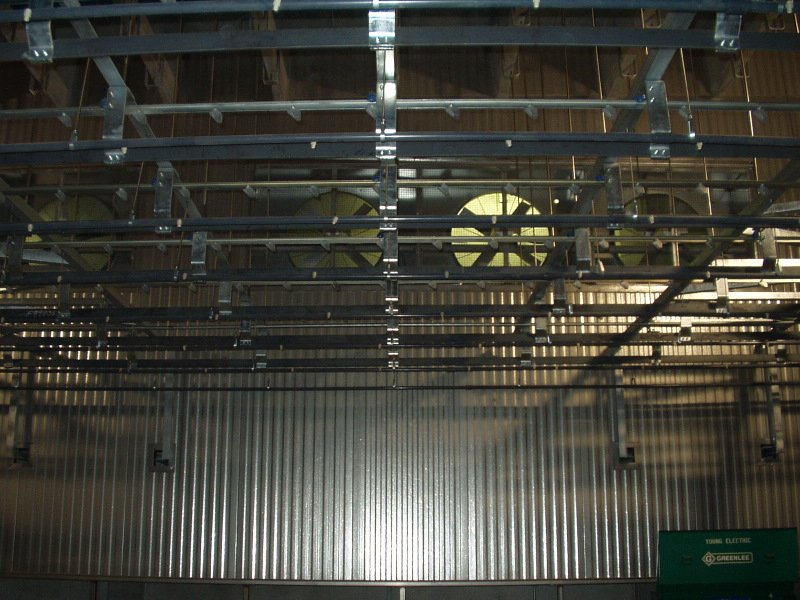
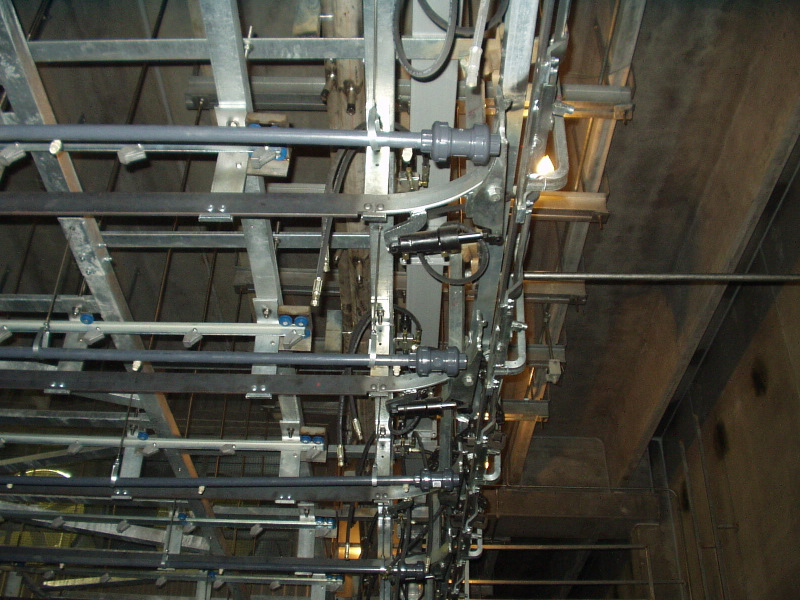

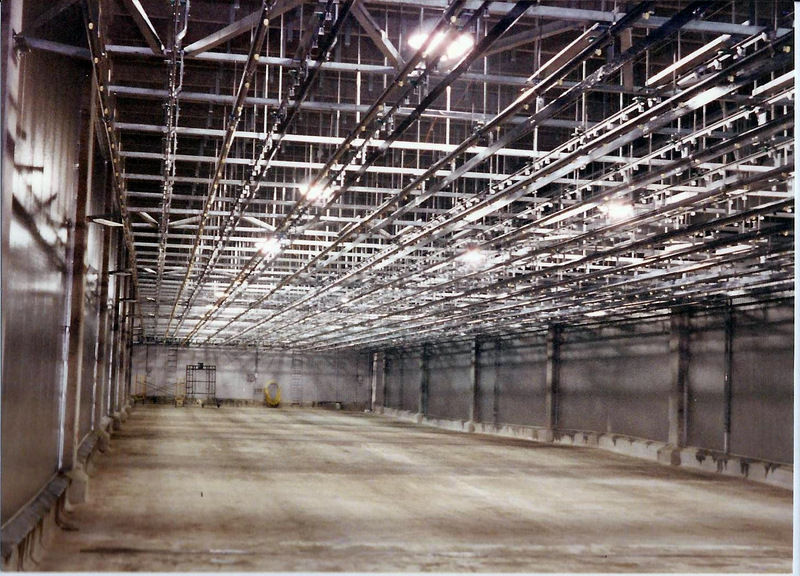
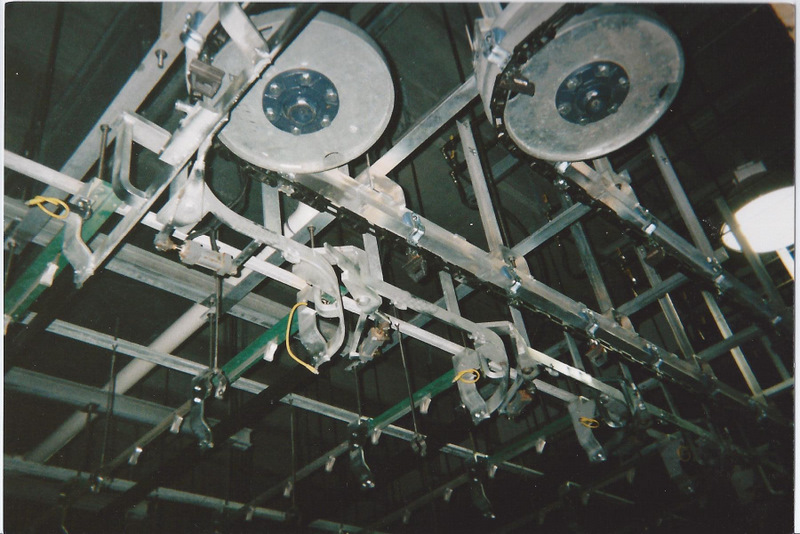
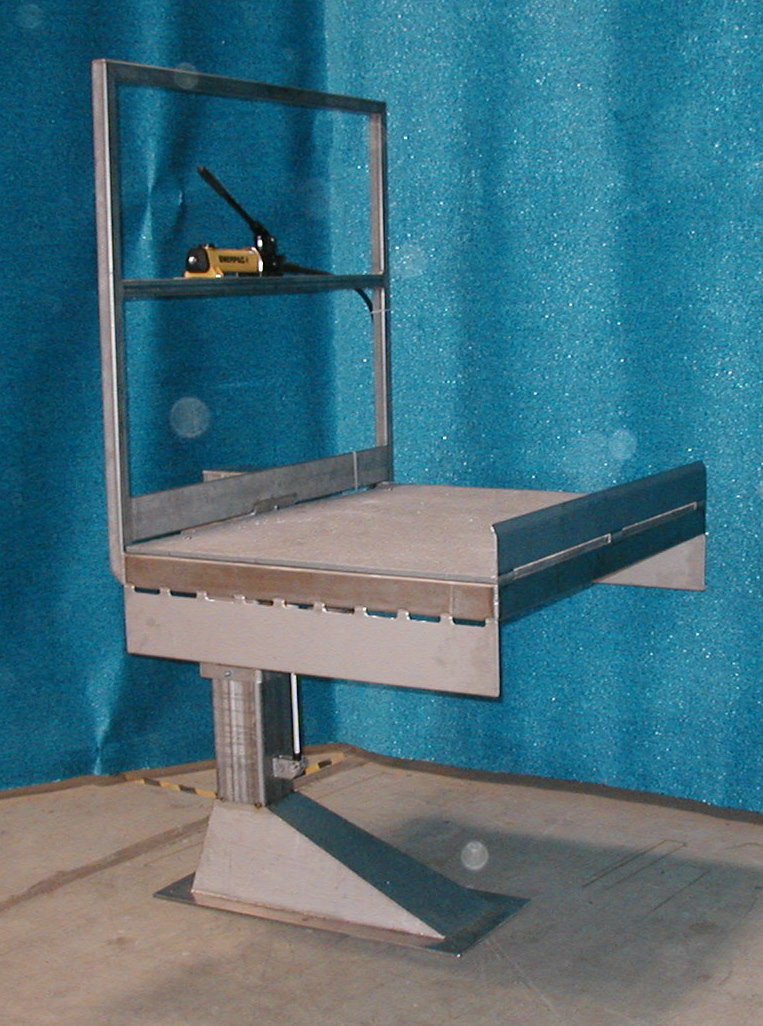
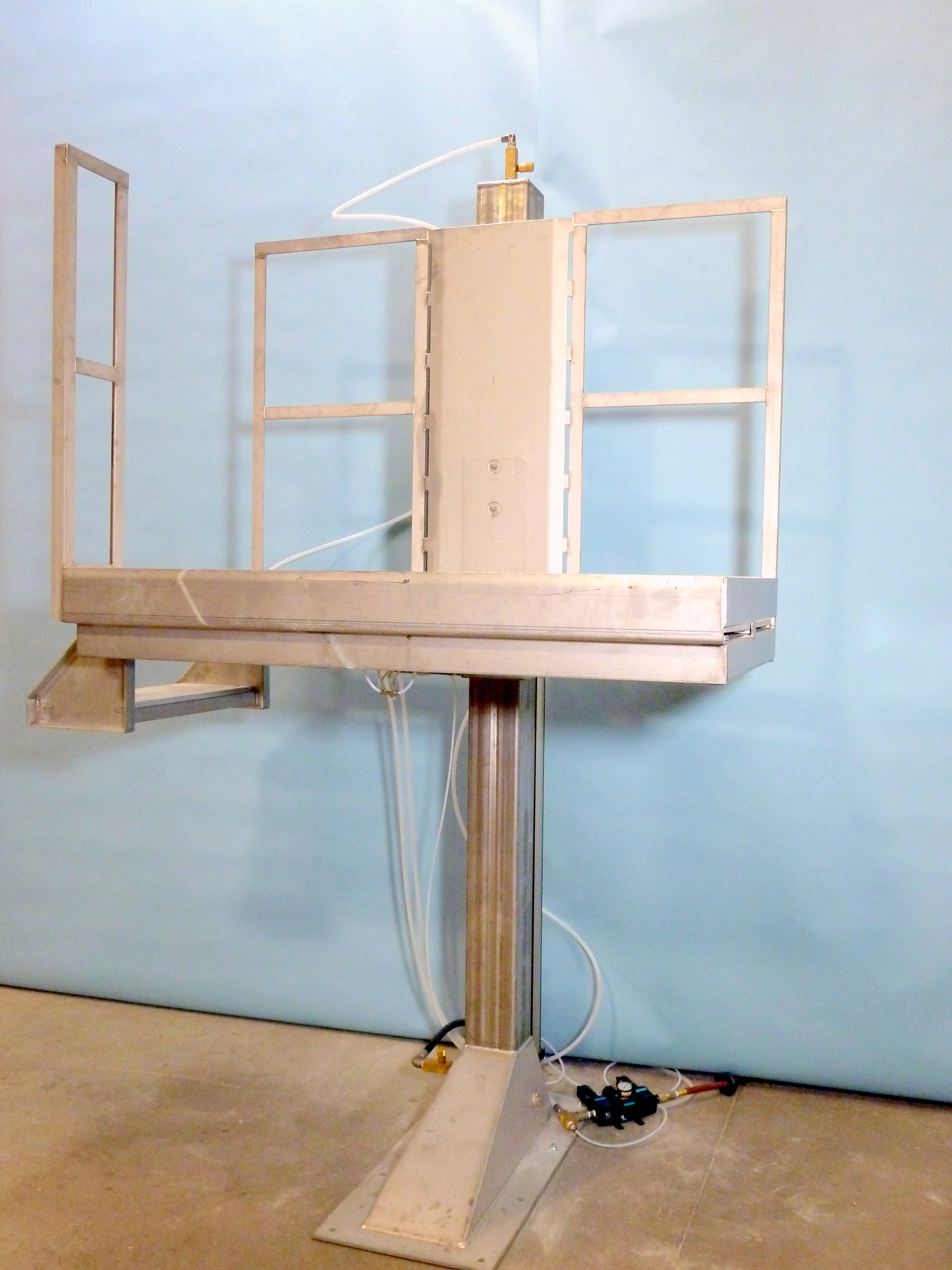
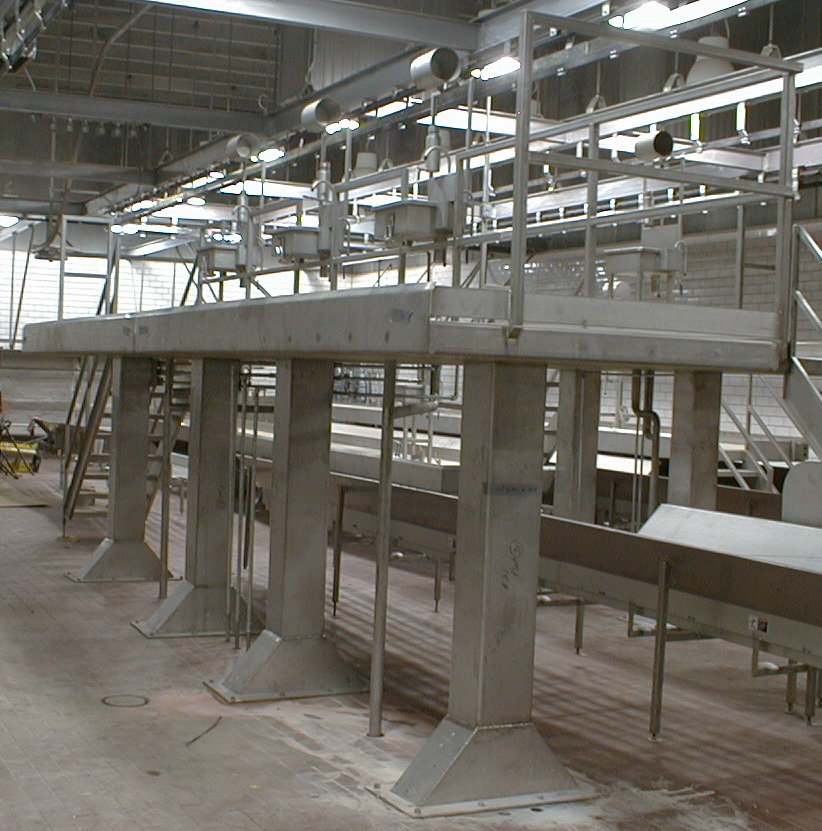
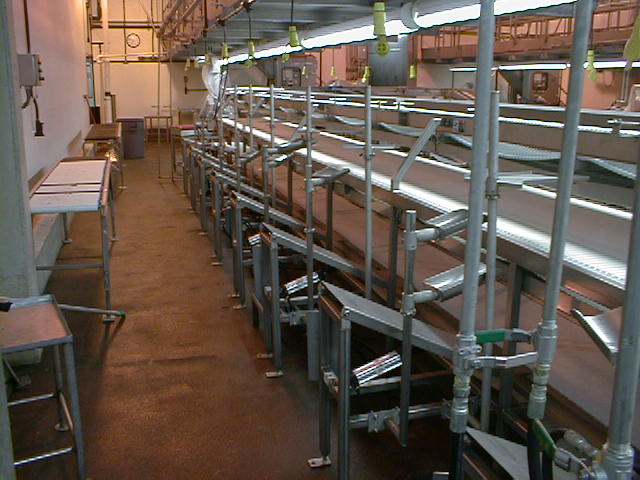
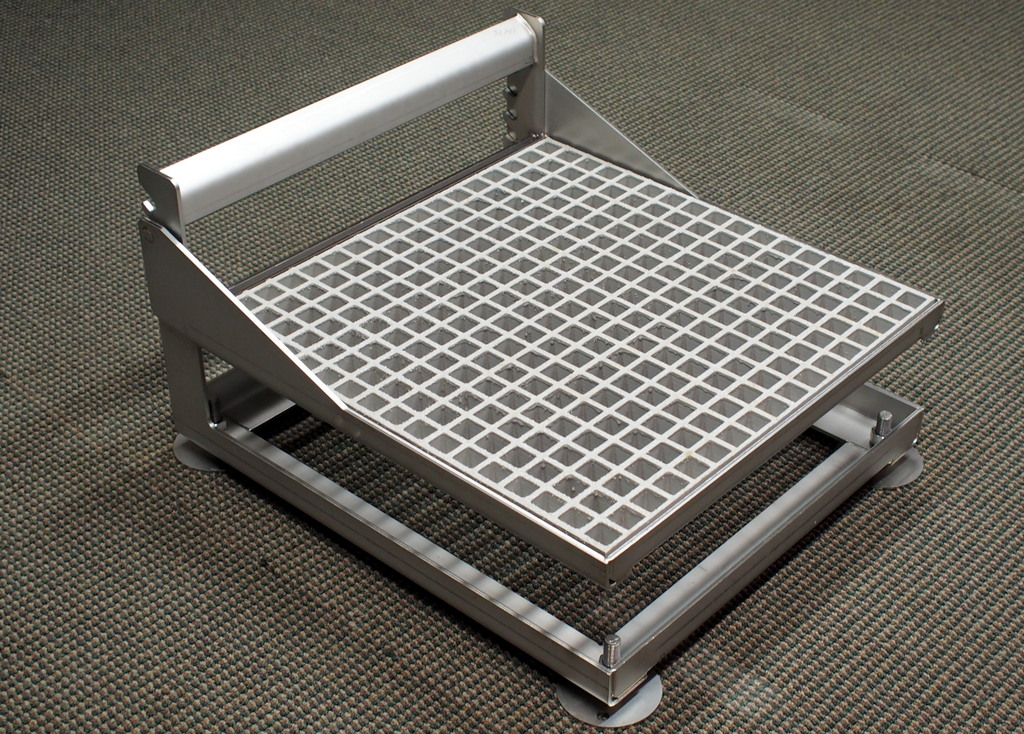
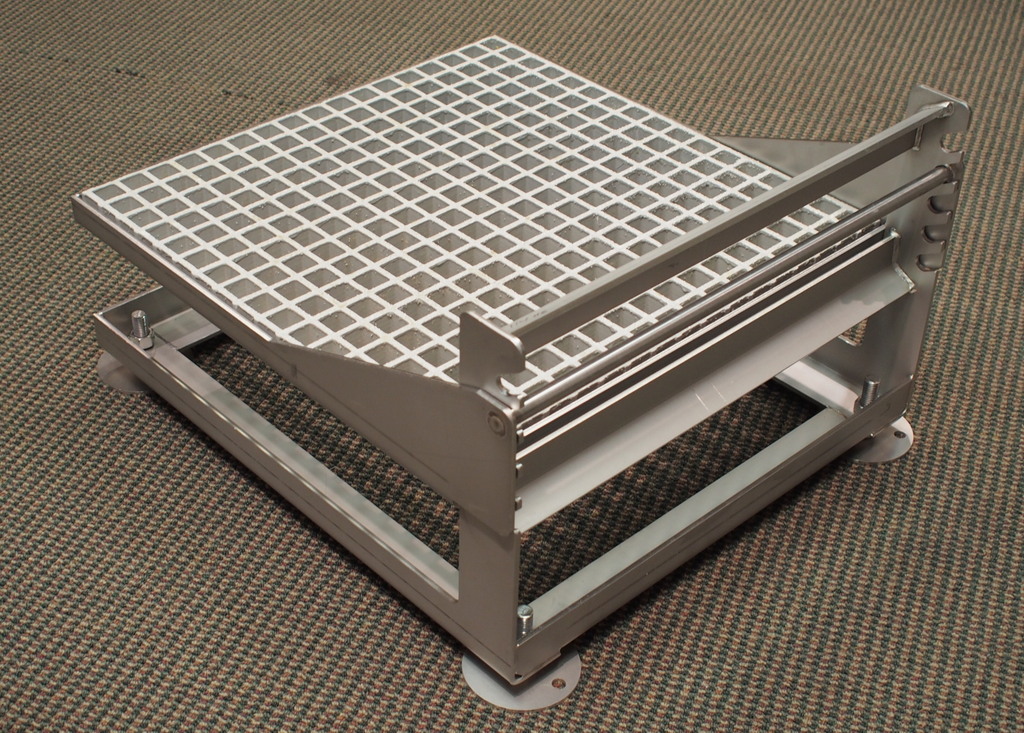
Work Stations & Ergo Stands
No matter what the industry, Millard can provide you with safe and sanitary personnel work stations or ergo stands at either floor level or elevated to bring you to the work. We will work with you to custom design, build, and install the proper work stations and ergo stands to fit your processing applications.
Features:
- Stationary Work Stations
- Adjustable Self-Contained Hydraulics on Ergo Stands
- Adjustable Hydraulic Inspection Stands
- Safety Railing and Guarding
- Heavy Duty Stainless Steel
- Wash-down duty construction
- Custom Length, Width, Heights to fit your application
-
"In-House" PassivationPassivation treatment is intended to improve the surface condition of stainless steel by dissolving iron that has been embedded in the surface during forming or machining. If allowed to remain, the iron can corrode and give the appearance of rust spots on the stainless steel. Passivation restores the original corrosion-resistant surface by forming a thin, transparent oxide film and is the preferred method for the sanitary durability of stainless steel. Millard has one of the largest "In-House" Passivation operations available for our customer's fabricated items. See our case study on passivation for details. Finish for Sanitary Durability
- Tilt-down safety railing available


402-331-8010 • www.millardmfg.com designed by Chip Thompson